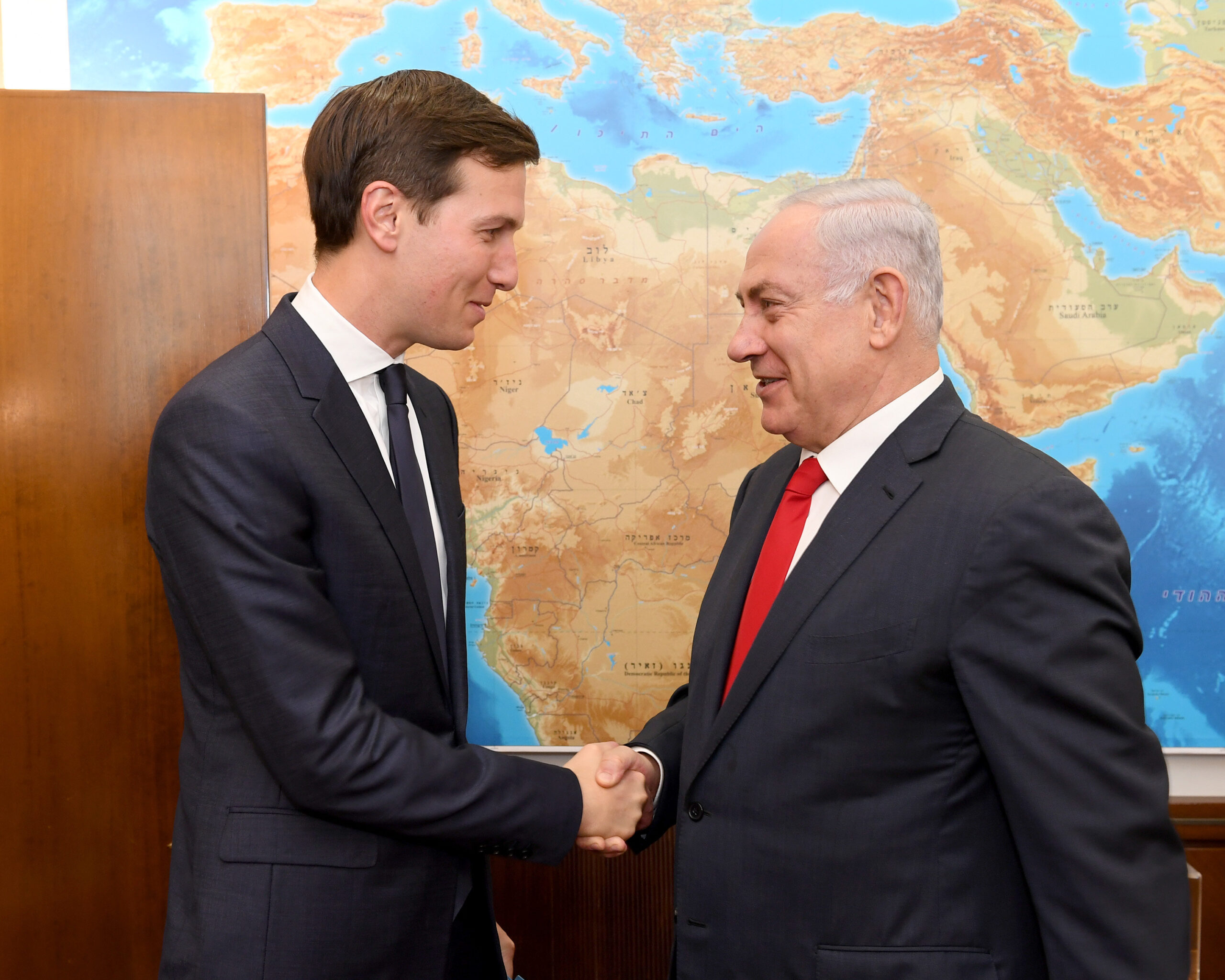
Amid mounting tensions between Israel’s political leadership and the Board of Peace for Gaza, Channel 14 can reveal Monday evening that Prime Minister Benjamin Netanyahu and Jared Kushner, President Donald Trump’s son-in-law and adviser, held several tense conversations in recent days over the future of the plan.
According to sources familiar with the conversations, Kushner confronted Netanyahu, telling him: “You’re throwing a wrench into the idea that you wanted. You didn’t want Israel to control the Strip, you didn’t want Hamas—and based on that desire, we established the Board of Peace. Now you’re throwing a wrench into the works when it comes time to actually do something.”
Prime Minister Netanyahu with Steve Witkoff and Jared Kushner | Photo: Avi Ohayon, GPO
Netanyahu responded: “That’s right. We wanted something different in Gaza that would not pose a threat—but only after the Strip is fully demilitarized and Hamas is disarmed, not before. Bringing an agreement under which the Strip would be governed according to ‘Palestinian’ law is, in effect, a ‘Palestinian’ state.”
Kushner is a key figure working behind the scenes on the plan and wields significant influence over the Gaza roadmap. The tense exchanges between Netanyahu and Trump’s son-in-law, combined with pressure from within the Israeli government, contributed to Netanyahu’s forceful declaration Sunday that Israel rejects the Board of Peace’s 15-point document.
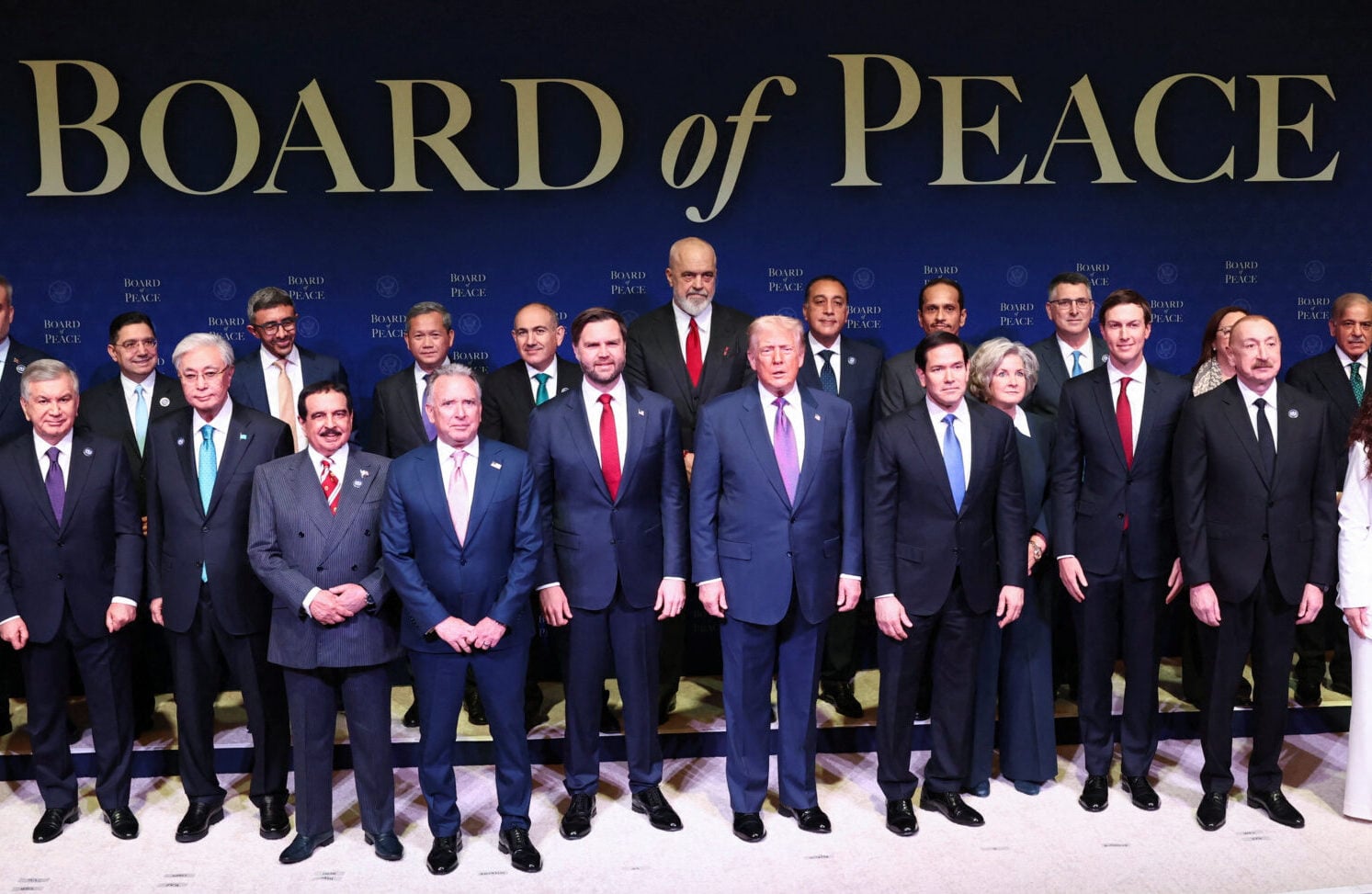
Board of Peace | Photo: Reuters
The dispute exposes a fundamental divide over what must come first in Gaza: advancing a new political framework or ensuring Hamas is completely disarmed and the Strip demilitarized. For Netanyahu, the message appears unequivocal—Israel will not trade one threat on its border for another under the banner of peace.
During an interview on Tucker Carlson’s podcast, Hunter Biden, son of former U.S. President Joe Biden, launched a blistering attack on Israeli Prime Minister Benjamin Netanyahu, arguing that calling the Israeli leader “evil incarnate” should not be considered antisemitic.
At the same time, Carlson raised conspiratorial claims about the origins of allegations concerning purported criminal material found on Biden’s infamous laptop.
Hunter Biden: “If it’s antisemitic to point out that Bibi Netanyahu is evil incarnate then I don’t know what to say to people anymore. All you have to do is just open your eyes. Open your heart for one minute” pic.twitter.com/avtk4yobkL
“If it’s antisemitic to point out that Bibi Netanyahu is evil incarnate, then I don’t know what to tell people anymore,” Biden told Carlson. “All you have to do is just open your eyes, open your heart for one second.” Carlson responded by calling it “such an obvious lie.”
Later in the conversation, Carlson raised another bizarre and conspiratorial allegation, claiming that Israeli figures were responsible for providing him with information concerning allegations that material involving exploited minors had been found on Hunter Biden’s laptop.
“The claim that there were pictures or videos of exploited minors on the laptop? That came from the Israelis,” Carlson said. “I’m just telling you that. They came to me with it. So I know that.”
INSANE 🚨 Tucker Carlson makes WILD Accusation to Cover for Hunter Biden’s Child P*rn on his laptop.
“The allegations that there was abuse of minors came from the Israelis”
Carlson further claimed that one of his producers met with an individual who connected members of his team with figures linked to Netanyahu. “They were behind it,” Carlson alleged, claiming that people in Washington knew about the supposed Israeli connection but refrained from criticizing Israel. “I felt like everyone in Washington knew it, but there was so much pressure to never criticize Israel in any way,” Carlson said.
Tucker Carlson | Photo: Shutterstock
Neither Carlson’s claims of Israeli involvement nor the allegations he attributed to Israeli-linked figures were substantiated in the material presented during the conversation. What was unmistakable, however, was the direction of the discussion: an attack on Israel’s prime minister quickly expanded into sweeping, unverified allegations implicating Israelis themselves.
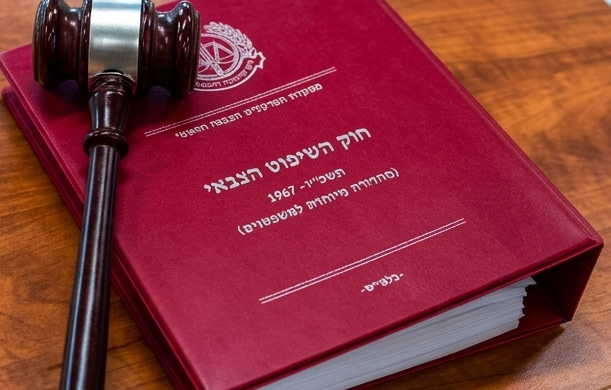
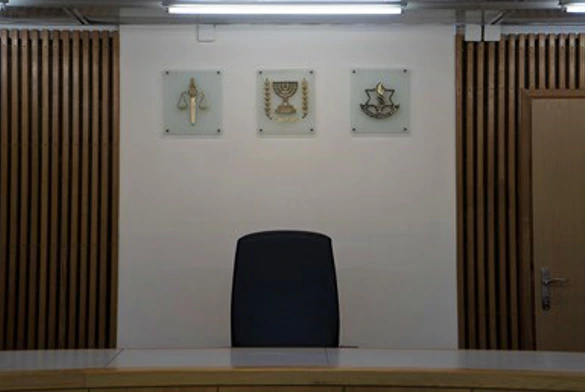
Military prosecutors are leveling harsh criticism at the Samaria Military Court, alleging biased and lenient treatment of terrorists. The prosecutors also point to a series of incidents involving circumvention of procedures and violations of required separation from defense attorneys. The IDF strongly rejects the allegations. We first reported Monday evening that last Thursday, terrorist Khamed Tsubah appeared at the Samaria Military Court. Tsubah, along with another terrorist, carried out the attack at the Eli gas station nearly two years ago, in which Elisha Antman, Harel Masoud, Nachman Shmuel Mordoff, and Ofer Feirman were murdered, and three others were wounded. According to sources present at the hearing, the conduct of senior judges in this case and similar ones raises questions about their neutrality. The sources say those judges allegedly acted in a biased manner favoring the terrorists and contrary to the recommendations of law enforcement officials.
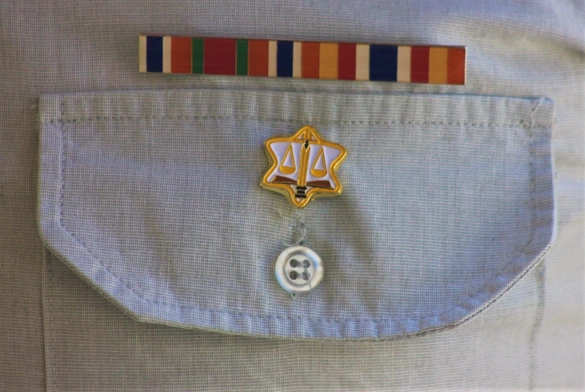
Military Courts pin | Photo: Military Courts website
Violating Procedures
During the hearing concerning the Eli gas station attack, Tsubah agreed to admit to the facts in the indictment but asked in return to speak with his mother. A representative from the Israel Prison Service objected to the request, saying it violated procedures. But then the president of the Samaria Military Court, Lt. Col. Kamal Zahraldin, intervened. According to sources present at the hearing, President Zahraldin turned to the terrorist’s defense attorney in Arabic and told him: “Bring the defendant here physically and we will approve his parents’ entry to the hearing.” Military prosecutors are sharply criticizing the remarks, claiming they represent an attempt to circumvent Prison Service procedures. “This is an attempt to bypass procedures the judge is aware of, and a very bad message being sent to terrorists,” they said. According to them, the case doesn’t stand alone but joins a series of incidents that have sparked criticism among prosecutors about the conduct of the Samaria Military Court and the level of deterrence it demonstrates toward defendants and suspects in terror offenses.
One of the wounded in the Eli terror attack | Photo: Free to use
Father and Son Arrested—Then Released
Another incident prosecutors point to occurred following the deadly attack near Givat Gilad on July 24: A terrorist who grabbed a weapon from a security guard opened fire, and in the battle against him, Major Yuval Ezra and Binyahu Melat, a member of Givat Gilad’s emergency response team, fell.
As part of the investigation into the attack, a father and son who were filmed in videos from the incident were arrested on suspicion of involvement in events leading to the attack. But Judge Capt. Ortal Zer ruled that the evidentiary foundation presented to her was insufficient to continue their detention and ordered their release under restrictive conditions. “I found that the same substantive evidentiary difficulty still exists even regarding the current suspicions the prosecution attributed to the suspects,” the judge wrote in her decision.
Military prosecutors criticized the decision as part of their broader claim that a series of decisions by the court conveys an overly lenient policy toward suspects and defendants in security offenses.
Photo: Military Courts website
The Allegation: Meetings with Defense Attorneys Without Prosecutors Present
Another allegation raised by prosecutors concerns the conduct of Zahraldin, president of the Samaria Military Court: According to them, the president regularly holds meetings in his office with defense attorneys representing defendants in terror offenses, without the presence of prosecution representatives. According to those sources, this is conduct that doesn’t align with the law and with the required separation between the court and the parties in proceedings.
“There’s no proper separation here between the president and the parties,” the sources claimed. “This conduct sends a message that messages can be conveyed without us being there and able to object—and thus influence ongoing proceedings.”
Prosecutors emphasize that from their perspective, these aren’t isolated incidents but ongoing conduct that they say undermines the ability to conduct aggressive and deterrent proceedings against terrorists.
“A bad message to terrorists” | Photo: Muhammad Atiya, Flash90
According to them, precisely at a time when the security establishment seeks to intensify the fight against terror, decisions are being made at the Samaria Military Court that send the opposite message. The sources are now demanding an examination of the court’s conduct and the line between the broad judicial discretion given to judges and conduct that they claim exceeds it.
IDF Spokesperson’s Response: The attempt in the article to create a false impression of Samaria Military Court policy is wrong and doesn’t match reality. The military courts in Judea and Samaria operate independently and professionally. All decisions in cases are made according to the law and based solely on professional considerations. Trials are conducted according to existing law while strictly maintaining fair process and the rights of crime victims.
Photo: Shutterstock
Regarding the claim about the decision to release under conditions two of those involved in the incident that occurred in the village of Tel in July—the decision was based on evidentiary difficulties in the evidence collected. An appeal filed on the decision was rejected by the Military Court of Appeals, which also noted the evidentiary difficulties in the material presented.
Regarding the trial of Khamed Tsubah, his defense attorney filed a request to convene a panel of judges so that his client and his partner could admit to the indictment, for offenses primarily involving intentional killing of Elisha Antman, Harel Masoud, Nachman Shmuel Mordoff, and Ofer Feirman. During the hearing, the defendant indicated he was indeed considering pleading guilty but requested the opportunity to speak with his mother.
The court clarified in the courtroom the accepted procedural orders on the matter, and afterward the defense attorney’s conversation with his client continued in order to bring the case to a close and spare the hearing of the many witnesses in the case. The claim that the court’s conduct was contrary to accepted procedures is completely baseless. The court explained the existing procedural orders in the courtroom, and subsequently the defendant admitted to the indictment as written and the case was scheduled for a sentencing arguments hearing.
The president of the Samaria Military Court holds periodic work meetings with all court visitors—prosecution and defense, police bodies and Prison Service representatives. The meetings deal with administrative and logistical matters only and are held according to procedures and lawfully.
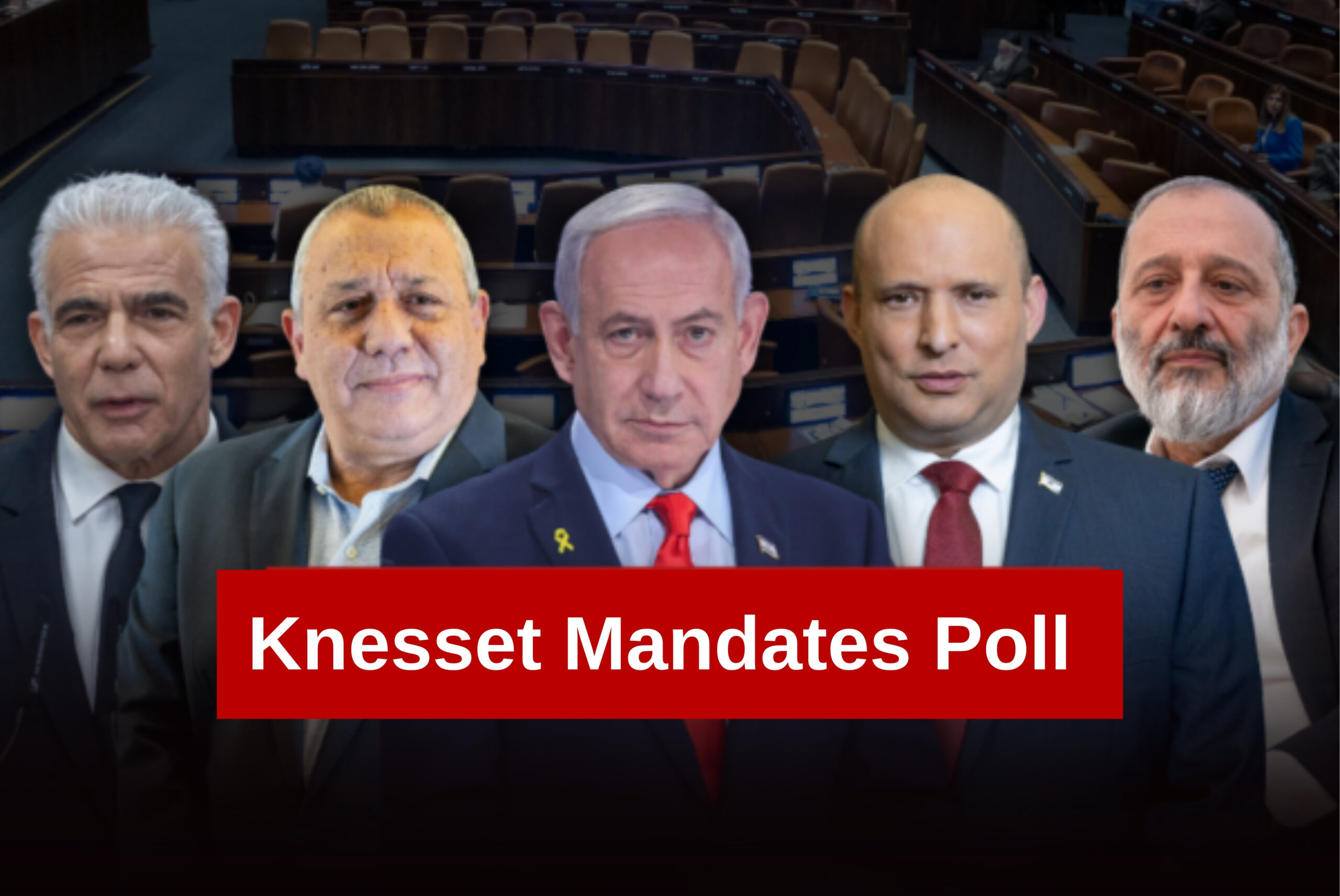
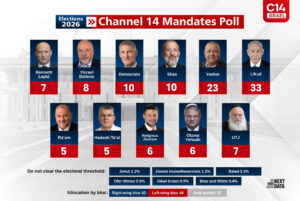
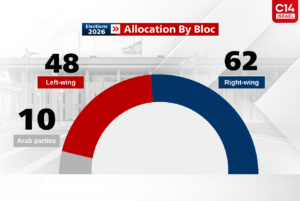
A new C14 poll released Monday evening shows a remarkably stable political landscape, with the right-wing bloc maintaining its solid majority of 62 mandates. Prime Minister Benjamin Netanyahu’s Likud continues to dominate as Israel’s largest party with 33 seats—two more than the last poll—while the left-wing bloc holds 48 mandates and Arab parties secure 10.
C14 Mandates poll
In the full mandate breakdown, Gadi Eisenkot’s Yesh party comes in second with 23 seats. Shas and the Democrats each receive 10 mandates. Yisrael Beiteinu gets 8 seats, while Yachad and United Torah Judaism each win 7. Otzma Yehudit and Religious Zionism each receive 6 mandates. Among Arab parties, Hadash-Ta’al and Ra’am each get 5 seats. Falling below the electoral threshold are Balad (2.3%), Zehut (1.3%), Bayit Tziyoni Miluimnikim (1.2%), Gilad Erdan (0.9%), Ofer Winter (0.6%), and Blue and White (0.4%).
Allocation by bloc
On the question of suitability for prime minister, Netanyahu scores a crushing victory with a massive lead at 54% support. His main rival, Eisenkot, receives just 34%, while Naftali Bennett gets 6%, Avigdor Lieberman 5%, and Benny Gantz earns a single percentage point.
In a direct matchup between Netanyahu and Eisenkot, Netanyahu leads with 55% versus 45% for Eisenkot. Among voters of smaller parties and undecided voters, the gap widens significantly—Netanyahu receives 59% support compared to just 29% for Eisenkot, with 12% saying they haven’t yet decided.
The poll was conducted by NEXT DATA with 741 adult participants from the general population on the evening of August 9, 2026. Data analysis by Shlomo Filber.
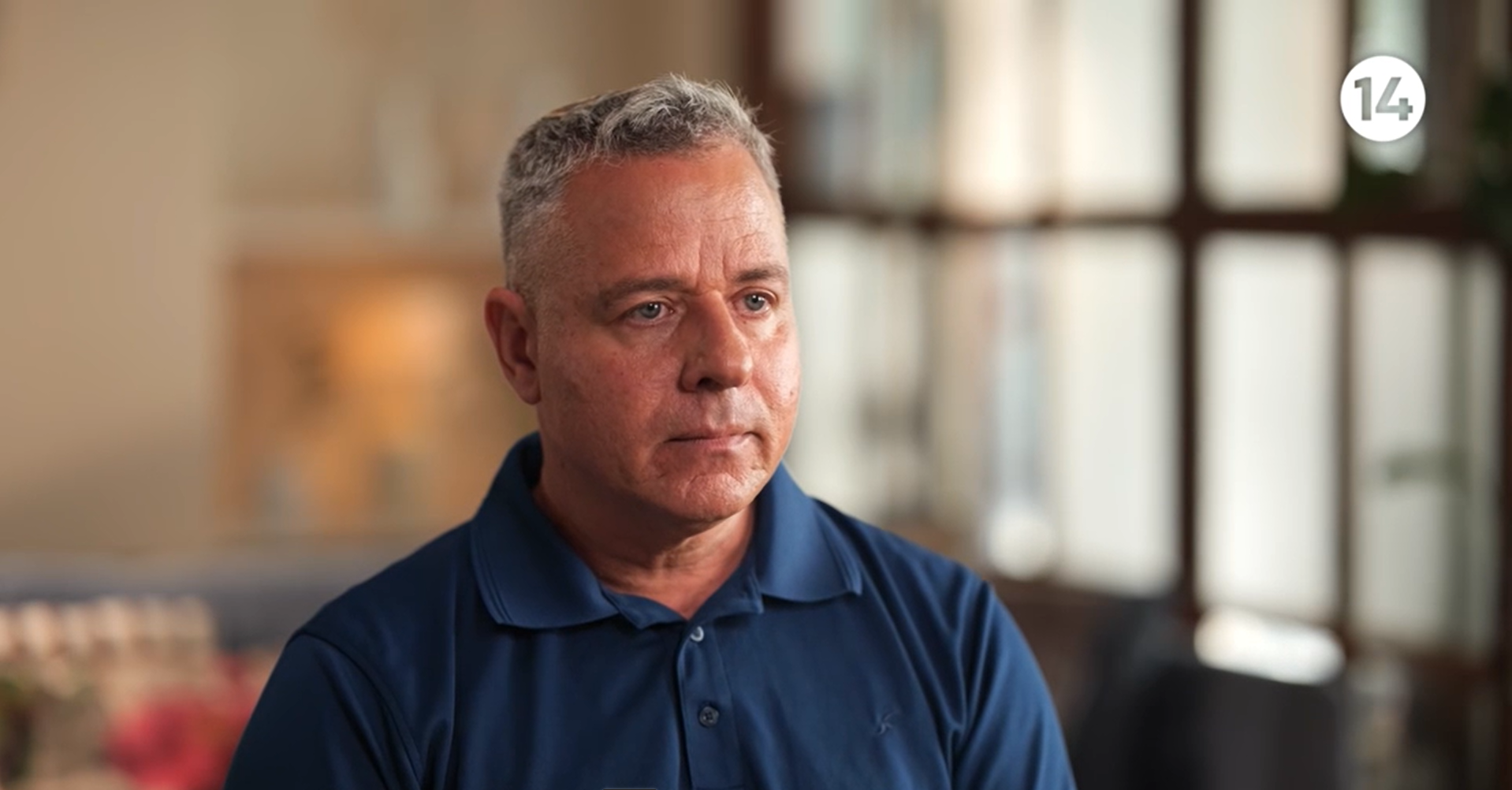
Retired Col. Oren Solomon said Monday in an interview with Channel 14’s Noam Amir that Prime Minister Netanyahu’s announcement rejecting the 15-point agreement for now is part of a deliberate strategy: “The prime minister made a decision early on: pursue a strategy where on one hand the hostages come home and an agreement is signed, but in practice he planned from the start that there would be an exit point—and that’s Hamas’s refusal to disarm.”
Oren Solomon | Photo: Channel 14 News
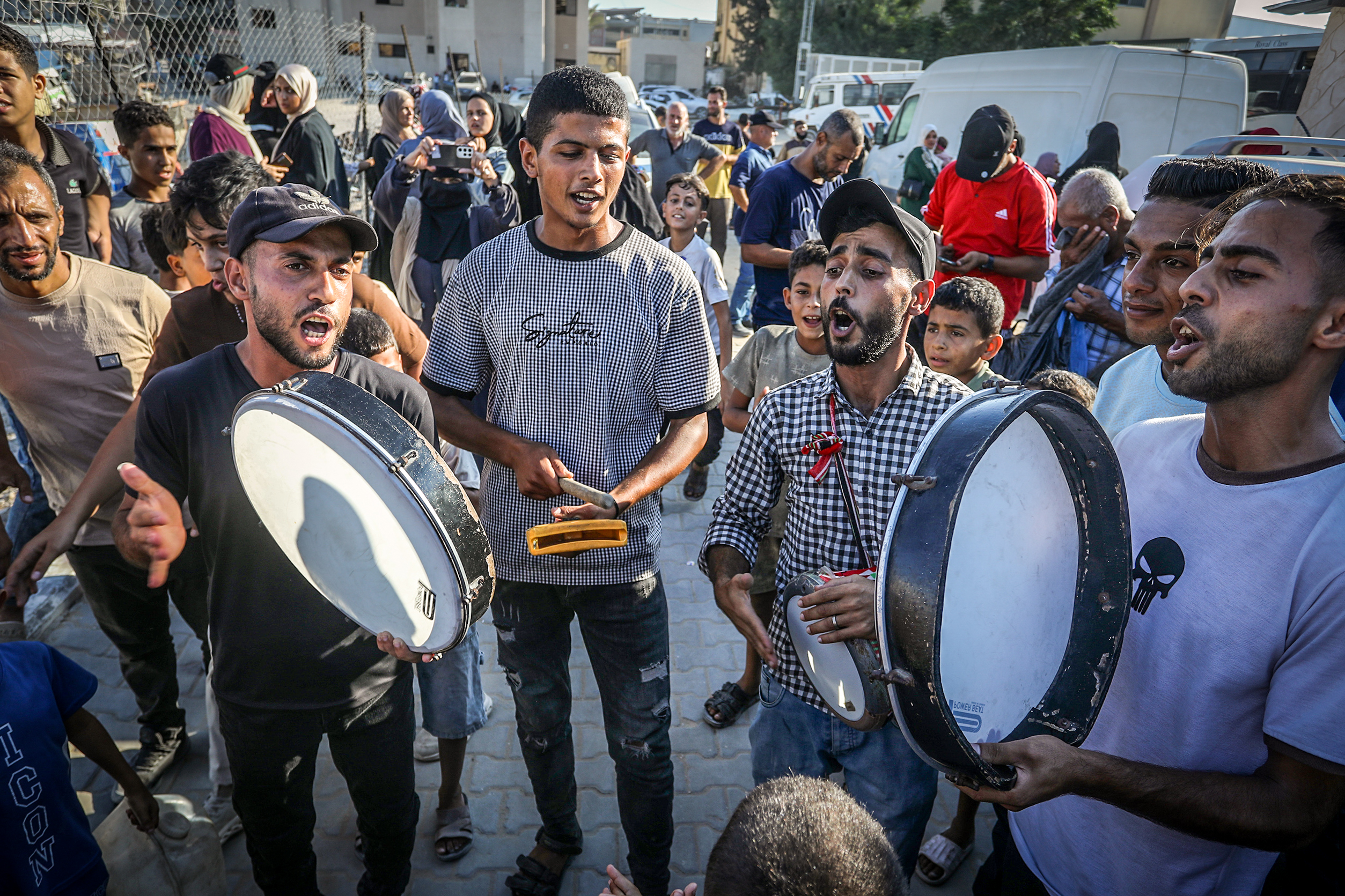
Solomon emphasized that alongside all the declarations from those involved in Gaza, including the Peace Council, attention should be paid to what’s not being discussed: “The prime minister is looking ahead. In the current situation, Israel has no intention of adopting the 15-point document as long as Hamas hasn’t completely disarmed. At the same time, Netanyahu hasn’t addressed reconstruction of the Strip or bringing in stabilization forces. But the reality on the ground is advancing: The U.S. is taking control of concrete flow for sealing tunnels, and meanwhile, Palestinian forces are undergoing training for future coordination and cooperation. In practice, I don’t see anyone meeting this challenge of dealing with the tunnels who isn’t the IDF,” he added.
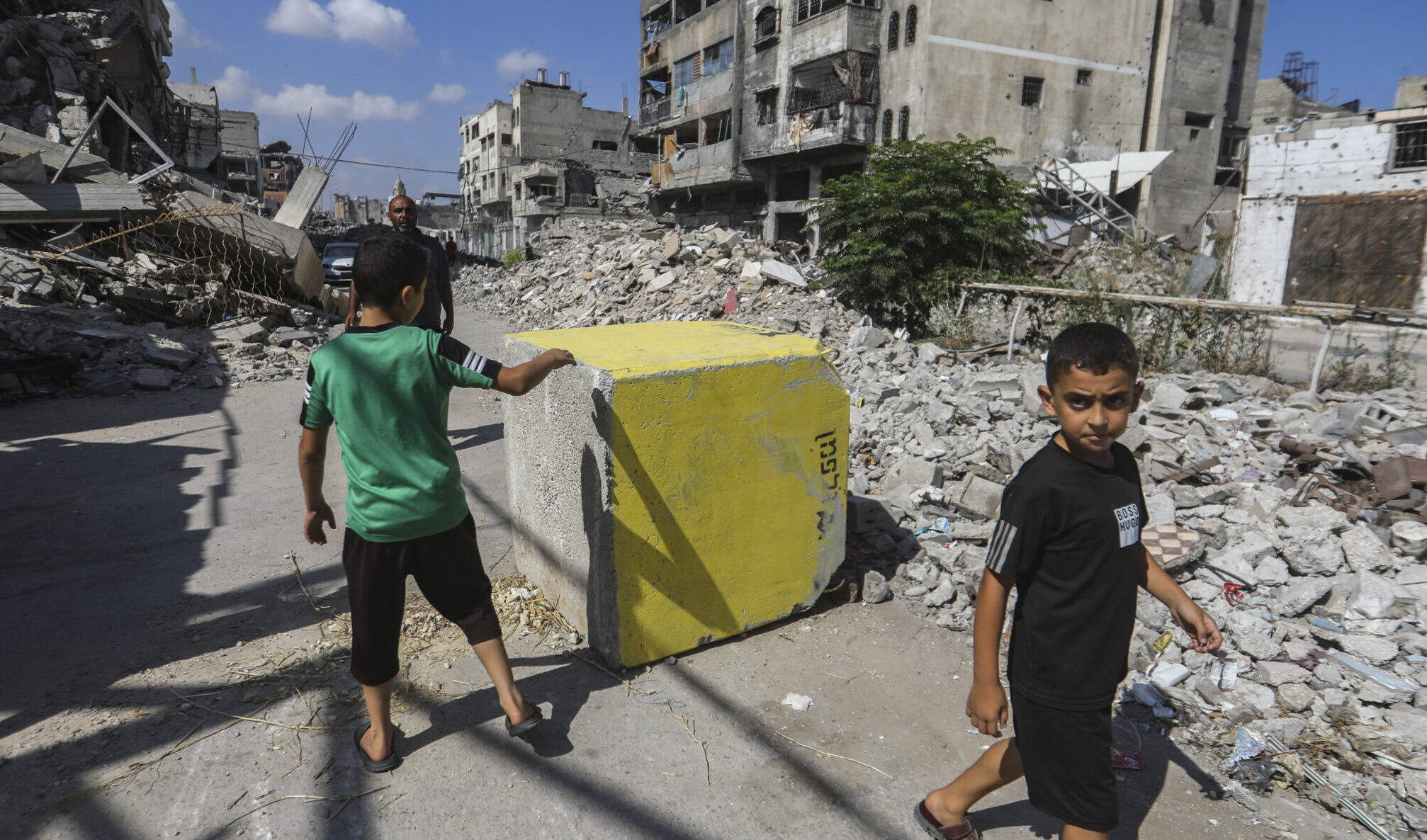
Residents today in the Strip | Photo: Abed Rahim Khatib, Flash90
“Right now the Hamas terror organization is putting on shows and playing the game. The dynamic is that the U.S. is looking for achievements—and that’s where the tension and risk in the process lie. Both Israel and Hamas are playing for time: while Hamas strengthens civilian control, Israel is focused on Lebanon and Iran. We’re also playing the arena prioritization game, and later we’ll get to Gaza. The media’s job is to monitor and ensure there’s no start of reconstruction as long as there’s no disarmament in the Strip,” Solomon concluded.
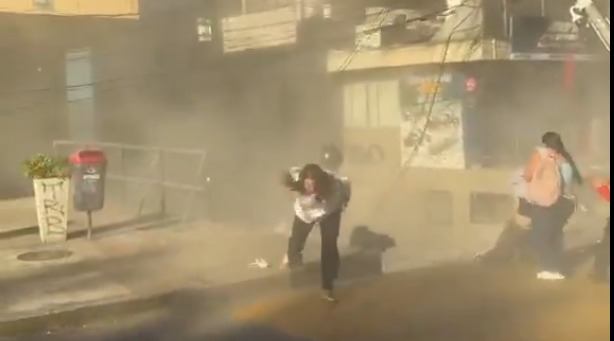
An Israeli who was on the eighth floor of a high-rise during the powerful earthquake that struck Colombia today (Monday) described the moments of panic: “Everything shook violently, people were screaming in the stairwell.” According to him, several buildings collapsed in different areas of the country and his volunteers have already gone out to help. “We’re hoping and praying there won’t be fatalities.” The powerful earthquake that hit Colombia today was felt strongly across wide areas of the country and sparked panic among residents. Rabbi Yosef German, who was on the eighth floor of a high-rise when the quake struck, described the dramatic moments and the scenes after he left the building.
Frightened people outside their homes, Bogotá, Colombia | Photo: Reuters
“I arrived at 5 in the morning from the city of Cali, and a little after 7 a.m. everything suddenly started shaking,” he told C14. “I’m staying on the eighth floor in a building near the airport. Everything shook violently. It was both a strong and unusually long earthquake.” According to him, when the shaking started he rushed out of the apartment and down from the building. “I went downstairs and heard people screaming in the stairwell. Everyone gathered outside, frightened,” he said.
German, who came to Colombia for the presidential inauguration events, said that shortly after the quake he began receiving reports of damage in different areas of the country. According to him, reports came in about several buildings that collapsed, including in the Pereira, Cali and Manizales areas. “There are reports of at least five to six buildings that collapsed,” he said. “The lucky thing is that the quake happened at a time when most people had already left their homes, which may have prevented a heavier disaster.”
Frightened people outside their homes, Bogotá, Colombia | Photo: Reuters
According to him, local volunteers he worked with in the past as part of ZAKA activities have already gone out to areas where destruction was reported. “My volunteers, who were with me on behalf of ZAKA in the past in Venezuela, are already at the sites where buildings collapsed to provide help and see what needs to be done,” he said. He added that at this stage the situation is still becoming clear: “Right now there’s known to be very serious property damage, and we’re hoping and praying there won’t be fatalities.” The earthquake, measuring 7.4 in magnitude, occurred in the morning hours with its epicenter in the San José del Palmar area of Chocó province. According to the United States Geological Survey (USGS), the quake’s focus was at a depth of about 107 kilometers below the surface.
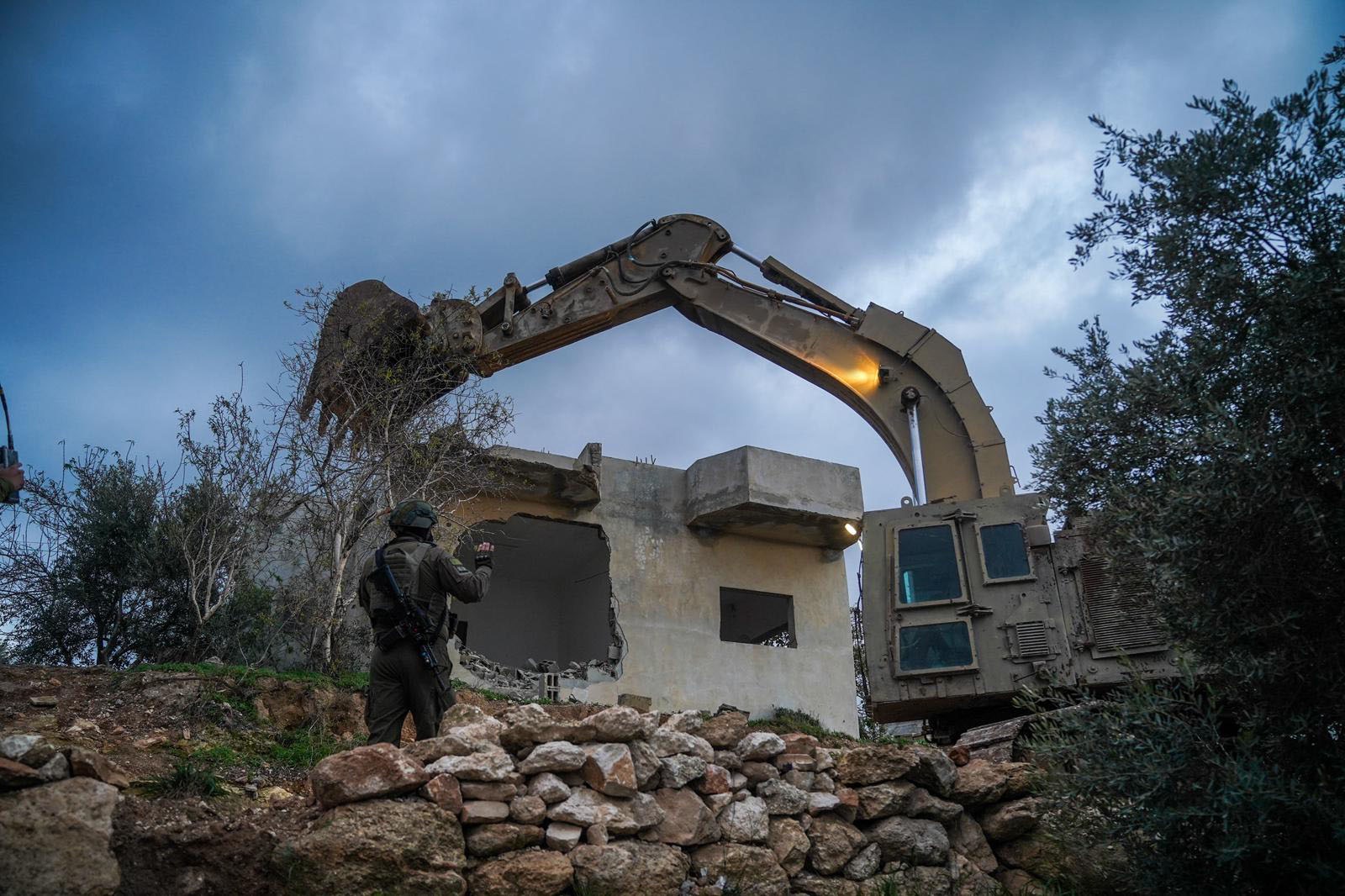
A new report from the Civil Administration’s Supervision Unit, released Monday summarizing the first half of 2026, reveals a dramatic increase in enforcement and demolitions of illegal ‘Palestinian’ construction across Judea and Samaria in recent years. The trend has accelerated under the policies of Minister Bezalel Smotrich, with consistent increases in supervision and enforcement activity on the ground.
According to data comparing the first half of each year, 250 illegal structures were demolished in 2022. That figure fell slightly to 201 in 2023 amid the war before climbing again to 310 structures in 2024. The pace accelerated significantly in 2025, with 443 demolitions, before reaching a record 536 illegal structures demolished during the first half of 2026—more than double the number recorded during the equivalent period in 2022.
A Defense Ministry division also pointed to a growing trend of ‘Palestinians’ demolishing illegal structures themselves in order to avoid enforcement action. Smotrich, under whose authority the Defense Ministry division operates, welcomed the figures and said they reflect a deliberate shift in Israeli policy.
For years, Smotrich said, Israel stood by while the Salam Fayyad plan sought to establish facts on the ground and force the creation of a “Palestinian” state through the takeover of state land and systematic, large-scale construction in Area C. He also highlighted the government’s broader actions in Judea and Samaria, saying that since the beginning of the current government’s term, it has led a revolution in the region.
Those efforts include the establishment of 104 new communities and 160 ranches protecting more than one million dunams of state land, alongside what Smotrich described as an uncompromising campaign against the Arab takeover of territory. “We are changing the equation,” Smotrich declared.
Judea and Samaria | Photo: None
He concluded by thanking the Civil Administration’s Supervision Unit and Infrastructure Division for what he described as their dedicated and professional work implementing government policy on the ground.
For Smotrich and the government, the numbers represent more than an enforcement record: they signal a fundamental shift from watching illegal construction reshape Area C to actively defending Israel’s state lands. With demolitions more than doubling since 2022, Jerusalem is making clear that attempts to establish irreversible facts on the ground in Judea and Samaria will increasingly meet facts of a very different kind.
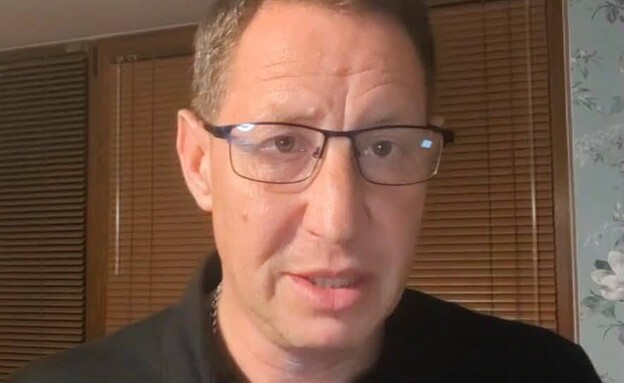
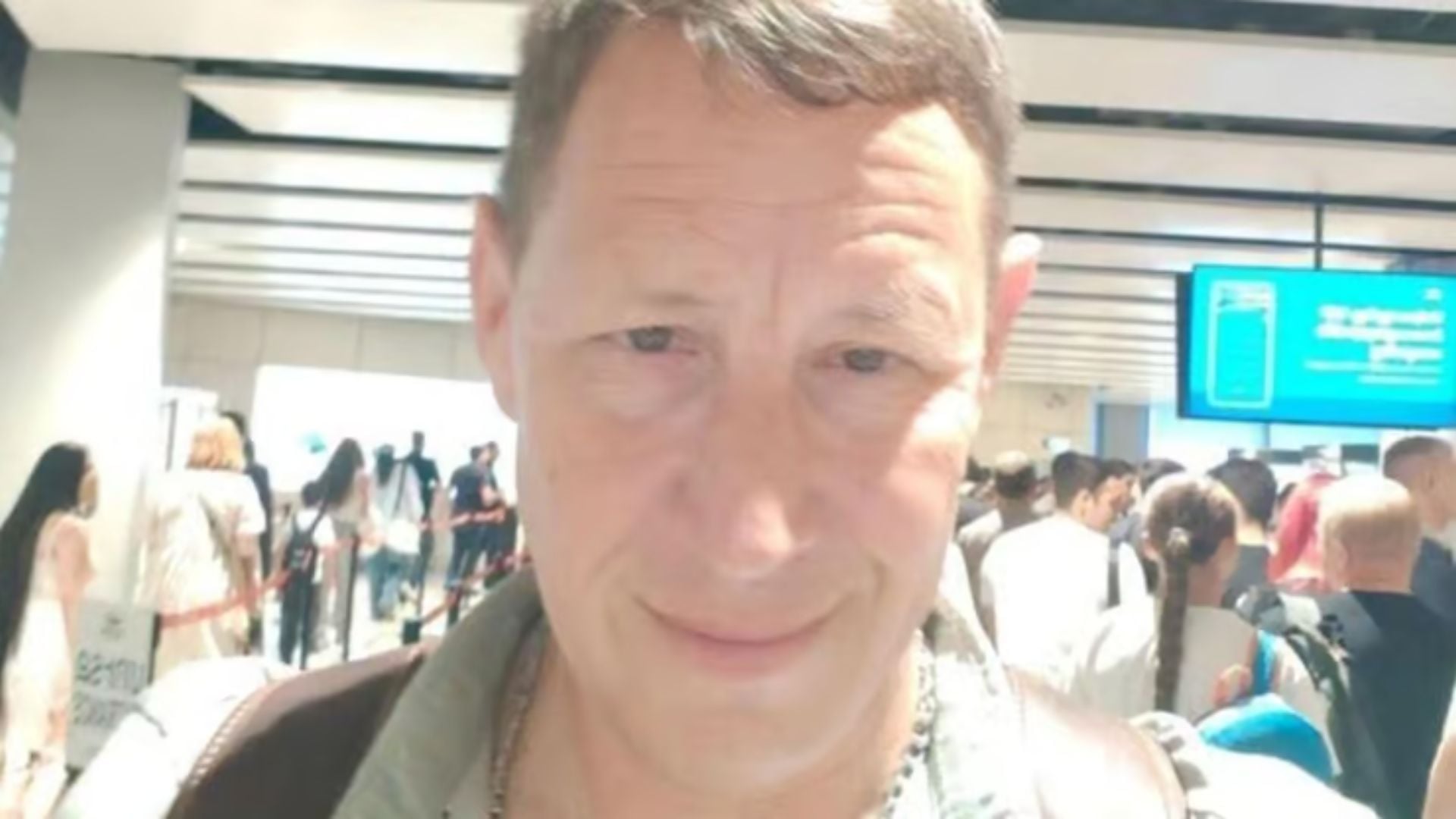
Russian media are reporting the mysterious disappearance of historian and writer Artyom Kirpichonok, who allegedly landed in Israel last week and has not been heard from since. According to reports in Russian media and on social networks in Moscow, Kirpichonok arrived in Israel on a flight from Yerevan, Armenia, but made no further contact with acquaintances after landing.
Kirpichonok was reportedly scheduled to attend an event in Israel to which he had been invited, but never arrived at his destination. Activists and acquaintances in Russia have since issued appeals for help locating him, asking anyone with information about his whereabouts to come forward.
Artyom Kirpichonok | Photo: Social media
Kirpichonok, 51, was born in St. Petersburg and immigrated to Israel in the 1990s, where he lived for approximately 15 years. During that period, he studied at the Hebrew University of Jerusalem and also served in the military. He later returned to live in Russia. In recent years, Kirpichonok became known in part for posts and publications expressing anti-Israel views and harsh criticism of Zionism.
Russian sources now claim that there has been no sign of him since his arrival in Israel and that efforts are underway to determine the circumstances surrounding his apparent disappearance. According to Russian Telegram channels, the Russian Embassy in Israel said it had contacted Israeli authorities regarding Kirpichonok’s alleged disappearance but had not yet received a response.
As of publication, Israeli officials have issued no public statement regarding the Russian claims, leaving both Kirpichonok’s whereabouts and what happened after his reported arrival at Ben Gurion Airport unclear.
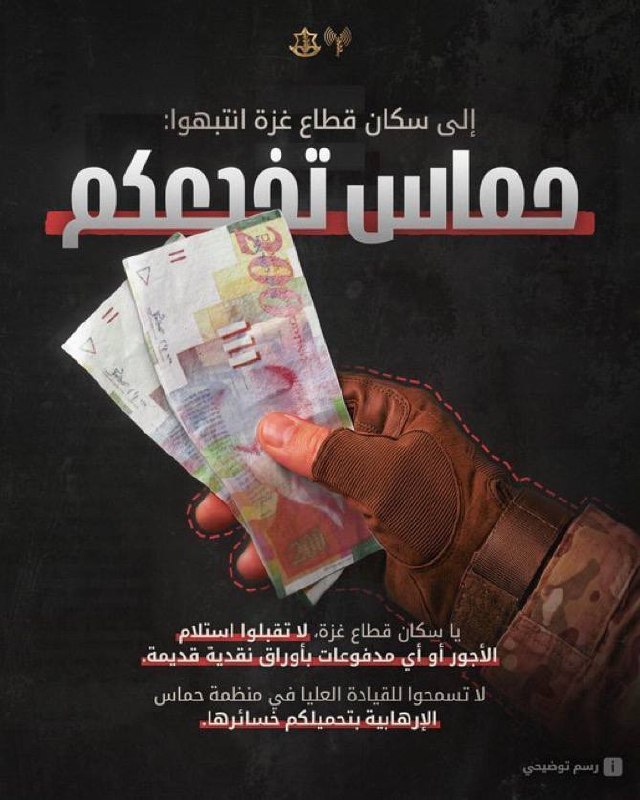
The IDF’s Arabic spokesman issued an unusual warning to Gaza residents on Monday: they’re caught in the middle of a large-scale economic scam run by Hamas. In an official statement to residents, the IDF said they’re being defrauded and it’s time to wake up. The military explained that the Bank of Israel, which issues the banknotes in their hands, recommends exchanging old bills for new ones. Residents were warned that anyone holding old bills is taking enormous financial risk—soon the notes will be worthless and civilians will be left with nothing, while Hamas exploits the crisis in the Strip to dump its invalid currency.
IDF Spokesperson’s Warning to Gaza Residents | Photo: IDF Spokesperson
The IDF’s direct appeal comes amid reports of severe deterioration in the value of worn and old Israeli shekel banknotes circulating in the Strip, and attempts by Hamas operatives to trade them on the black market or pass them to unsuspecting civilians in exchange for goods and services. Though Gaza is controlled by Hamas, the shekel is the primary and nearly exclusive currency used for daily commerce, salary payments, and purchasing basic goods in the Strip. Due to the closure and the war, the supply of fresh cash from the Bank of Israel to Gaza has been halted or dramatically limited, resulting in old, torn, and heavily worn banknotes circulating in the Strip whose quality has severely deteriorated.
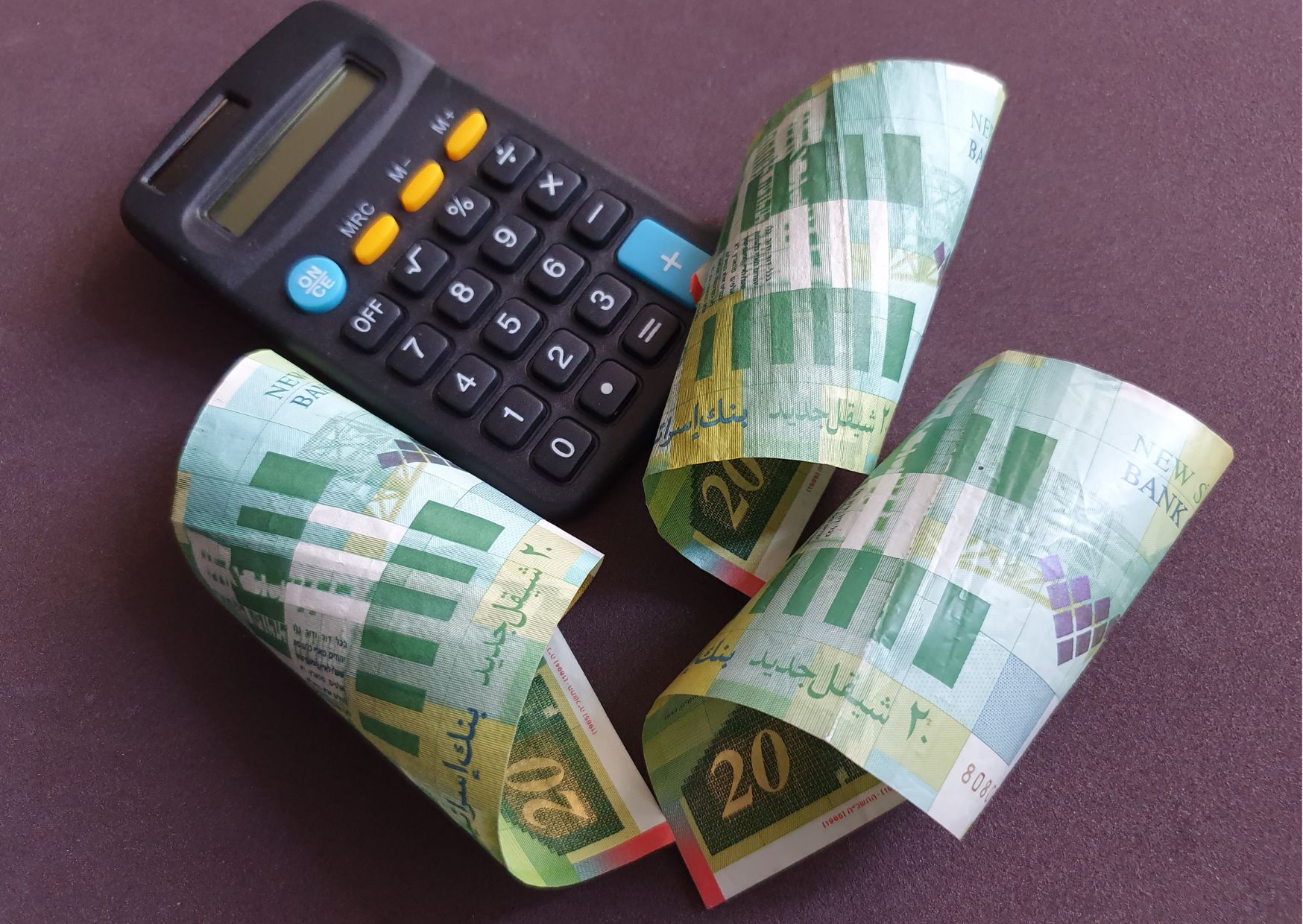
Old shekels | Photo: Canva
Meanwhile, the Bank of Israel periodically updates its banknote series and removes old or damaged bills from circulation. Holders who don’t exchange them at authorized banks within the defined timeframe face a situation where the bills lose their status as legal tender.
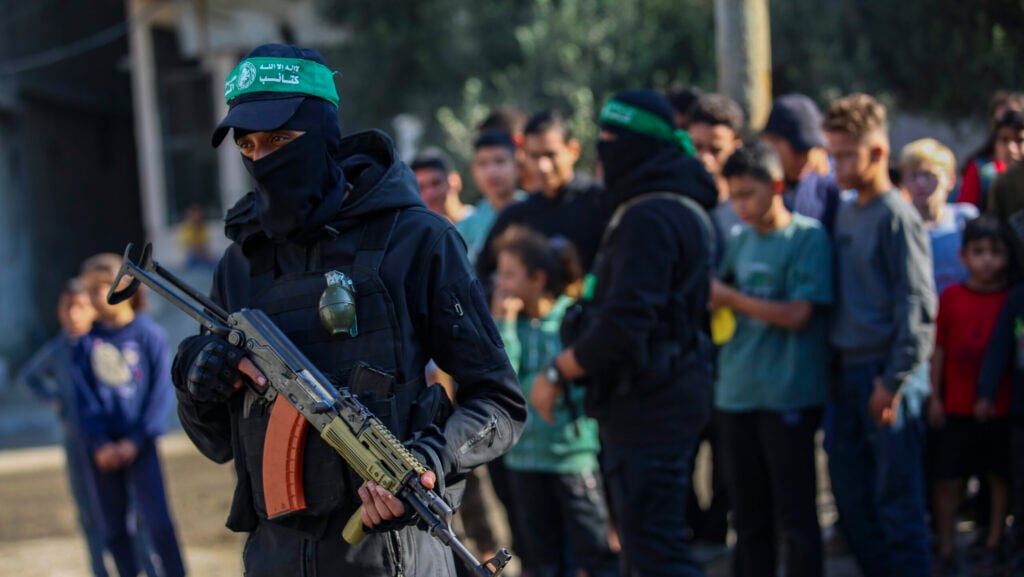
Hamas terrorists in the Gaza Strip | Photo: Flash 90
The IDF Arabic spokesman’s warning is designed to thwart Hamas attempts to use the invalid banknotes to finance its operations or shift economic losses onto the Gazan public. It’s part of a broader psychological and economic effort to increase public pressure on Hamas inside the Strip and prevent the organization from exploiting the humanitarian crisis for financial gain.
Beitar Jerusalem will face Austria Vienna on Thursday in the second leg of the third qualifying round of the UEFA Conference League. The Jerusalem club will play at Vienna’s Generali Arena, with approximately 1,000 Beitar supporters expected to accompany the team for the crucial away match, many of them staying across Vienna, Budapest and Bratislava.
A pro-‘Palestinian’ Instagram account is calling on activists to gather outside the stadium in Vienna to demonstrate against Israel and confront Beitar supporters. “Next Thursday, August 13, 2026, Beitar Jerusalem will face Austria Vienna in Vienna. The second leg of the third qualifying round of the UEFA Conference League will take place at the Generali Arena in Vienna,” the announcement read.
Photo: From Beitar Jerusalem’s Instagram page
The organization then directly targeted Beitar supporters: “UEFA is bringing a club to Vienna whose fans repeatedly attract attention due to brutal attacks—particularly against people perceived as Arab. We will not allow this to go unanswered. Support us in front of the Generali Arena with ‘Palestinian’ flags, signs and our voices, to show the world that Vienna stands with ‘Palestine’.”
The planned demonstration comes against the troubling backdrop of violence targeting Israeli soccer fans elsewhere in Europe. In November 2024, Maccabi Tel Aviv supporters traveled to Amsterdam for a Europa League match against Ajax. Following the game, Israeli fans were targeted in coordinated attacks in the streets of Amsterdam by pro-‘Palestinian’ assailants, who ambushed and assaulted Israelis at multiple locations.
Photo: From Beitar Jerusalem’s Instagram page
With around 1,000 Beitar supporters now preparing to arrive in Vienna and activists openly mobilizing outside the stadium, Thursday’s match will unfold under scrutiny both on and off the field, testing whether European authorities have learned the lessons of Amsterdam—or whether Israeli soccer fans will once again find themselves facing hostility far beyond the stadium.