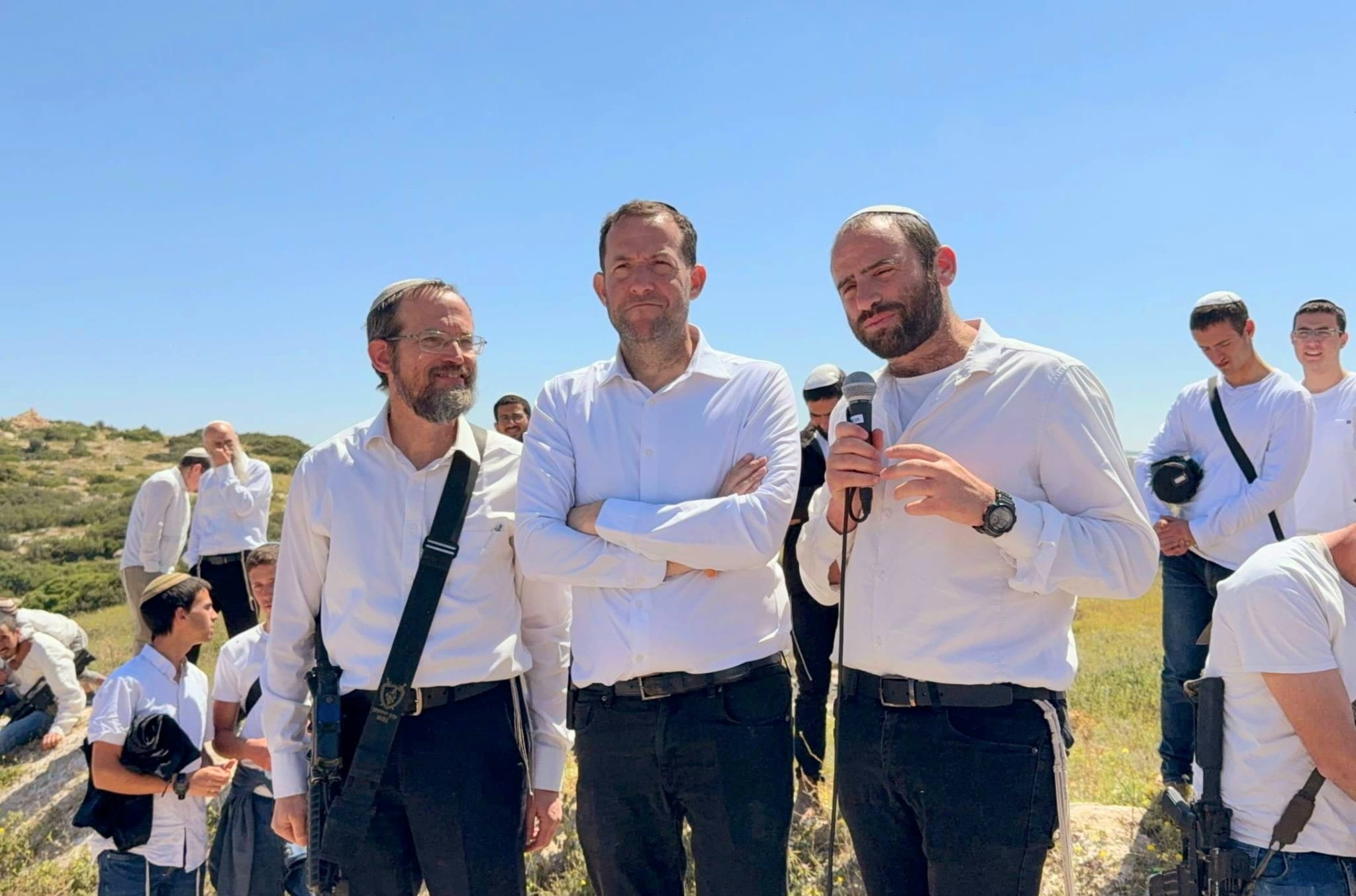
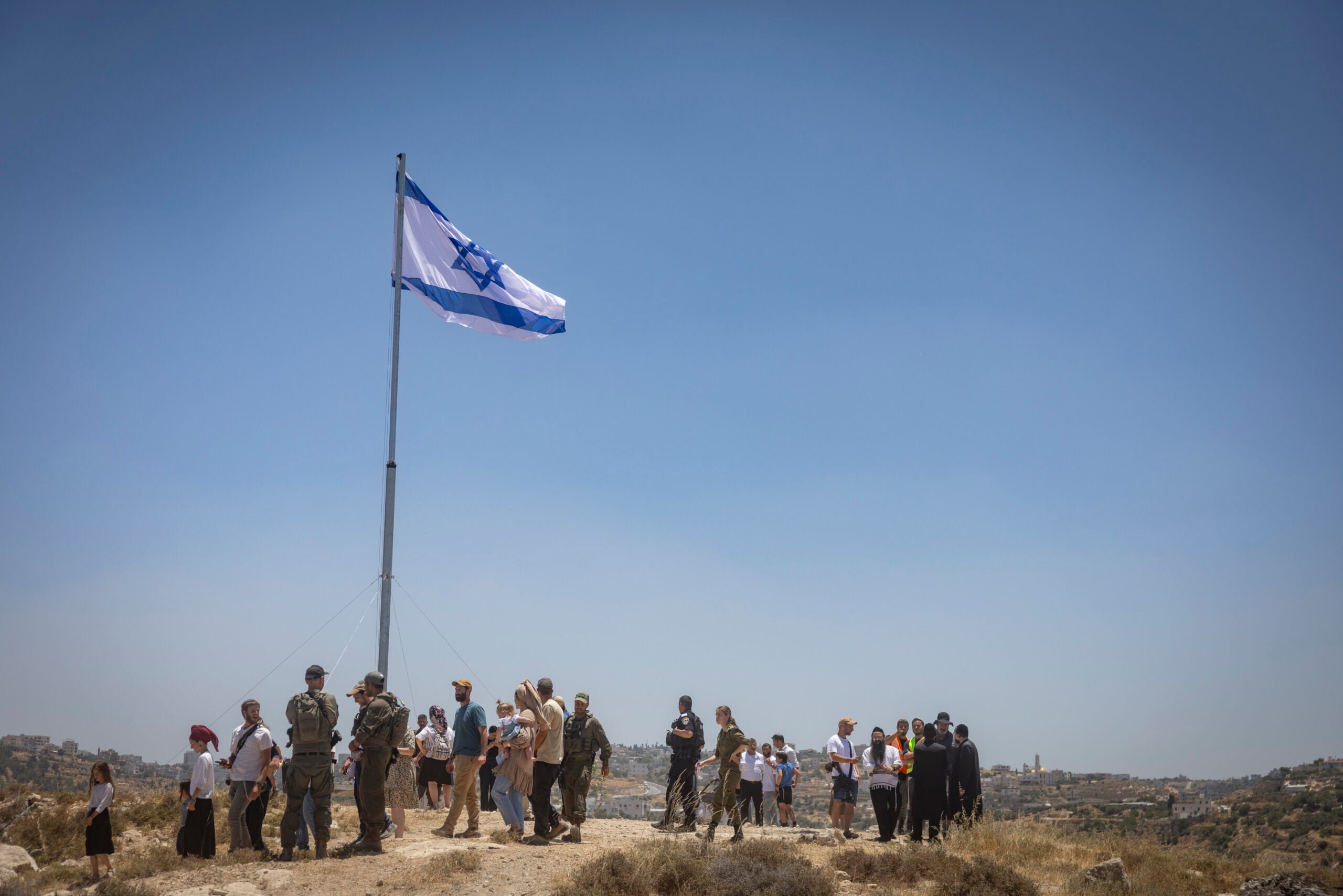
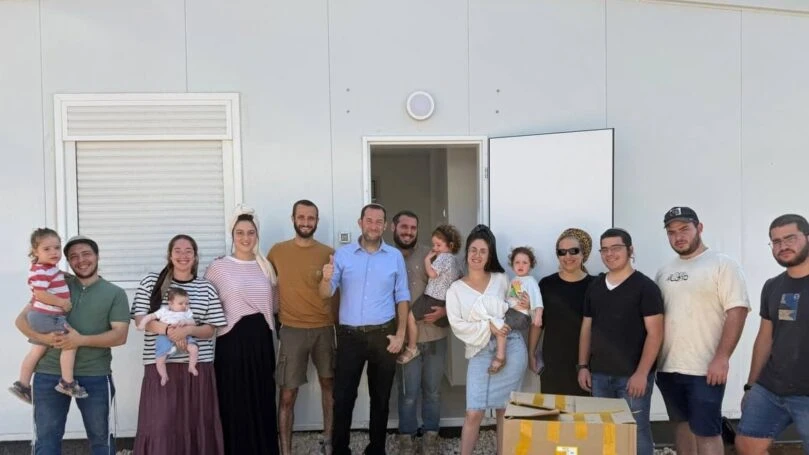
In a historic and emotional step toward renewing Jewish communities in northern Samaria, the town of Ganim will be reestablished this Thursday—21 years after it was uprooted and destroyed as part of the 2005 disengagement plan. The Samaria Regional Council announced Monday that a pioneering group of families will move onto the land this week, renewing the Jewish presence in the evacuated town. The reestablishment is being led by the Samaria Regional Council in close cooperation with the Amana movement and a division of the Ministry of Defense.
Photo: Chaim Goldberg, Flash 90
Alongside the families moving in, a new branch of the Bnei David yeshiva from Eli will be established in the renewed community. The new Torah institution will operate in the town and serve as a central and integral part of solidifying the settlement and strengthening the Jewish presence in northern Samaria. The families’ return to Ganim comes just days after the emotional groundbreaking of the new settlement Emek Dotan in the area, where 22 pioneering families have already arrived.
Emek Dotan is the fifth community the Samaria Regional Council has established in less than a year, part of a massive building surge in northern Samaria. The historic move comes after a stubborn 21-year battle to repeal the disengagement law and return to the evacuated communities. The fight was led by Samaria Regional Council head Yossi Dagan, together with the “Homesh First” activists, members of the Homesh yeshiva, and evacuees from Homesh and Sa-Nur who refused to give up on their homeland.
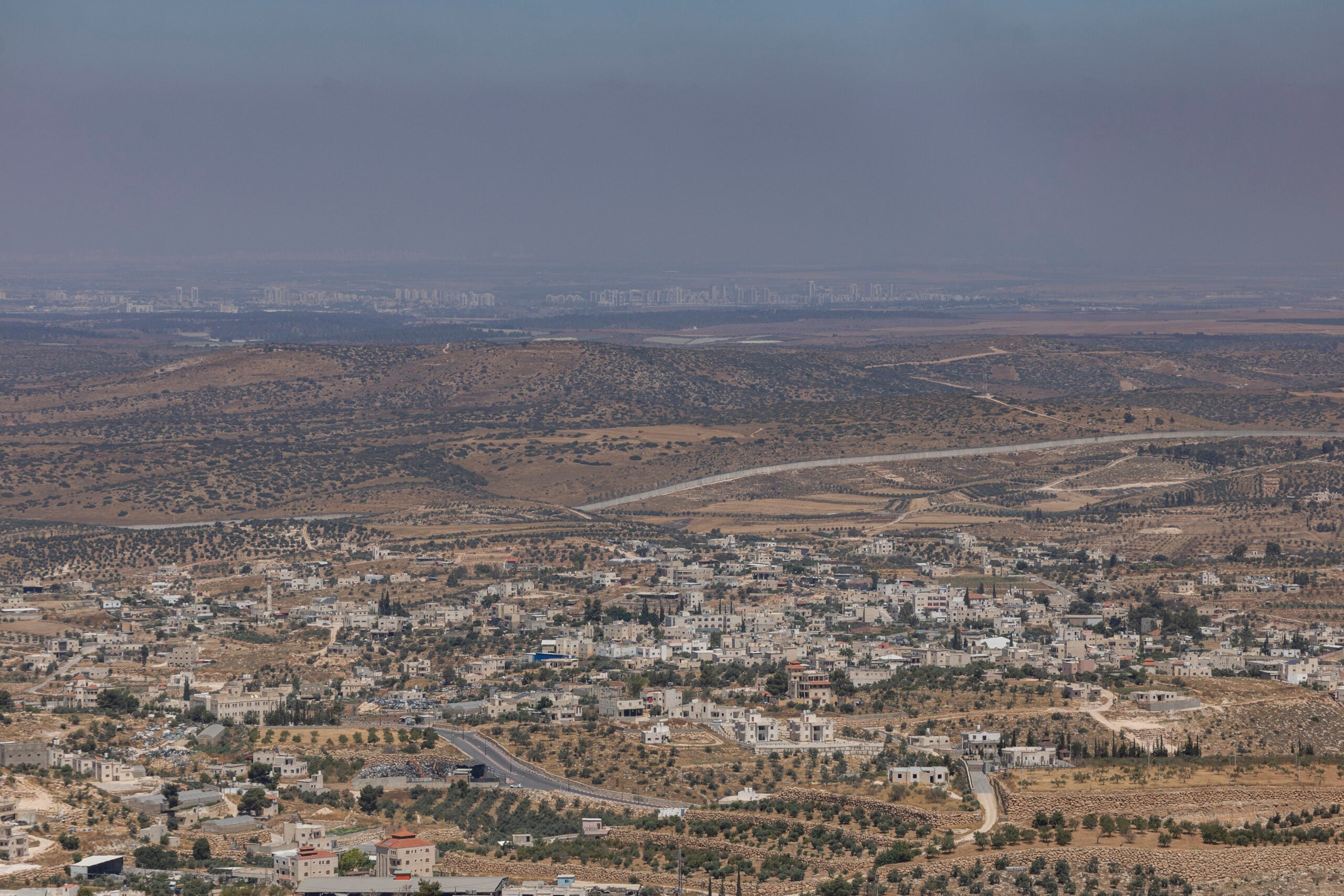
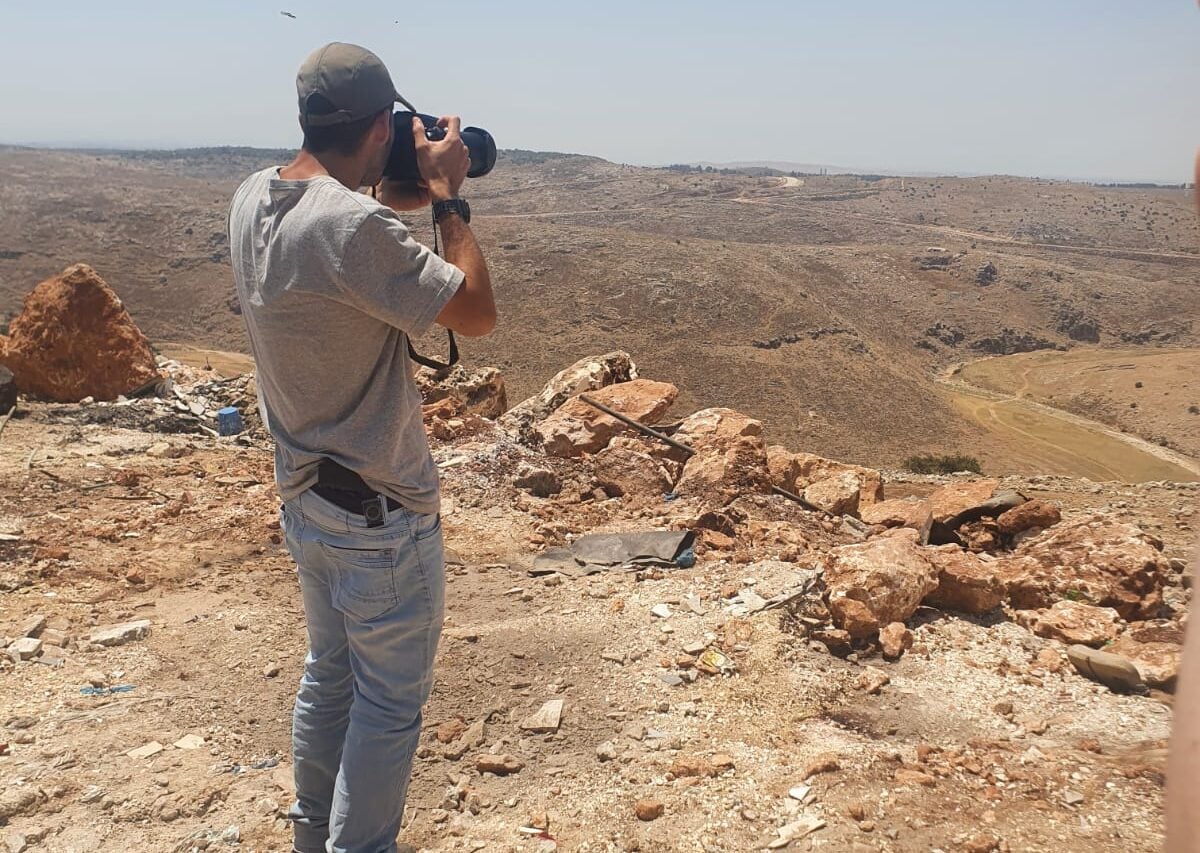
Judea and Samaria | Photo: Haim Golberg, Flash 90
The current move comes about a year after a decision by the Political-Security Cabinet led by Defense Minister Israel Katz and Finance Minister Bezalel Smotrich. It’s part of the expansive “Reconnection Plan” being led by the Samaria Council, which includes establishing 19 new communities in northern Samaria as part of the “Million in Samaria” initiative. Ganim was one of four communities in northern Samaria evacuated in the 2005 disengagement, along with Kadim, Homesh, and Sa-Nur.
Samaria Regional Council head Yossi Dagan blessed the move with emotion, saying it represents a historic correction of the injustice of the disengagement. Dagan emphasized that instead of uprooting, they are now building, and instead of withdrawal, they are bringing pioneering resettlement—noting that the people of Israel are coming home. Ganim nucleus chairman Alon Kotzki added that there is tremendous excitement and a strong desire to help among the large families who are leaving their comfort zones and enlisting in this important national mission.
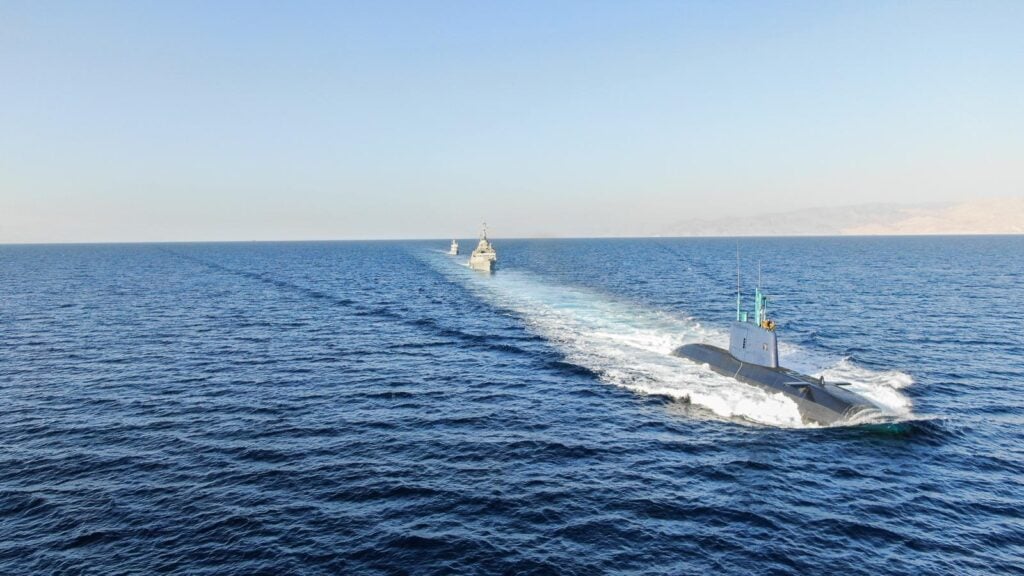
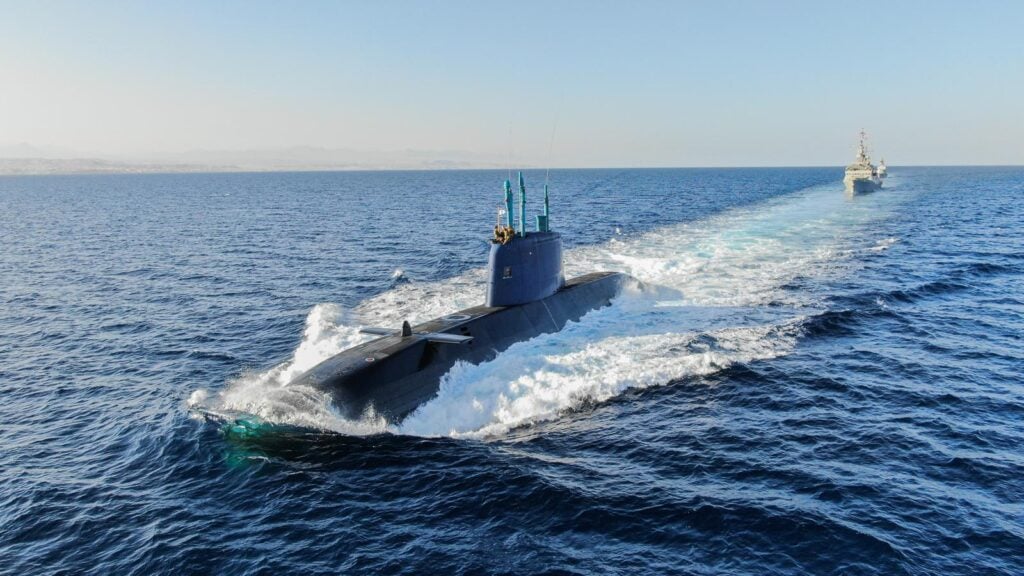
Israel has received its newest and most expensive submarine ever from Germany—the INS Drakon. The massive vessel, estimated to cost around $634 million, was built at specialized shipyards in Kiel, Germany, and was delivered to the Israeli Navy in late July 2026. The submarine is equipped with highly advanced systems that allow it to remain underwater in complete silence for extended periods, Fox News reported Sunday.
Navy submarine in a naval maneuver, archive | Photo: IDF Spokesperson
According to the report, because of its exceptional size—stretching over 70 meters in length—the submarine can carry large missiles with far longer ranges than before. What this means is that Israel can now launch missiles from the sub and reach any point in Iran directly from Mediterranean waters. This capability saves the submarine from having to navigate dangerous or overly long routes, like passing through the Suez Canal or circumnavigating the entire African continent.
The submarine’s central importance is creating a backup plan in case of a severe surprise attack. Security experts explain that if something hits IDF bases on land or at ports, a submarine deep underwater, hidden from enemy eyes, could respond immediately and deliver a devastating counterstrike.
Visual representation, photo: IDF Spokesperson
The submarine’s name, “Drakon,” was chosen to symbolize power, but also to commemorate the fighters of the submarine “Dakar” that sank in the past, by incorporating the letters D, K, and R into the name.
Israel’s submarine project is considered one of the country’s most important defense systems in recent decades. The submarines are manufactured in Germany for the IDF to gather secret intelligence and provide a security net against distant enemy states. The arrival of the Drakon completes a major phase in strengthening the Navy and prepares the IDF for the security challenges of the coming years.
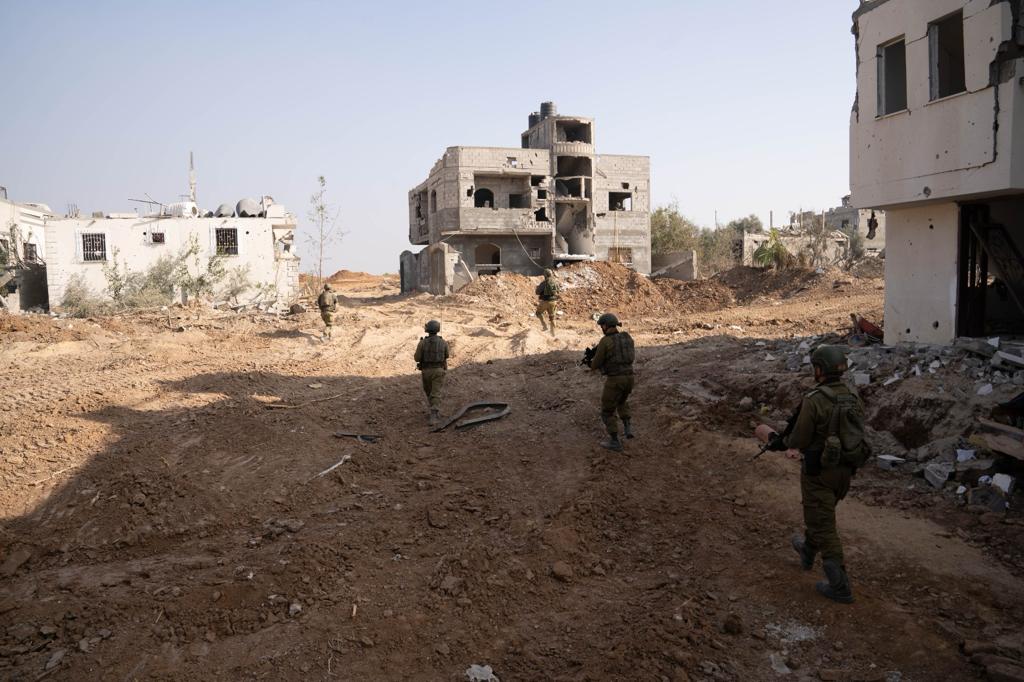
Despite Prime Minister Benjamin Netanyahu’s clear statement earlier Sunday at the cabinet meeting that Israel rejects the 15-point document and will not withdraw from Gaza before Hamas is fully disarmed, Channel 14 has learned that Israel’s security establishment is preparing to significantly reduce troop levels in the Gaza Strip.
Photo: IDF spokesperson
The scale of the planned drawdown is expected to be so extensive that it would nearly return force levels to what they were before the October 7 massacre. Currently, two divisions operate in Gaza: the organic Gaza Division and the 99th Reserve Division, which has rotated with the 252nd Division over the past year.
After several months in which the 99th Division has carried out its missions, it now appears that when its current service period ends, no other division will replace it. This move will result in the Gaza Division becoming the sole division operating in the Strip.
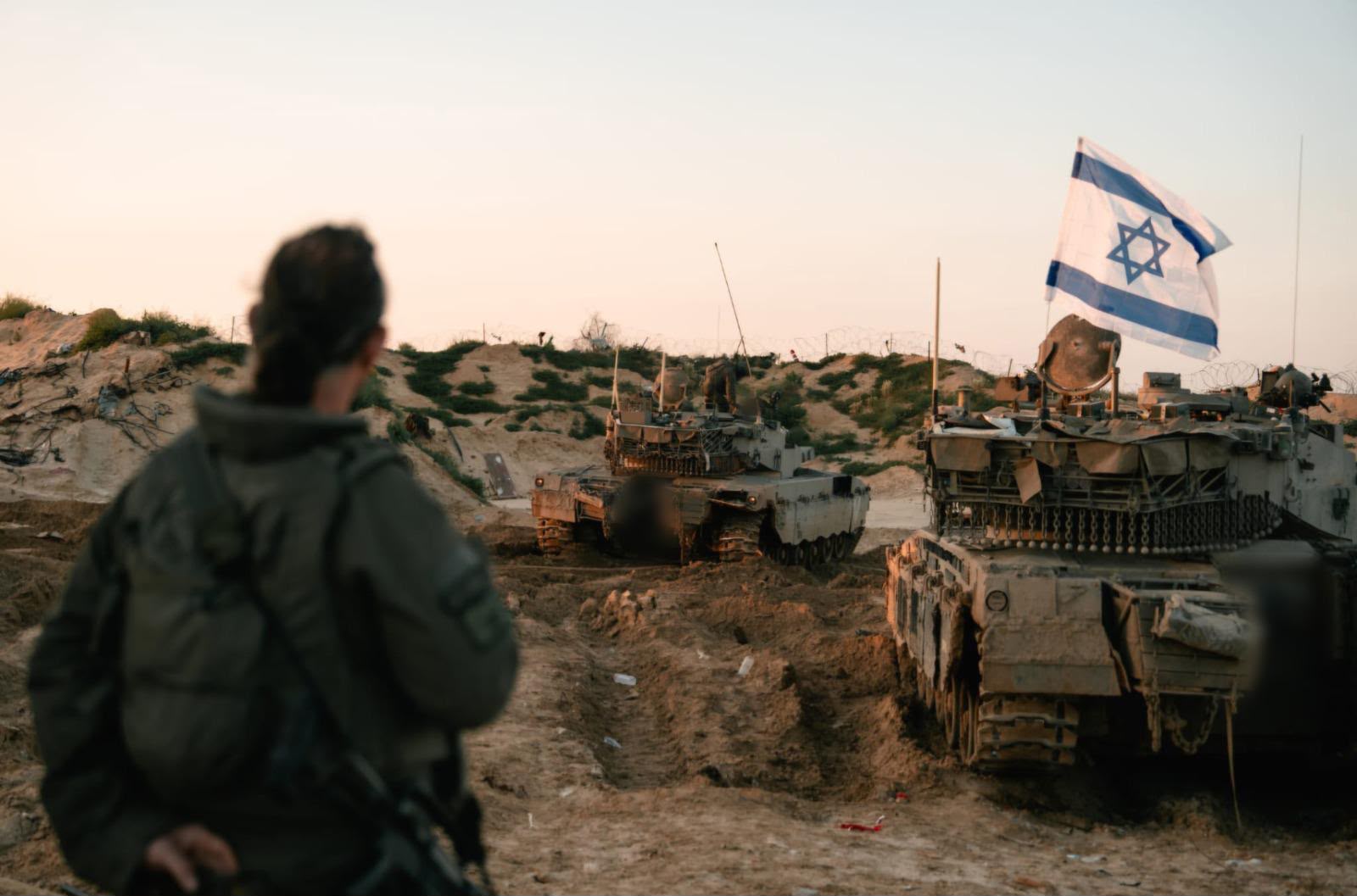
IDF forces in the Gaza Strip, archive | Photo: IDF spokesperson
The Gaza Division is a territorial division that includes two brigades—northern and southern—supplemented by additional battalions and brigades that reinforce it in the field. Still, it’s clear beyond any doubt that such a significant reduction in force levels points to a clear direction regarding the future of combat and control in Gaza, at least in the near term.
A brutal 24 hours left six Israelis dead, including four children and teenagers, in a string of tragedies at home and abroad. The deadly incidents unfolded within hours on Sunday and the night before, leaving families and entire communities in deep mourning during the summer break. The disasters included drownings, a fall from a cliff, a child left in a car, and a fatal crash in Judea and Samaria.
Car accident between 2 private vehicles on Highway 1 near the Citadel intersection | Photo: MDA
The latest tragedy struck Sunday on the road to Maale Adumim in the Judaean Mountains, where a vehicle carrying three men overturned. Two passengers, both around 45, were critically injured and pronounced dead at the scene by rescue teams, while a third man, around 40, was rushed to the hospital in serious condition. Earlier, a 17-year-old boy was killed after falling from a great height during an activity near Keshet Cave in the Western Galilee, where medics were forced to pronounce him dead on site.
Hours earlier, the search in the Jordan River ended with grim news when Elchanan Karni, a 12-year-old boy from Modiin Illit, was found dead after drowning following a fall from an inflatable raft. In another devastating incident Sunday in Lod, 5-year-old Betzalel David Giler died after being found unconscious inside a locked vehicle. The boy was rushed to Shamir-Assaf Harofeh Medical Center in critical condition, suffering from severe heatstroke, but doctors were unable to save him.
A boy who fell from a height of 100 meters while probably abseiling near Keshet Cave | Photo: MDA
The deadly 24 hours began Saturday night during a family vacation in Mexico. Shalom Arush, a 4-year-old boy from Jerusalem and grandson of Rabbi Shalom Arush, drowned in a hotel pool near the town of San José del Cabo. Members of ZAKA’s international unit worked quickly with local Mexican authorities to prevent an autopsy and completed the necessary procedures to bring the boy back to Israel for burial, as the entire community rallies to support the grieving family.
Disturbing footage emerged from the United States over the weekend showing thousands of Muslim residents in Dearborn, Michigan, marching through the streets dressed in radical Islamic attire—calling for the implementation of Sharia law in their city.
The residents took to the streets dressed in black, some wearing keffiyehs, chanting verses from the Quran. Several women wore niqabs, garments designed to cover all parts of a woman’s body, and children, girls, and infants were also seen in this attire. The crowd also displayed flags of Lebanon, the terror group PLO, and other Arab states. According to social media reports, the crowd also chanted in support of Hamas and Hezbollah.
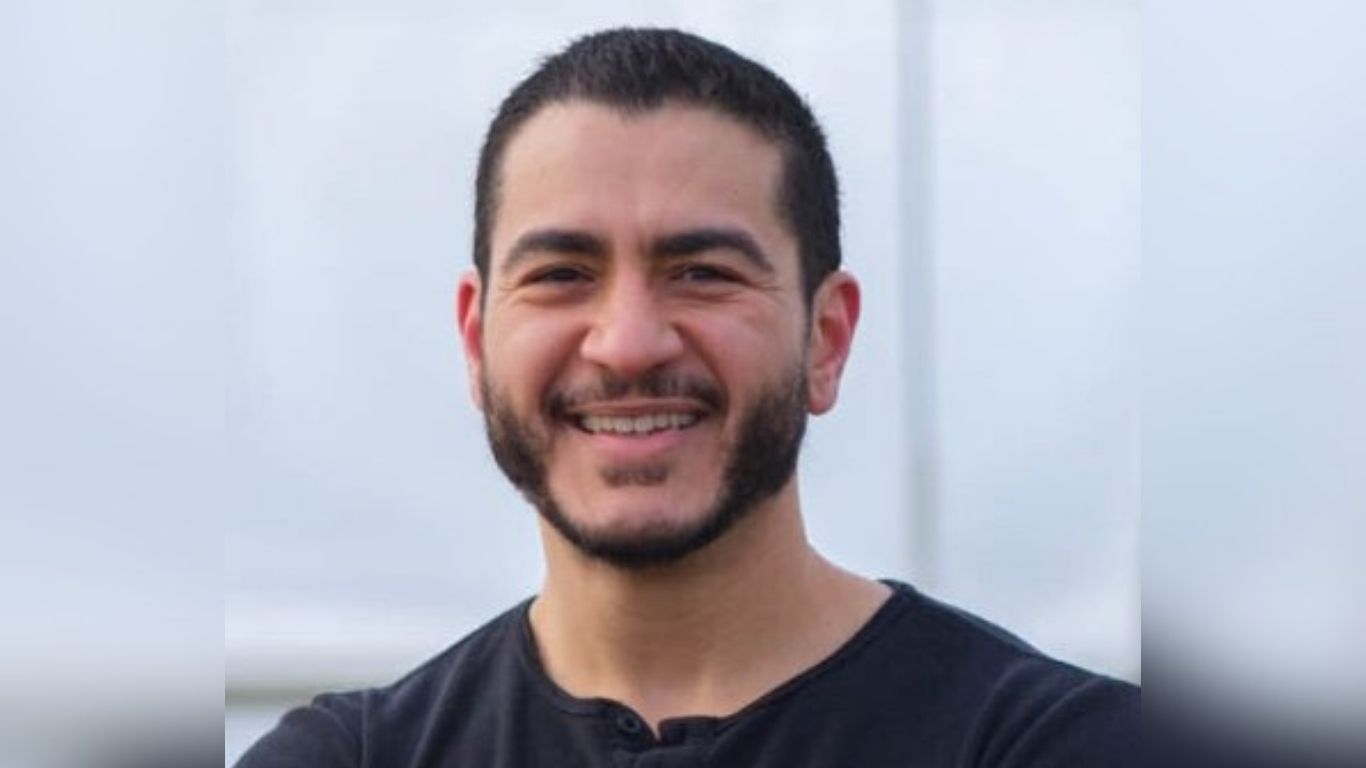
The demonstrations weren’t entirely unexpected. Senate primary candidate Abdul El-Sayed won Michigan’s Democratic primary for Senate. El-Sayed has repeatedly accused Israel of “apartheid” and “genocide,” called for ending American aid to Israel, and opposed defining it as a Jewish state.
Photo: From the X account of Dr. Abdul El-Sayed
Political analysts in the United States point to the large Arab-American community living in Michigan—which harbors deep hostility toward Israel—as the main factor behind El-Sayed’s victory.
The U.S. President responded to his election: “Good news for the Republican Party. El-Sayed, the communist loser who hates Jews and Israel, is the expected winner in his race with the socialist. As usual, the polls were way off on this one. They didn’t expect her to do almost as well as she did. Now, the Democrats’ crazy policies will only get worse!”
American social media users wrote: “America is converting to Islam faster than Europe.”
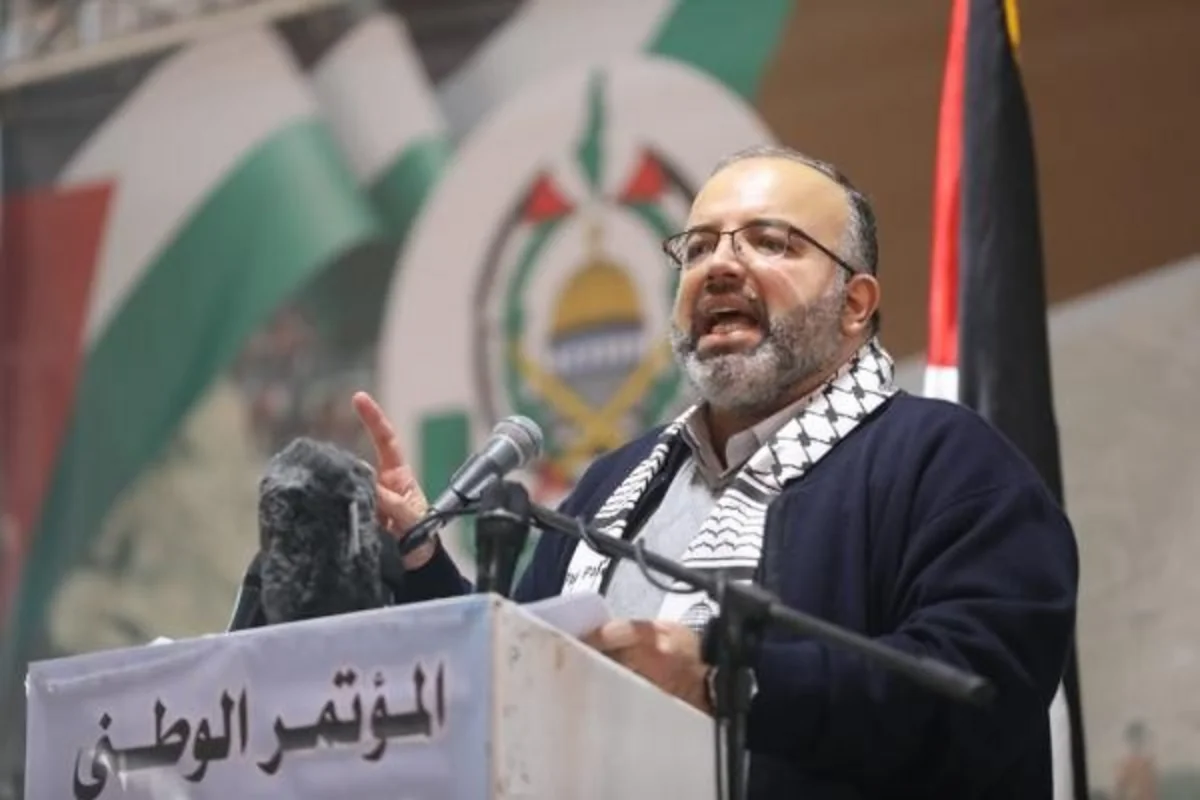
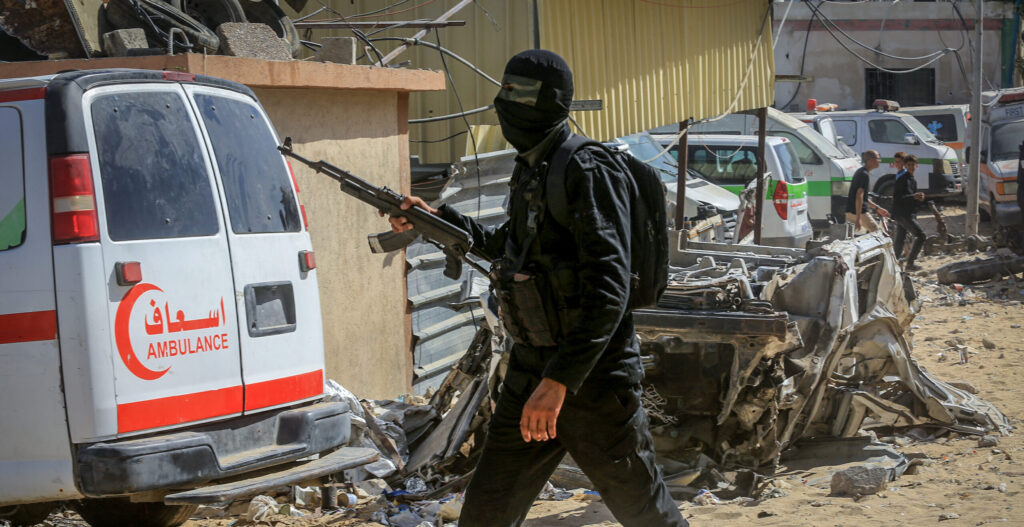
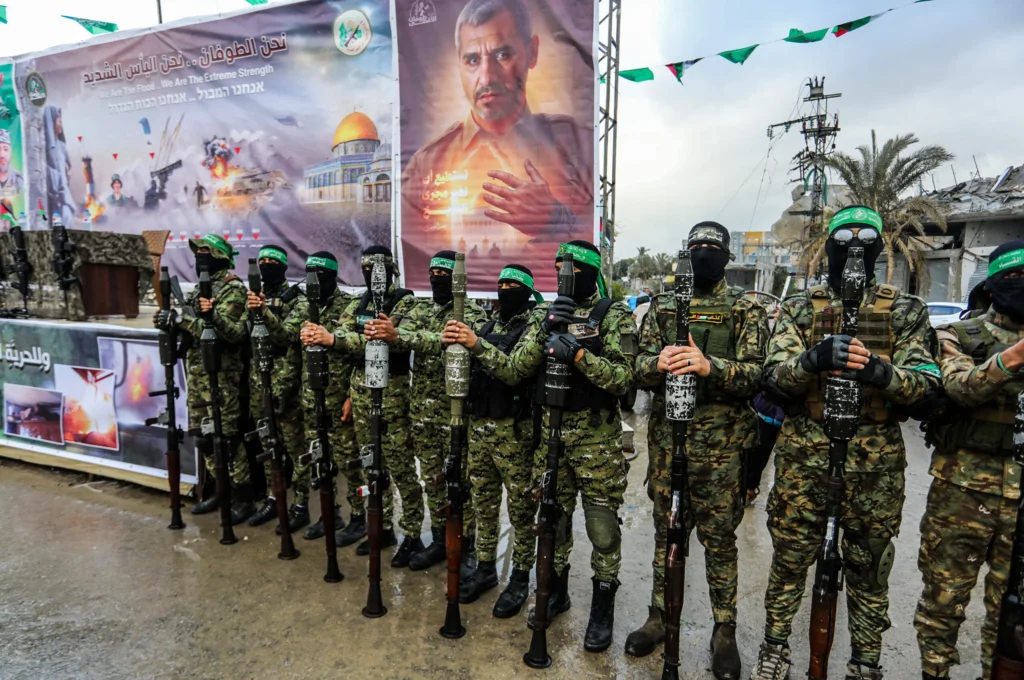
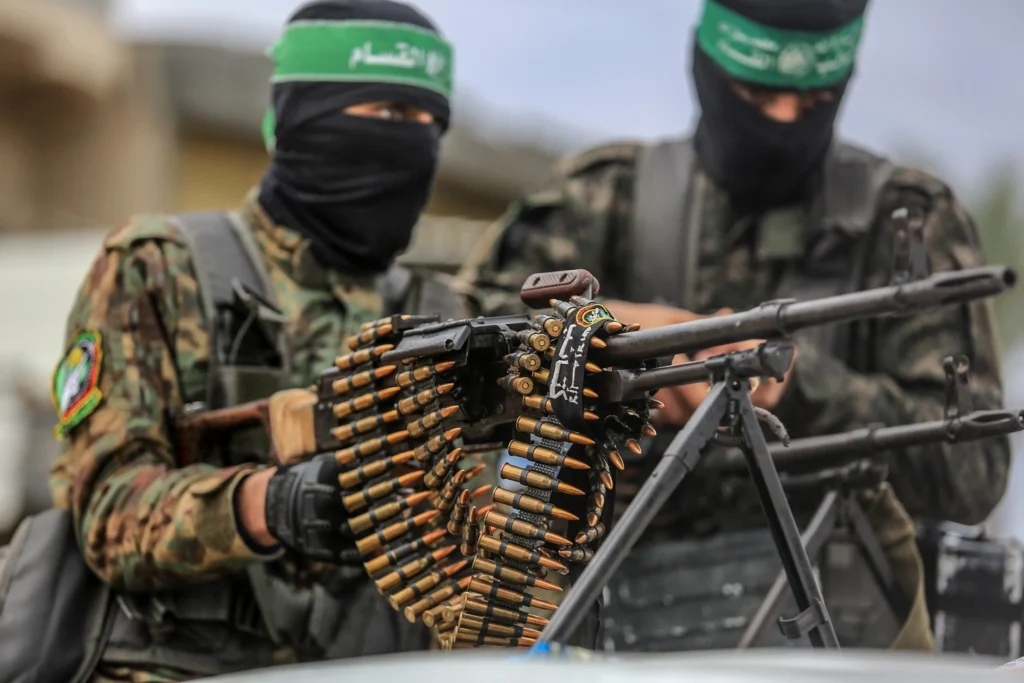
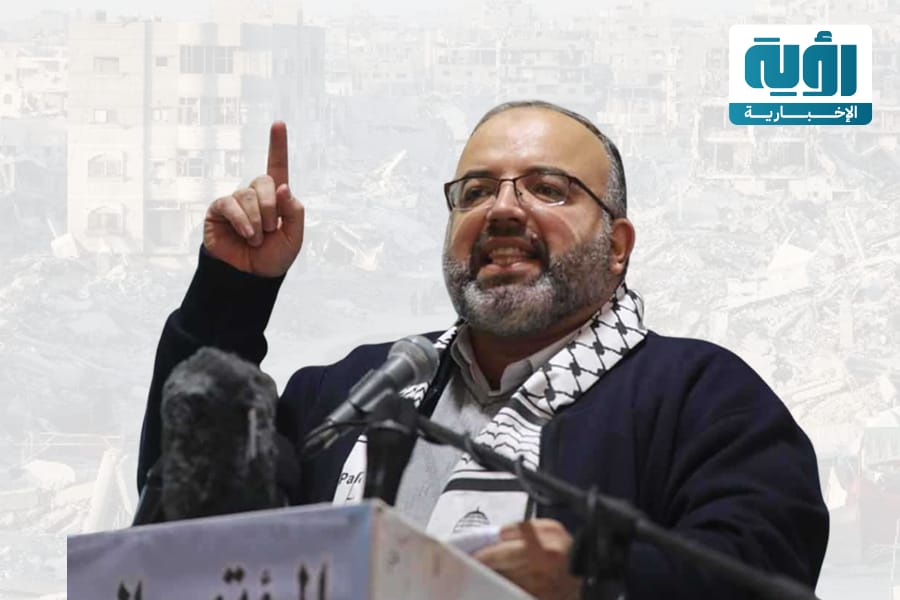
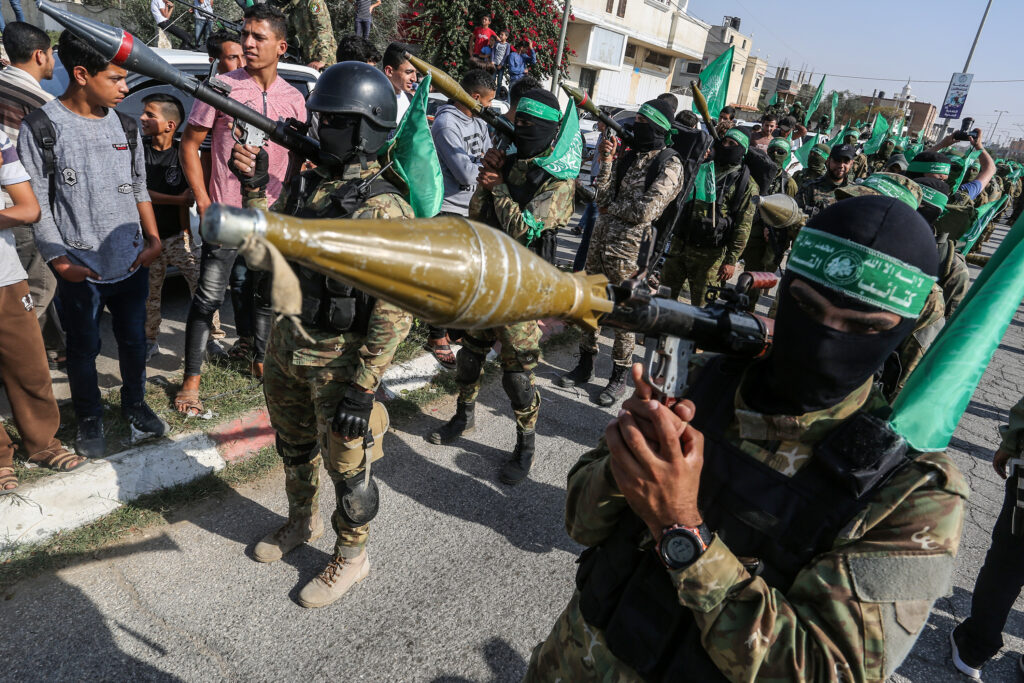
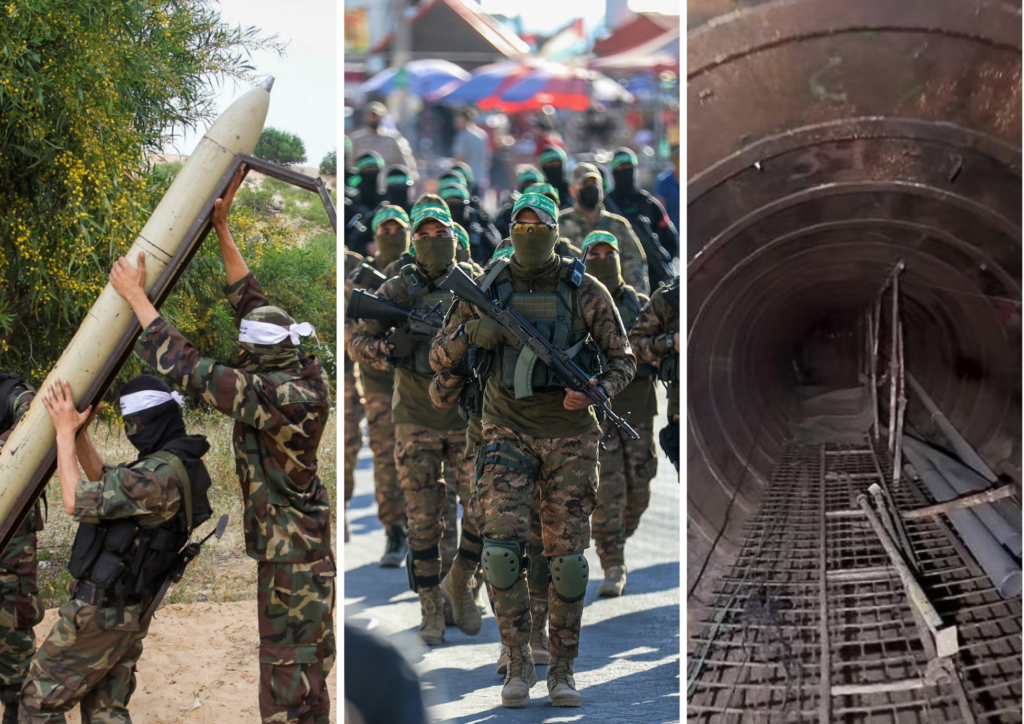
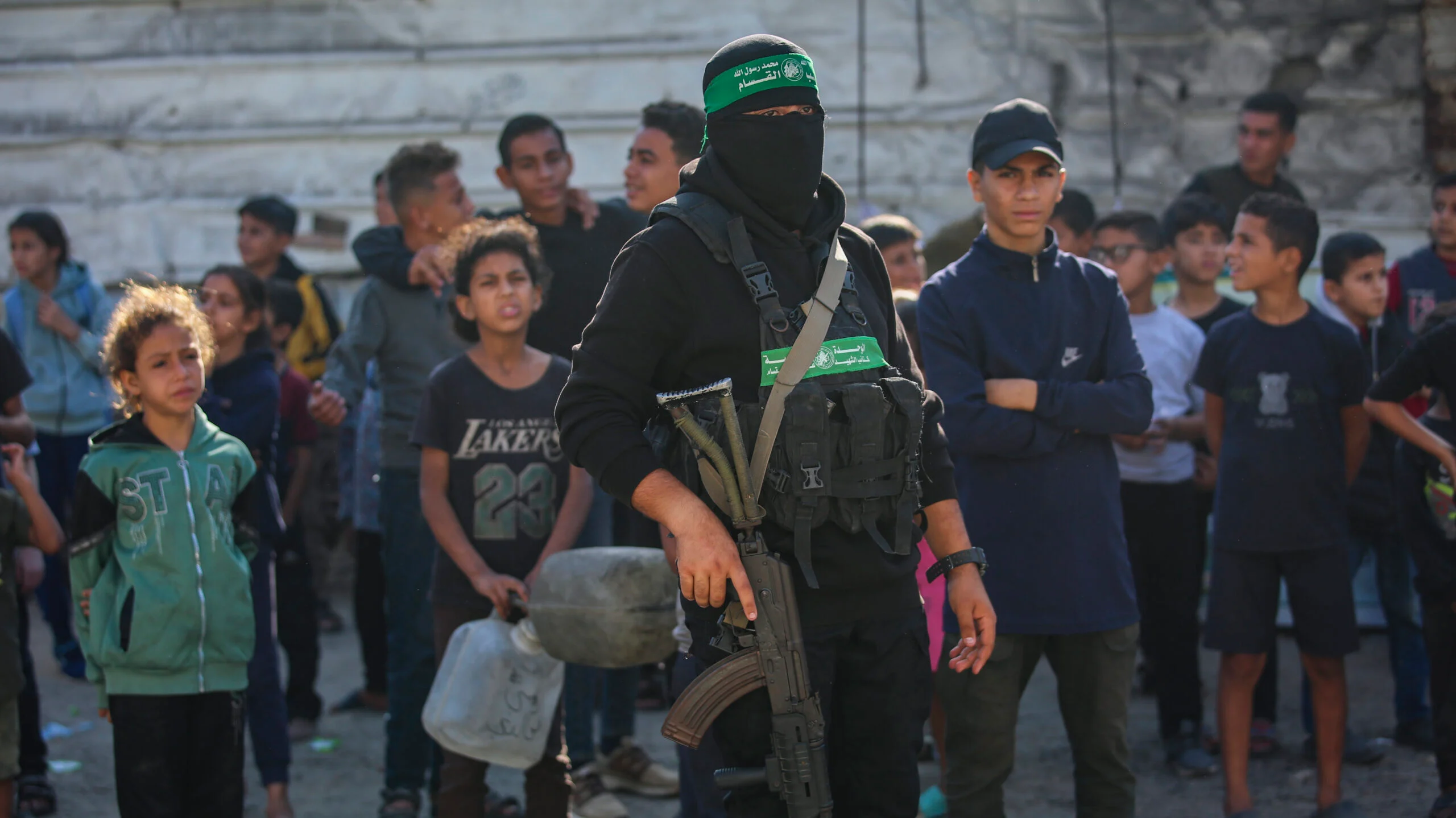
Ali al-Amoudi was recently appointed as the terrorist leader of Hamas in the Gaza Strip following the terror group’s internal elections. He assumes this position at a time when Hamas is facing intense international diplomatic pressure demanding the dismantlement of its military capabilities—from the Kalashnikov rifle, the traditional symbol of armed resistance, to the complete dismantling of the organization’s military production infrastructure throughout the Gaza Strip.
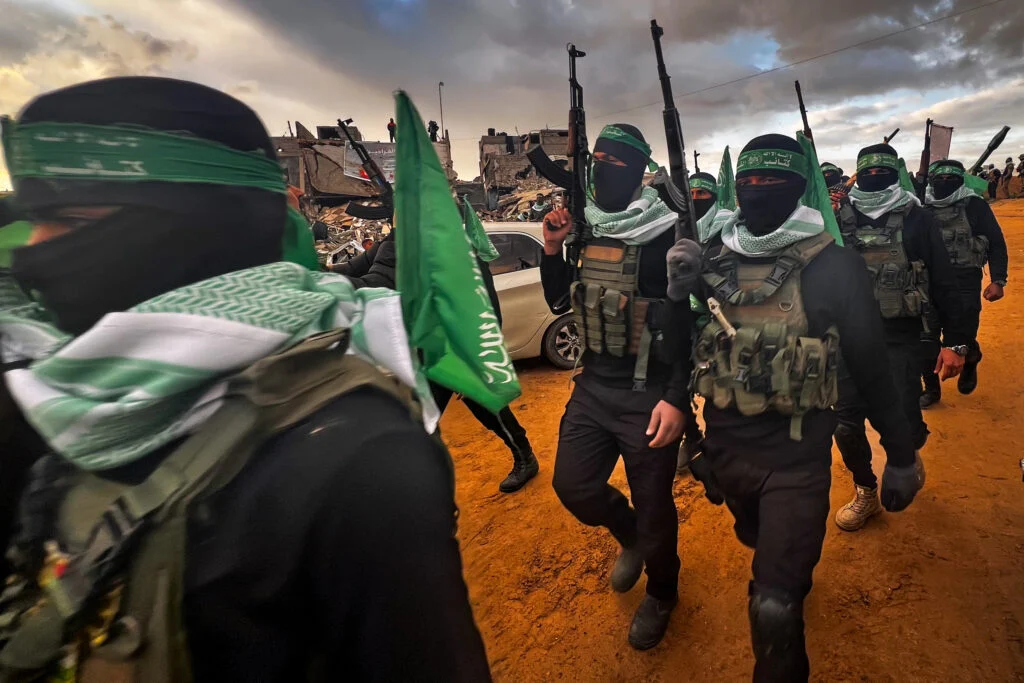
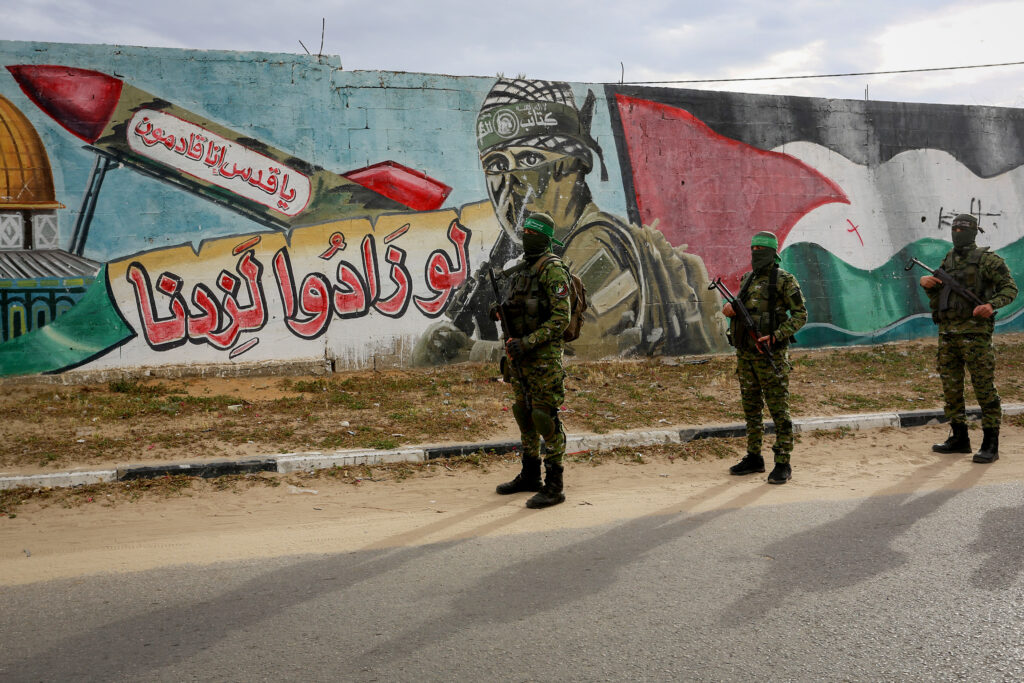
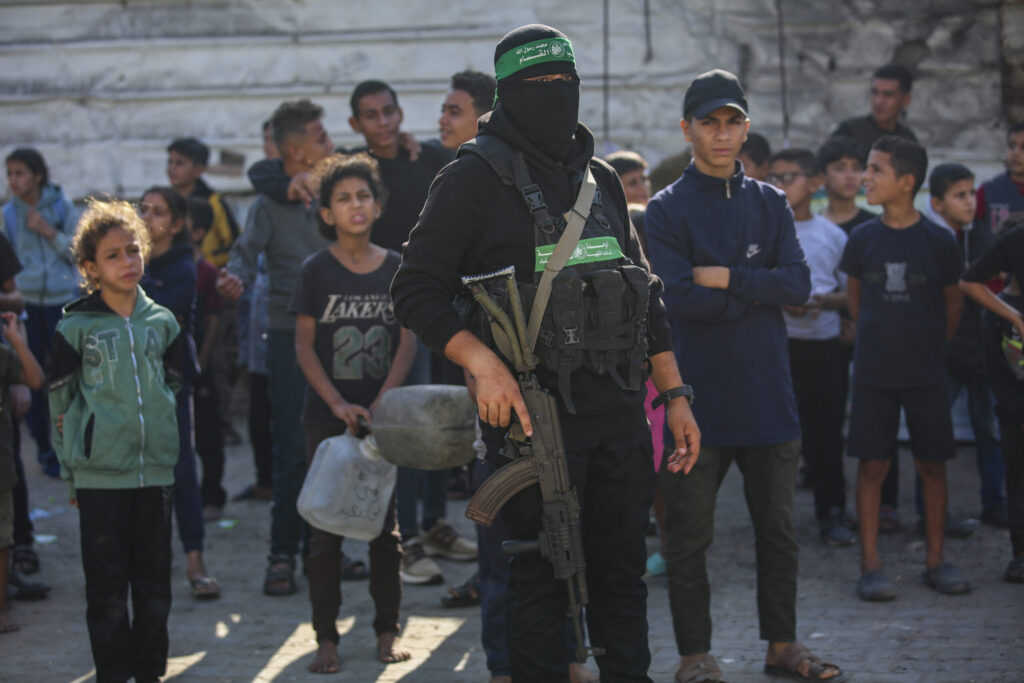
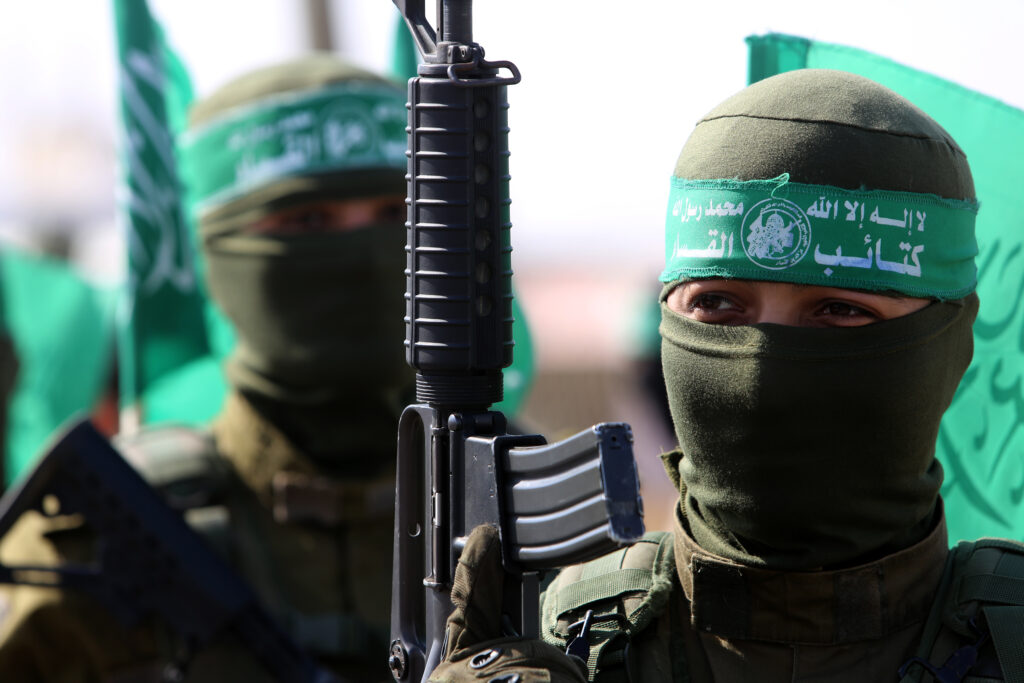
Hamas terrorists | Photo: Said Muhammad, Flash 90
Any reasonable observer understands that Hamas has no intention or desire to voluntarily surrender its weapons. Such a move would effectively bury the historical source of the terror group’s power: the military framework identified with the Izz ad-Din al-Qassam Brigades, Hamas’ armed wing named after the prominent jihadist figure.
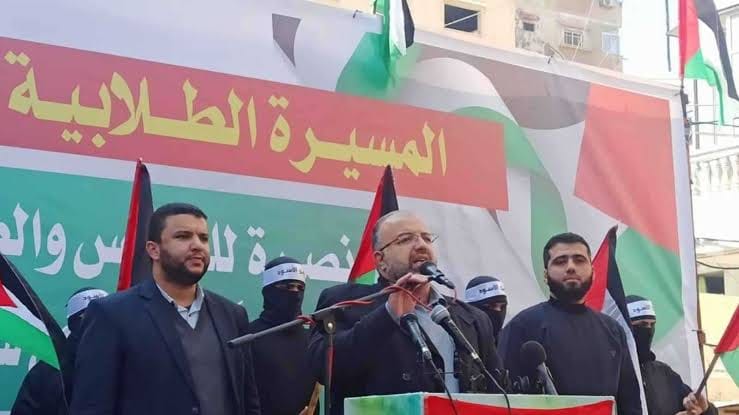
Photo: Jordanian Roya TV
For Hamas, weapons represent far more than a military tool. They constitute a central source of the terror organization’s honor, prestige, and identity as a jihadist organization determined to pursue an uncompromising struggle against those it defines as infidels ruling over sacred Islamic lands.
This worldview was clearly reflected in the inaugural speech delivered by Hamas Political Bureau chief Khalil al-Hayya before the cameras of the Qatari media network Al Jazeera: “We will continue on the same path of jihad toward victory in Haifa, Jaffa, Safed, and the Negev—pure Arab land.”
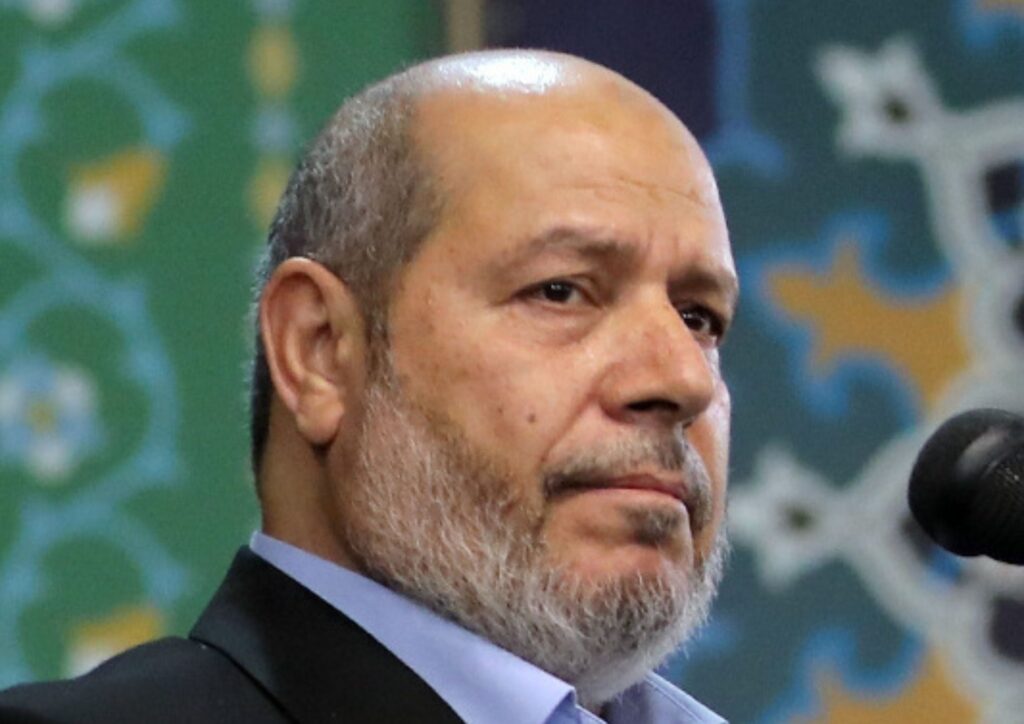
Khalil Al Haya | Photo: Arab Networks
The Test Facing Hamas’ New Leader
At this moment, many eyes within the Gaza Strip—and across the broader so-called ‘Axis of Resistance’ —are focused on Hamas’ new leader in Gaza, Ali al-Amoudi, particularly regarding the question of whether Hamas will be forced to dismantle its military capabilities.
Photo: Flash90
The central question is whether al-Amoudi will succeed in maneuvering under the heavy international political pressure exerted by the Board of Peace, which is pushing Hamas in Gaza into an increasingly difficult position while demanding that the terrorists relinquish their weapons.
At the same time, another fundamental question remains: will al-Amoudi succeed in rebuilding, from the ruins of war, an exhausted and weakened organization that has suffered a devastating blow since the outbreak of the war in October 2023?
Photo by: Flash90
And if he does succeed in rebuilding Hamas, will he restore the terror structure to its traditional form in the Gaza Strip—as a terrorist army that it became following Ahmed al-Jaabari’s takeover in the summer of 2007—or will he be forced to introduce substantial changes in an attempt to construct a different model suited to the new reality facing Hamas?
The Bureaucrat Tasked with Rebuilding Hamas
Much of al-Amoudi’s influence stems from his identity as a bureaucrat and an organizational figure—someone whose strength lies in administration, structure, and rebuilding institutions.
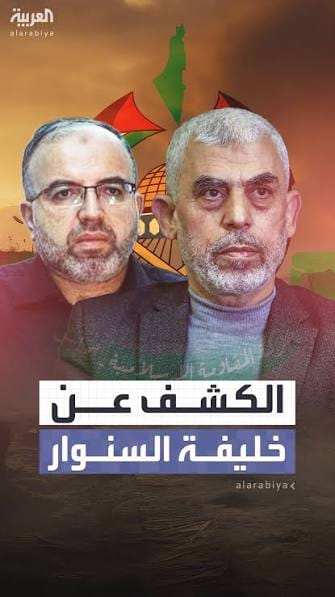
Yahya Sinwar’s successor | Photo: Al-Arabia
On this matter, Dr. Harel Chorev, a senior researcher of Arab affairs at the Moshe Dayan Center for Middle Eastern and African Studies at Tel Aviv University, stated in an interview with Channel 14: “Al-Amoudi is a bureaucrat who likely possesses a greater ability than others to rebuild a destroyed organization. He can carry out new appointments within Hamas’ military wing, the Izz ad-Din al-Qassam Brigades, creating alternatives to those who were killed or wounded during the war. His primary mission is to build, almost from nothing, a new infrastructure for an organization that may need to undergo fundamental changes rather than simply return to what it was in the past, but instead build something different that is better suited to the current military and political reality Hamas faces.”
The Mastermind of Hamas’ Media and Psychological Warfare
Another important aspect of al-Amoudi’s profile is his role as a strategist in the fields of media and psychological warfare. Dr. Harel Chorev further adds: “He is highly capable in the field of psychological and media operations, through which he has done much to undermine the legitimacy of the State of Israel in the West. In this regard, he was second only to the jihadist propagandist Abu Obeida.”
The terrorist organization Hamas | Photo: Shutterstock
From Possible Successor to Hamas Leader
Ali al-Amoudi’s name first emerged publicly in November 2025, when the Saudi newspaper Asharq Al-Awsat identified him as a possible successor to Yahya Sinwar as the next leader of Hamas in the Gaza Strip. At the same time, however, unofficial Israeli assessments, alongside Hamas researchers and Arab affairs journalists, identified another realistic candidate: Tawfiq Abu Naim.
The eliminated Hamas terrorist Tawfiq Abu Naim | Photo: Arab networks
Abu Naim had maintained a long-standing relationship with Yahya Sinwar dating back to the 1980s, when the two operated together within Hamas’ notorious internal security apparatus, al-Majd. The two were later imprisoned together in Ashkelon Prison, from which they attempted to escape in the early 1990s. The fact that both names emerged as realistic possibilities for Hamas’ leadership succession was not coincidental. Both men belonged to Sinwar’s broader circle for many years.
Photo: Arm News
Nevertheless, neither of them was actually part of Hamas’ innermost decision-making circle. Their prominence was largely the result of their survival following the extensive campaign of targeted killings against senior Hamas figures in the Gaza Strip—a campaign that formed part of a broader strategy of leadership decapitation and one of several strategic tools employed in the war against terrorist organizations affiliated with the Iranian-backed Sunni-Shiite Axis of Resistance.
The Leadership Circle That Shaped Hamas
In this context, joint research conducted by Dr. Harel Chorev and former senior Shin Bet official Adi Rotem sheds light on Hamas’ internal leadership structure: “The quartet consisting of Yahya Sinwar, Mohammed Deif, Marwan Issa, and Rawhi Mushtaha constituted for years the primary decision-making nucleus within the movement.”
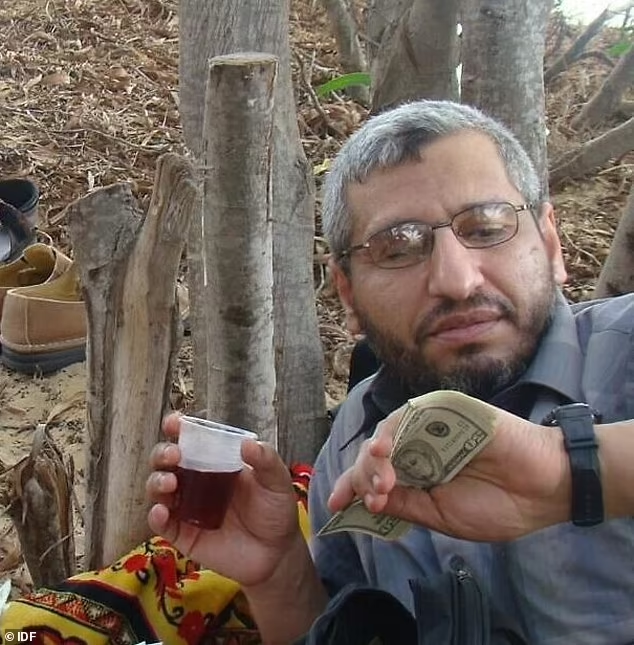
Dead Hamas arch-terrorist Mohammed Deif | photo: Arab networks
This remained the reality until the morning of the October 7 massacre, and arguably continued to shape Hamas’ leadership structure afterward, until these figures were eliminated one after another during the war with Israel.
Dr. Harel Chorev further explains regarding Ali al-Amoudi: “He was one of Yahya Sinwar’s closest trusted associates within a highly compartmentalized environment. They sat together in prison, and the two were released together as part of the Shalit Deal. From Sinwar’s perspective, this was extremely significant.”
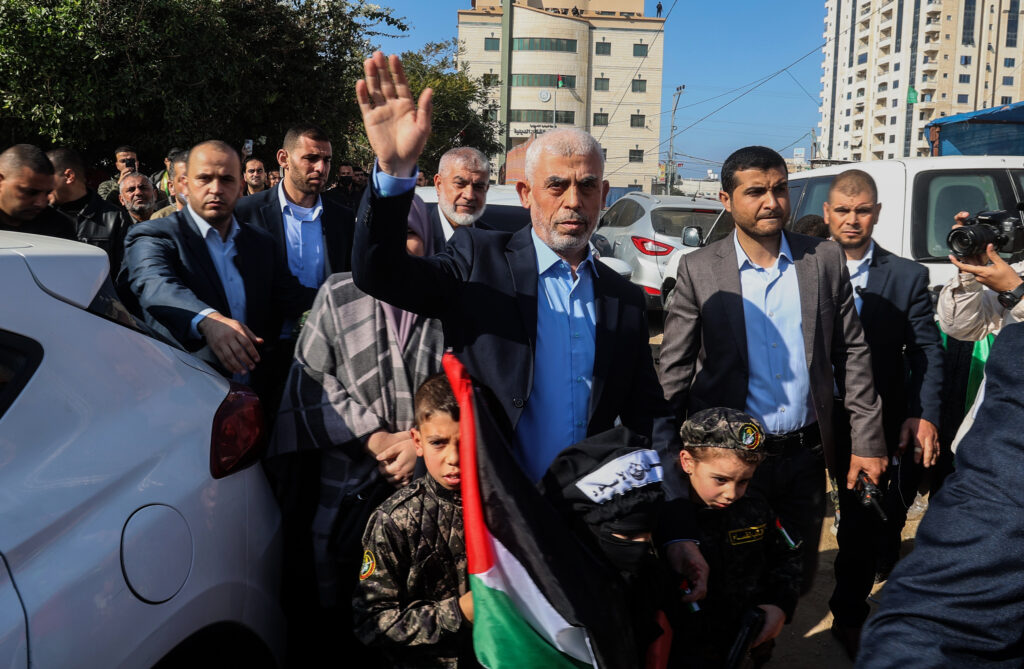
Dead Hamas arch-terrorist Yahya Sinwar | photo: Atia Mohammed/Flash90
A Prison Relationship That Shaped Hamas’ Future
Ali al-Amoudi first arrived in the Gaza Strip following his release from Israeli prison in the autumn of 2011, as part of the prisoner exchange agreement known as the Shalit Deal, which secured the release of Israeli soldier Gilad Shalit for 1,027 terrorists. He had served approximately 17 years in prison for his membership in an Izz ad-Din al-Qassam Brigades terrorist cell that operated in the Ramallah area and carried out the murder of Shin Bet coordinator Noam Cohen, of blessed memory, in February 1994 in the town of Beitunia.
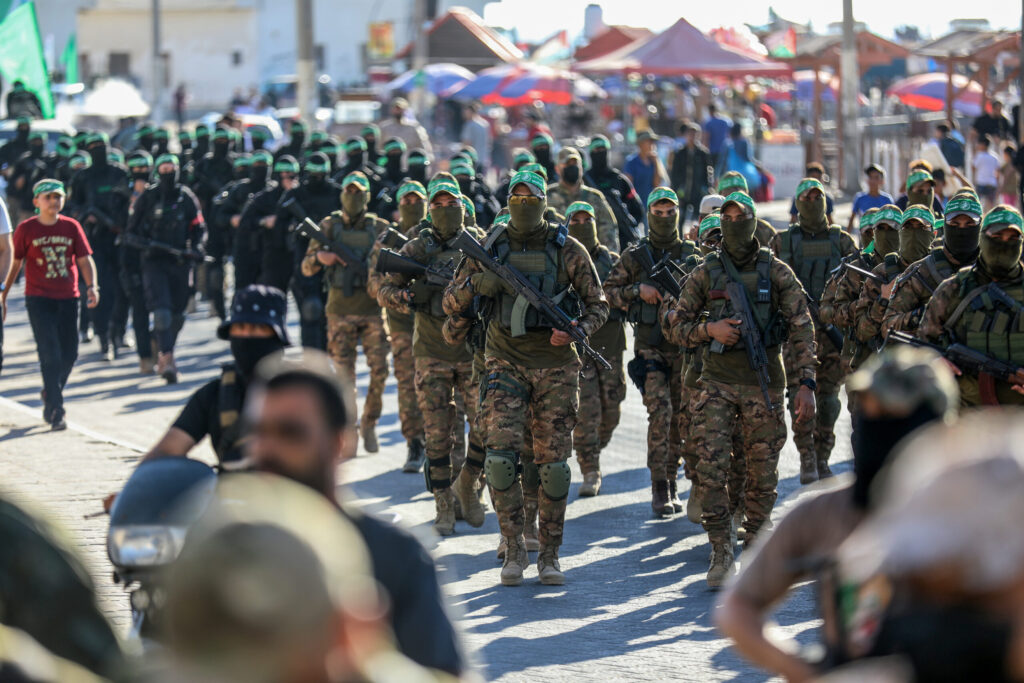
Hamas terrorists, archive | Photo: Abed Rahim Khatib/Flash90
Upon his release, Israel’s security establishment decided to deport him to the Gaza Strip together with 163 additional terrorist operatives. The overwhelming majority of them were affiliated with the military circles of the Izz ad-Din al-Qassam Brigades in Judea and Samaria, and had been involved in terrorism against Israeli civilians during the era of the Oslo Accords in the 1990s and during the Second Intifada in the early 2000s.
The 163 Deportees and Hamas’ Judea and Samaria Headquarters
Over time, some of these deportees played a central role in establishing and strengthening a sophisticated Hamas terrorist infrastructure known as the Judea and Samaria Headquarters.
Hamas terrorists | Photo: Shutterstock
Through this framework, several key Hamas figures—including Ayman Abu Daoud, Mahmoud Qawasmeh, Zakaria Najib, and Amir Dukkan—directed terrorist activity throughout Judea and Samaria, relying extensively on their broad familial and sociological networks across the region.
These networks became a significant component in Hamas’ efforts to maintain and expand its operational capabilities beyond the Gaza Strip.
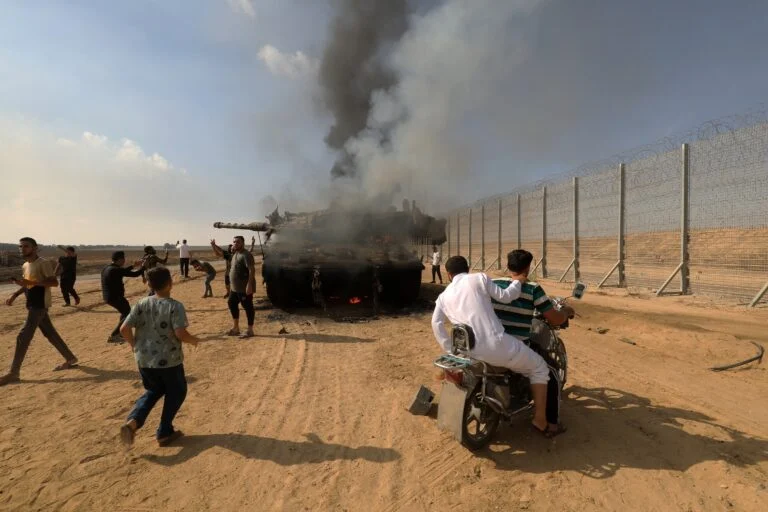
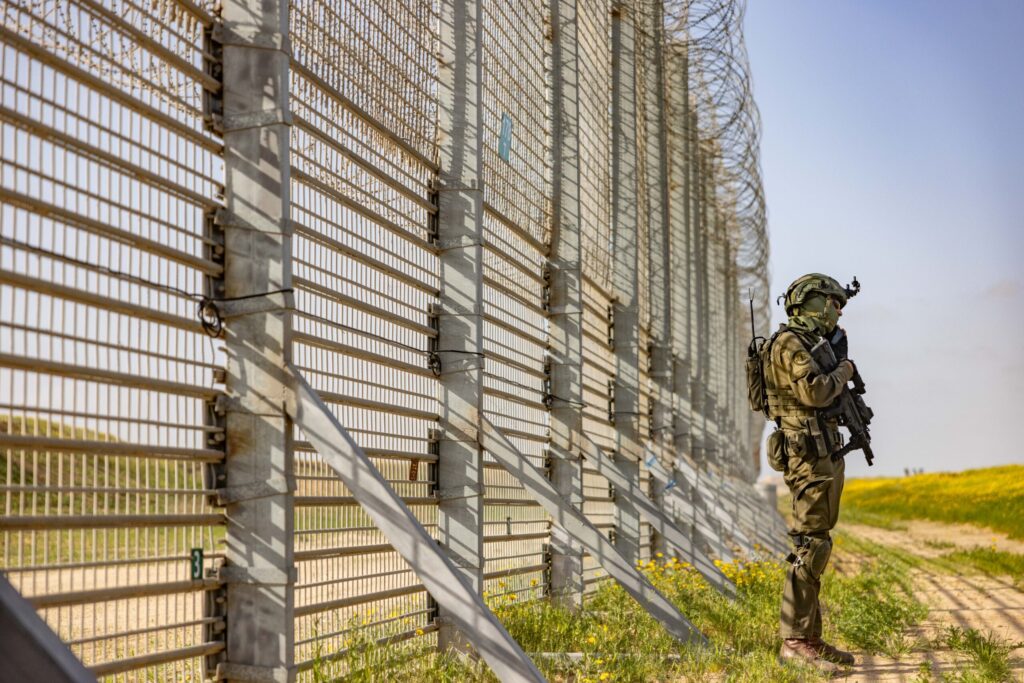
Gazan terrorists breaking through the fences on October 7nth | photo by: Shutterstock
From Prisoner to Sinwar’s Chief of Staff
Unlike many of those released as part of the Shalit Deal, Ali al-Amoudi did not return to the militant operational circles of the Izz ad-Din al-Qassam Brigades, nor did he become part of Hamas’ Judea and Samaria Headquarters. Instead, as a trusted associate of Yahya Sinwar since their shared years in Israeli prison, al-Amoudi gradually assumed a different role within Hamas.
Photo by: Attia Muhammed/Flash90
Following Sinwar’s rise to leadership of Hamas in the Gaza Strip in early 2017, al-Amoudi became his Chief of Staff and an integral member of his inner circle. His importance did not derive from direct battlefield command, but rather from his organizational capabilities, loyalty, and proximity to Sinwar—qualities that positioned him as one of the figures capable of managing the reconstruction of Hamas after the devastating blows suffered by the terror organization during the war.
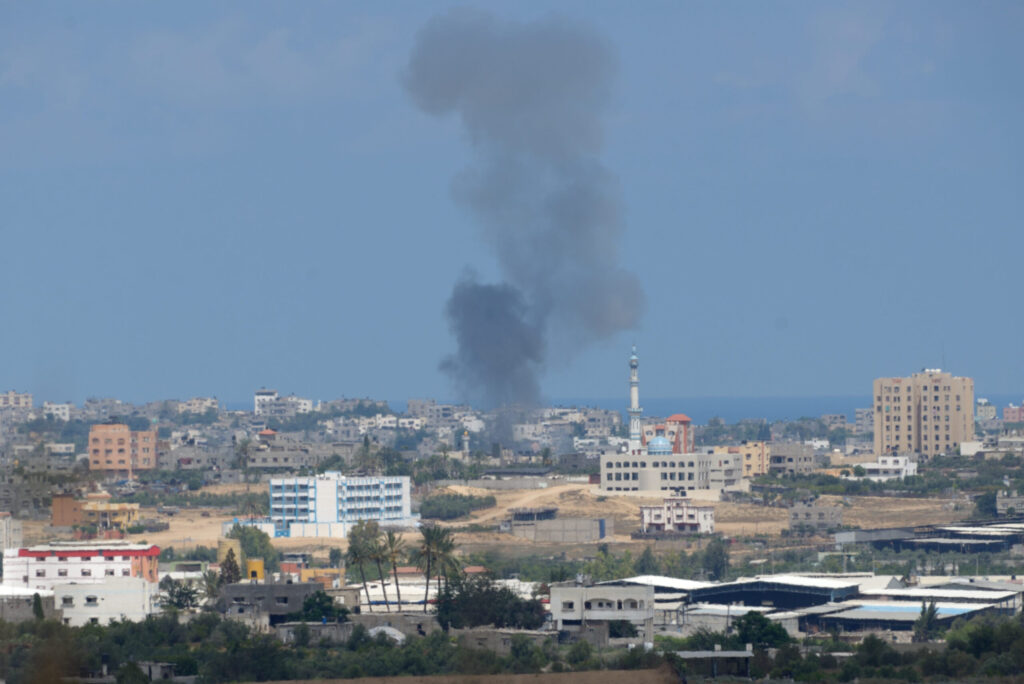
Strike in the Gaza Strip. Archive | photo: Gili Yaari, Flash90
Hamas After the War: Collapse or Transformation?
Although Hamas’ future in the Gaza Strip currently remains uncertain, and although the terror groups could potentially disappear from the collective consciousness if it is dismantled as a military organization, Israel must nevertheless prepare for another possibility: the transformation of Hamas rather than its disappearance. The terror organization may change its organizational structure while preserving the ideological foundations that have guided it since its establishment.
Photo: Flash90
These foundations originate from the ideological framework of the Muslim Brotherhood, whose worldview continues to include uncompromising hostility toward the existence of a Jewish state and the pursuit of its strategic objectives through jihadist ideology.
The challenge facing Israel is therefore not limited solely to Hamas’ military capabilities, weapons, or command structure.
The deeper challenge lies in the possible continuation of the ideological infrastructure that sustains the terror organization, even if Hamas is forced to alter its organizational model.
The Strategic Challenge Facing Israel
The continued survival of figures such as Ali al-Amoudi and others in the Gaza Strip—only a short distance from Israel’s Jewish communities—must be examined within a broader strategic context.
Photo by: Chaim Goldberg/Flash90
They represent an ideological current within Hamas that remains committed to jihad against the State of Israel and its Jewish citizens, while maintaining ties with the broader Iranian-backed Axis of Resistance and operating under the influence of strategic guidance from circles connected to the Islamic Revolutionary Guard Corps (IRGC) in Iran. For this worldview, the ultimate ideological and religious objective remains the “liberation” of Jerusalem and the Al-Aqsa Mosque.
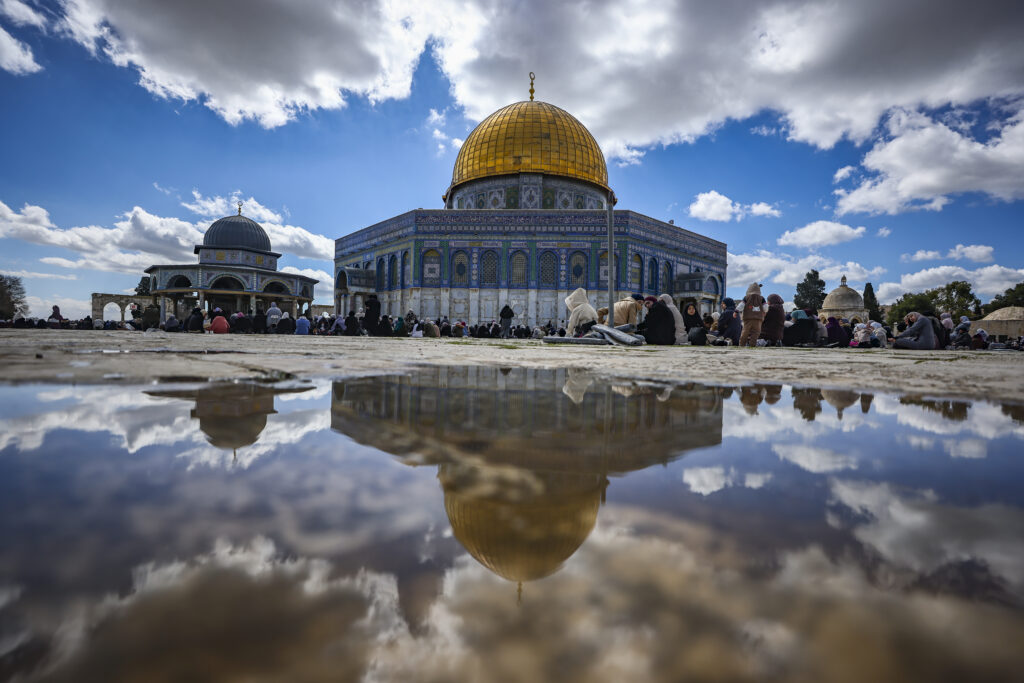
Al-Aqsa Mosque compound in Jerusalem’s Old City | Photo by Jamal Awad/Flash90
Therefore, even if Hamas undergoes structural changes in the aftermath of the war, Israel must take into account that organizational transformation does not necessarily mean ideological transformation. The future of Hamas’ terror structure may depend on its ability to adapt militarily and politically to a new reality. However, the central question will remain whether the terror organization’s ideological foundations survive alongside any future ‘organizational’ framework.
Photo: IDF Spokesperson, Flash 90
Ali al-Amoudi’s rise to leadership places him at the center of this struggle: between the growing demands for Hamas’ dismantlement and the terror organization’s effort to preserve its military identity, organizational resilience, and ideological mission.
Prime Minister Benjamin Netanyahu declared today (Sunday) at the opening of the cabinet meeting that Israel rejects the 15-point document and that the IDF will not carry out any withdrawal from the Gaza Strip until its elected governing terror group, Hamas, is truly and completely disarmed.
“Israel rejects the 15-point document. The IDF will not carry out any withdrawal until Hamas is disarmed. And when I say “Hamas must be disarmed,” I mean heavy weapons, medium weapons, and light weapons. All weapons. And we’re talking about genuine disarmament, not a fictitious one,” Netanyahu said.
According to him, Israel is holding talks with the Americans on the issue these days. Netanyahu noted that some of the ideas raised are acceptable to Israel and some are not, adding that Israel knows how to stand up for its interests even with its friends.
Netanyahu also addressed other fronts. Regarding Iran, he said that “with a deal or without a deal, as long as I am prime minister, Iran will not have nuclear weapons.” He added that Iran has not yet attacked Israel because it knows what response it would receive if it did.
As for Lebanon, the prime minister said Israel has operated with force in recent days, eliminated terrorists, and is working to thwart threats. According to him, the operations are being carried out “with common sense and wisdom,” alongside determination.
Netanyahu further declared that as long as he serves as prime minister, a ‘Palestinian’ state will not be established “not in Gaza and not in Judea and Samaria.” He concluded that the IDF will continue to thwart threats against its forces and against Israeli citizens.
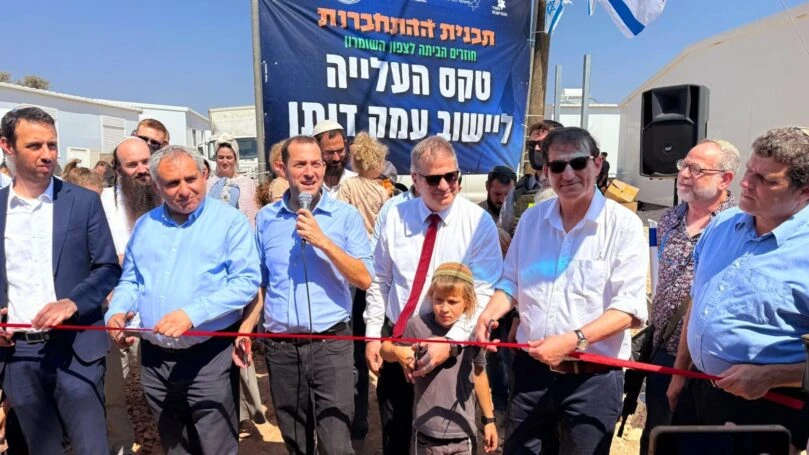
Twenty-two families broke ground and established the new town of Emek Dotan in northern Samaria during a ceremony attended by government ministers, Knesset members, community leaders and local residents. The community is being built near the historic Dotan Valley and Joseph’s Pit.
Photo: Elihay Menachem, Hanna Landman
The ceremony drew Samaria Governor Yossi Dagan, Education Minister Yoav Kisch, Minister Ze’ev Elkin, former Housing Minister and Knesset member Yitzhak Goldknopf, and Knesset members Ariel Kellner, Amit Halevi, Boaz Bismuth and Nissim Vaturi. Also attending were Amana movement Secretary-General Ze’ev Hever, Judea and Samaria Division Director-General Hoshea Harari, members of Homesh First and the founding families.
According to the Samaria Regional Council, Emek Dotan is the first new community established in northern Samaria since the four communities evacuated under the disengagement plan. It’s also the fifth town the Samaria Regional Council has established in less than a year.
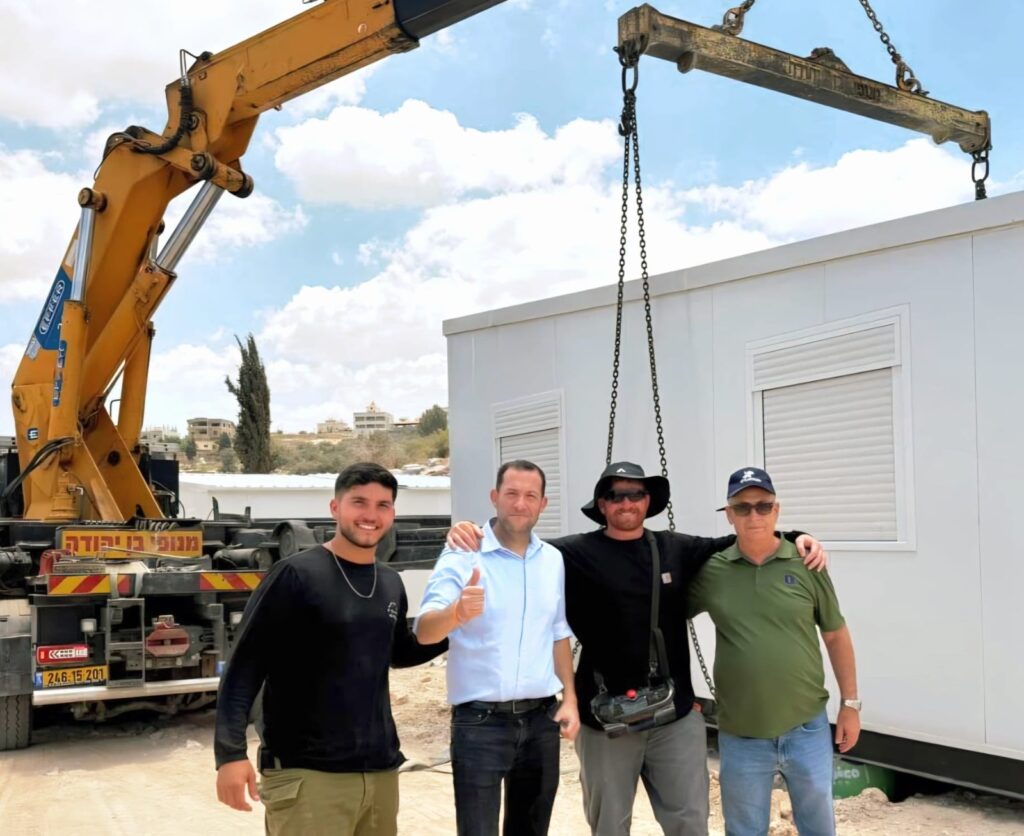
Structures placed in the new town of Emek Dotan. archive | Photo: Samaria Regional Council
The town is being established a year after a cabinet decision led by Defense Minister Israel Katz and Finance Minister Bezalel Smotrich, as part of the “Reconnection Plan” spearheaded by the council. The plan includes establishing 19 new towns across northern Samaria, aimed at strengthening security and communities in the area.
Samaria Governer Yossi Dagan said at the ceremony: “Today we are correcting a historic injustice. Twenty-one years ago they tried to uproot us from the four communities in northern Samaria, thinking they could disconnect the people of Israel from their land. Today we are proving the opposite. Not only have we returned to northern Samaria, we are rebuilding it—bigger, stronger and more prosperous.”
First families moving into Emek Dotan | Photos: Elihay Menachem, Hanna Landman
Education Minister Yoav Kisch announced during the ceremony that a kindergarten will open for the community’s children at the start of the school year: “First of all I have good news, I don’t know if the children already know: there will be a kindergarten here! From the beginning of the year we’re opening a kindergarten for the children of Emek Dotan!”
Minister Ze’ev Elkin said he sees the town’s establishment as the fulfillment of the struggle to return Jewish communities to northern Samaria. Foreign Affairs and Defense Committee Chairman Knesset member Boaz Bismuth blessed the first families and said it was “another historic and moving morning in Samaria.”
The founding group’s chairman, Amitai Weiss, who moved with his family to live there, said: “We are happy to be part of this huge movement of returning the Divine Presence to Zion, of returning the towns. With God’s help the town will grow, develop—a happy community, a strong community, a Torah community.”
A kite was discovered over the weekend near Moshav Shuva in the Sdot Negev Regional Council. Council head Tamir Idan claimed the kite came from the Gaza Strip, adding that inspection revealed it carried no explosives. An IDF spokesperson said the circumstances of the incident are under investigation.
Idan sharply criticized the incident, saying that the mere penetration of an aerial device from Gaza into council territory is a serious event. “Even when it turns out it carried no explosives, this is crossing a red line for us,” he said.
IDF forces fighting in the Gaza Strip | Photo: IDF Spokesperson
According to Idan, the concern is that incidents like this could become routine or develop into a more significant threat. “Today it’s a kite without explosives, tomorrow that same device could carry explosives, and eventually the threat could come via drones or other means,” he warned.
The council head called for a clear response from Israel and made clear that from his perspective, there’s no room to return to a policy of containment regarding incidents from Gaza. “We will not accept a drip of incidents and no gradual return to the security reality we knew in the past,” he said.
Hamas terrorists | Photo: Flash 90
Idan added that any future discussion of arrangements concerning the Gaza Strip must, in his view, be conditional on ensuring the security of border residents. He specified that for him, the conditions include dismantling Hamas, demilitarizing the Strip, and ensuring stable security for area residents.
Regavim, a conservative Israeli organization, has filed an unprecedented appeal to the European Union Court of Justice in Luxembourg, demanding the complete cancellation of sanctions imposed on the group and its CEO, Meir Deutsch, by the EU Council last May. This marks the first legal challenge of its kind filed by an Israeli entity or citizen against European sanctions. The legal team is led by attorney Salomé Lemaitre from the Paris Bar and attorney Nick Kaufman from Jerusalem.
Photo: Regavim
The appeal sharply criticizes the EU’s evidence file against Regavim, arguing it suffers from lack of professionalism and relies on publications from media outlets and organizations identified with the far left. The filing points to a series of distortions and misrepresentations—for example, attributing the demolition of a school in the village of Jabat al-Dib to Regavim, even though the demolition was carried out by Israeli authorities under an order from the Jerusalem District Court due to immediate danger of the structure’s collapse.
Regavim emphasizes that beyond the judicial critique of the evidence and procedures, the appeal challenges the very use of sanctions as an anti-democratic and oppressive practice, imposed without any hearing or due process in a manner that terrorizes any citizen. The sanctions significantly harm the rights of EU citizens to donate or support Regavim’s lawful activities, and prohibit business relationships with companies registered in Europe, including banks, credit card companies, clearing firms, and other international financial service providers.
“The European Union created an embarrassing legal smokescreen to persecute a legitimate civil society organization, simply because it publicly criticizes the EU’s illegal actions,” said Regavim CEO Meir Deutsch. “The appeal we filed in Luxembourg is designed not only to defend Regavim’s activities and cancel the severe economic damage caused by the sanctions, but also to stand firmly against the European attempt to terrorize civil society and the public in Israel, as part of its broader efforts to advance the establishment of a ‘Palestinian’ terror state that would endanger the future of the State of Israel.”