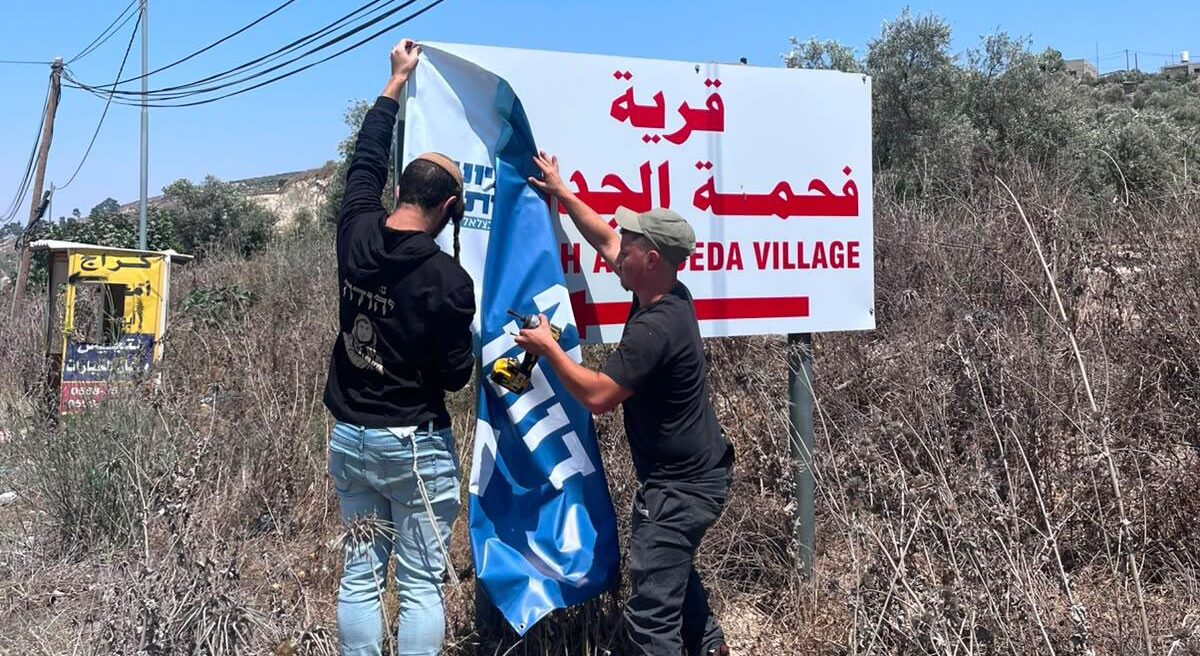
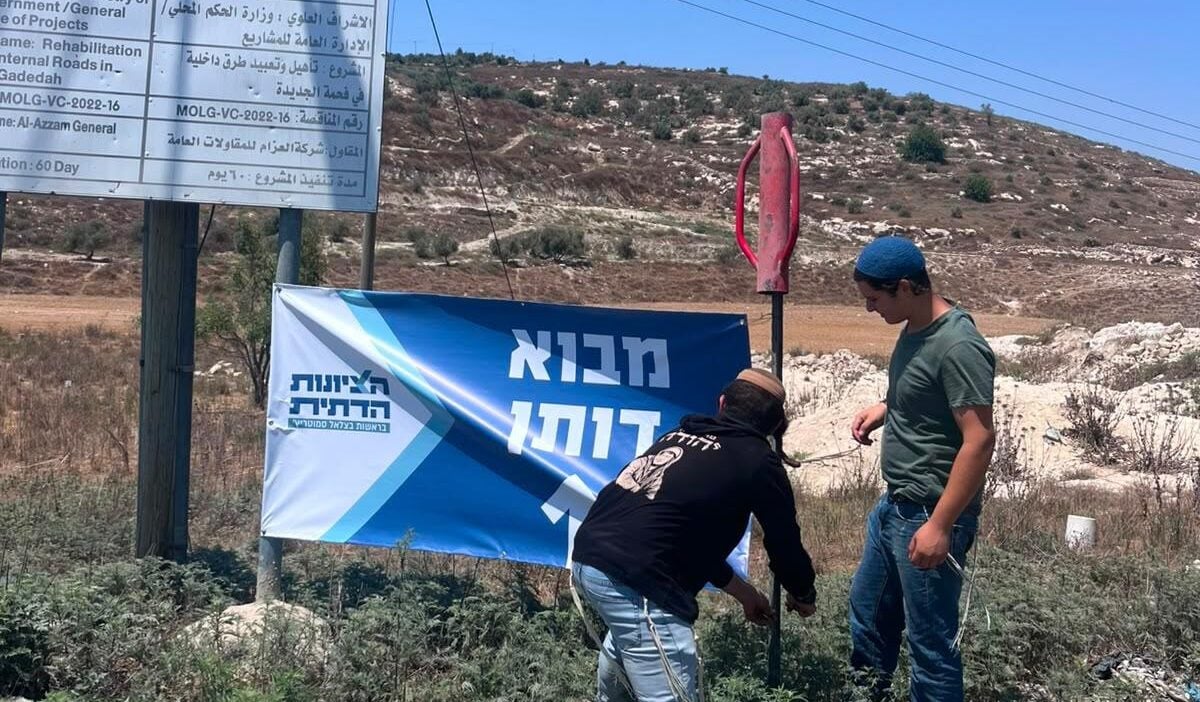
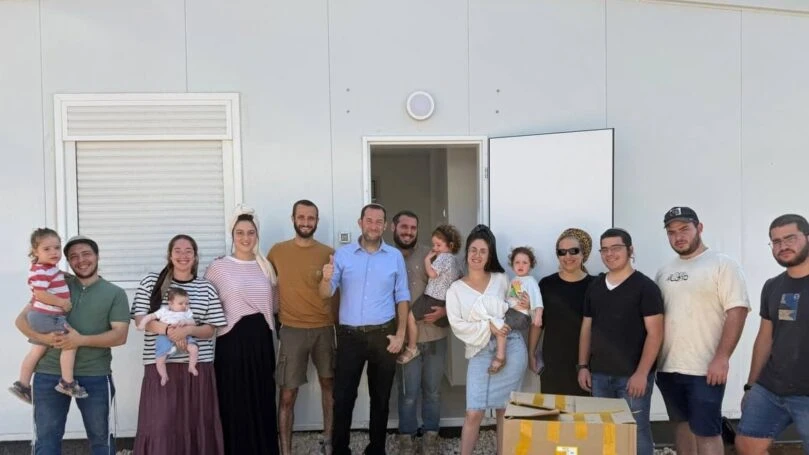
The Religious Zionism party, led by Finance Minister Bezalel Smotrich, installed directional road signs in northern Samaria settlements on Sunday, following a lynch attempt against an Israeli family that accidentally entered Jenin last week due to a navigation error.
Photo: Religious Zionism party
The signs direct drivers to towns and main routes in the area, including Mevo Dotan, Emek Dotan, Homesh, and Shaked. The party said the initiative aims to reduce navigation errors and help travelers find their way through the roads and towns.
Religious Zionism officials said the signage is also meant to strengthen the connection between the Israeli public and settlement in northern Samaria, and make the communities more accessible and familiar. “Northern Samaria is a thriving and renewing region as part of the Judea and Samaria revolution that Minister Smotrich is leading as Israel’s security belt. The entire Israeli public is invited to come, hike, and visit without fear. We won’t let terror dictate the roads,” the party said.
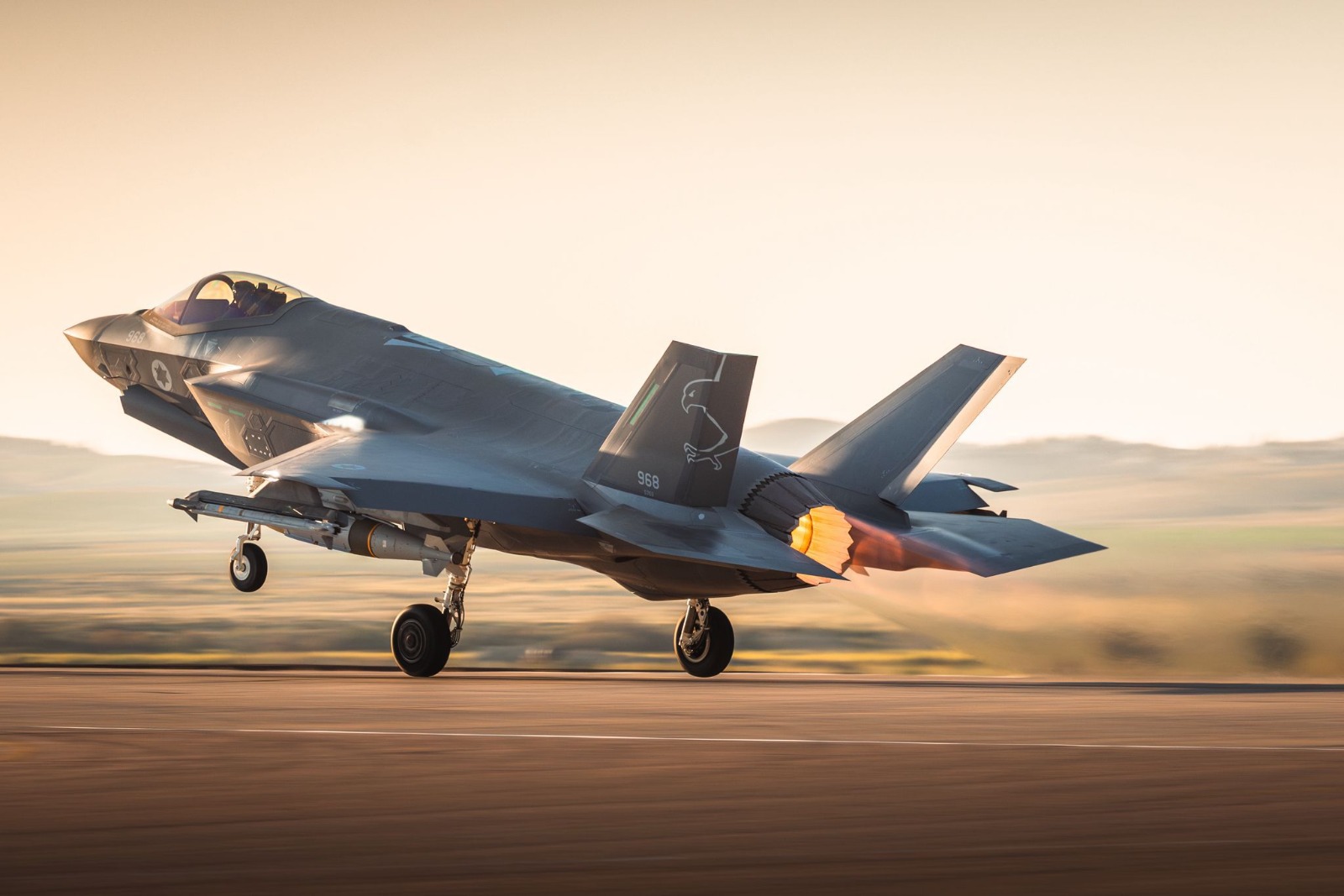
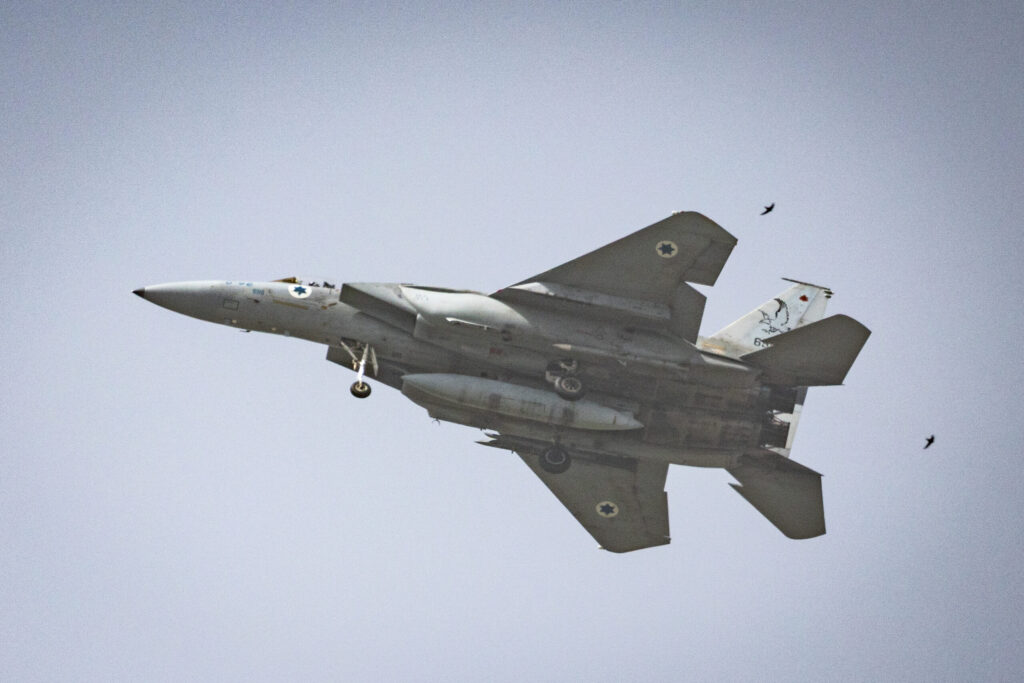
The government will approve today (Sunday) a budget supplement of ₪2.6 billion for the Defense Ministry for what the decision defines as “urgent defense procurement.” The purchase is classified and is intended to address the security establishment’s armament needs against the backdrop of intensified fighting and operational requirements that have emerged recently.
A fighter jet on its way to attack | Photo: Nati Shochat/Flash 90
The decision has already been approved by the Ministerial Committee on Procurement and will now be brought to the government for approval. Security officials said the budget is designated for acquisition related to armament, but the procurement details themselves remain classified for security reasons.
According to the decision, immediate funding will come from changes to the state budget for 2026: ₪1.5 billion will be reduced from the budget allocated for interest and commission payments, and another ₪1.1 billion will be cut from the operating budgets and commitments of government ministries.
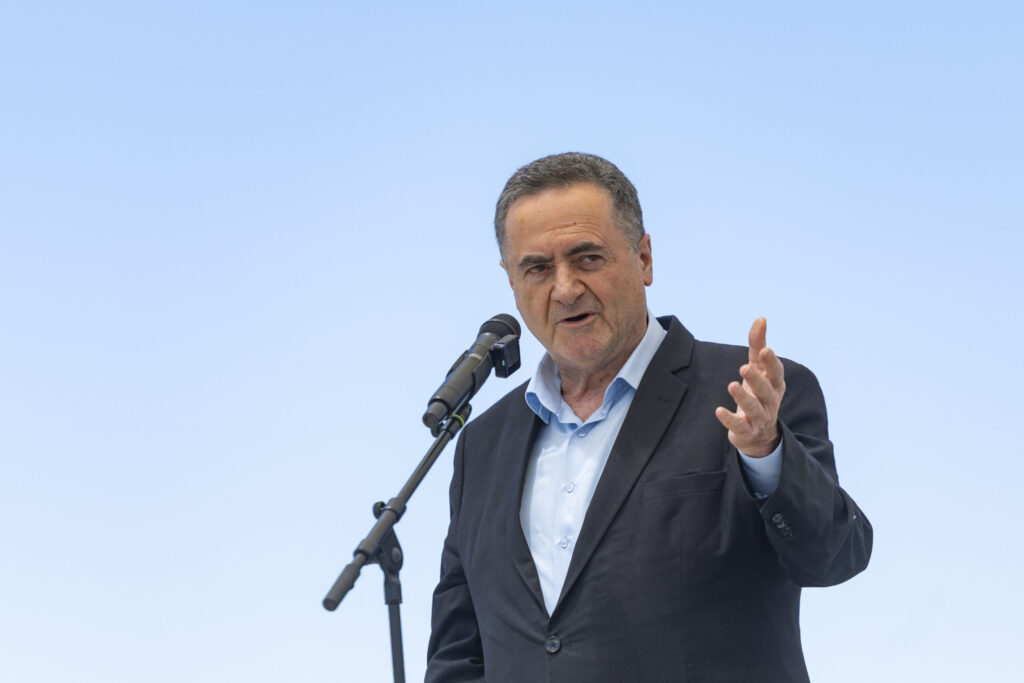
Defense Minister Katz | Photo: Haim Goldberg, Flash90
However, it was determined that if the state budget for 2026 is finally approved in the Knesset, the cuts to government ministries can be canceled, and the funding will come from a dedicated budget line defined in previous government decisions.
Prime Minister Benjamin Netanyahu | Photo: Haim Goldberg, Flash 90
Voices across the Arab world are growing louder, calling for regime change in Israel and the rise of a government open to establishing a “Palestinian” state. An Al Jazeera analyst lays out a scenario where Netanyahu’s fall triggers Likud’s collapse and the end of the right: “The Israeli left will seize power.” And what’s the connection to the vision Yair Lapid presented at the UN?
Full disclosure: The author is a Likud party member and is running in Likud’s primaries.
In recent years, and especially since the October 7, 2023 massacre, voices in Arab countries—both at the official level and in public discourse—have been expressing hope for a change of government in Israel more loudly than ever.
This isn’t necessarily ideological support for the “Israeli left” in its classic form (which is currently very weak), but rather a clear preference for a government less identified with the right and more open to political dialogue with the ‘Palestinians’. Dialogue that would ultimately lead to the establishment of a ‘Palestinian’ state. Benjamin Netanyahu, as the symbol of the current right-wing government, is seen by many in the Arab world as a central obstacle to this goal.
Ehab Jabareen, a regular guest on Al Jazeera and an expert on Israeli affairs, recently made striking statements about Prime Minister Benjamin Netanyahu’s current situation and the Likud party. Jabareen, in interviews on various Arab channels, noted that the current moment represents the greatest periods of humiliation and disgrace for Netanyahu since he entered politics over 43 years ago, and perhaps even more than his 1999 defeat.
The Knesset, archive | Photo: Flash 90
The idea Jabareen raises in one phrase: “If Netanyahu falls—Likud falls.” “Likud will collapse and even the Israeli right won’t recover after the Netanyahu era, and the Israeli left will seize power. This isn’t wishful thinking or analysis but an organized plan that Arab states are working on, led by Qatar, Saudi Arabia, and Egypt.” Jabareen’s claim is that Netanyahu has controlled the party since the 1990s, turned it into a personal tool, ousted internal rivals, and tied it to coalitions with the far right and ultra-Orthodox parties. Likud’s electoral identity became linked to his persona more than to traditional Jabotinsky ideology.
According to the reporter, Netanyahu’s political fall (in the upcoming elections) could lead to Likud’s dissolution, since the party’s senior members and ministers depend on his survival and the Israeli party system leans on the charismatic leader. History shows, according to Jabareen, that Israeli parties are heavily affected by the departure of dominant leaders.
Al Jazeera network | Photo: Shutterstock
Qatar, through Al Jazeera and its diplomatic discourse, promotes a narrative against Netanyahu’s government and frequently hosts guests from Israel who sharply attack Netanyahu. Even Egypt, which doesn’t typically host Israeli guests, recently hosted Israeli journalist Gideon Levy, who harshly criticized Netanyahu’s policies and the government.
Such criticism joins media and diplomatic pressure that weakens the prime minister’s international image. Other Arab states see his government as an obstacle to regional stability and possible normalization or a political solution. Many Arab governments prefer an Israeli government from the left, which the Arabs claim is capable of negotiating and even establishing a ‘Palestinian’ state, because the right in Arab eyes threatens the ‘Palestinian’ Authority’s interests.
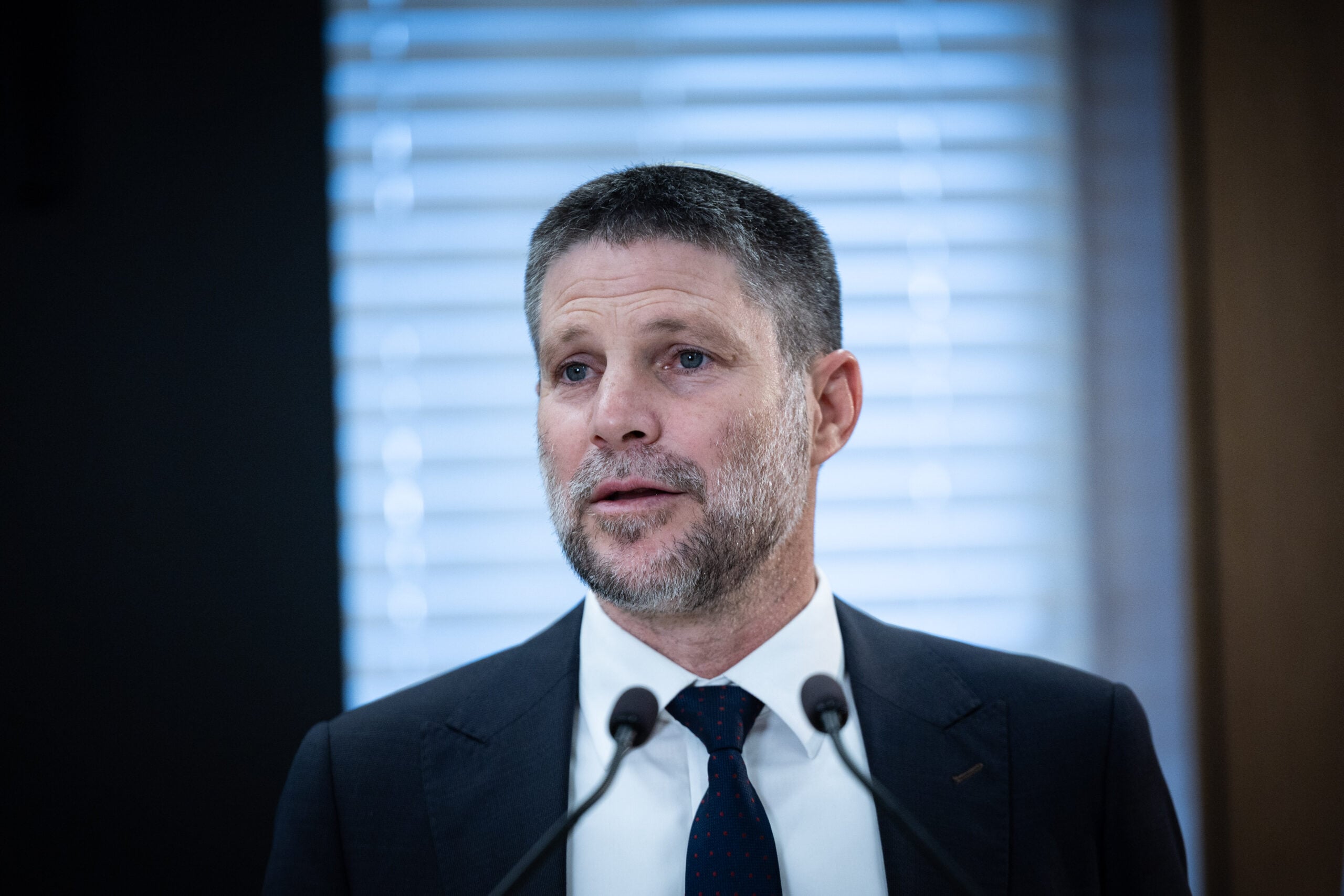
Minister Smotrich | Photo: Yonatan Sindel, Flash 90
The Arabs believe—and rightly so—that Netanyahu’s governments, especially since 2022 together with his right-wing partners (Ben-Gvir and Smotrich), are promoting massive construction in Judea and Samaria, de facto annexation of territories, and open rejection of the idea of a ‘Palestinian’ state. Netanyahu himself has repeatedly declared his opposition to a ‘Palestinian’ state west of the Jordan River, and even spoke about connecting to the vision of “Greater Israel.” Arab states see this as a direct threat. They demand a “credible path” to a ‘Palestinian’ state as a condition for deepening relations or normalization (with Saudi Arabia, for example).
A left-wing government in their eyes is more flexible and would be open to negotiating with the ‘Palestinians’ and even willing to discuss territorial concessions (as was once “land for peace”) or at least a construction freeze—something that makes it easier for Arab leaders to justify cooperation with Israel to their own public.
Prime Minister Benjamin Netanyahu | Photo: Haim Goldberg, Flash 90
Arab states’ preference for toppling Netanyahu doesn’t stem from love for the Israeli left, but from cold calculation of interests: internal stability, reducing public pressure, opening the door to broader normalization, and reducing escalation risks. Netanyahu, as someone identified with right-wing principles, has become a symbol of policies that make things difficult for Arab partners. A governmental shift toward the left is seen in their eyes as an opportunity to reset relations and advance toward a more stable regional order.
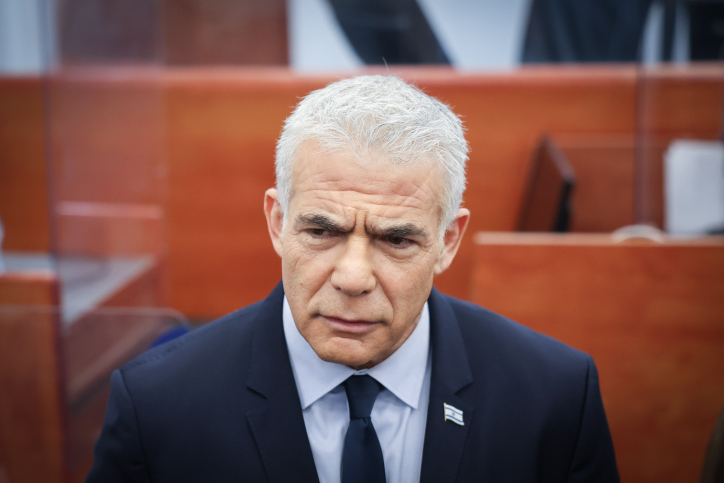
Arab states haven’t forgotten the vision of Israel’s transitional prime minister Yair Lapid when in his UN speech in September 2022—a year and change before the October 7 massacre—he said the following: “Israel’s economic and military strength allows us to defend ourselves, but it allows us something else: to aspire to peace with the entire Arab world and with our closest neighbors—the ‘Palestinians’.
Gazans near a tank at the Gaza border on October 7 | Photo: Flash 90
An agreement based on two states for two peoples is the right thing for Israel’s security, for the Israeli economy, and for our children’s future. Peace is not a compromise, it is the bravest decision we can make. Peace is not weakness, it embodies all the strength of the human spirit. War is surrender to everything evil in us, peace is the victory of everything good.”
In practice, this speech essentially aligns with the vision of the ‘Palestinians’ and Arab states. Eisenkot and Bennett, Lapid’s partners, are considered center-left figures who might adopt this vision. Therefore Qatar and Arab states are working to topple Netanyahu and crush Likud in particular and the right in general. This isn’t personal against Netanyahu but against the entire right, to put an end to right-wing rule in Israel and replace it with left-wing rule.
Photo: Shutterstock
Arab states should know that the political reality in Israel is determined primarily by the Israeli voter and not by Arab states or their propaganda. The Israeli voter is sharp and knows what’s good for Israel.
A violent antisemitic altercation erupted at Ninoy Aquino International Airport (NAIA) in Manila after a 54-year-old American passenger launched an unprovoked verbal tirade against an Israeli traveler.
According to local reports, the suspect, identified as Kent Scott Lee, targeted 37-year-old Israeli national Noam Shimon Rosenberg in the domestic departure waiting area as both waited for a flight to Cebu. Witnesses stated that Lee mocked Rosenberg’s Jewish identity, shouting: “Jew, baby killer… Hitler was right. Too bad Hitler didn’t finish killing all the Jews.”
Refusing to let the neo-Nazi slurs slide, Rosenberg confronted Lee physically. The Israeli reportedly kicked luggage on Lee’s trolley and struck him, escalating into an intense fistfight that damaged a nearby marble table near a food stall.
Photo: Shutterstock
Airport security and local police intervened to break up the fight. Both men were detained and transported to the Pasay City General Hospital for medical evaluation.
Despite the severe antisemitic provocation that triggered the incident, local authorities transferred the case to the Pasay City Prosecutor’s Office the following day, filing public disturbance charges against both individuals in accordance with Philippine law.
The new northern Samaria community of Emek Dotan was officially established today as founding families moved into initial residential structures on site, accompanied by supply trucks arriving with household equipment.
First families moving into Emek Dotan | Photos: Elihay Menachem, Hanna Landman
The move-in precedes an official founding ceremony scheduled for today, attended by government ministers, Members of the Knesset, and public figures. Among the attendees are Samaria Governor Yossi Dagan, Education Minister Yoav Kisch, Minister Ze’ev Elkin, MKs Kati Shitrit, Boaz Bismuth, and Nissim Vaturi, Amana Secretary-General Ze’ev Hever (Zambish), and Rabbi Chaim Baruch, head of the Bruchin, Lod, and Tiberias yeshiva institutions whose alumni make up many of the initial residents.
Emek Dotan is the fifth new community established by the Samaria Regional Council in less than a year. Its establishment follows a government cabinet decision and forms part of a broader plan to establish 19 new communities across northern Samaria. Located near the biblical Dothan Valley—historically associated with the story of Joseph and his brothers—the communities aims to bolster the Jewish presence in northern Samaria and enhance access to historical heritage sites.
Structures placed in the new town of Emek Dotan. archive | Photo: Samaria Regional Council
“Today we are privileged to fulfill a dream of generations,” said Samaria Governor Yossi Dagan. “In the very place where Joseph sought his brothers, a new community is born today. Emek Dotan is much more than a new town—it is an expression of the victory of the Zionist spirit, the eternal bond of the Jewish people to their land, and the continuation of the community momentum in northern Samaria.”
Hadas Weiss, an initial resident and mother of two, expressed excitement about moving in: “Settling the land is deeply moving. We are truly doing something important here. We never envisioned founding a community in Samaria, but when the opportunity arose, it felt entirely right.”
A joint unmanned aerial vehicle (UAV) manufacturing facility established by Serbia and Israel is slated to open next month, around September 15–20, Serbian President Aleksandar Vučić announced during a joint press conference with Ukrainian President Volodymyr Zelenskyy.
Serbian President Aleksandar Vučić and Israeli Prime Minister Netanyahu | Photo: Avi Ohayon, GPO
The initiative itself was first announced by Vučić in April, but the Serbian leader has now laid out a concrete timeline for the plant’s launch, putting the opening just weeks away.
Vučić noted that Ukrainian representatives would be invited to the opening ceremony, citing Kyiv’s operational expertise in the field: “The Ukrainians are very successful in this domain and operate their own drone factories.”
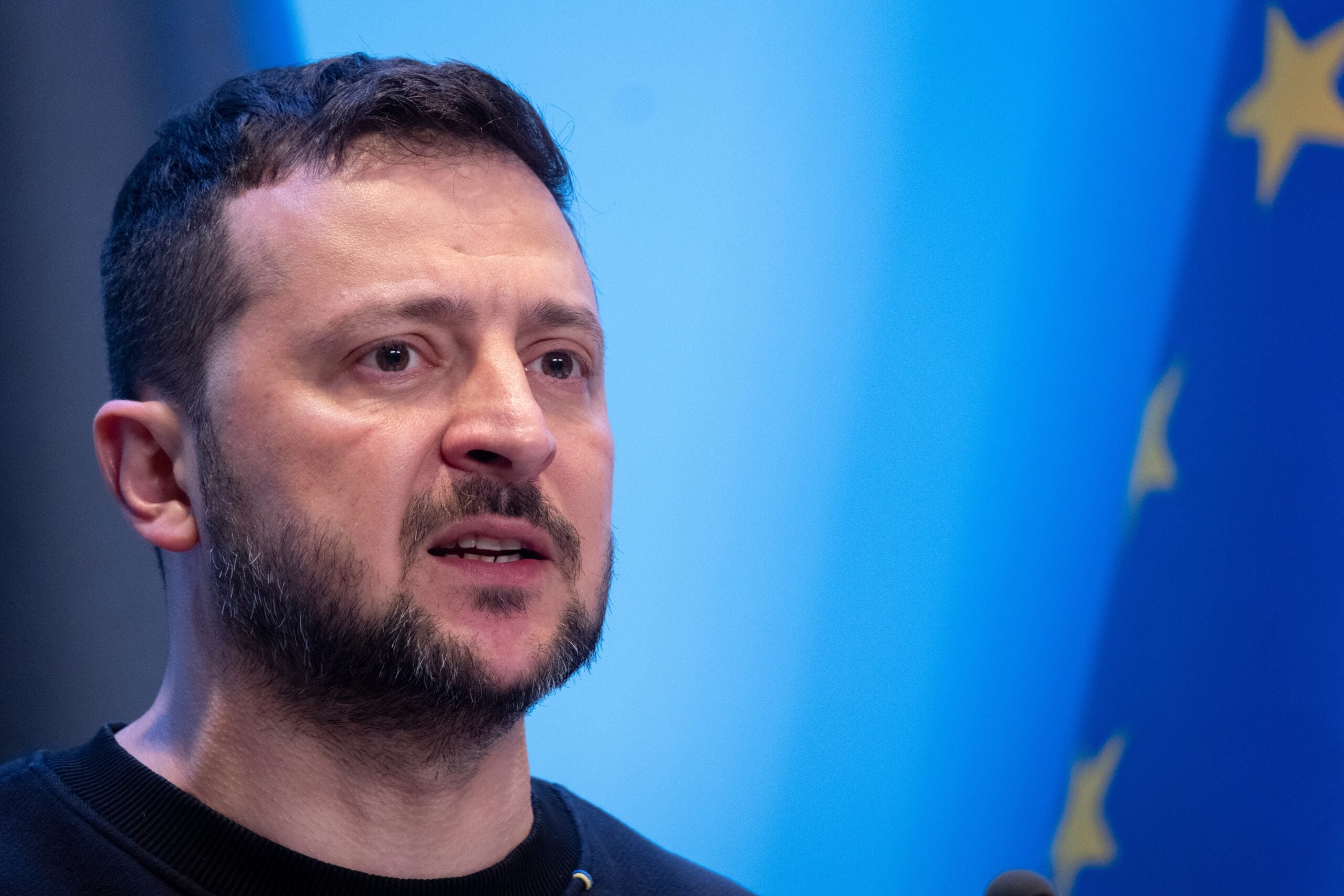
President Volodymyr Zelenskyy | Photo: Shutterstock
Addressing questions on whether Belgrade and Kyiv discussed bilateral defense ties during the meeting, Vučić clarified that military cooperation is not currently on the table.
“We did not discuss any military cooperation today—not for the current period,” Vučić stated. “What happens after the war ends is an entirely different matter.”
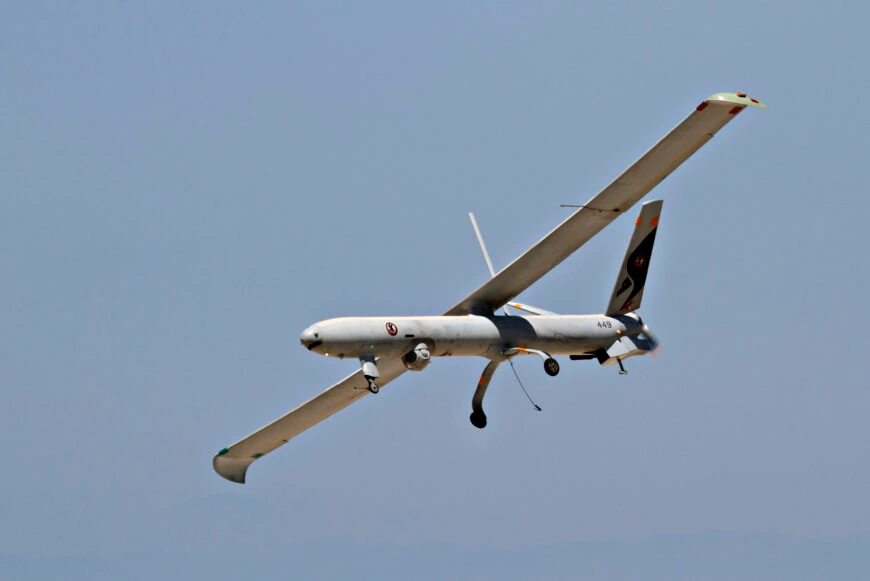
A serious security incident occurred along Israel’s northern border over the weekend when Hezbollah launched an explosive drone toward Israeli forces. While the attack resulted in no casualties, the Israel Defense Forces (IDF) chose to conceal the incident from both the public and the country’s political leadership.
According to Channel 14 military analyst Noam Amir, defense establishment officials claimed the incident was withheld to avoid providing operational intelligence to the enemy.
Amir dismissed this rationale on Night News, calling it an illogical explanation given that the IDF routinely reports on similar aerial threats targeting forces in the field.
The primary issue, Amir emphasized, is that the military made a unilateral decision not to brief political leaders or update the public. Government officials have expressed strong dissatisfaction with the handling of the incident. Defense Minister Israel Katz is expected to hold a meeting with the IDF Chief of Staff to clarify that such conduct is unacceptable.
Currently, the IDF has no immediate plans to respond to the violation, though the situation remains fluid and could shift.
Maj. Gen. (res.) Uzi Dayan, former Deputy Chief of Staff of the IDF and former head of Israel’s National Security Council, addressed the possibility of Israel launching a strike against Iran without American participation, stressing that Jerusalem must maintain full operational freedom even when its interests diverge from Washington’s.
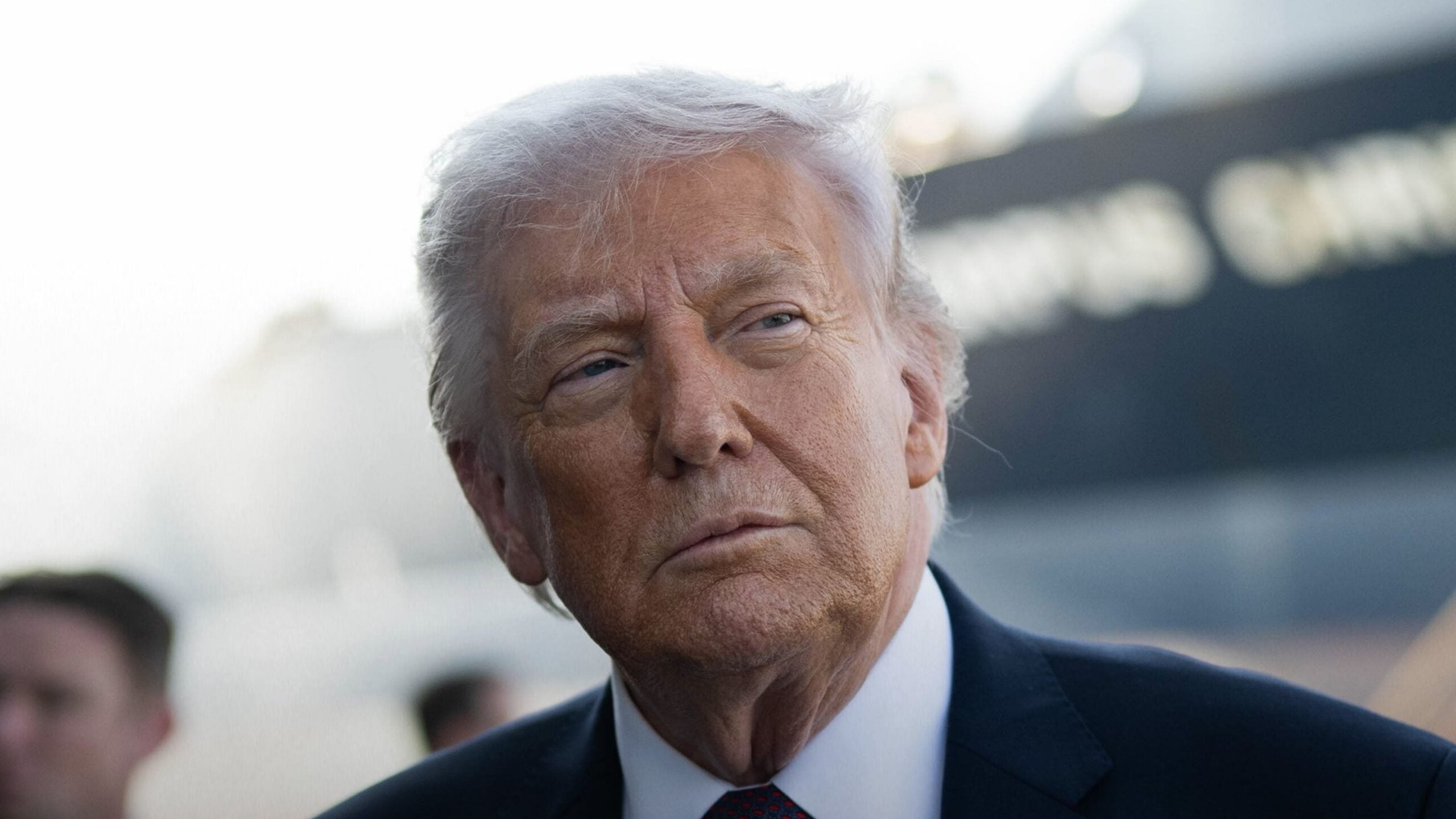
U.S. President Donald Trump | Photo: The White House
Speaking in an interview with Shira Kai on Channel 14, Dayan characterized the U.S.–Israel dynamic using a line from poet Yehuda Amichai: “The two of us together and each on our own.”
“We are together primarily on defense, state-level cooperation, and shared values,” Dayan explained. “However, we are on our own in the sense that we have no choice but to defeat Iran.”
According to Dayan, this core difference marks the strategic divergence between Jerusalem and Washington. “The United States is not attempting to decisively defeat Iran; it is seeking a utilitarian arrangement. Washington will almost always prefer an expedient deal over a just war.”
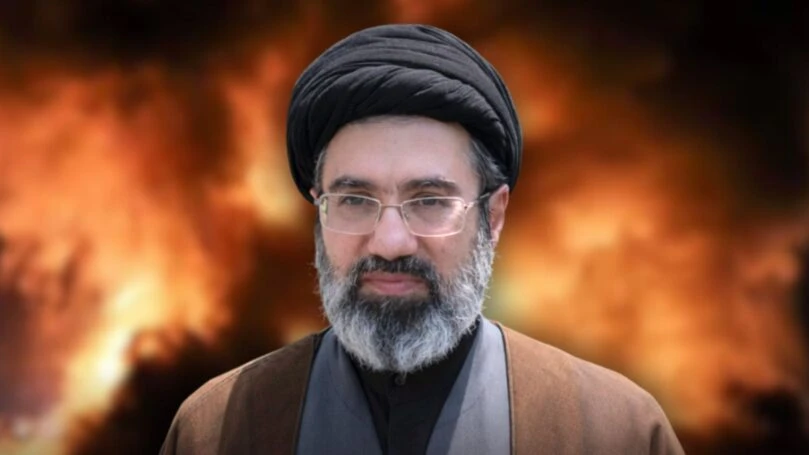
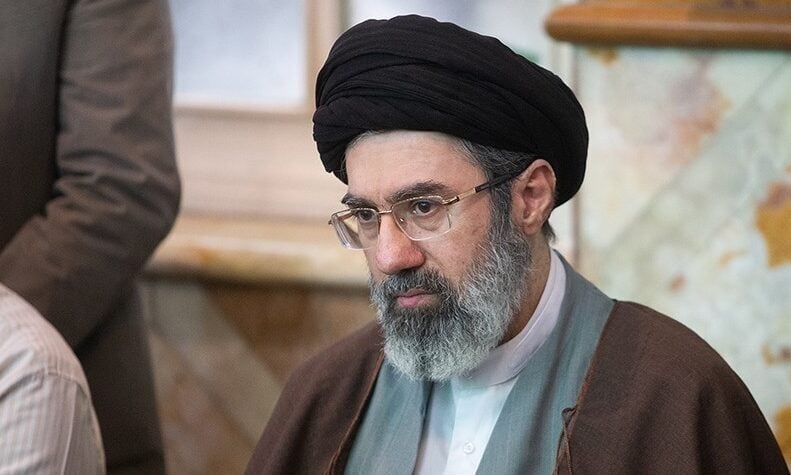
Mojtaba Khamenei | Photo: Tasnim News Agency (Edited in accordance with CC BY 4.0 license)
Dayan also addressed the American administration’s posture, cautioning against underestimating the regime in Tehran. “What [former President] Trump tends to overlook is that a nuclear Iran constitutes a threat to world peace. It is not solely a Middle Eastern crisis, nor is it only Israel’s problem.”
Highlighting the Iranian regime’s internal resilience, Dayan pointed out that despite domestic unrest, Tehran maintains a firm grip on power: “The regime manages to survive. It isn’t comfortable, and there is significant discontent, but it has not reached the threshold of a revolution.”
Iranian soldiers | Photo: Shutterstock
In this climate, Dayan warned, Tehran continues to buy time while Washington leaves open pathways for diplomatic agreements—an outcome he views as perilous for Israeli security.
“The primary danger remains Iran’s advancing nuclear-ballistic enterprise,” Dayan emphasized. “This threat affects global stability, yet Israel remains the only nation fully prepared to stand on the front lines against it.”
Italy has ordered one of Europe’s most strategic airports to stop using an Israeli-made defense system, with the country’s Council of State directing Rome airport operator Aeroporti di Roma to remove Rafael’s counter-drone technology from Fiumicino International Airport.
According to Italian media reports Thursday, the lucrative contract to protect Rome’s main international airport will instead be transferred to a domestic Italian company.
The decision comes at a sensitive moment in relations between Italy and Israel, which have faced growing strains in recent months over developments in the Middle East. The ruling itself, however, centered on regulatory and procurement issues surrounding the Israeli system rather than diplomatic considerations.
Photo: Flash90
The court’s decision followed an assessment by technical experts from Italy’s Defense Ministry, who determined that the Israeli system—developed through cooperation between Rafael Advanced Defense Systems and Altintech—qualified as military equipment.
According to the ruling, the system had been brought into operation without the authorizations required in Italy for the import and use of military equipment of its kind. That determination led to the disqualification of the contract and its transfer to an Italian company.
Rome airport authorities have now been given just 60 days to complete the replacement of the Israeli defense system with a locally supplied alternative.
At the same time, the court ordered that investigative materials be transferred to the Rome public prosecutor to determine whether a criminal investigation should be opened into the tender and procurement process surrounding the Rafael system. The airport operator, meanwhile, has said it will act to ensure that security remains protected throughout the transition.
Photo: Shutterstock
The removal therefore represents more than the loss of a high-profile contract for an Israeli defense company: Rafael technology currently protecting one of Europe’s busiest and most strategically important airports is being taken out of service and replaced by an Italian system.
While the court cited licensing and procurement requirements—not Israel’s nationality—as the basis for its decision, the timing comes amid recent strains in relations between Rome and Jerusalem, including Italy’s suspension of a longstanding defense-cooperation agreement with Israel earlier this year.
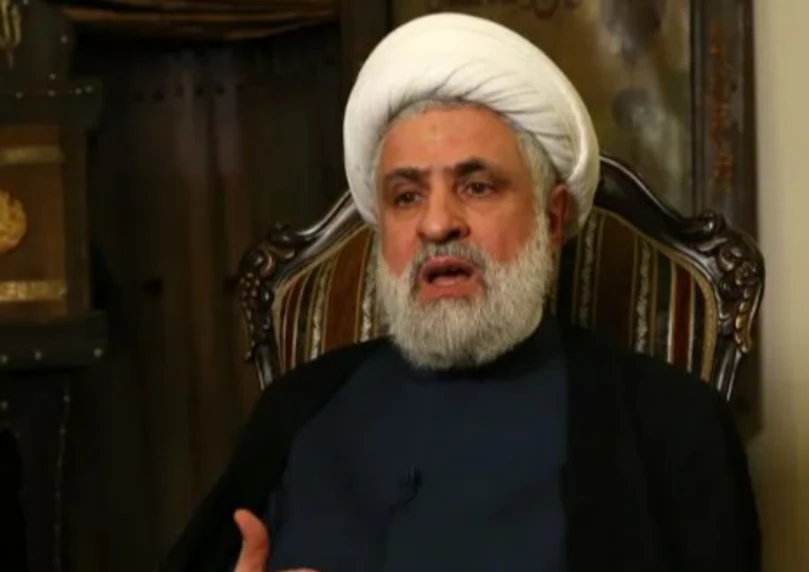
Hezbollah Secretary-General Naim Qassem announced in his latest appearance that the Lebanese terrorist organization is prepared to hold a public meeting with Syria’s new leadership at a time suitable for both sides. The announcement follows remarks by U.S. President Trump suggesting that the Syrian regime could, if necessary, confront Hezbollah militarily instead of Israel.
Qassem’s announcement came after Syrian leader Abu Mohammed al-Julani said he would not oppose sitting down with the terrorist organization if doing so served the interests of Syria and Lebanon. Qassem responded: “A stable Syria is a source of support for Lebanon, just as a stable Lebanon is a source of support for Syria.”
The development is particularly unusual given that the two sides have been fighting one another since 2012. That year, Hezbollah entered the Syrian civil war at Iran’s request to help Bashar al-Assad, becoming one of the forces that helped prevent the dictator’s regime from collapsing earlier.
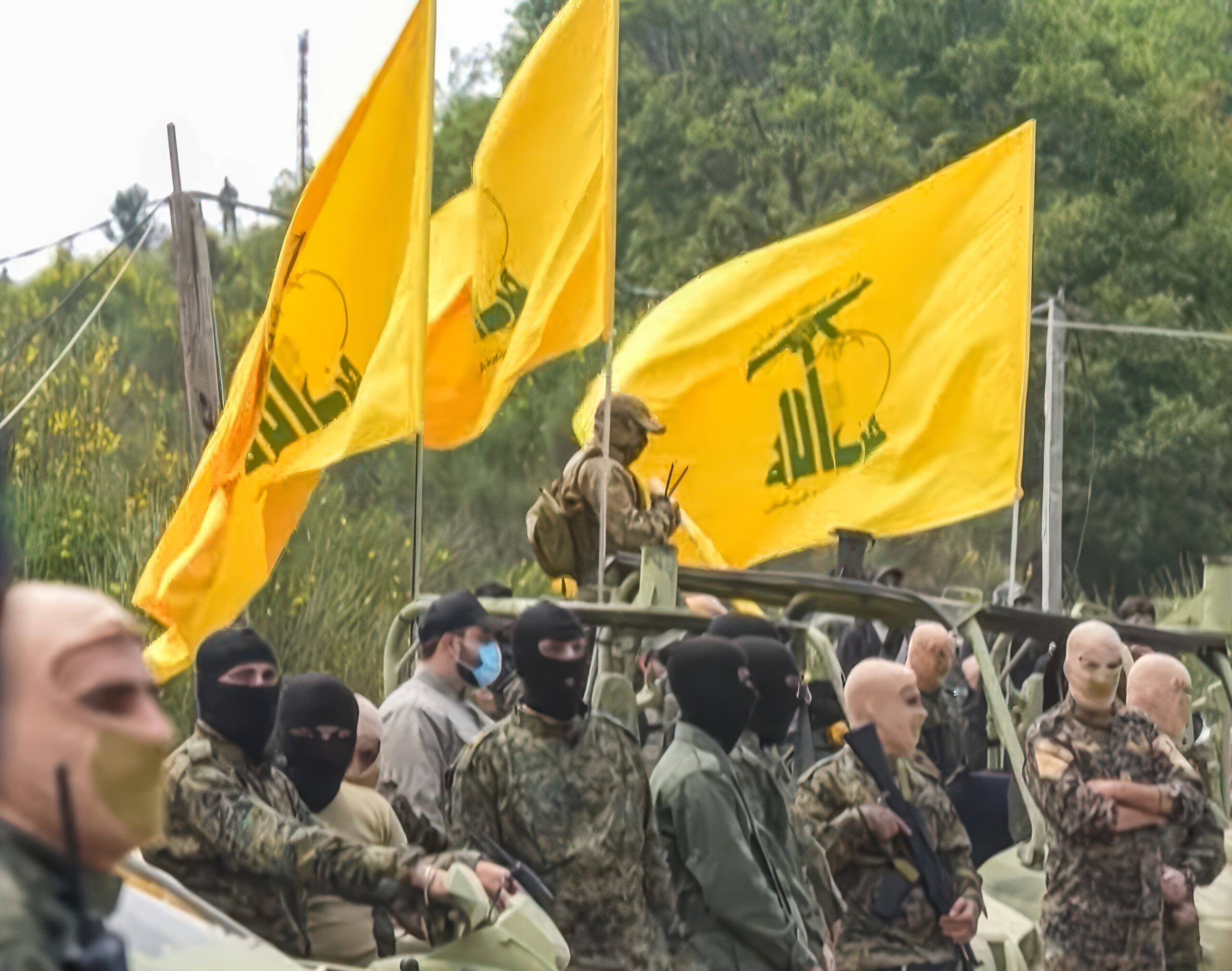
Hezbollah and al-Julani’s forces nevertheless remain enemies. Cells affiliated with the terrorist organization have recently attempted to carry out attacks in the Damascus area, according to Saudi media.
The current positions of both sides may help explain their willingness to consider putting more than a decade of bloodshed behind them. Hezbollah is struggling politically and militarily to reassert its control over southern Lebanon as Israel and the Lebanese government increasingly push back against the organization.
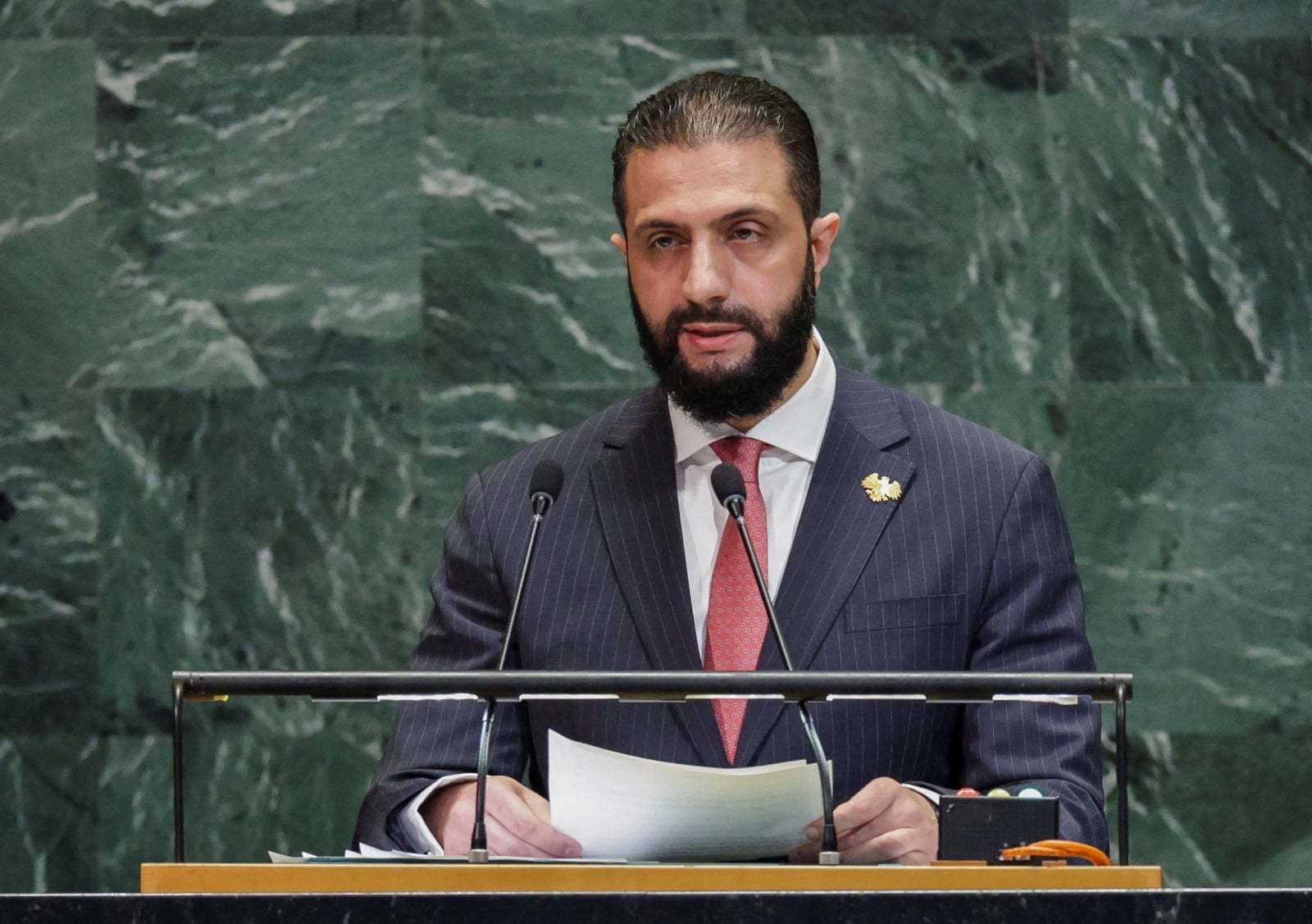
Syrian President Abu Mohammed al-Julani | Photo: Reuters
Al-Julani, meanwhile, is seeking to stabilize and rebuild the new Syria under his leadership—and another military front along the Lebanese border is a complication he would likely prefer to avoid.
The larger question is how supporters on either side would respond to any eventual agreement. Arab media have questioned how al-Julani could explain cooperation with an organization that, for many of his supporters, remains synonymous with Assad’s brutal war against them—and how Qassem’s supporters would accept an agreement with a former al-Qaeda figure who was involved in fighting and killing Shiite Muslims in Iraq.
After more than a decade as bitter enemies, a Hezbollah-al-Julani rapprochement would represent a remarkable reversal. Whether it reflects pragmatic recognition of a changing Middle East or simply two weakened adversaries deciding they can no longer afford another enemy remains to be seen.