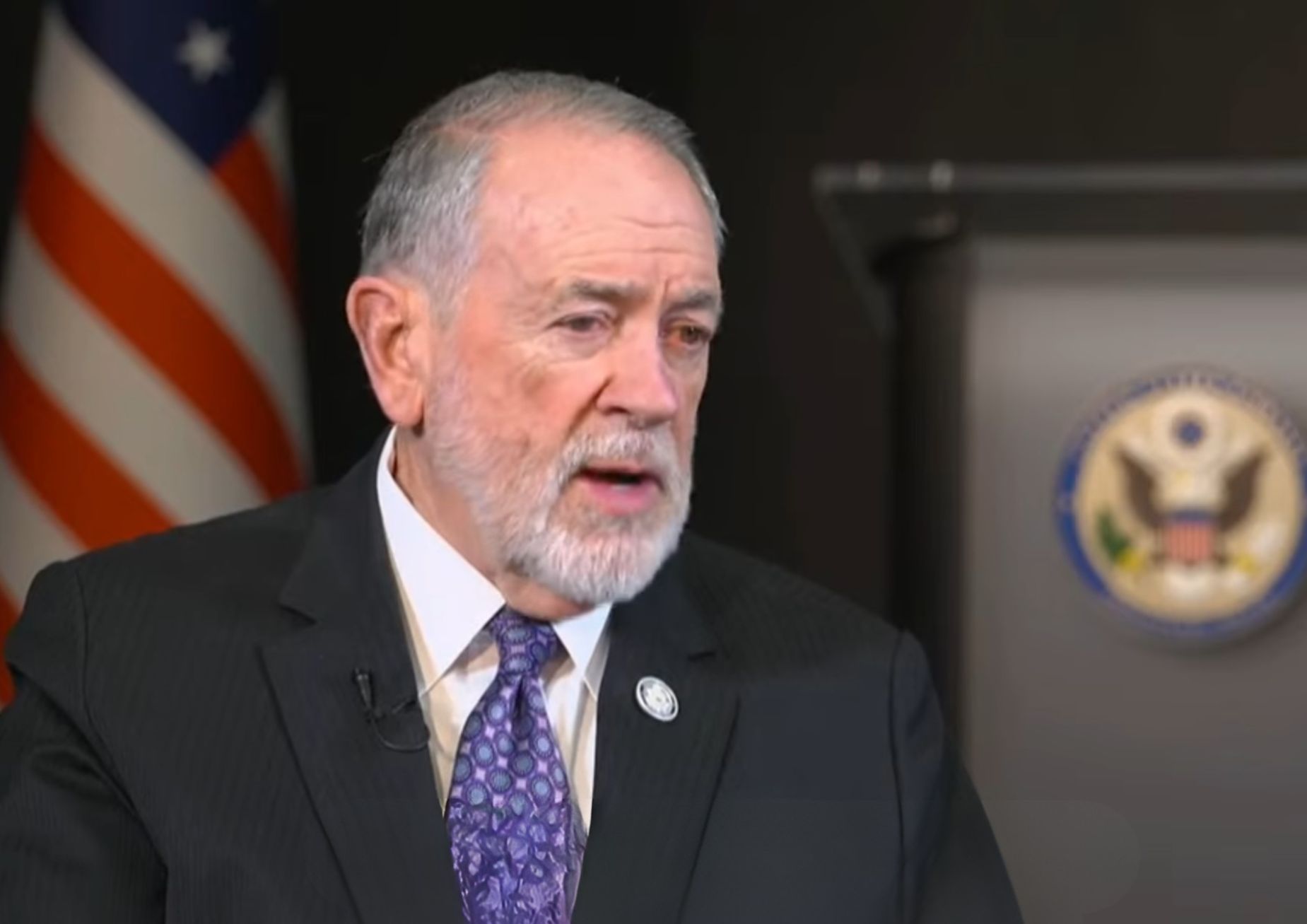
In an exclusive interview with C14, U.S. Ambassador to Israel Mike Huckabee said every visit to Israel reveals new layers of extraordinary history. Huckabee also disclosed during the C14 interview that he intends to recommend President Donald Trump visit heritage sites in Judea and Samaria if he comes to the Holy Land in the future.
The International Conference on Israeli Heritage in Judea and Samaria opened Tuesday in a festive ceremony at the historic site of Herodium. The event, designed to deepen the historical and archaeological connection of the Jewish people to these territories, drew public figures and Israel supporters from around the world. C14 reporter Shira Krips covered the conference and conducted an exclusive interview with U.S. Ambassador to Israel Mike Huckabee.
The guest of honor at the conference, U.S. Ambassador to Israel and Trump confidant Mike Huckabee, didn’t hide his excitement about visiting the site. “This is an amazing biblical site and a great place to be,” Huckabee told Shira Krips. He said that every time he visits Israel he discovers new layers of history: “Just when you think you’ve seen it all, something else pops up and you realize you’ll never be able to exhaust the extraordinary history of this amazing land.”
During the interview, Huckabee also addressed the possibility that President Trump might visit heritage sites in Judea and Samaria. When Krips asked whether Trump is expected to come, Huckabee replied that he intends to strongly recommend it: “I’ll probably see him next week in Washington and tell him that if he doesn’t come—he’s missing something spectacular.”
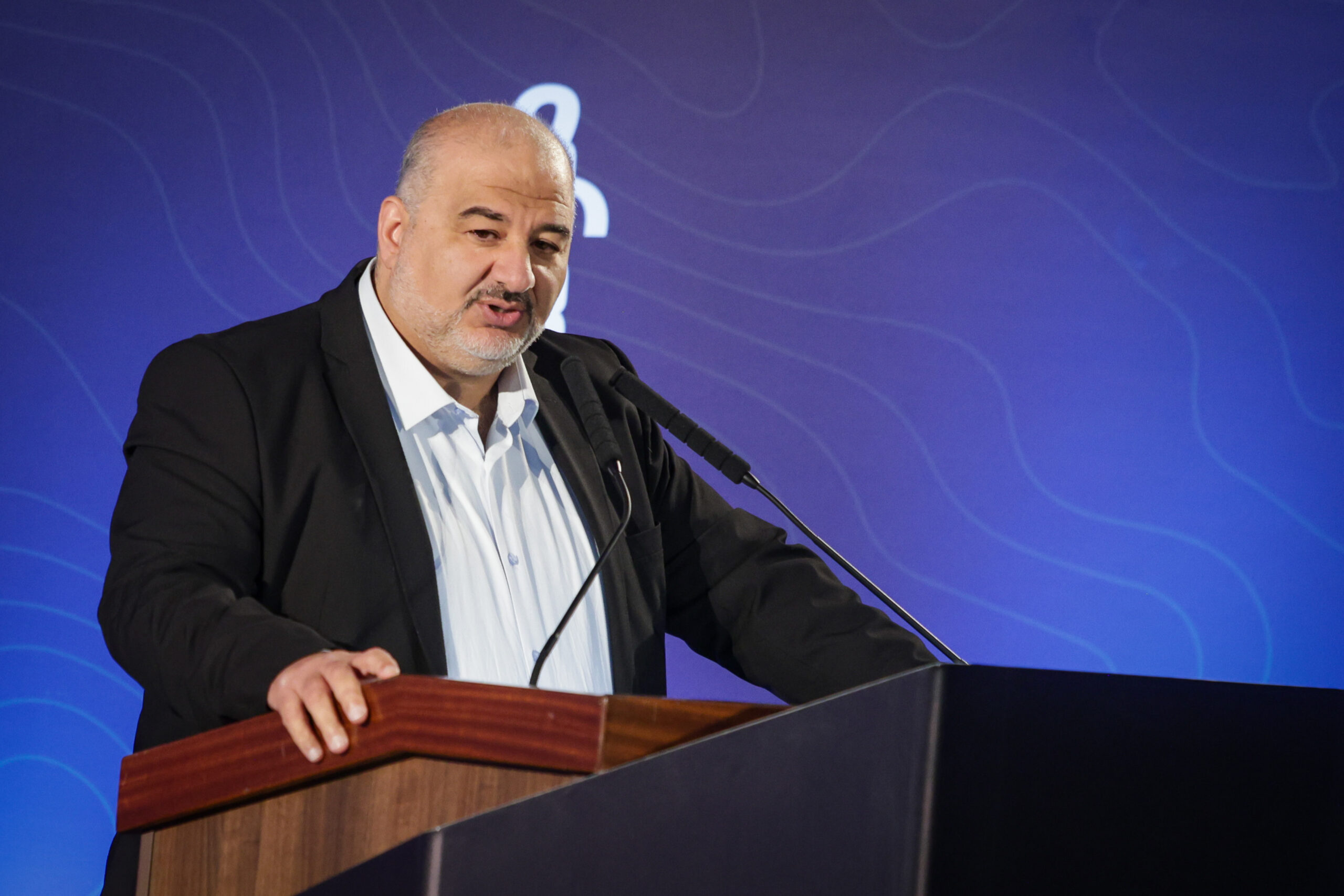
While Israel’s Arab public has spent months pushing for political unity and a single joint list that would include all four Arab parties and restore real power in the Knesset, Mansour Abbas, chairman of Ra’am, keeps dragging his feet, making conditions, and preparing himself an “escape route” to become Israel’s next kingmaker.
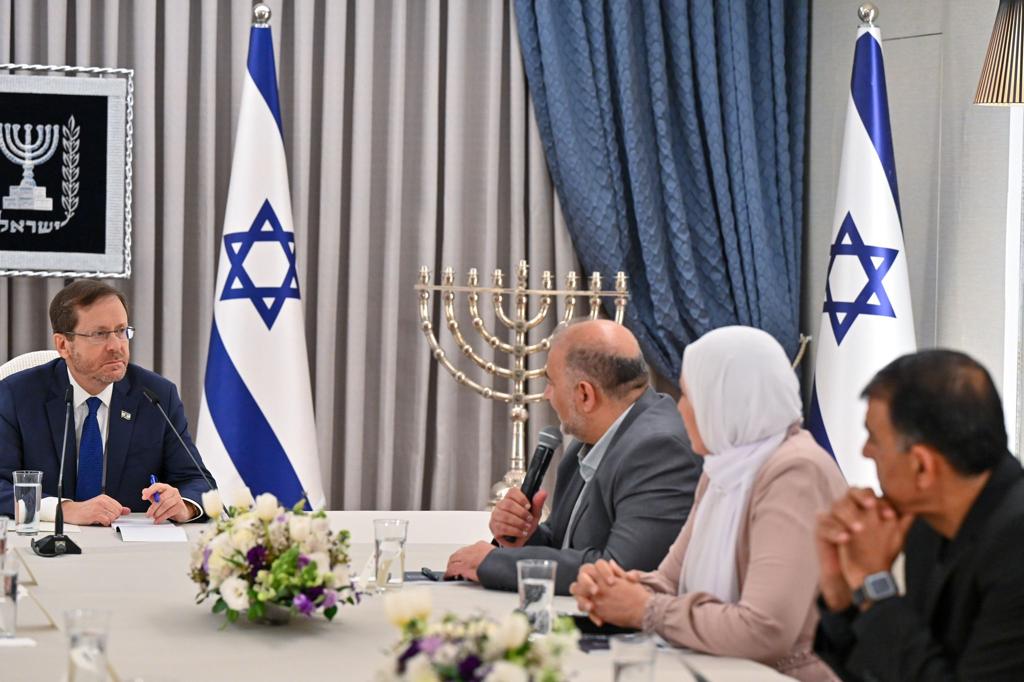
Representatives of the Ra’am party at the President’s residence | Photo: Kobi Gideon, GPO
Why? Because Abbas doesn’t actually want unity. He wants control and money. He prefers to run alone rather than within a joint list framework. In a real joint list—with seat allocation, joint campaigning and coalition discipline—he would no longer be “the sole leader.” He might find himself in slot 2 or 3, or even lower. Abbas would rather be the head of 4-5 of “his” mandates than a secondary player in 12-15 joint mandates. This isn’t public interest; this is his own personal interest.
Mansour Abbas is not the “moderate voice” he tries to sell to Jews. He’s an opportunistic politician who found a niche—being the “responsible” Arab willing to sit with Jewish governments—and he guards that niche at all costs, even if it comes at the expense of his people’s unity and power. He doesn’t want a real joint list because it would force him to give up some power, some ideology, and some of his political options. The Arab public wants unity. Abbas wants to remain the “king” of pragmatism. So what does Mansour Abbas really want?
The Muslim Brotherhood’s Tamkeen Method: Penetrating Democracy and Seizing Control from Within
Ra’am is the political arm of the Southern Branch of the Islamic Movement in Israel. This is not a secular party and not a ‘Palestinian-nationalist’ one. It is Islamist-conservative. Mansour Abbas’s strategy represents one of the pillars of the Muslim Brotherhood’s worldview. This is the stage of political empowerment and consolidation, where the movement seeks to achieve effective control of government institutions and society to implement its vision—an Islamic state based on Sharia law. Unlike extremist currents calling for immediate violent revolution, the Muslim Brotherhood, inspired by founder Hassan al-Banna, developed a gradual and sophisticated approach: building broad roots in society through education, Dawah (spreading Islam), community organizing, and establishing influence networks, followed by systematic penetration of state institutions.
Muslim Brotherhood | Photo: Shutterstock
The method is based on exploiting democratic tools themselves. Instead of trying to topple the regime through frontal force, they penetrate it through free elections, parliamentary participation, joining coalitions, and gaining public legitimacy. Once there’s a foothold in institutions, a process of structural changes begins: influence over the education system, appointments of Islamists in all branches, legislative changes, control of religious and judicial bodies, and creation of a parallel society where Islamic norms become dominant. Ultimately, the goal is Tamkeen—full empowerment that will enable the transformation of government and social orders in an Islamic direction.
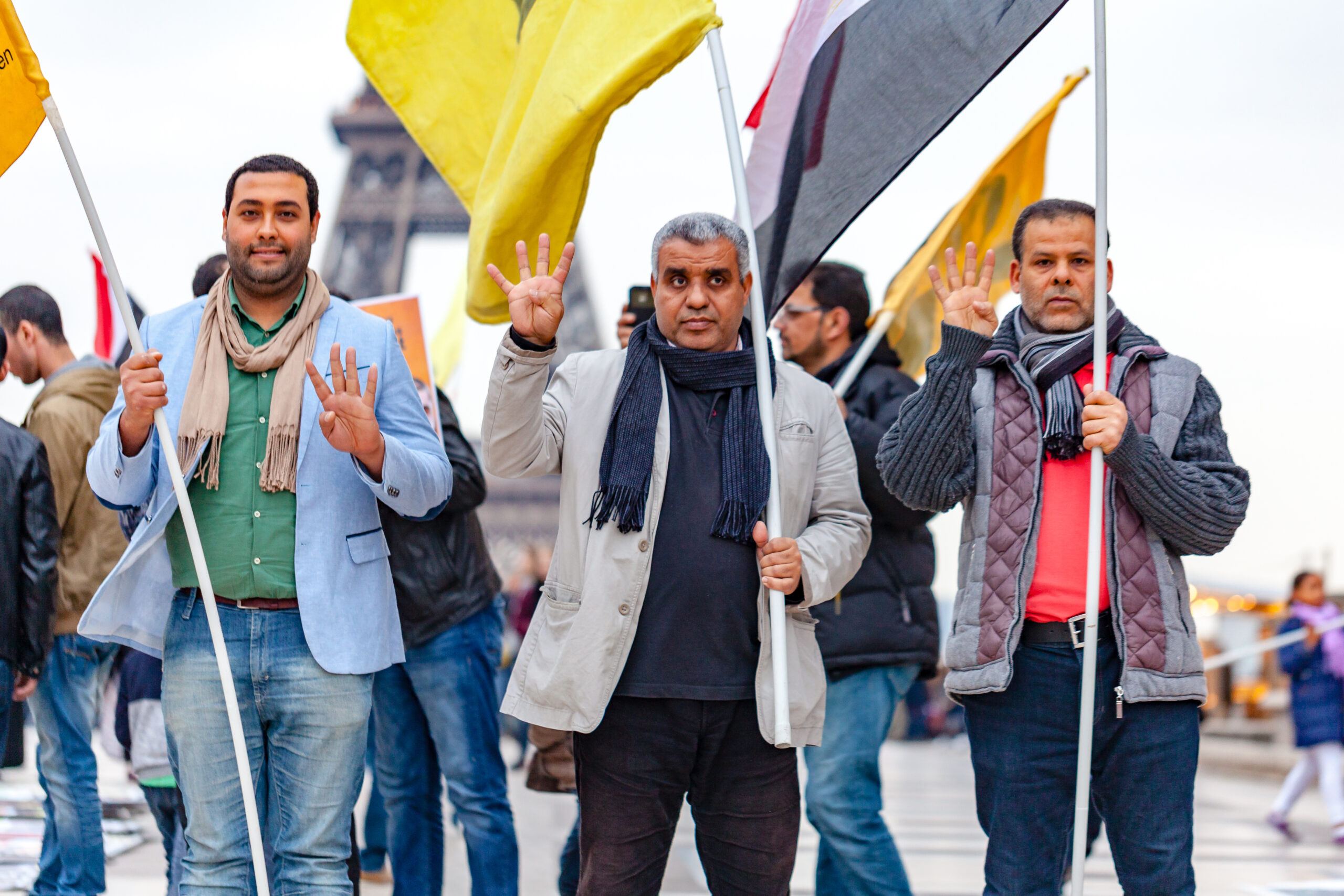
For example, in Egypt, the method was clearly demonstrated. After the fall of Mubarak’s regime in 2011, the Muslim Brotherhood exploited the democratic window, won a significant majority in parliament, and in the presidential election with Mohamed Morsi. They immediately began attempts to change the constitution, expand their influence over the judiciary and military, and embed Islamic values in state institutions. Only a wave of broad popular opposition, backed by military intervention when army commander and Defense Minister Abdel Fattah el-Sisi deposed the sitting president and arrested him, stopped the process before Tamkeen was completed.
Photo: Flsah 90
Here in Israel, Mansour Abbas and the Ra’am party, emerging from the Southern Islamic Movement, represent a clear attempt to implement the same tamkeen method. The Southern Islamic Movement carries deep ideological baggage connected to the Muslim Brotherhood, even if in a more pragmatic version. Abbas and his supporters have participated in the Israeli political system since the 1990s, been elected to the Knesset, and reached a peak in 2021 when they joined the government coalition—a move presented as pragmatism and integration.
Recently, following President Trump’s decisions to impose sanctions on the Muslim Brotherhood in America and elsewhere, amid political pressures and threats to the legality of their activities, Abbas announced severing religious ties and transforming the party into “completely civil.” This is, of course, a distinctly tactical move. The goal is penetration into Israeli government arms—the Knesset, appointments, joining coalitions, decision-making centers, and budgets—to exploit Israeli democracy.
President Donald Trump | Photo: Shutterstock
Under the guise of genuine concern for the rights of Israel’s Arabs and improving their economic and social situation, they are building a political power base that can serve in the future for deeper structural changes: growing influence over the Arab education system, demands for recognition of collective rights that undermine the Jewish character of the state, and influence on sensitive issues like the Temple Mount and the Israeli-Arab conflict.
Exploiting democracy this way is not legitimate. Real democracy is not just a technical mechanism of elections and coalitions; it is based on shared commitment to core values—equality before the law, individual freedom, rule of law, and the national identity of the state. When ideological forces that see democracy as merely a temporary tool penetrate its institutions and use it to accumulate power, they turn it against itself. The European experience clearly teaches that ignoring the danger or granting legitimacy leads to a divided society, gradual erosion of democratic values, and the rise of forces seeking to replace the governing order.
Bennett and Lapid | Photo: Miriam Elster, Flash 90
Now, as we approach the next elections, if the right-wing bloc struggles to reach at least 65 mandates, the same spectacle from the Bennett-Lapid government is set to return. Only this time it will be bigger, more expensive, and more dangerous. In fact, the left is already starting to organize. It knows it won’t reach 61 without Arab help. And the only help remaining in the political arena is Mansour Abbas. So the familiar dances begin again: suddenly Abbas is “the sane voice in the Arab sector,” suddenly “you can talk to him,” and suddenly all his demands—budgets, appointments, legitimizing unrecognized villages, influence over the Temple Mount, autonomy in education—become “legitimate demands.”
Remember, if the right fails to assemble a stable coalition in the next elections, don’t be surprised to see the familiar pictures again: Abbas sitting with Eisenkot or Bennett, and Yair Golan signing agreements with a smirk. Because he knows—this time it won’t be just another few billion shekels. This time, it will be another significant step forward on the path to becoming the decisive factor in Israel, on the road to changing the character of the only Jewish state in the world. And the left? It will keep calling it a “partnership.” Because when you need a Knesset seat, even “values” can be sold.
The Foreign Ministry issued an urgent clarification Tuesday regarding the status of the Hebron Agreement, stating that contrary to publications and statements by Finance Minister Bezalel Smotrich, the political accord has not been canceled, and any claim otherwise does not reflect the official policy of the Israeli government.
According to the Foreign Ministry statement, the only decision made on the matter in recent months was a narrow, focused security cabinet resolution. The decision relates exclusively to planning and construction authority in the Jewish community in Hebron and at Jewish heritage sites in the city.
The Foreign Ministry said the move was taken after years of “complete lack of cooperation” by the Hebron municipality, which prevented any progress on these issues. The decision is meant to enable proper management and development at sites under the responsibility of the Jewish community, given the deadlock created with the local authority.
The Foreign Ministry emphasizes unequivocally that aside from this specific arrangement on planning and construction issues, no other changes have been made to the Hebron Agreement, and it continues to stand as the political basis for the area.
Earlier Tuesday, Smotrich revealed at a ceremony declaring the new settlement of Doran in the Hebron Hills that a process was completed last night in which all planning and construction authority granted to the Hebron municipality under the Hebron Agreement was withdrawn. According to him, the move was implemented following a cabinet decision approved several months ago, and after the Supreme Planning Council made the necessary decisions last night to complete it.
According to his office, the decision means that planning and construction authority in the Jewish community in Hebron and at holy sites, including the Cave of the Patriarchs, are no longer in the hands of the Hebron municipality, but transfer to the responsibility of the State of Israel.
The Hebron Agreement, signed in 1997, divided the city of Hebron into two areas—H1 under ‘Palestinian’ control and H2 under Israeli security control—and remains to this day a particularly sensitive political and diplomatic friction point. Recently, calls have increased from elements in the government to reexamine the arrangements in the city, leading to tensions with the international community monitoring the region’s stability.
The Foreign Ministry’s clarification represents an attempt to prevent an unnecessary diplomatic crisis with Israel’s allies, who view the Hebron Agreement as a cornerstone of stability in the Judea and Samaria region. The distinction between “canceling an agreement” and “a focused decision on construction authority” is critical, as it tries to preserve the political status quo while facing political pressure for changes on the ground.
The trend has reversed: After a wave of departures during the Iron Swords war, 2025 data shows a significant drop in the number of Israelis canceling their residency. According to the figures, 6,651 voluntary applications were filed in 2025 compared to 7,756 in 2024. The sharpest decline was among new immigrants.
Israel’s National Insurance Institute released new data Tuesday showing fewer Israelis ended their residency in 2025. After 2024—the year of the Iron Swords war—saw a spike in departures, the 2025 numbers point to a slowdown.
A surprising statistic emerges among the population considered the most “mobile” – new immigrants who can easily return to their country of origin – and indicates a significant decrease in requests to terminate residency. Only 6,651 residents requested to terminate their residency voluntarily in 2025, compared to 7,756 similar requests in 2024. Of these: 1,995 are new immigrants and 4,656 are residents of Israel.
Finance Minister Bezalel Smotrich announced Monday that Israel has canceled key provisions of the 1997 Hebron Agreement, stripping the ‘Palestinian’ municipality of planning and construction authority over Jewish areas of the city and its holy sites.
“Yesterday we canceled the Hebron Agreement,” Smotrich said at a ceremony announcing a new town called Doren in the Hebron hills. “For many years, one of the most absurd clauses of Oslo remained in place, with authority over the Jewish town in Hebron and the holy sites dependent on Hebron’s terror municipality. Yesterday we put an end to that.”
The move was completed Sunday night when Israel’s Supreme Planning Council approved the final decisions needed to implement a cabinet resolution Smotrich initiated several months ago. Planning and construction authority over Jewish areas in Hebron and holy sites—including the Cave of the Patriarchs—now rests entirely with the State of Israel rather than Hebron’s municipality.
The Cave of the Patriarchs | Photo: Wissam Hashalmon, Flash 90
“This is much more than a planning procedure,” Smotrich added. “This is a historic correction. We are continuing this regulation revolution, strengthening governance and deepening Israeli sovereignty in Judea and Samaria.”
Smotrich serves as both finance minister and a minister within the Defense Ministry, where he oversees civilian affairs in Judea and Samaria.
Energy and Infrastructure Ministry Director General Yossi Dayan told the Israeli Institute for Energy and Environment’s “Energy Summit 2026” today (Tuesday) that fortifying Israel’s national energy infrastructure is critical to giving the IDF operational freedom to strike Iranian targets.
Dayan said the recent war demonstrated the need for early preparation and significant investment in the sector, arguing that Israel’s energy resilience directly affects its ability to make security decisions and operate during emergencies.
Energy station in southern Iran | Photo: Shutterstock
He said one of the main considerations in evaluating strikes on enemy energy targets is Israel’s ability to withstand a counterattack. The more protected and resilient Israel’s energy sector, he said, the more room decision-makers have on security matters—including strikes on Iran’s energy infrastructure.
“The public saw that there was electricity, water and fuel, but behind that stood enormous work done throughout the war,” Dayan explained. “One of the considerations in evaluating a strike on energy facilities in enemy countries is what the response against Israel will be. If we want decision-makers to have more freedom of action on security matters—we need to be much more protected. At the end of the day, this is about national risk management.”
Dayan said the energy sector developed dedicated solutions for extreme scenarios in electricity, gas, fuel and water, and the fear of widespread blackouts never materialized thanks to early preparation. He stressed that Israel cannot rely on a single energy source and called for advancing civilian nuclear energy in Israel.
Nuclear reactor for electricity and energy production, illustration |Photo: Shutterstock
“In my opinion, nuclear energy is the most efficient and safe energy. There are political, security and regulatory difficulties, but if my opinion were heard—this should be Israel’s next energy,” he said.
Dayan also addressed the development of artificial intelligence and called on Israel to develop independent AI capabilities to reduce dependence on foreign entities. He also addressed one of the main bottlenecks in developing the electricity sector—the transmission grid—and estimated that by 2028 it will no longer be a significant bottleneck.
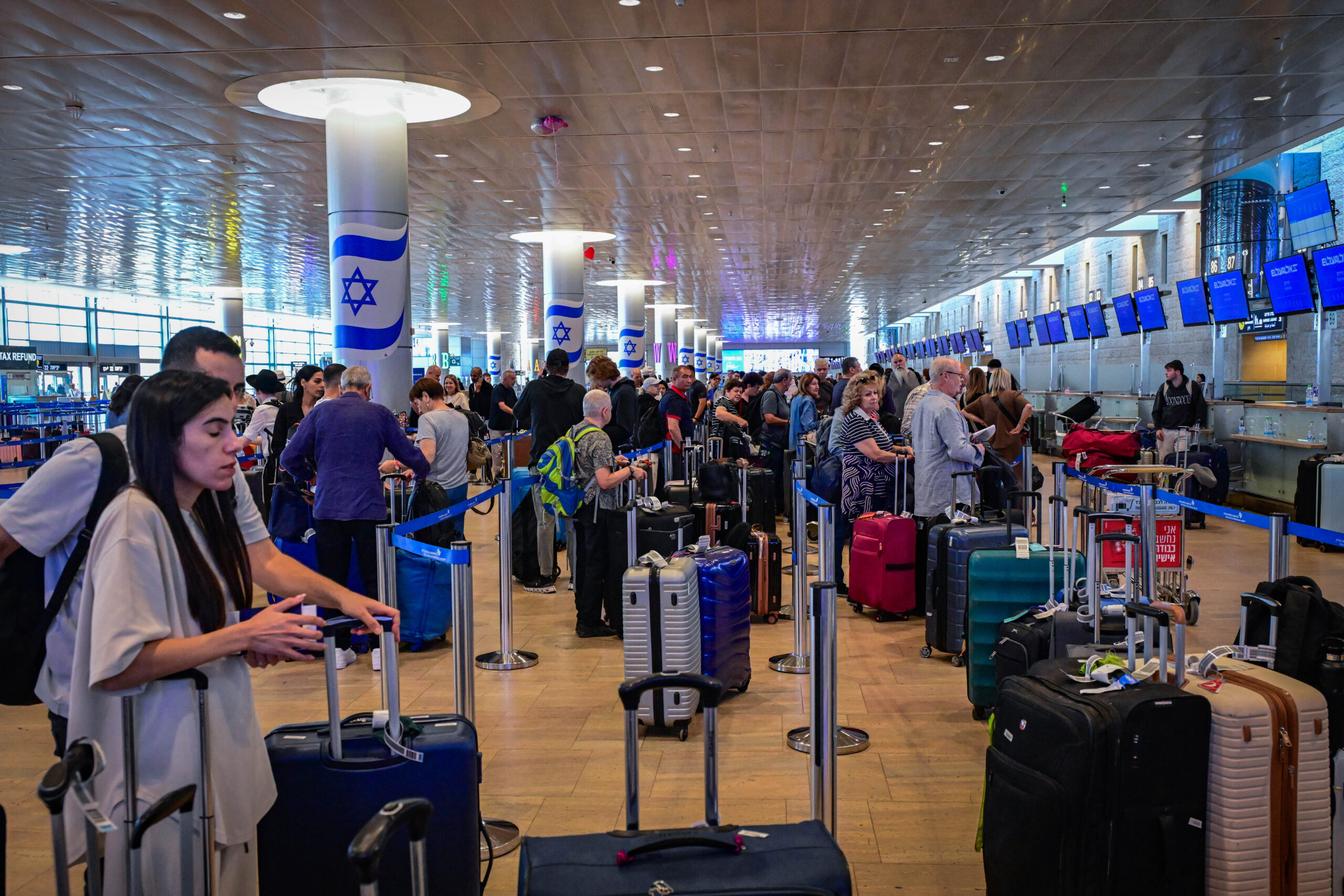
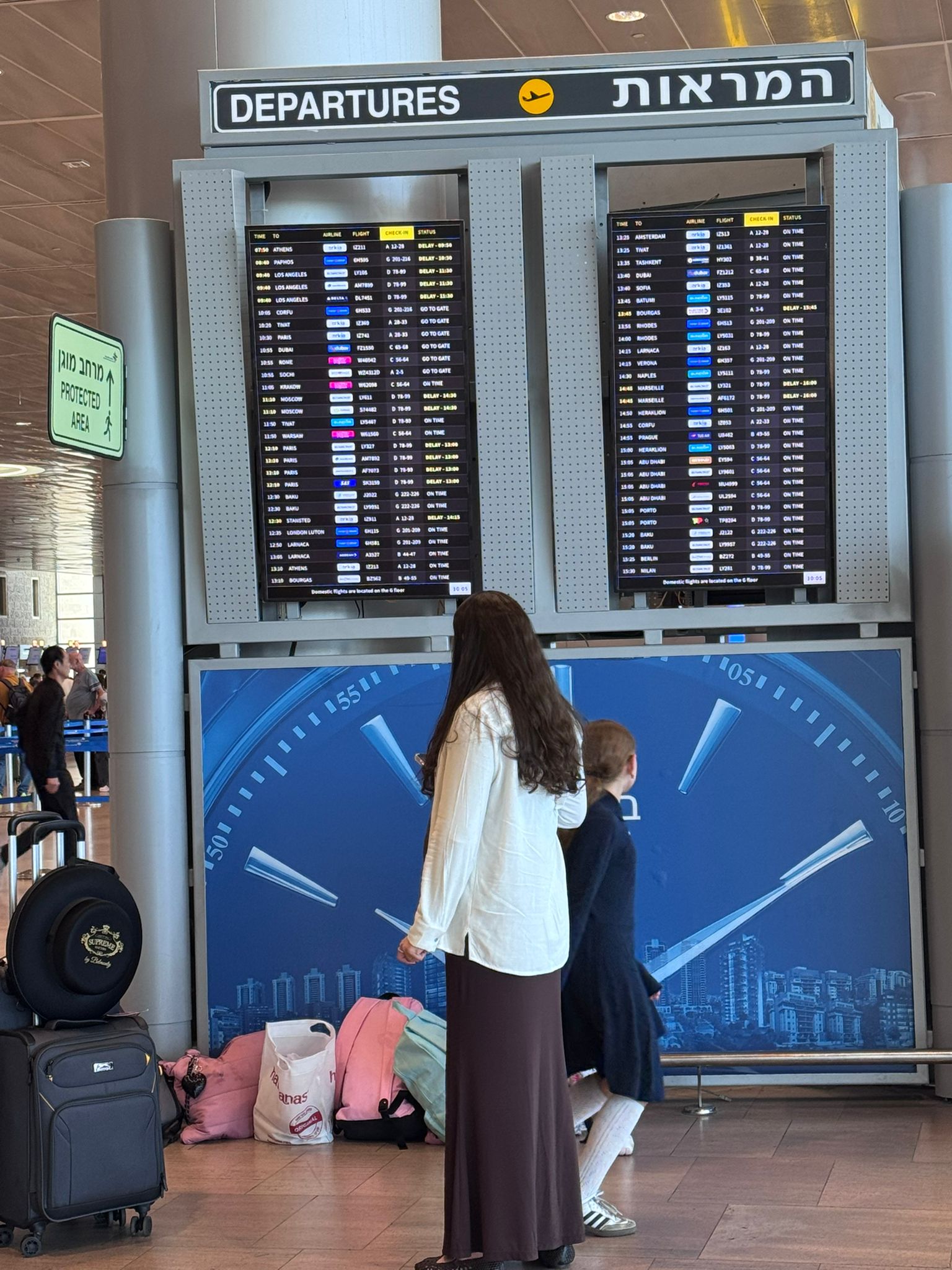
Dozens of aircraft parking stands are expected to be vacated at Ben Gurion Airport in the coming days, after it was decided to transfer some of the aircraft parked at the field to Air Force bases. The move comes after Transportation Minister Miri Regev sent an urgent letter to Prime Minister Benjamin Netanyahu, in which she warned of an acute parking shortage at Ben Gurion Airport. In her letter, she warned that without an immediate solution, there could be a severe shortage of parking stands for aircraft ahead of the peak summer season and the Tishrei holidays — a situation that could affect more than 2.4 million scheduled flight tickets.
Photo: Yossi Aloni/Flash90
Following the appeal, the Prime Minister instructed the head of the National Security Council to formulate an immediate solution to the issue. In accordance with the outline that was formulated, and as first reported by Channel 14, in the coming days approximately 20 aircraft will be transferred from Ben Gurion Airport to Air Force bases, and in a further phase, towards July, approximately 17 additional parking stands are expected to be vacated.
Photo: Avshalom Sassouni, Flash 90
The move is expected to provide a significant response to the parking shortage at the airport and allow Israeli airlines to continue operating their scheduled flights for the summer season, without the need for extensive cancellation of flights.
At the same time, estimates are that the American planes currently parked at Ben Gurion Airport are also expected to leave Israel following the agreement signed between the United States and Iran. If the move is indeed implemented, it is expected to further ease parking congestion at the airport and help increase the supply of parking stands during the busy period of the year.
Israeli Air Force Commander Major General Omer Tischler revealed that a massive strike planned against hundreds of targets in Iran was called off just one hour before aircraft were set to take off. The disclosure came in a letter to Air Force personnel summarizing last week’s events and the Air Force’s operations in the Iranian arena.
According to Tischler, the events began after a strike carried out in Dahiyeh, Beirut, which prompted Iran to launch dozens of surface-to-surface missiles at Israel. He noted that the air defense system successfully intercepted all relevant threats and that there were no casualties in Israel.
While defending Israeli airspace, the Air Force simultaneously operated inside Iranian territory. “The Air Force launched an attack 1,500 kilometers from home,” Tischler wrote. According to him, within just a few hours, dozens of targets in Iran were struck, including components of the air defense system and additional targets linked to the Iranian regime.
The Air Force chief then revealed that the following day, preparations were underway for a far larger operation. “At midday, the entire Air Force was ready to launch a massive strike,” he wrote. According to him, the force had completed arming, planning, and preparation to strike hundreds of targets deep inside Iran, while significantly shortening readiness times.
However, the operation was halted at the last moment. “The strike was stopped while crews were still being briefed in the squadrons, just one hour before departure for the mission,” he wrote.
In his letter, Tischler also addressed recent political developments and understandings reached between the United States and Iran. “It’s too early to know how global moves will affect the security reality,” he noted, emphasizing that the Air Force’s mission remains defending Israel’s security.
He concluded by praising Air Force personnel for their recent performance. “You’ve proven once again flexibility, speed, and power in defense and offense, in planning and execution,” he wrote, adding that the Air Force will continue operating to ensure the security of Israeli citizens.
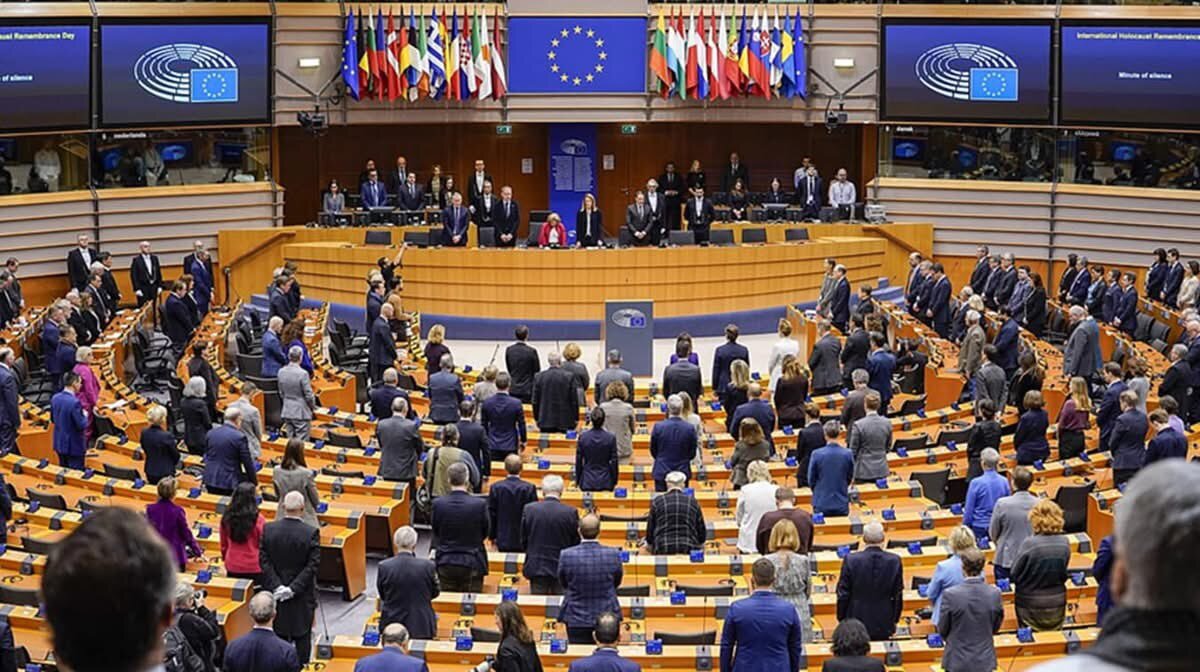
The European Union’s hostile stance toward towns in Judea and Samaria is intensifying: As reported Sunday night by Euronews, after months of stalemate, the European Commission has caved to pressure from EU member states. According to the report, the Commission will present by July 13 a list of ‘options’ for restricting trade with products coming from Jewish communities.
The move, designed to deepen the boycott of Israeli products from Judea and Samaria, comes following demands from foreign ministers of EU member states. EU foreign policy chief Kaja Kallas confirmed after the meeting in Luxembourg that she intends to submit to the Commission a request to prepare a “list of measures,” which explicitly include restrictions on imports of products from what they call “illegal settlements.”
European Parliament | Photo: Nati Langerman
The Dubious Legal Pretext
The European Union is trying to rely on controversial legal opinions from 2024 by the International Court of Justice in The Hague, which claim that the settlements are illegal. Countries like France and Sweden are leading the aggressive line, arguing that imposing tariffs on Judea and Samaria community products is a “normal step.” French Minister Delegate for Foreign Trade Nicolas Forissier even stated recently that this is “not an aggressive” policy.
Meanwhile, the European Commission itself has been wary of such a move until now, since under EU law, measures of this type are defined as sanctions requiring unanimous agreement of all member states—agreement that does not currently exist. However, it appears that political pressure is overriding legal considerations, and the Union is seeking creative ways to “bypass” the unanimity requirement in order to punish Jewish presence in Judea and Samaria.
Agricultural activity in the settlement | Photo: Chaim Goldberg/ Flash90
Israel Determined: No More “Temporary Sites”
The Israeli government has flatly rejected attempts to portray the Jewish presence in Judea and Samaria as illegal, and has defined the European measures as a blatant attempt at interference and delegitimization of the Zionist enterprise. Despite the diplomatic pressure, Israel continues to strengthen its hold in Judea and Samaria, including steps in planning and licensing that constitute natural sovereignty over the homeland.
The final decision regarding the nature of the measures will likely be made ahead of the next meeting of European foreign ministers in July. Until then, it’s clear that Brussels continues to focus on narrowing Israel’s steps, instead of dealing with the continent’s real challenges.
The women of provocation arrived this morning (Tuesday) to carry out their monthly provocation, and hold a Reform “minyan” in the Western Wall area, blatantly disrupting the other worshippers.
Ironically, this month, the Western Wall Heritage Foundation ushers allowed the Reform “Women of the Wall” to enter the plaza wearing branded, demonstrative shirts, and even bringing in a suitcase containing a Torah scroll. In addition, the Reform women’s activities are causing great anger among the women praying in the Women’s Plaza, causing clashes and tension there.
Photo: Yehuda Aharoni
Meanwhile, several other prayer services took place at the Western Wall plaza, including a musical service accompanied by singing. Many worshipers and visitors came to the site during the morning hours, and the plaza was crowded with people who came for Rosh Chodesh prayers, organized groups, families and tourists.
Erez Asher, CEO of the Liba Center, said: “With the joy of Rosh Chodesh and the immense appreciation for the hundreds of righteous Israeli women, it is sad to see the Reform women desecrating the Western Wall again and again. The provocations will not break us. The hundreds of righteous worshipers who came this month to preserve the sanctity of the Holy Place will continue the tradition of festive prayer. The people of Israel know that the Western Wall is the holiest place of prayer that exists for us today, so it was and so it will be.”