Category: Israel

  • Netanyahu Addresses US-Iran Deal in First Response

    Netanyahu Addresses US-Iran Deal in First Response

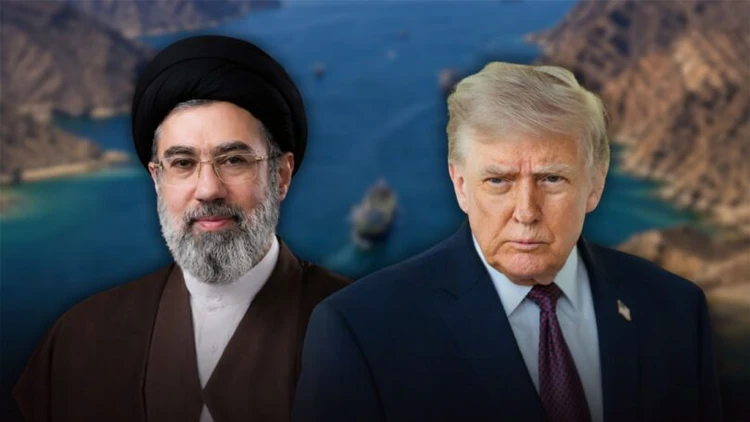
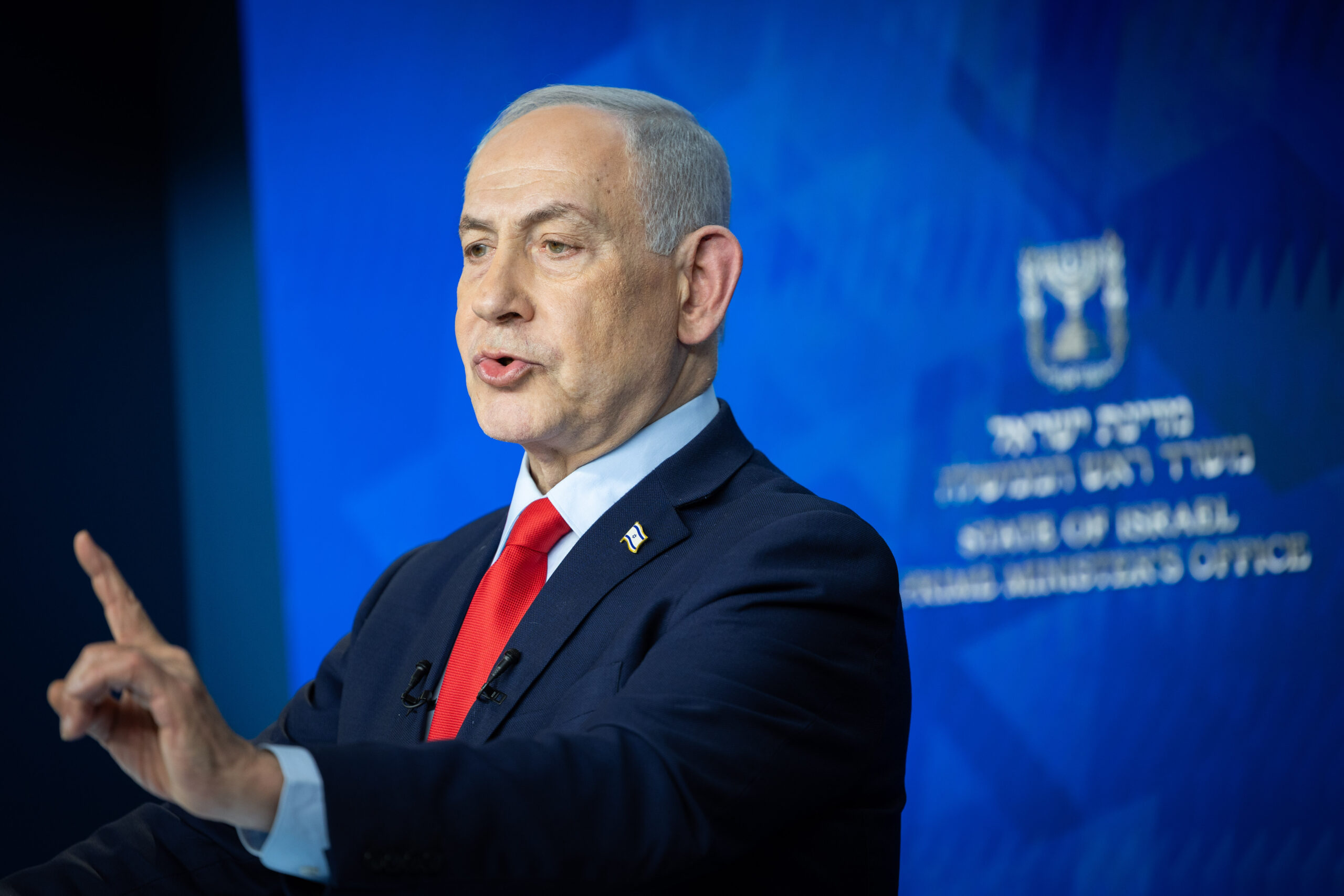
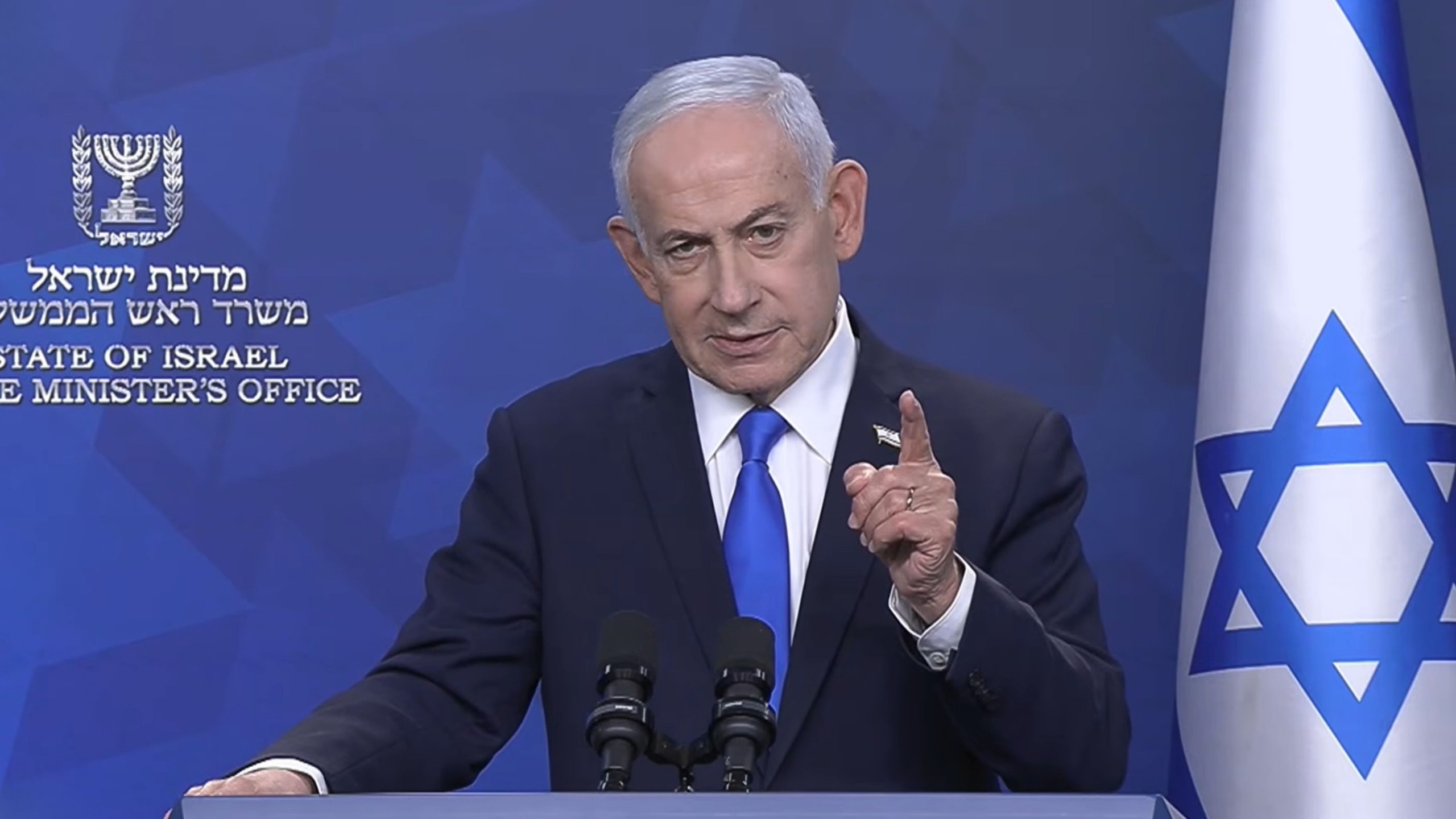
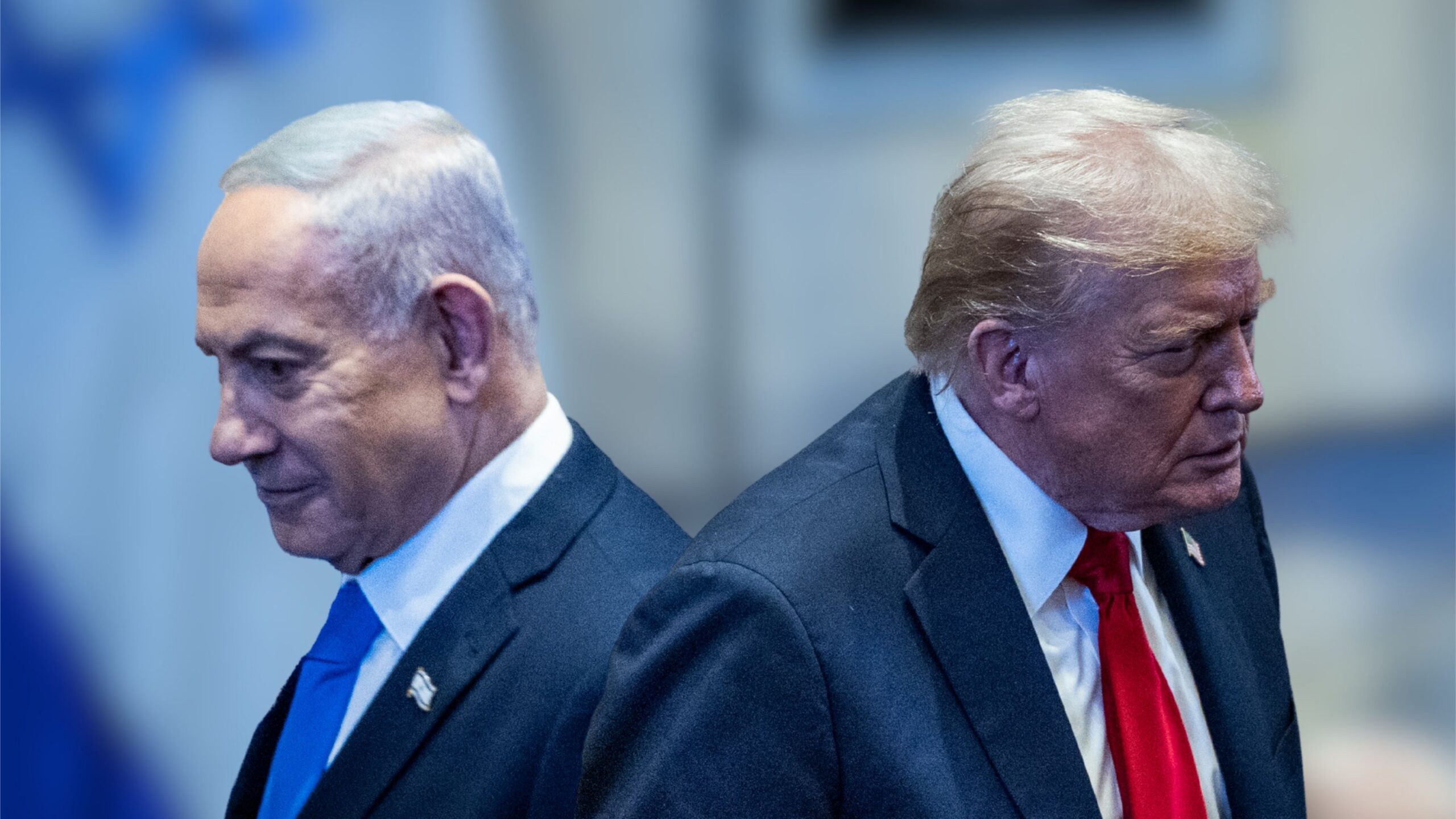
    In a special press conference from his office in Jerusalem, Prime Minister Benjamin Netanyahu addressed the latest policy developments for the first time this evening (Monday), primarily the agreement signed between the Trump administration and Iran. Despite concerns in Israel that the agreement could reduce military freedom of action, Netanyahu presented an uncompromising line and made it clear that, for him, the strategic goal remains the same.

    In his opening remarks, Netanyahu defined the fight against the Iranian nuclear program as both a personal and national issue. “For decades, I have been fighting Iran’s efforts to arm itself with nuclear weapons. I can define this as my life’s mission,” the Prime Minister declared. He sent a clear message to the international community and the regime in Tehran: “With or without an agreement, Iran will not have nuclear weapons. Not today or tomorrow. As long as I am the Prime Minister of Israel, this will not happen.”

    Netanyahu brushed aside criticism of the results of the military campaign in Iran and wondered aloud: “Now I hear people asking, what have we achieved? And I answer them: We have removed the threat of immediate annihilation from us.” According to him, the joint military activity with the US was unprecedented: “We launched the largest strike flight in the history of Israel. We thwarted the nuclear scientists, beheaded the leaders of the terrorist regime and destroyed the nuclear factories.”

    Headlines that will never return? Attacks in Iran, archive | Photo: IDF Spokesperson
    Damage to Iran: “Close to a trillion dollars”

    The prime minister detailed the depth of the damage to Iranian infrastructure, and claimed that the Iranian economy suffered a fatal blow that will set it back for decades. “We destroyed missiles and the vast majority of the factories that produce missiles. We destroyed their navy and their air force,” Netanyahu listed, adding an astonishing economic figure: “We caused enormous damage. We estimate it at hundreds of billions of dollars. Some estimate it to be close to a trillion dollars.”

    According to him, without the Israeli action, the world would have woken up to a completely different reality. “Iran was racing towards nuclear weapons. If we had not acted at the time we acted and with the intensity we acted, Iran would already have atomic bombs. This means that millions of Israeli citizens were in terrible danger of mass death. We have put this danger of the elimination of the Israeli population away from us for years.”

    The bombing of the strategic bridge in Iran | Photo: Arab Networks
    Gaza and Lebanon: “We brought everyone back, I did not accept the nonsense”

    Netanyahu also referred to the parallel systems, while sharply criticizing elements in the defense establishment and politics who called for an end to the war at earlier stages. “They told me: ‘Prime Minister, we must give in, do not enter Rafah, end the war,’” Netanyahu repeated. “I did not accept this nonsense. We entered Rafah and returned all the hostages to the last one.”

    In the northern sector, the Prime Minister emphasized the strategic change: “Hezbollah is a shadow of what it was. We prevented the Radwan force from invading the Galilee and destroyed the vast majority of the 150,000 rockets.” He declared that Israel would not rush to withdraw from the territories it had captured: “We will remain in the security strips as long as necessary to protect our country. Israel will not allow terrorist organizations to camp on our borders.”
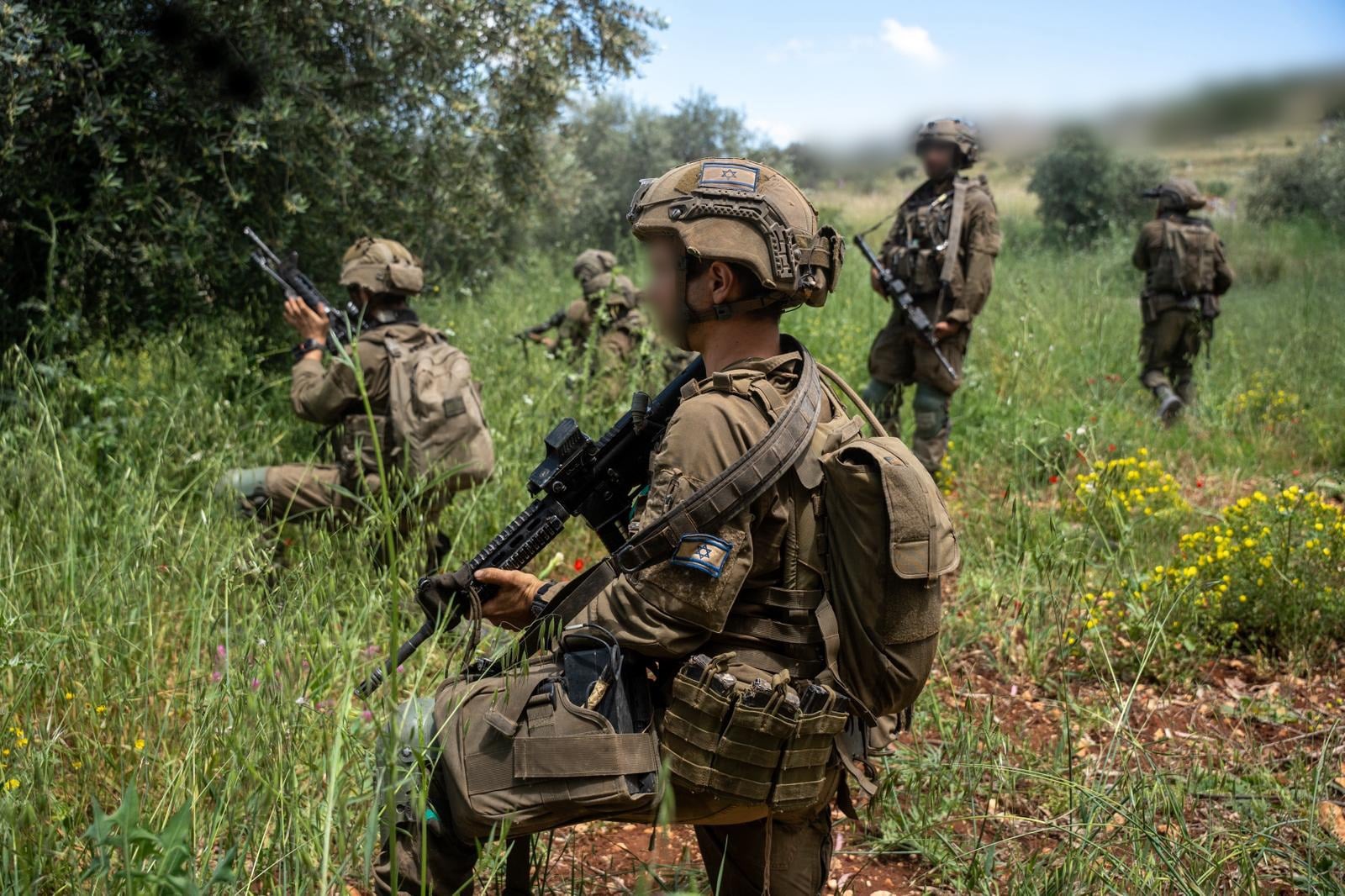
    “They will remain in the security zone.” IDF fighters in Lebanon | Photo: IDF Spokesperson
    “I am running in the elections to win”

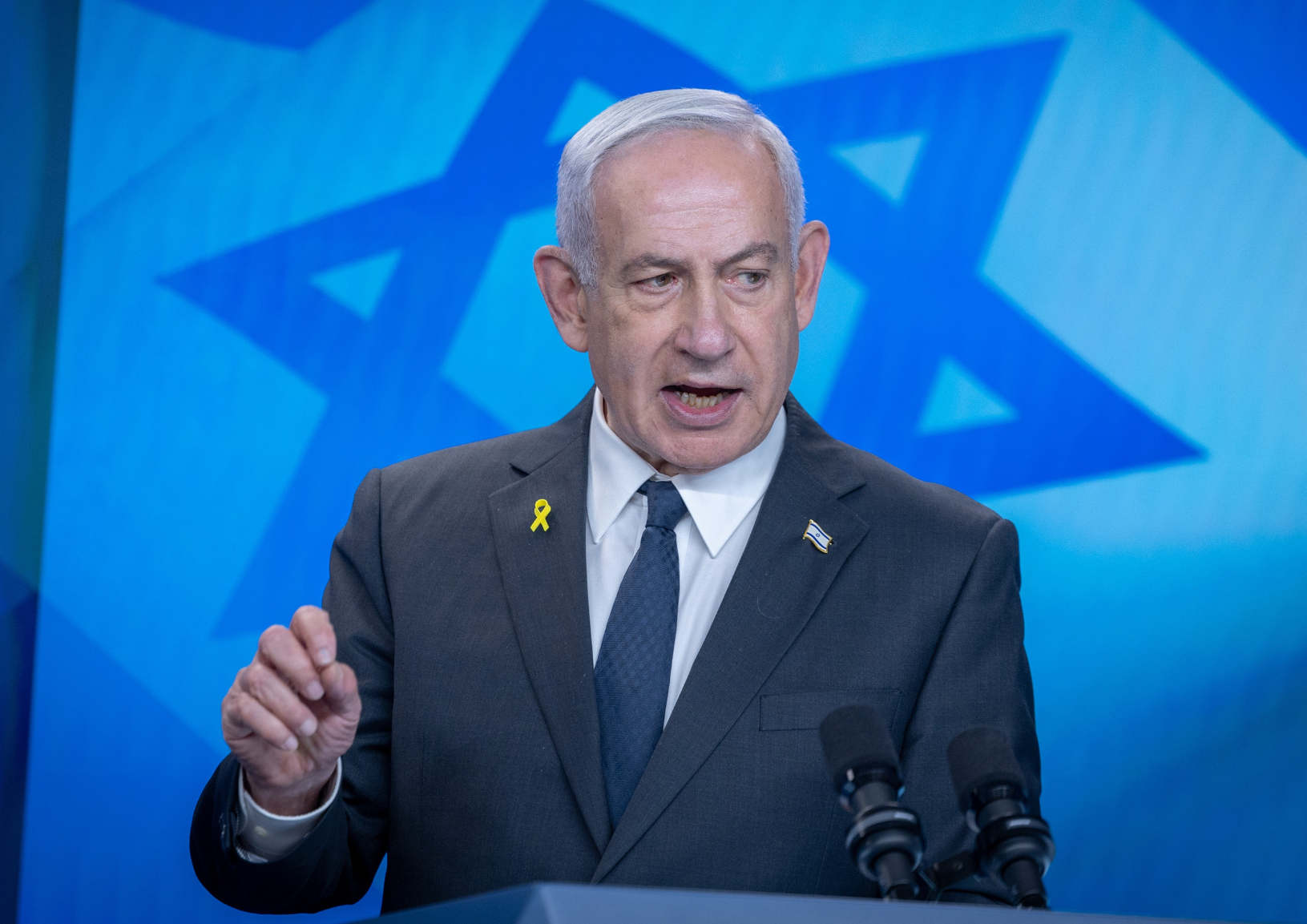
    During the question phase, Netanyahu responded to our political correspondent Moti Kastel, regarding his relations with President Trump and Israel’s red lines. “Trump is the President of the United States, I am the Prime Minister of Israel. I am responsible for our security interests and I stand by them,” Netanyahu said. “When necessary, I stand firm. Alliances are made with the strong, and Israel today is a very strong country.”

    In response to a question about his political future, Netanyahu dispelled the fog surrounding rumors of a possible retirement: “Yes, I’m going to run and I also intend to win.”

    Here to stay. Netanyahu at Likud headquarters in Jerusalem, on the evening of the last election day | Photo: Olivia Pitossi/Flash90

    Towards the end, the prime minister promised that the war achievements were just the beginning of a process of strengthening. He announced an additional 350 billion shekels to the defense budget for “weapons independence” and the development of groundbreaking technologies. “We are going to achieve many more great things,” Netanyahu concluded on an optimistic note. “We will build new alliances with countries in the region and beyond. Israel is stronger than ever, and the axis of evil of Iran is weaker than ever. Together, with God’s help, we will ensure the eternity of Israel.”
  • Israel Must Not Wait for Others to Decide Its Fate

    Israel Must Not Wait for Others to Decide Its Fate

    As Israeli citizens run to bomb shelters again and again from Lebanese fire, and as a new deal with Iran takes shape in Washington, one question sharpens: Will Israel shape its own security future, or wait for others to do it?

    It’s easy to get swept up in daily headlines. Another barrage from Lebanon, another strike in Dahieh, another senior terrorist eliminated. But the real picture is far broader. Hezbollah is a serious threat, but it’s not Israel’s strategic problem. Neither are the Houthis or Shiite militias. They’re all arms of Iran, which for decades has built a ring of fire around Israel to wage war through proxies.

    So the real question isn’t how to respond to more fire from Lebanon. The question is whether Israel is ready to make clear that responsibility for the war waged by its proxies rests first and foremost with the regime in Tehran.

    The American negotiations with Iran and the campaign in Lebanon aren’t two separate events. They’re the exact same campaign. If Iran keeps its nuclear program, its missile array, and the proxy network it built across the Middle East, no tactical achievement in Lebanon will change the strategic reality.

    U.S. Vice President JD Vance said recently that even the world wars ended in agreements. He’s right. Except those agreements were signed only after the aggressor was defeated. Germany, Japan, and the Ottoman Empire didn’t get a chance to recover militarily during negotiations. History teaches that stable agreements are signed after a decision, not instead of one.

    After nearly three years of war, Israel doesn’t have the privilege of folding just when the future of the Middle East is being decided. We paid a heavy price in blood. Thousands of families lost loved ones, hundreds of thousands of citizens bore the burden of reserve duty, and the Israeli economy took a severe hit. All that price wasn’t paid to return to square one, with Iran keeping most of its capabilities and continuing to threaten Israel through its proxies.

    Precisely because of this, if Israel is fated to confront the American administration, it’s better that it be over the most important question for its security and future. Better an argument with our great friend over the Iranian threat than quiet agreement that allows that threat to grow. If there’s a diplomatic price to pay, it should be for Israel’s existential interest, not for one tactical confrontation or another in Lebanon.

    This isn’t a call for confrontation with the United States. On the contrary. The alliance with the United States is a top strategic asset, and it must be preserved. But friendship isn’t dependence, and alliance isn’t surrender of independent judgment. History teaches that nations respect allies who know how to stand up for their vital interests.

    Hezbollah is an arm. The Houthis are an arm. Hamas is an arm. Iran is the head. After nearly three years of war, Israel can’t settle for striking the arms and accept the continued strengthening of the head.

    This is also a test for the prime minister. For decades, Benjamin Netanyahu presented Iran as the greatest strategic threat to Israel. He warned against its nuclear program, its military buildup, and the proxy network it built around us. The events of October 7 and the war that followed demonstrated how real that threat is.

    Mr. Prime Minister, if the struggle against Iran is indeed your life’s political and security work, the hour of testing has arrived. This isn’t the time to settle for managing the war against the proxies while their patron continues to grow stronger. This also isn’t the time to accept regional arrangements that could perpetuate the Iranian threat.

    Israel must not be the Czechoslovakia of the twenty-first century. It must not discover that others decided for it what its security borders will be and what threat it’s allowed to confront.

    There are moments in history when a nation must make clear that some issues aren’t open to negotiation. We’re in such a moment. Israel should strive for cooperation with the United States, but if it’s required to stand its ground against its greatest friend, it’s better that it be over the most existential issue facing it. Not over Iran’s proxies, but over Iran itself. After nearly three years of war, Israel doesn’t have the moral right toward its fighters and citizens to settle for less than that.

  • Smotrich Calls to Apply Sovereignty in Judea & Samaria

    Smotrich Calls to Apply Sovereignty in Judea & Samaria

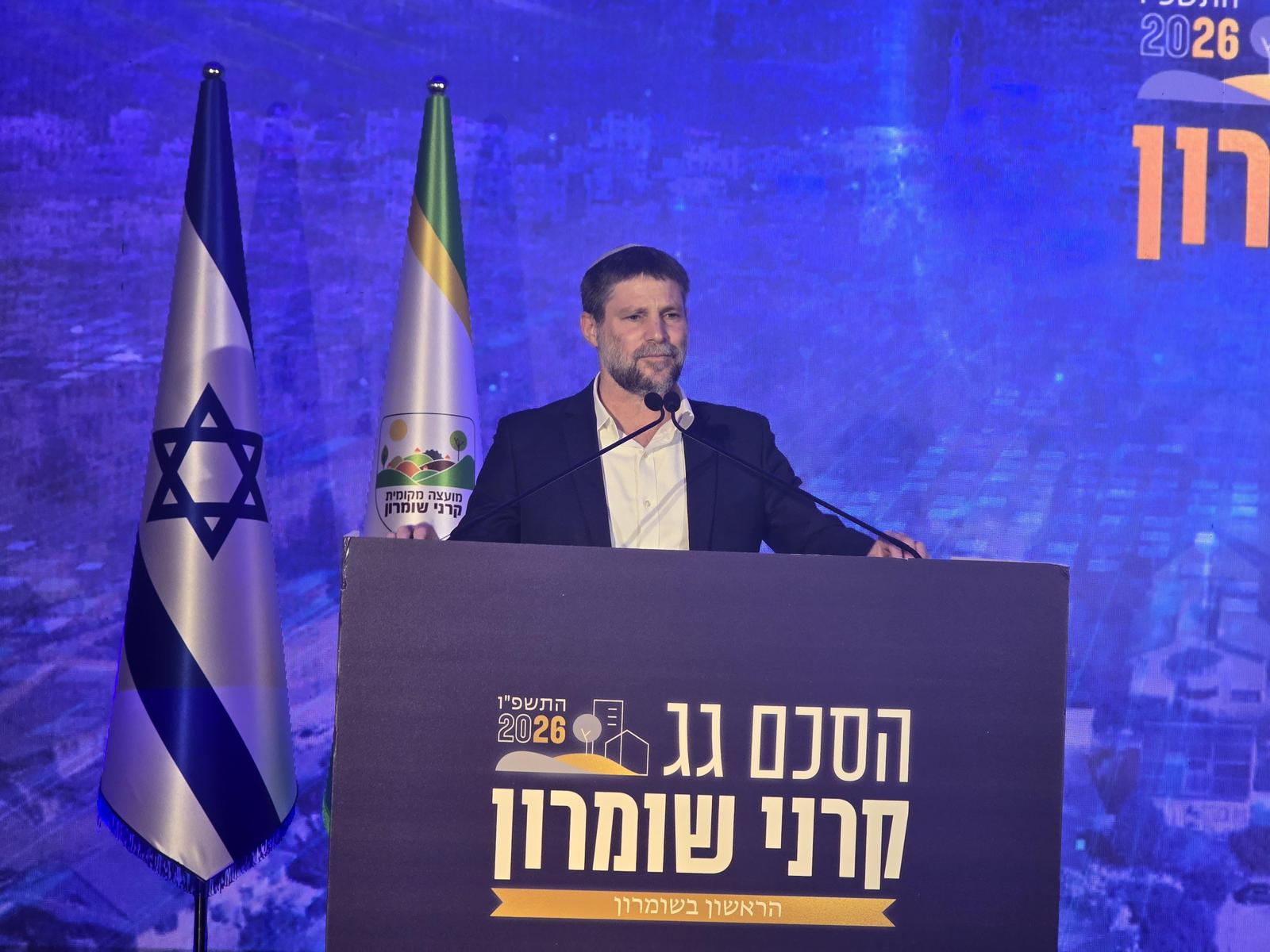
    The first umbrella agreement in Judea and Samaria was signed yesterday (Sunday) in Karnei Shomron, in the presence of Finance Minister Bezalel Smotrich, Construction and Housing Minister Haim Katz, Israel Land Authority Director Yehuda Eliyahu, Karnei Shomron Council Chairman Yonatan Kuznitz, and other senior officials. The agreement, worth approximately 2 billion shekels, was formulated in cooperation with the local council, the Israeli government, and the Israel Land Authority. Prime Minister Benjamin Netanyahu, who was forced to cancel his participation in the ceremony at the last minute, sent a congratulatory video to the council chairman and the participants.

    According to the agreement, approximately 6,000 new housing units are expected to be built, along with extensive investments in infrastructure, public institutions, education, culture, transportation, commercial and employment areas, and the development of public space. It was also reported that the move is expected to expand the borders of Karnei Shomron and strengthen its position as a significant regional center in the heart of Samaria. The agreement also includes investments in the old neighborhoods and upgrading the quality of life of the residents as part of a long-term development plan.

    During the ceremony, Smotrich spoke and also addressed the political pressures exerted against Israel. “The time has come to decide in Judea and Samaria as well and to apply sovereignty even before the elections,” he said. According to him, applying sovereignty would be “the victorious answer to the political attack that is being waged against us in the world.”

    Israel Land Authority Director Yehuda Eliyahu defined the signing of the agreement as a “historic moment,” while Council Chairman Yonatan Kuznitz said that this is one of the most significant moves in the history of the Jewish presence, which will lay the foundations for Karnei Shomron to become a major regional hub in the years to come.

  • Arabs Set Fire, Then Blame Israelis Who Put It Out

    Arabs Set Fire, Then Blame Israelis Who Put It Out

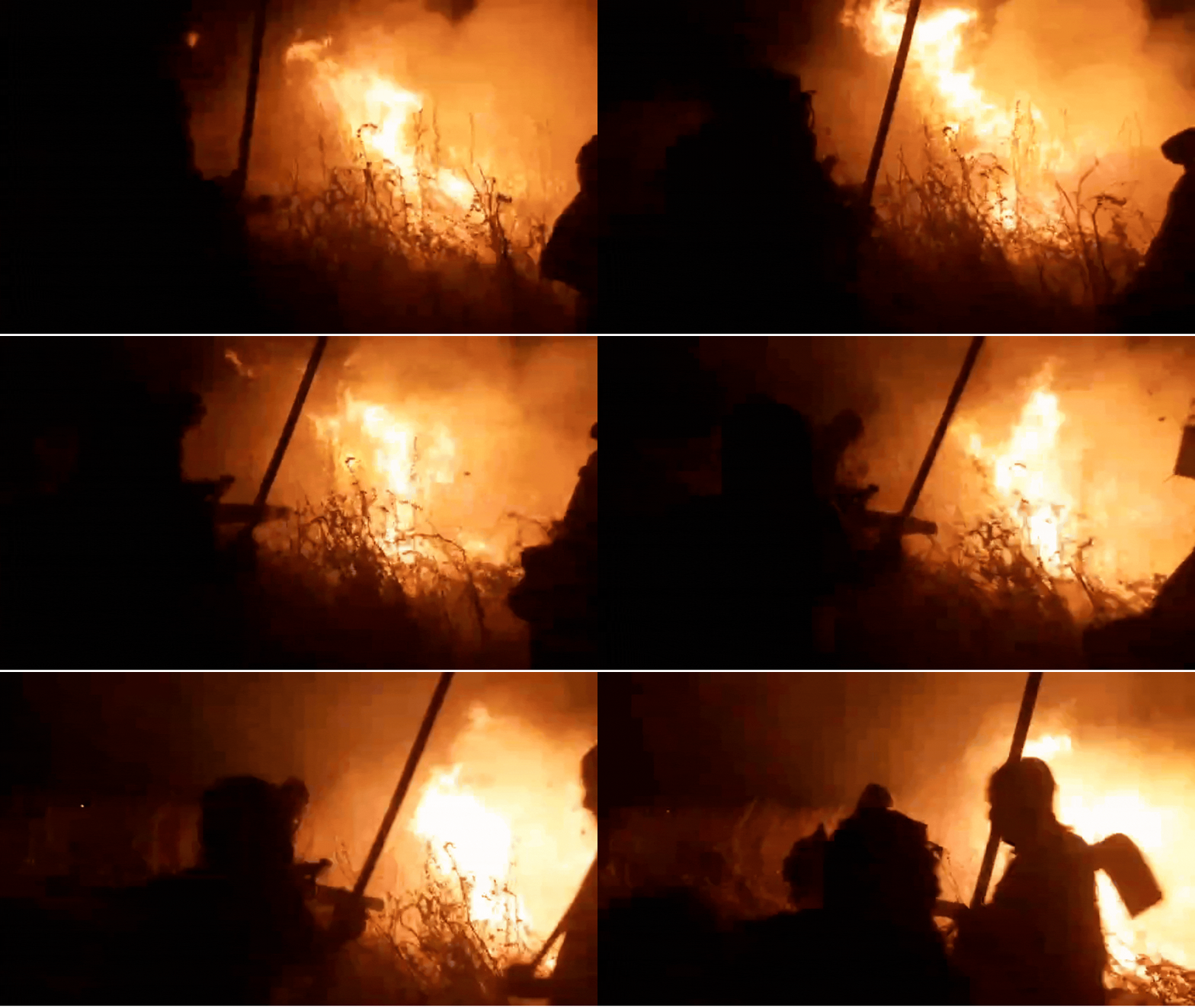
    Arab arsonists set a large fire at the grazing lands of Sela HaRimon Farm, located north of the town of Tayibe in the Binyamin region. Israeli volunteers who arrived to fight the flames found themselves under a violent stone attack from the Arab rioters. Despite one volunteer being injured, they continued firefighting operations.

    The volunteers managed to gain ful control of the fire using a firefighting vehicle, beaters, and blowers, preventing further damage to the grazing lands and nature. Documentation from the scene clearly shows the volunteers’ firefighting efforts as they worked to protect the environment from the arson. One Israeli was lightly injured during the attack.

    But after the fire was extinguished, an attempt began to flip reality on its head and spread a serious blood libel. Sources in the town of Tayibe published false claims that the Jews themselves had set the fire. Qatari propoganda outlet Al Jazeera even quoted the mayor of Tayibe claiming that “settlers burned an entire hill of the village’s lands last night,” in an attempt to create a false narrative against the Israeli community.

    The fake Al Jazeera report | Screenshot

    The Binyamin Regional Council responded: “We utterly reject the attempt to spread false information and back the volunteers who acted with courage and responsibility. The Binyamin Regional Council will continue to work for the rehabilitation and development of open spaces, for the preservation of nature and animals in the area, and for all residents of the region.”

  • Iran Throws a Tantrum: “No More Negotiations”

    Iran Throws a Tantrum: “No More Negotiations”

    US Ambassador to the United Nations Mike Waltz said today (Sunday) that President Donald Trump still “fully intends” that the initial framework of a deal with Iran will be signed today: “I will leave the details and the actual timing to the White House. The Iranians are incredibly difficult negotiators, coupled with the fact that they have a very hard time getting guidance from their supreme leader, and they are not always on the same page within their team.” On the other hand, Professor Muhammad Marandi, one of the representatives of the Iranian negotiating delegation, posted on X, writing: “For now – there will be no more negotiations.” Both statements come after Israel’s strike on the Dahieh neighborhood in Beirut, following repeated ceasefire violations by Hezbollah, which launched drones and missiles toward Israeli territory.

    Earlier, several senior Iranian officials issued threats against Israel. The commander of the Khatem al-Anbiya headquarters warned that “the crimes of the Zionist entity will not go unanswered.” Ebrahim Rezaei, spokesman for the Iranian parliament’s National Security and Foreign Policy Committee, also issued a stark warning against what he called a “miscalculation” in dealing with Israel.

    The speaker of the Iranian parliament, Mohammad-Baqer Qalibaf, also hardened his tone: “The Zionist invasion of Dahiya has proven once again that America lacks the will or the ability to fulfill its obligations,” he wrote. According to him, “You cannot score points by giving the regime a green light. The game of bad cop and good cop is outdated. If you do not have the will and ability to fulfill your obligations, there is no way to continue on the path.”

  • Energy Investment for Northern Israel Border Towns

    Energy Investment for Northern Israel Border Towns

    The Energy and Infrastructure Ministry, together with the “Tnufa Letzafon,” the Israeli government’s directorate for the rehabilitation of the North, announced today (Sunday) a major investment of roughly ₪70 million (~$19M) in energy projects for communities along the confrontation line. The move is part of a broader national investment package for the Northern Development Zone totaling ₪13.3 billion (~$3.6B), including a multi-year plan recently approved by the government.

    According to the ministry, the investment is designed to strengthen the resilience of local authorities and enable them to absorb new populations, based on the concept that an economically strong community that functions continuously even during emergencies is one that families choose to stay in. The ministry said the initiative focuses on strengthening energy security and ensuring operational continuity during crises.

    Energy and Infrastructure Minister Eli Cohen said, “This is an important step that will help rehabilitate the North. We salute the residents of the North for their steadfast resilience, and are investing significant budgets in energy infrastructure that will improve energy supply in routine times and emergencies, contribute to economic development in the region, increase local authorities’ investment in residents’ welfare, and improve quality of life in the North.”

    Minister for Rehabilitation of the South and North Zeev Elkin said: “Just last week we finished passing the five-year plan through the government, and we’re already turning the document into policy and investments felt on the ground. Investment in energy infrastructure is a double investment—both in strengthening resilience and operational continuity of communities during emergencies, and in creating economic growth engines for years ahead.”

    Aviad Friedman, head of the Northern Development Authority, said: “I’m a great believer that the way to strengthen a community is to create its own revenue sources. An energy project generates steady annual income and serves as a growth lever that gives communities managerial independence and the ability to shape their own future.”

  • Netanyahu Eyes New Center-Right Party to Break Ceiling

    Netanyahu Eyes New Center-Right Party to Break Ceiling

    The Israeli left has shed its skin and replaced its leaders this term, but the real battle for shaping the country is now shifting to the right bloc. Netanyahu has identified a critical group of mandates in the center of the map—voters who have never voted for the right but see him as the most suitable leader. Creating a new political force that declares loyalty to the bloc is the only key to breaking through the glass ceiling and achieving a decisive majority.

    The next two moves that will complete the political map ahead of elections, after the left has dealt its cards, will be a facelift for the Likud list and the establishment of a new center-right party that declares, “we’re joining a government led by Netanyahu.” The right likes to say it doesn’t interfere with how the left divides its mandates. And indeed, it’s been a long and fascinating process to watch the formation of the left’s new party map—a process that lasted more than two years.

    Netanyahu | Photo: Haim Goldberg, Flash 90

    Like a snake shedding its skin, the left has replaced nearly all its parties and their leaders. It ousted Benny Gantz, Yair Lapid, and Merav Michaeli; eliminated the National Unity party, Yesh Atid, and Labor; and established in their place “Yachad,” “Yashar,” and the Democrats with Naftali Bennett, Gadi Eisenkot, and Yair Golan. Like a soccer team that dropped a league, or a company that went bankrupt, they replaced the CEO, management, and players, did new branding, and are returning to the market in an attempt to win again.

    But the next two moves that will shape the political map are about to happen on the right: a Likud facelift and a new center-right party. In Likud, Netanyahu understands that the current list—shaped from opposition stars in 2021—isn’t relevant for 2027. The method (primaries) no longer works either, and he’s pushing to create an attractive list through reserved slots or an organizing committee. Likud is the party with the highest voter loyalty in Israel.

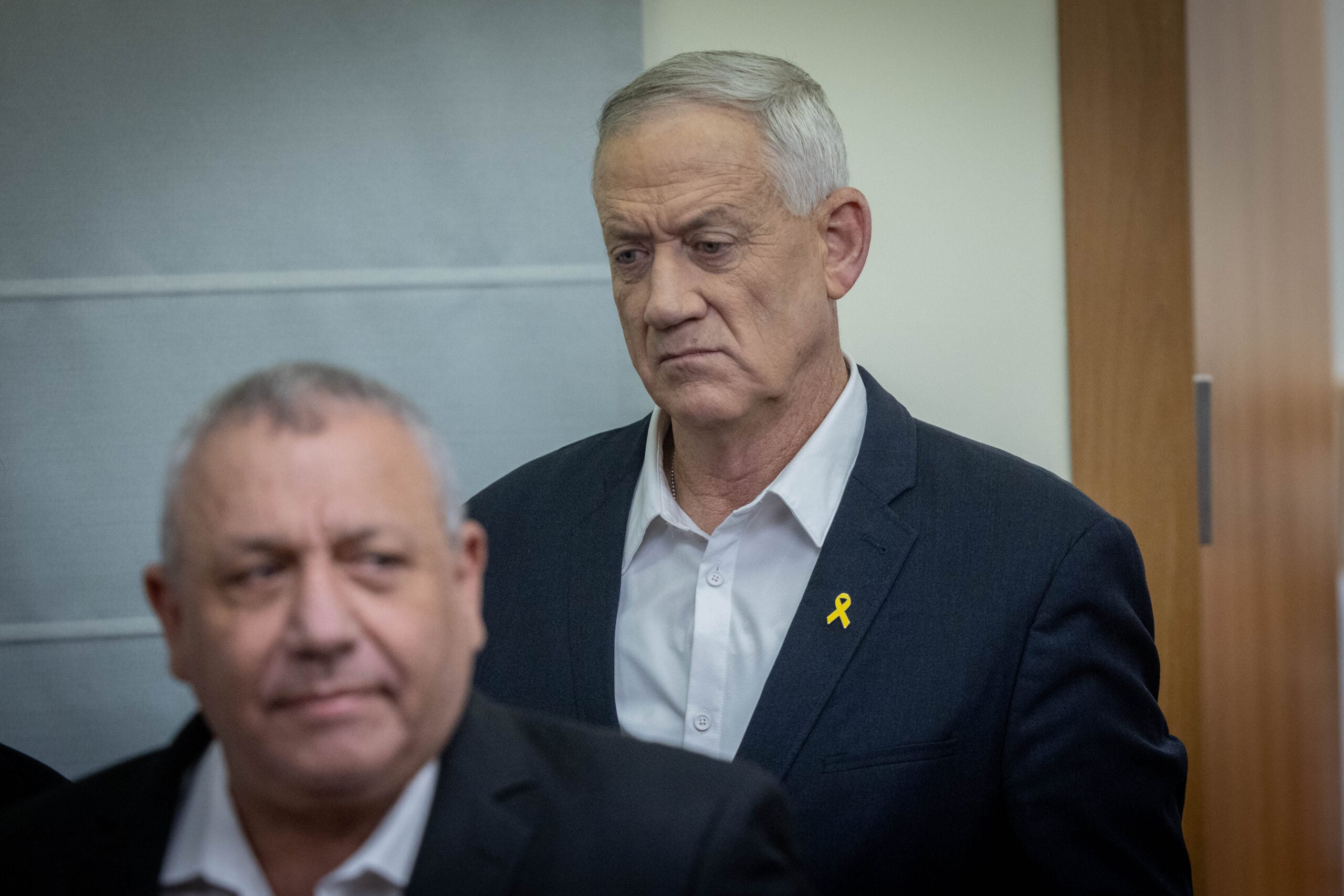
    Benny Gantz and Gadi Eisenkot | Photo: Haim Goldberg, Flash 90

    In the end, the vast majority of Likudniks always come home, but to win decisively requires bringing in another 5 seats. The success level of Netanyahu’s move will also impact the second and more intriguing move: Will a center-right party emerge, and who is its target audience? In the center of the political map, a political paradox is playing out. Since summer 2024, the beeper attacks and “Rising Lion,” and after Gantz and Eisenkot’s departure, a group of about 5-7 seats of disillusioned voters has formed in the center of the map.

    These are voters who have never voted for the right, who see Netanyahu as the most suitable prime minister for this time (according to suitability data), but have no party to choose—and the current Likud isn’t an option for them right now. At the same time, many claimants to the crown have been circulating in that same zone for two years, courting those same voters but failing to gain traction: Yoaz Hendel, Gilad Erdan, Dedi Shimchi, Yuli Edelstein, Ayelet Shaked, and many extra-parliamentary organizations that emerged after the protests and the war.

    Photo: C14

    The reason this supply and demand don’t meet is simple: these voters want a center-right security-oriented, Zionist, values-based party whose leaders will explicitly declare: “We’re joining the right bloc led by Netanyahu.” But all those contenders and organizations can’t make that declaration. They’re still in the paradigm of forcing a change of government as the swing vote, in complete opposition to the wishes of those potential voters. These moves will decide the elections decisively.

    The right bloc in my polls currently has between 63-65 seats. There’s an argument that to carry out significant reforms, a more decisive majority is needed. A center-right party that will be a partner in a future coalition can bring the entire camp to a stable and strong coalition of 68-70 seats, which would completely change the face of the political map in the coming years and the ability to govern effectively.

  • 17 Terror Attacks in One Week Fly Under the Radar

    17 Terror Attacks in One Week Fly Under the Radar

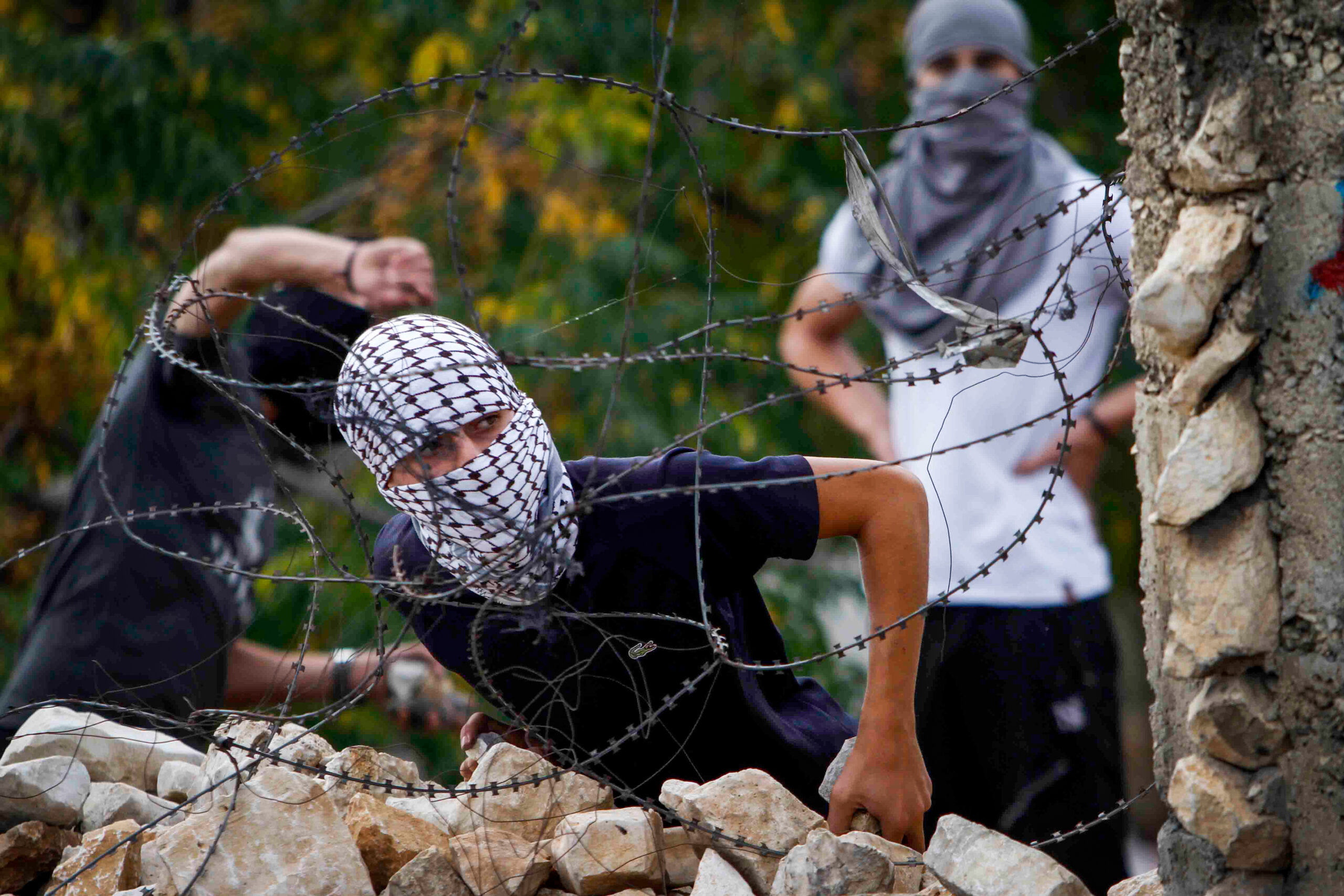
    Terror in Israel rages daily, but it appears that in many cases, if an incident ends without fatalities, it gets no mention in Israeli media. The reality on the ground shows that civilians face life-threatening dangers every day, from stone-throwing and firebombs to laser-blinding attempts while driving.

    Burning tires – The silenced terrorism | Photo: Wissam Ashlamon, Flash 90

    As part of a special C14 project, we’re bringing you the full picture—a list of attacks that occurred over the past week, incidents happening hour by hour but flying under the radar.

    Around 17 terror attacks were recorded over the past week

    Terror incidents occurred throughout Judea and Samaria, including a deadly shooting attack in which one person was killed and five others were wounded. In addition, numerous stone-throwing attacks were documented targeting vehicles and civilians, some of which ended with injuries and property damage. Several firebomb attacks were also reported, including Molotov cocktails thrown at communities and major roads.

    Throwing stones | Photo: Nasser Shtayyeh, Flash 90

    Alongside these, several assaults on Jews were recorded, along with an attempted ramming attack, multiple laser-blinding incidents targeting communities and security forces, and suspected infiltration and sheep theft. Some of the attackers fled the scene, and in several cases damage to vehicles and property was reported.

  • Seinfeld to Pro-‘Palestinian’: ‘It Doesn’t Even Exist’

    Seinfeld to Pro-‘Palestinian’: ‘It Doesn’t Even Exist’

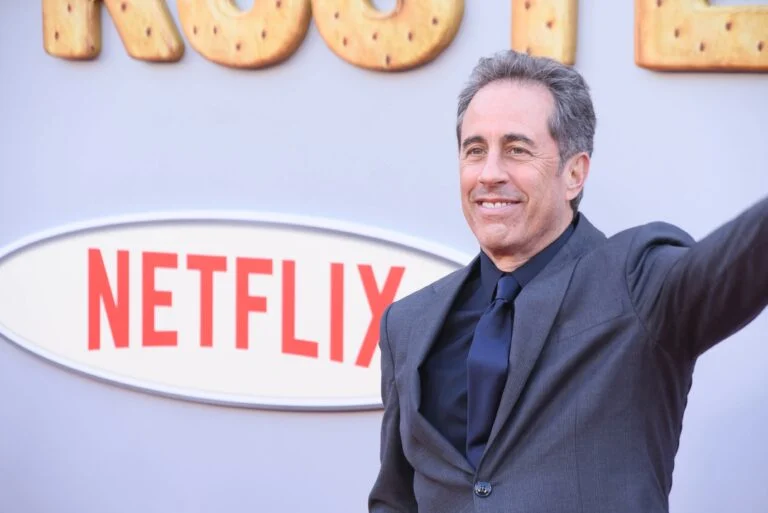
    The escalating political tensions surrounding the Middle East continue to spill into American sports and entertainment, this time reaching one of the country’s biggest cultural icons. An extraordinary confrontation unfolded this week outside Madison Square Garden following the NBA Finals, when Jewish-American comedian Jerry Seinfeld found himself in a verbal clash with an anti-Israel activist amid the chaotic street celebrations.

    The incident happened as Seinfeld left the arena and encountered the celebrating crowd in the electrified atmosphere gripping local fans. A passerby who spotted the star decided to use the jubilant mob scene and packed crowd to challenge him in front of cameras. He approached Seinfeld directly and demanded he publicly declare the political slogan “Free Palestine,” aiming to extract a statement that would be captured on social media.

    Seinfeld’s response came swiftly—and was notably sharper than past attempts by celebrities to dodge such explosive topics. Rather than ignore the provocation or keep walking, the comedian made eye contact and answered coolly: “It doesn’t even exist.” The brief, direct reply stunned the activist and went viral within minutes on social media.

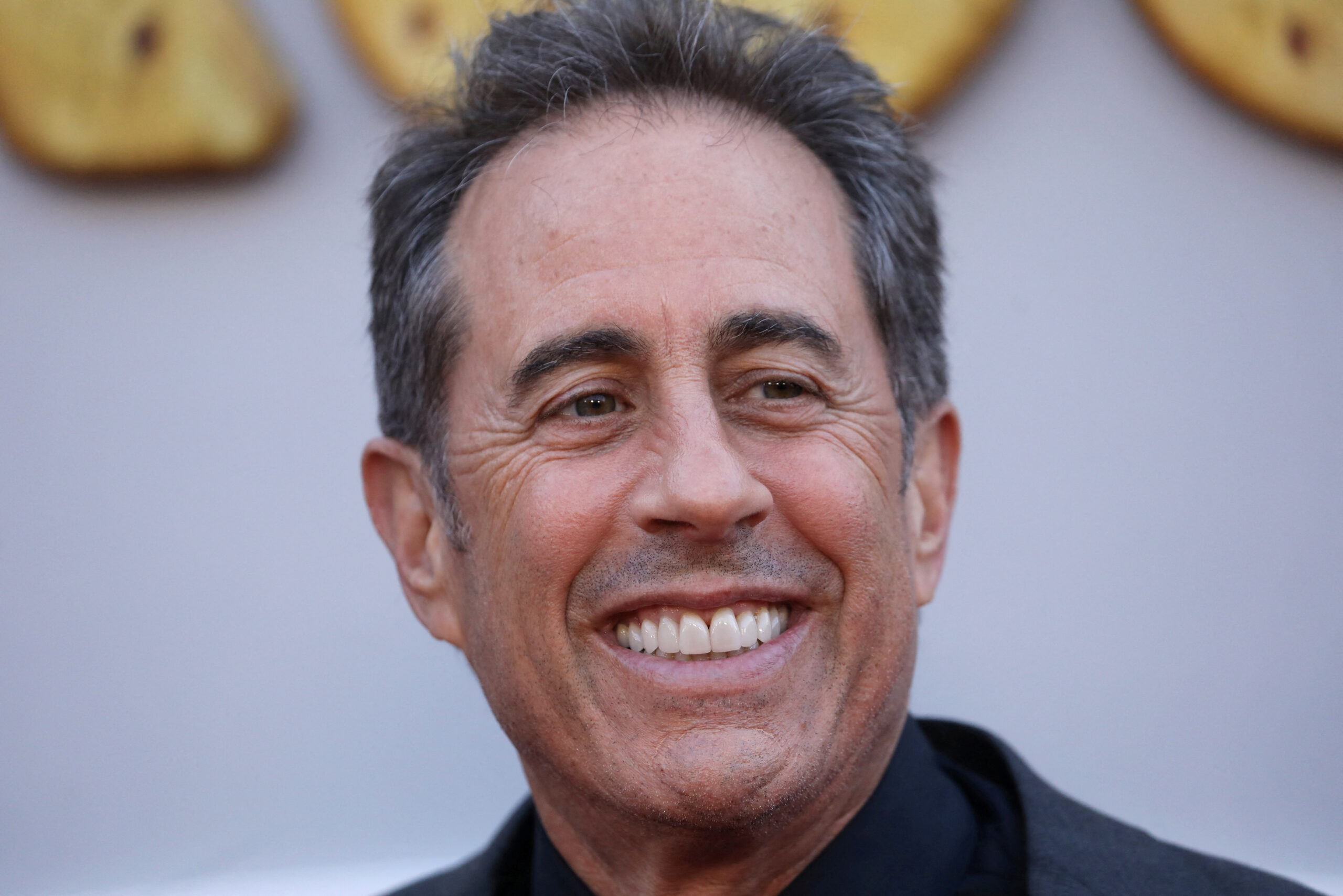
    Jerry Seinfeld | photo by: Shutterstock and MLM IMAGES Los Angeles

    This incident joins a series of public and unequivocal displays of support Seinfeld has shown for Israel since the war began, including solidarity visits to the country and meetings with families of hostages. While the Hollywood entertainment industry often maintains ambiguity on complex geopolitical issues out of fear of career damage, Seinfeld has proven time and again he’s unafraid to express his clear position—even when someone tries to set a media trap for him in the middle of a completely civilian sporting event.

  • Bennett-Lapid Party Crashes to 13 Seats in New Poll

    Bennett-Lapid Party Crashes to 13 Seats in New Poll

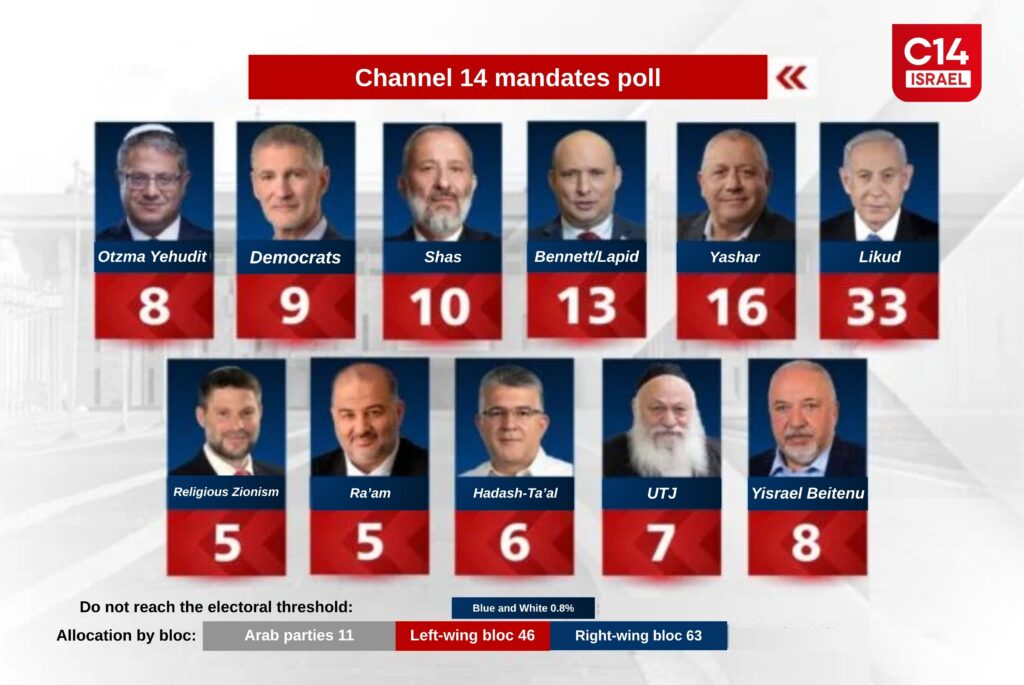
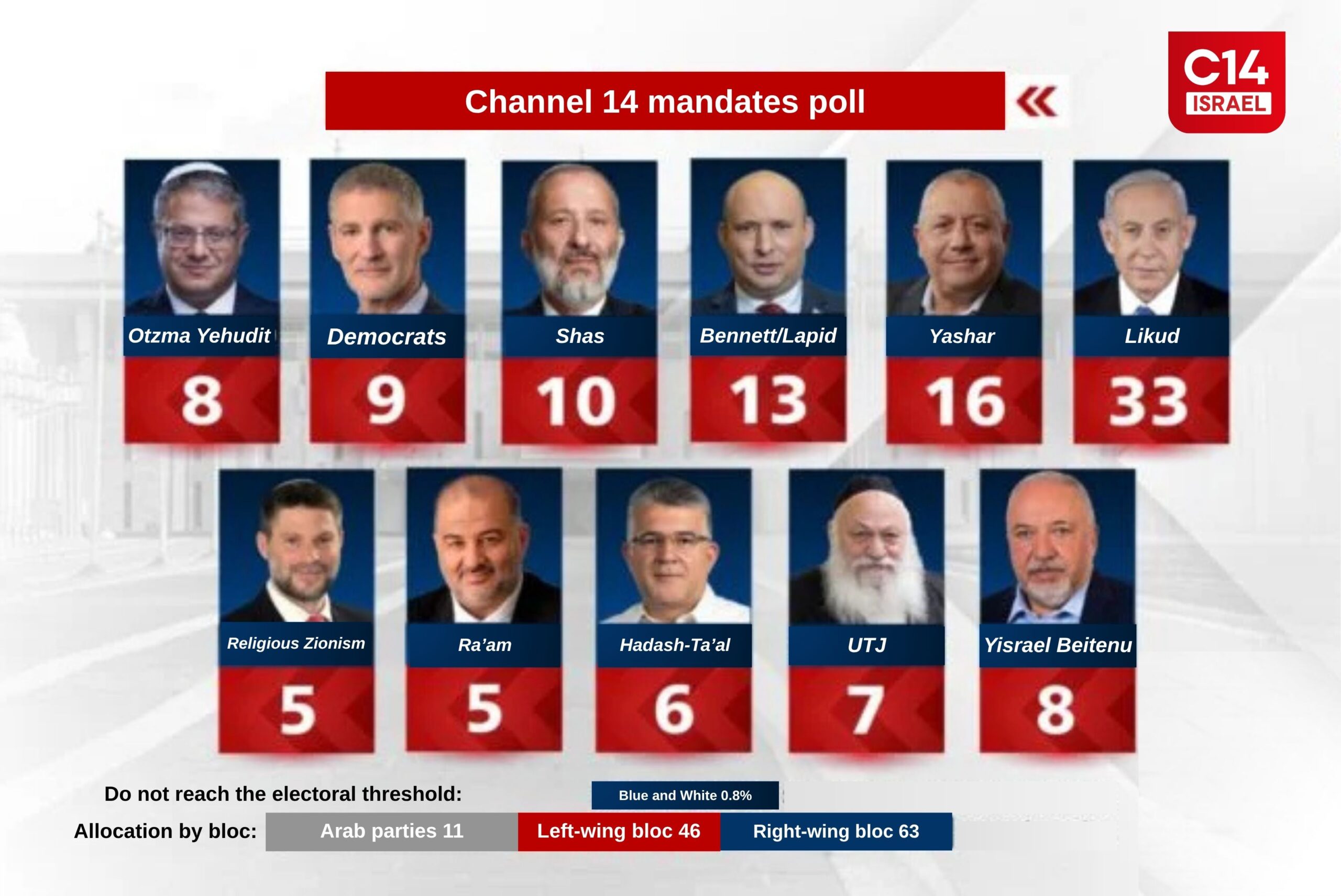
    A new Channel 14 poll broadcast Thursday evening shows the continued strengthening of Likud and Gadi Eisenkot alongside another weakening for Naftali Bennett. According to the latest data collected by Shlomo Filber and NEXT DATA, Likud rises to 33 seats—up one mandate from last week’s poll, which gave it 32 seats.

    Eisenkot’s Yashar party holds steady at 16 seats, cementing its position as the leading opposition alternative after overtaking Bennett for the first time in the previous poll. Bennett’s Yachad continues losing altitude, dropping to 13 seats—one fewer than last week.

    In the overall mandate map, Shas holds at 10 seats, while Otzma Yehudit falls to 8 mandates after jumping to 9 in the previous poll. The Democrats (9), Yisrael Beiteinu (8), and United Torah Judaism (7) remain completely stable compared to last week’s numbers. Hadash-Ta’al holds 6 seats, Ra’am 5—and so does Bezalel Smotrich’s Religious Zionism.

    The right-wing bloc maintains its crushing majority of 63 seats, while the left bloc weakens by one seat to 46 mandates, down from 47 in the previous poll. The Arab parties rise to 11 seats combined, while Blue and White continues its collapse below the electoral threshold with just 0.8% support, after hovering at 1.3% last week.

    On the question of suitability for prime minister, Benjamin Netanyahu widens the gap and reaches 49%—up one percentage point from the last poll. Eisenkot registers significant strengthening on the suitability question, climbing to 29%—another jump after already rising to 26% last week.

    Bennett, meanwhile, suffers a significant setback and drops to just 14% suitability, a sharp fall from the 18% measured in the previous poll. Avigdor Lieberman and Benny Gantz remain stable at the bottom of the list with 7% and 1% respectively, similar to last week’s numbers.

    The poll was conducted by NEXT DATA with 771 adults from the general population on June 11, 2026. Data analysis: Shlomo Filber.