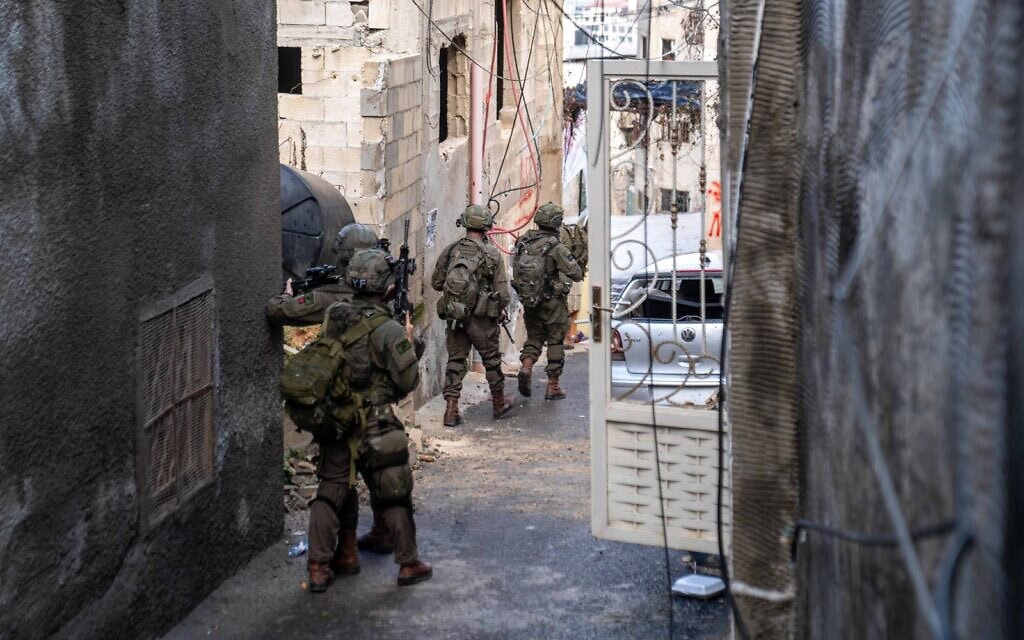
In a targeted overnight operation in Jenin, Israeli special forces arrested three terrorists Thursday night who were planning to carry out a major attack in northern Samaria today.
According to security officials, the three suspects formed a dangerous terror cell that was preparing to execute a serious attack. The swift arrest by the forces prevented what could have been a major incident. The suspects have been transferred to security forces for further interrogation.
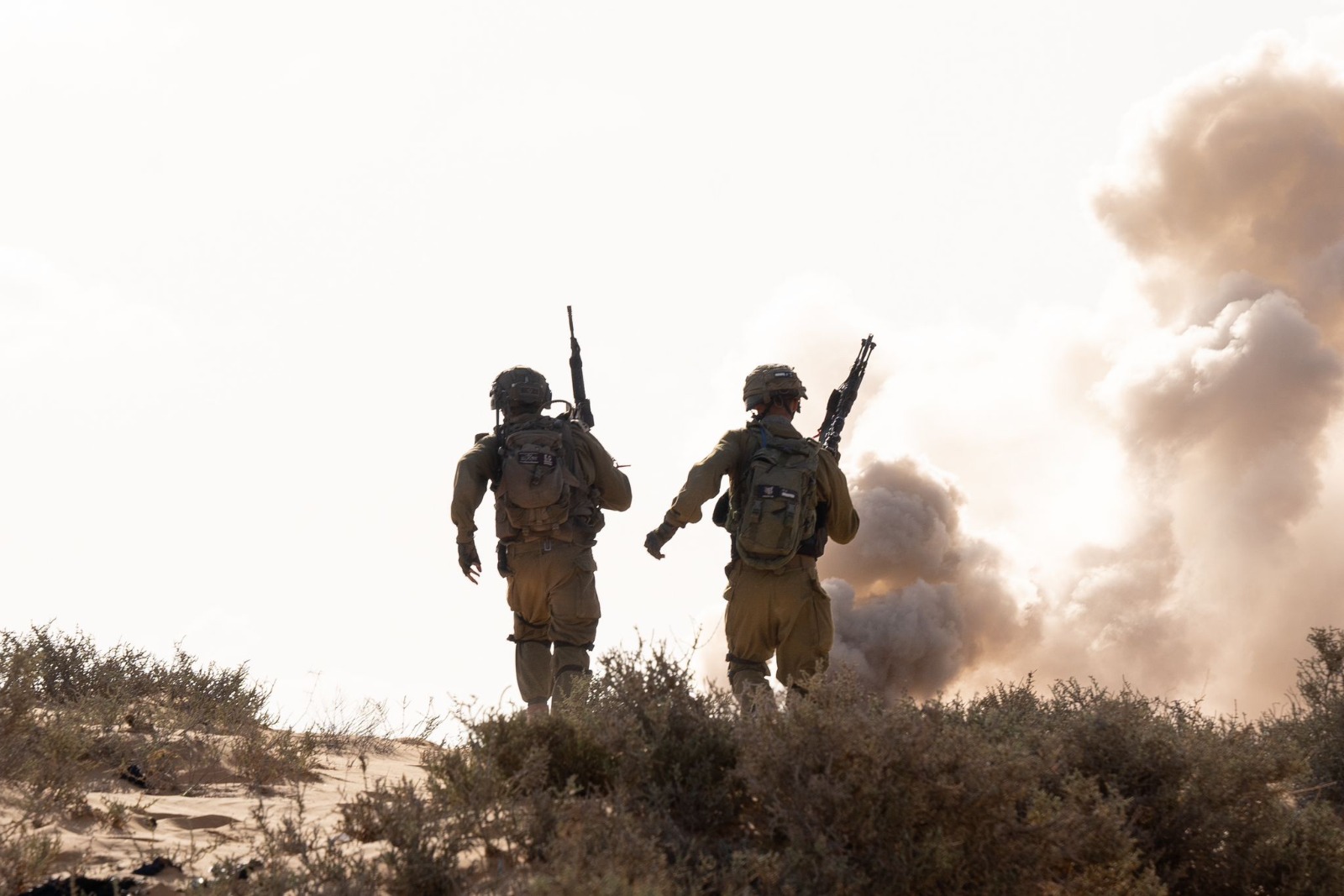
Paratroopers Brigade combat team forces operating in southern Gaza spotted a militant yesterday (Wednesday) who crossed the Yellow Line and approached their position in a manner that posed an immediate threat, an IDF spokesperson said.
After identifying the threat, the forces responded with fire to eliminate it. The IDF confirmed a hit on the militant. The military added that IDF forces in the Southern Command are deployed across the area in accordance with the ceasefire agreement and will continue to act to eliminate any immediate threat.
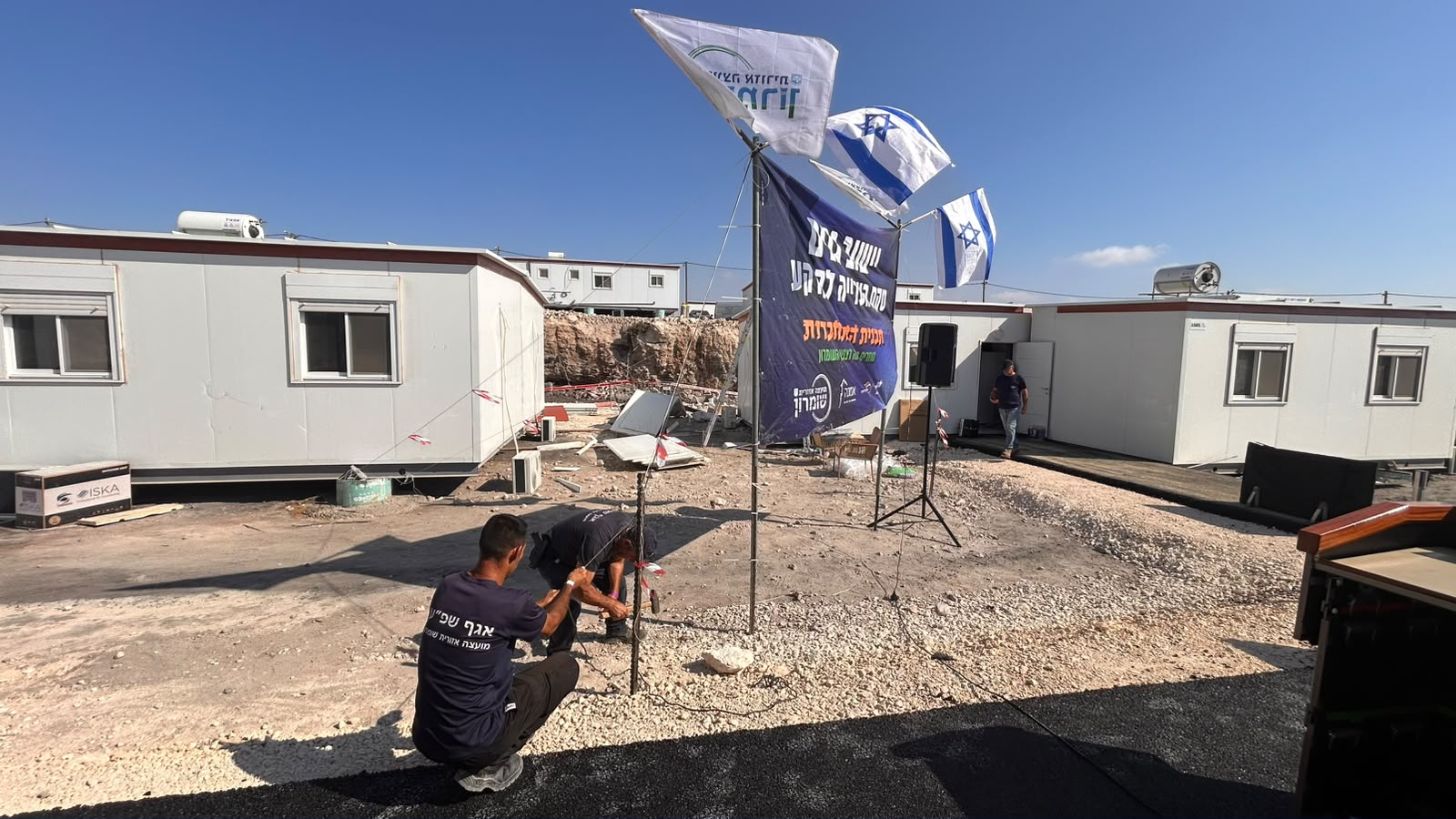
Twenty-one years after their painful expulsion as part of Israel’s disengagement plan, 30 families from the pioneering core group moved back to Ganim in northern Samaria on Sunday. Alongside the families, a branch of the Bnei David yeshiva from Ma’ale will open at the site next Sunday. The Samaria Regional Council is reestablishing the town in partnership with the Amana movement and the Israeli government. Ahead of the historic return, the council launched a massive flag campaign at the entrance to Ganim, hanging dozens of giant Israeli flags as a symbol of sovereignty, homecoming, and national restoration.
Photo: Meshi, Channel 14
A national ceremony was held at the site Sunday morning with ministers, Knesset members, leaders from Judea and Samaria, and public figures in attendance. Participants included Samaria Regional Council head Yossi Dagan, Amana Secretary-General Ze’ev Hever (Zambish), Bnei David heads Rabbi Eli Sadan and Rabbi Yigal Levinstein, head of the advanced yeshiva Rabbi Yehuda Sadan, and Rabbi Neriya Bulak, who will lead the new yeshiva in Ganim. Also attending were families expelled from Ganim and the family of Katy Winterob, a resident of the town who was murdered in a shooting attack on her way home.
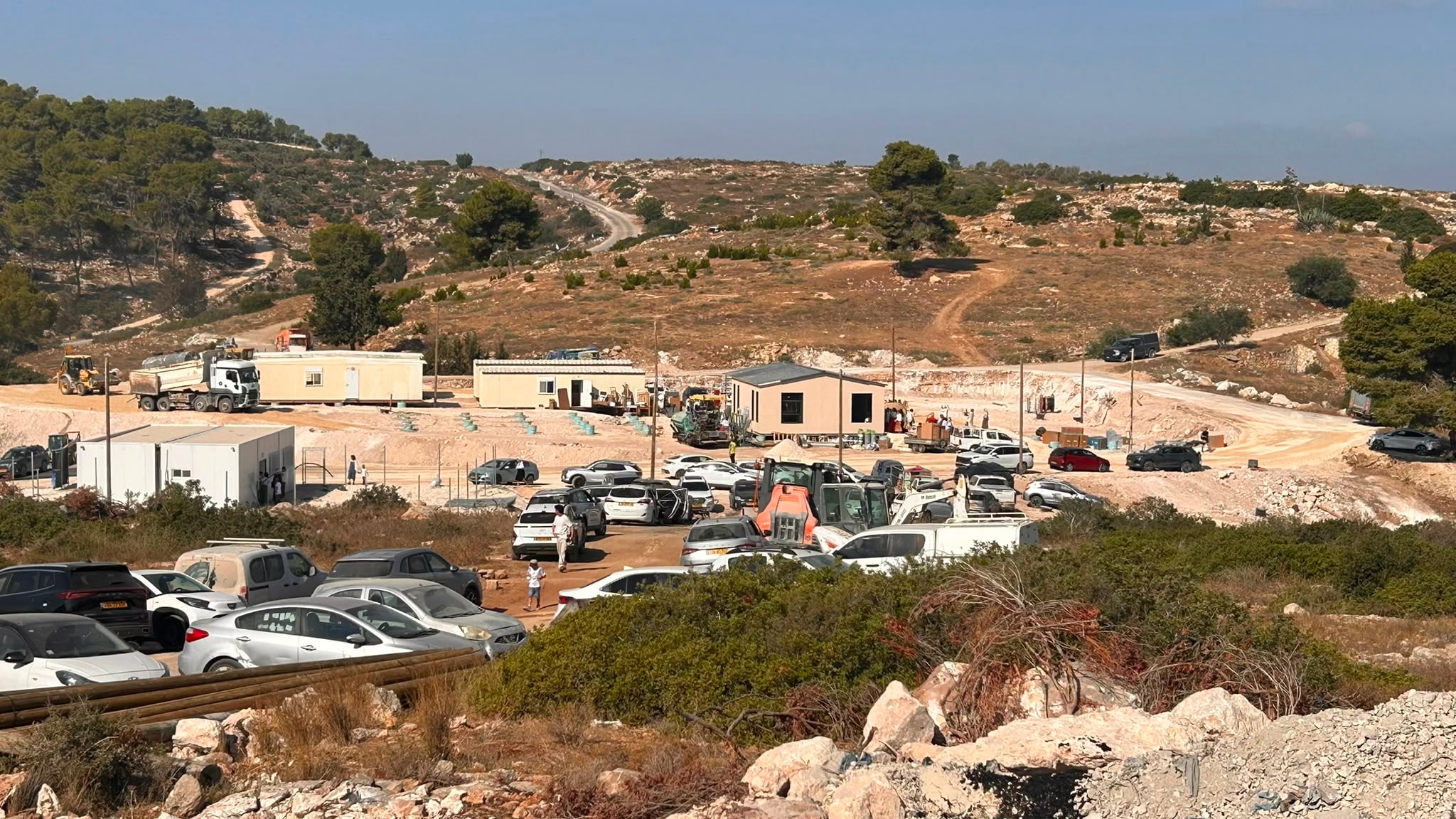
The move is part of the “Connection Plan” led by the Samaria Council, which includes establishing 19 new communities in northern Samaria as part of the “Million in Samaria” plan. The return to Ganim comes just days after breaking ground on Emek Dotan—the fifth community the council has established in less than a year. In July, Finance Minister Bezalel Smotrich approved a massive plan of over 1 billion shekels to build accesible roads to several new communities, including Ganim.
Photo: Meshi, Channel 14
Key statements from the leaders of the initiative:
• Samaria Regional Council head Yossi Dagan: “Today we’re returning and reestablishing Ganim—we’re not just returning to the four communities that were uprooted, we’re doubling and tripling the enterprise. Instead of uprooting and retreating, we’re bringing construction and resettlement. Ganim will be a huge town, 10 times larger. The people of Israel are coming home!”
• Ganim core group chairman Ilan Kotzky: “Establishing Ganim means returning to a piece of land we left. We are the pioneers of 2026. In another 10 years, Ganim will be a huge town of a thousand families—the jewel of Samaria.”
• Moriah Maslati, new-old resident of Ganim: “This day is much more than moving into a town—it’s a moment of correction, revival, and coming home. We’re excited to bring life back here—homes, community, and children. We’re bringing life back to Ganim!”
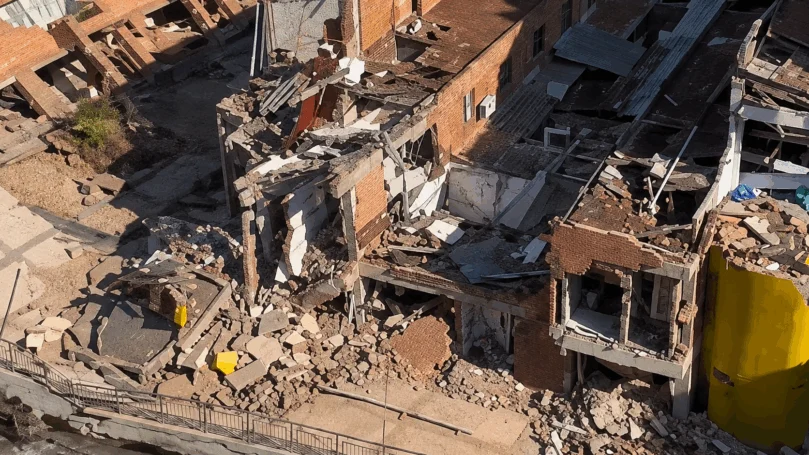
Prime Minister Benjamin Netanyahu today (Wednesday) ordered the immediate dispatch of an aid mission to Colombia, following the powerful earthquake that struck the country and following a request from the Colombian president. The Israeli directive comes as rescue forces continue their race against time to locate survivors under the rubble, following the 7.4-magnitude earthquake that struck the west of the country. According to Reuters, nearly 250 people were killed and 3,770 injured, more than 9,550 homes were destroyed and over 30,000 families were affected.
🇨🇴🚨 Colombia eleva a 239 los muertos por el terremoto de 7.4.
El sismo también deja 3,755 heridos y 287 desaparecidos. Continúan las labores de rescate.
A statement issued by the Prime Minister’s Office stated that the decision was made following a direct request from the Colombian president. “Following a request from the Colombian president, Prime Minister Benjamin Netanyahu ordered the immediate dispatch of an aid mission to Colombia following the earthquake disaster that struck the country,” Netanyahu’s office said. It was also stated: “The State of Israel shares the grief of the families of those killed in the disaster and will provide full assistance to the State of Colombia.” The statement did not provide details at this stage about the composition of the delegation, the number of its members, the exact date of its departure, or the equipment it is expected to bring with it.
The 7.4-magnitude earthquake struck western Colombia on Monday, leaving behind widespread destruction. Among the areas affected are Cali, Ferreira, and the Chocó region, where the epicenter was. In Cali alone, more than 50 buildings collapsed, and according to published data, at least 95 people were killed in the city and about a thousand were injured. In Ferreira, 79 deaths were reported and about 300 people are still missing.
La fe es lo último que se pierde….
Momentos en q una leve voz entre los escombros alegra a tods una multitud en #Colombiapic.twitter.com/ukns6VgG1r
Search and rescue operations have entered a particularly critical phase, with the first 72-hour window – when the chances of finding survivors under the rubble are higher – closing. At the same time, more than 130 aftershocks were recorded after the main quake.
Netanyahu’s directive comes after Israel had already offered Colombia help following the disaster. After the earthquake, Foreign Minister Gideon Sa’ar spoke with his Colombian counterpart and offered the country Israeli assistance as needed. Now, according to a statement from the Prime Minister’s Office, the move is advancing another step: After a request from the Colombian president, Netanyahu ordered an aid delegation to be sent immediately.
The death toll from Monday’s 7.4-magnitude earthquake in western Colombia has risen to 241, with 3,771 others injured, Colombian media reported Wednesday, citing figures from the National Unit for Disaster Risk Management. https://t.co/wlDXvip2mSpic.twitter.com/7J4SbuZ9ih
Israel is not the only country that has joined the efforts. Rescue and aid teams from countries in the region, including Mexico, Peru and El Salvador, have arrived in Colombia, and the Colombian Foreign Ministry is coordinating international aid. The European Union has also announced aid totaling two million euros for the victims of the disaster.
The earthquake has also become a significant test for the new government in Colombia. The new president, Abelardo de la Esperilla, took office just days before the disaster – and now his administration is faced with thousands of casualties, widespread destruction and a massive rescue and reconstruction operation. The challenge is particularly severe in remote areas of the Chocó region, where terrain, communication problems and the security situation make it difficult for aid forces to reach some of the affected communities.
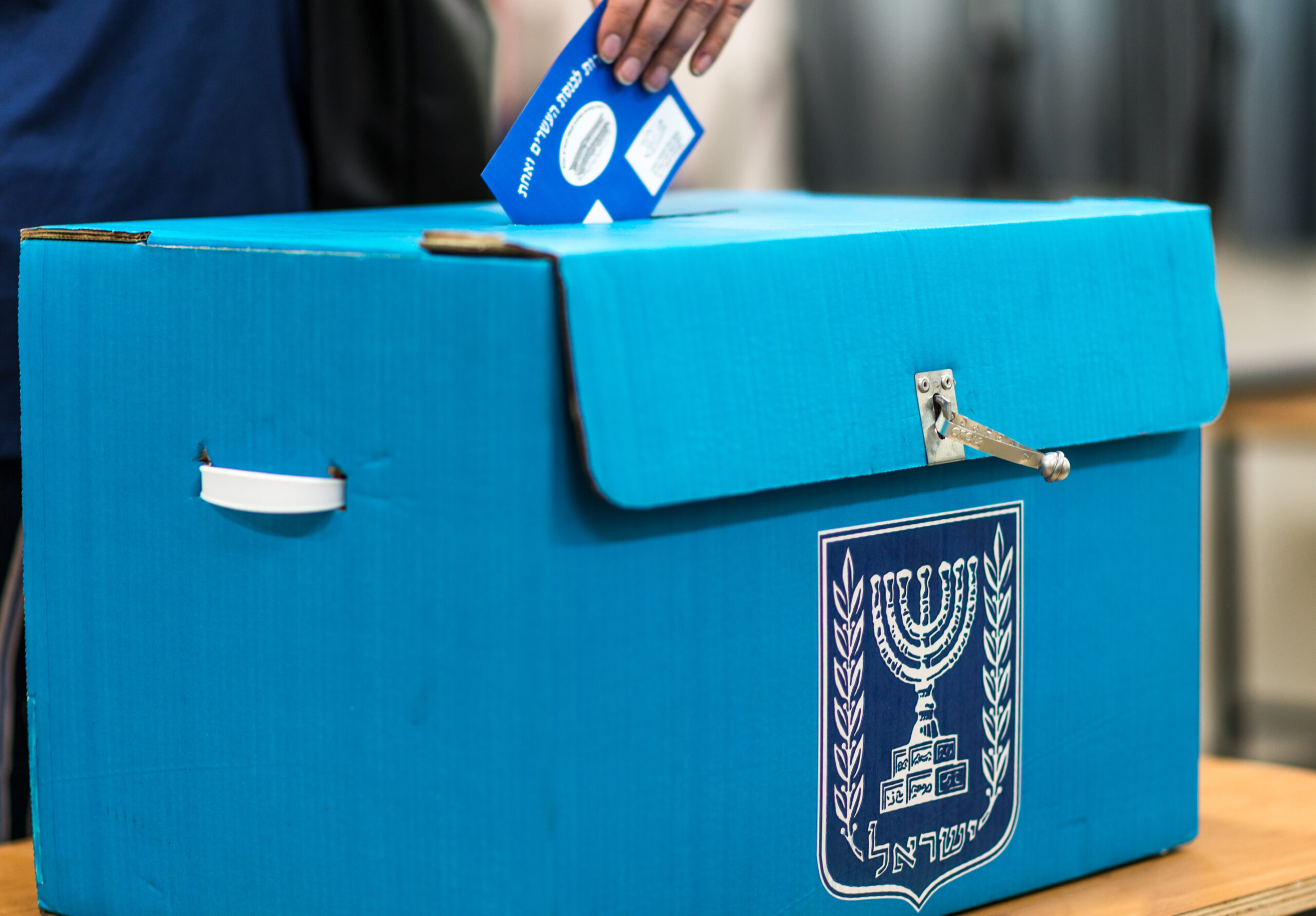
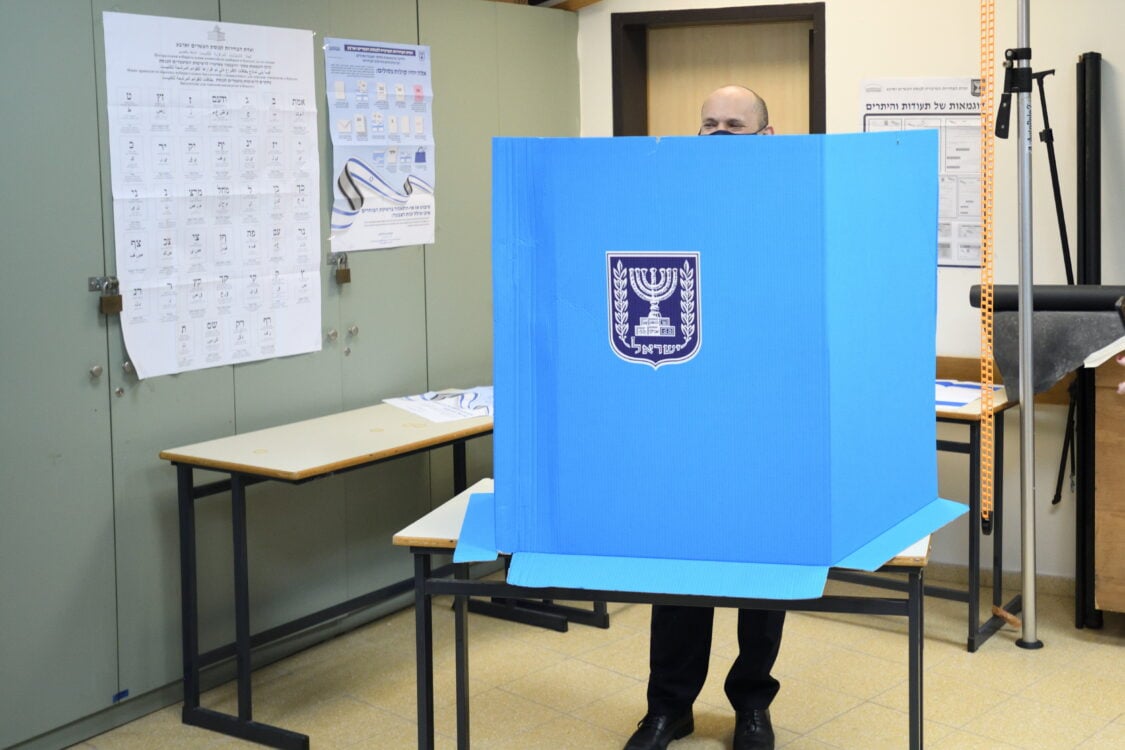
Wednesday evening, C14 reported that a paid social media campaign is currently urging Israelis in the country to pressure Israelis living abroad to return home and vote in the elections. Behind the initiative is an organization called “Bo’u” (“Come”).
C14 correspondent Motti Kastel revealed two years ago how the organization attempted to take control of elections for the National Union of Israeli Students. Nearly 2 million shekels (~$550,000) have been transferred to the organization over the years, while its filings do not disclose where the money originated.
Ballot box | Photo: Shutterstock
The Bo’u organization is primarily connected to figures affiliated with Israel’s Democrats party as well as activists from the HeHalutz movement, which operates educational institutions and pre-military academies and has close ties to Democrats figures including Naama Lazimi and Yaya Fink.
Among the organization’s founders are Democrats party activists Ido Attias, a Beersheba city council member representing the Democrats, and Shiran Meir, who is close to Lazimi.
Also involved is Tomer Meiri, who serves as CEO of Yaya Fink’s nonprofit, “The Israelis,” through which millions of shekels have been raised for political activities. Some members of Bo’u are also paid employees of the HeHalutz movement. Sources within the National Union of Israeli Students claimed that Bo’u maintained very close ties with Fink.
Illustration | Photo: Gili Yaari, Flash 90
However, one of the central questions surrounding both Bo’u and Fink’s “The Israelis” is the lack of transparency regarding where the money originated and how it is being spent. Nearly 2 million shekels flowed to Bo’u as it sought to take control of the National Union of Israeli Students, and the organization is now becoming involved in national elections by mobilizing voters.
On the organization’s Instagram pages, Fink can be seen encouraging Israelis abroad to return and vote so that Israel will not be left with Netanyahu, Ben Gvir and Smotrich.
C14 contacted members of the organization and attempted to determine where the millions of shekels originated. Shiran Meir declined to comment to Channel 14. Yaya Fink, Tomer Meiri, Ido Attias and the organization’s legal adviser, attorney Ram Pardes, did not respond to questions.
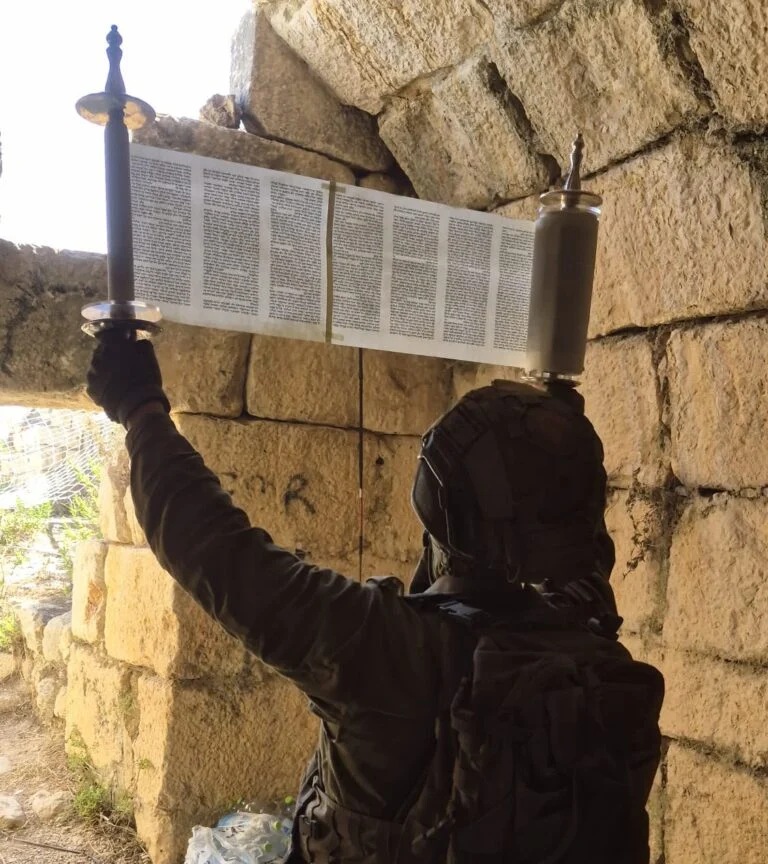
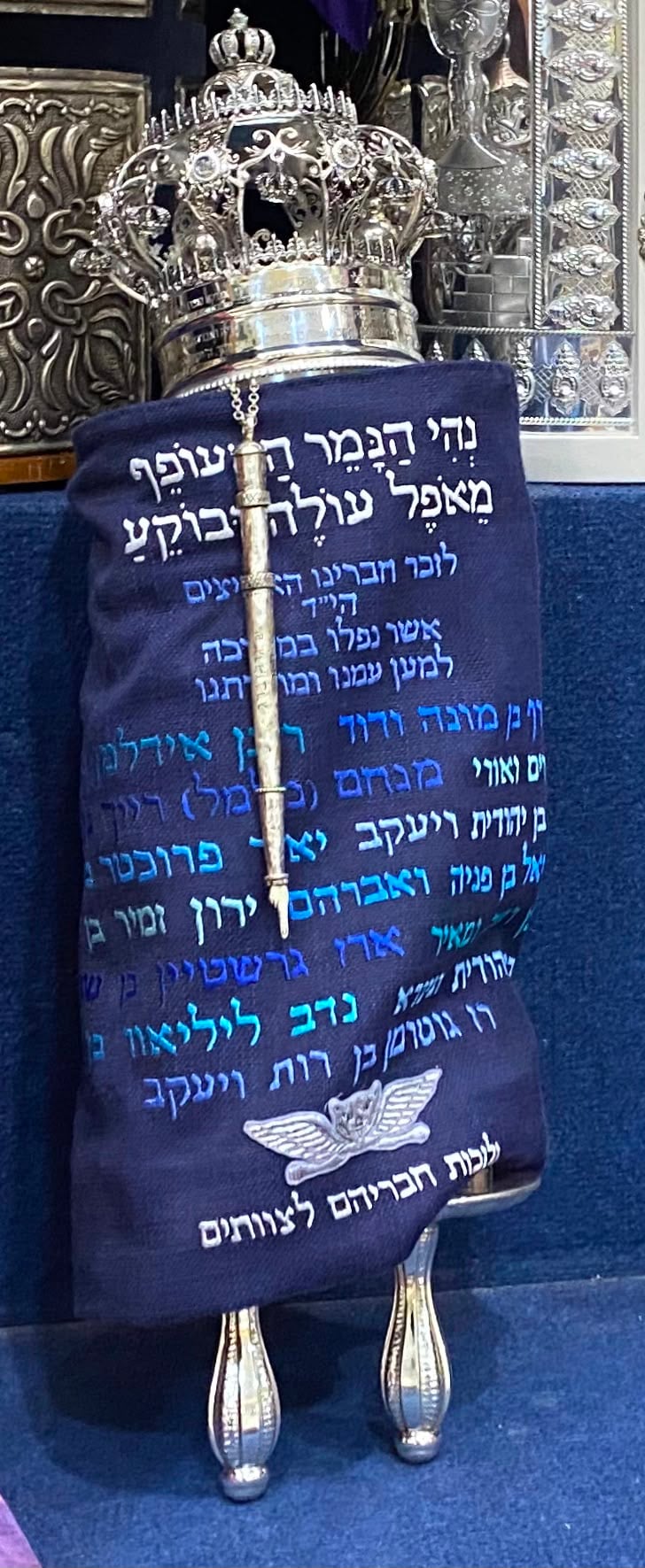
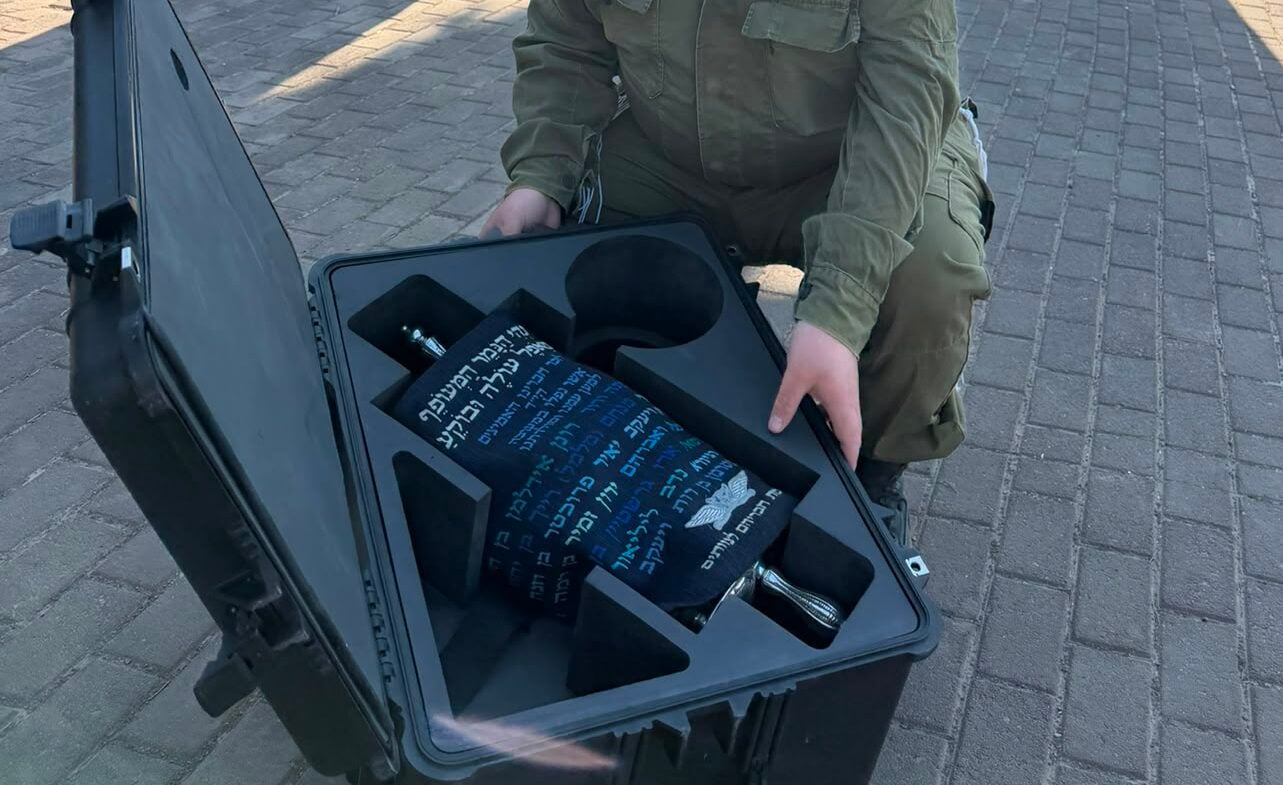
More than 40 years have passed since that night in June 1982, when Golani reconnaissance soldiers stormed Beaufort Fortress in a battle etched into Israel’s history. Recently, a remarkable circle of generations was closed there: a Torah scroll written in memory of 14 of their friends and commanders who fell over the years was brought to the fortress in Lebanon, where today’s heroic soldiers read from it in an emotional ceremony.
Closing a historic circle | Photo: None
Behind the initiative is Menachem Goldberg, a resident of Hoshaya who personally knew all of the fallen heroes commemorated on the Torah scroll. About six years ago, the Torah was dedicated in the community in memory of his friends and commanders—members of Golani teams who enlisted in the late 1970s and early 1980s. The idea of bringing the Torah specifically to Beaufort came from Goldberg’s son, who also served in the same unit.
“My son called me and said, ‘Dad, I think it would be beautiful if they brought the Torah up to Beaufort and read from it there,’” Goldberg recalled. “I started thinking about it and said, if it will do something good for someone, why not?” Approval from the Military Rabbinate soon followed.
Photo: Anon
Earlier this week, in the morning hours, the Torah from Hoshaya was brought north and carried across the border into Lebanon. Atop the fortress, beneath the open sky and at the site where their comrades’ blood was shed, an emotional Torah reading took place.
Gathered around the scroll were young Golani soldiers, just 20 years old, listening reverently to the story of the historic battle and the names inscribed on its mantle.
“I understood there was tremendous emotion there,” Goldberg said, describing the extraordinary scene. “To see young soldiers connecting to the names of people who fell 40 years ago—it is not something to take for granted. That connection, to the Torah scroll, to the names, to the fortress itself, simply spoke to them. They asked to be called up to the Torah and to be part of that moment.”
Photo: None
For the friends in Hoshaya, commemorating the 14 has become a lifelong mission. “These are people who are so deeply missed in Israeli society. When we take out the Torah scroll on Shabbat, I always stop and wonder which one of them I should kiss on the mantle this time,” Goldberg said emotionally. “It accompanies us in our daily lives—a tremendous sorrow alongside an enormous privilege to commemorate them through something timeless.”
When the Torah returned to its home in the Galilee, it carried with it a living reminder from the battlefield. “It came back late at night, its case filled with Lebanese dust,” Goldberg said with a bittersweet smile. “I felt there was a closing of the circle here that we had been waiting for.”
Photot: Anon
The journey to Beaufort also carried a timeless message. At a time of divisions and tensions within Israeli society, Goldberg sought to remind Israelis of what unites them.
“We fought there in Lebanon then, and we are fighting there now,” he said. “When you fight, nobody asks which party you vote for or what kind of kippah you wear. We all fight together.” That unity, he said, is the legacy left behind by his friends.
“We need to get through our disagreements with love. Every mention of a fallen soldier reminds us that we are not living here for nothing. There are those who paid with their blood so that we can continue living here, and we must be worthy of that price. If we are not dependent on one another, we will be hanging beside one another.”
Now, as the Torah scroll rests once again inside the Holy Ark in Hoshaya, its Lebanese dust may have been wiped away—but the spirit of the soldiers of Beaufort, those who came before and those who stand guard today, continues to live between its sacred letters.
Antisemitism in Europe continues to escalate, marked by sickening new footage circulating online. An Irish tourist visiting France entered a local supermarket and engaged in a verbal confrontation with two Jewish women. During the exchange, the tourist told the women: “I’m sorry Hitler didn’t finish the job.”
The antisemitic tourist | Photo: Social media
Following the outrageous comment, one of the Jewish women whipped out her smartphone and asked him to repeat the statement on camera. The tourist dodged the request and began walking away. As the woman followed him to document his face, the tourist spun around and threatened: “Get away from me before I put a bullet in your head.” This latest incident comes on the heels of a violent antisemitic attack in Germany last month, where a man was brutally assaulted simply for wearing an Israeli flag pin. According to reports, the assailant, an individual of Syrian origin, spotted the flag emblem on the victim’s clothing at a traffic light, confronted him briefly, and proceeded to viciously punch him in the face.
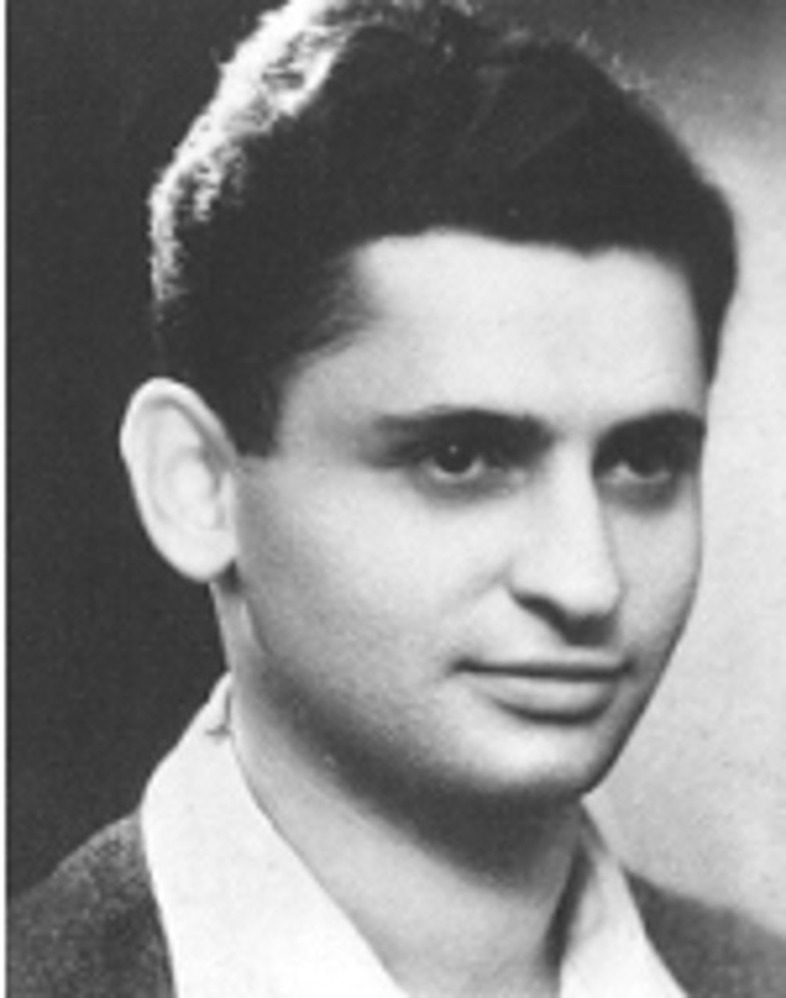
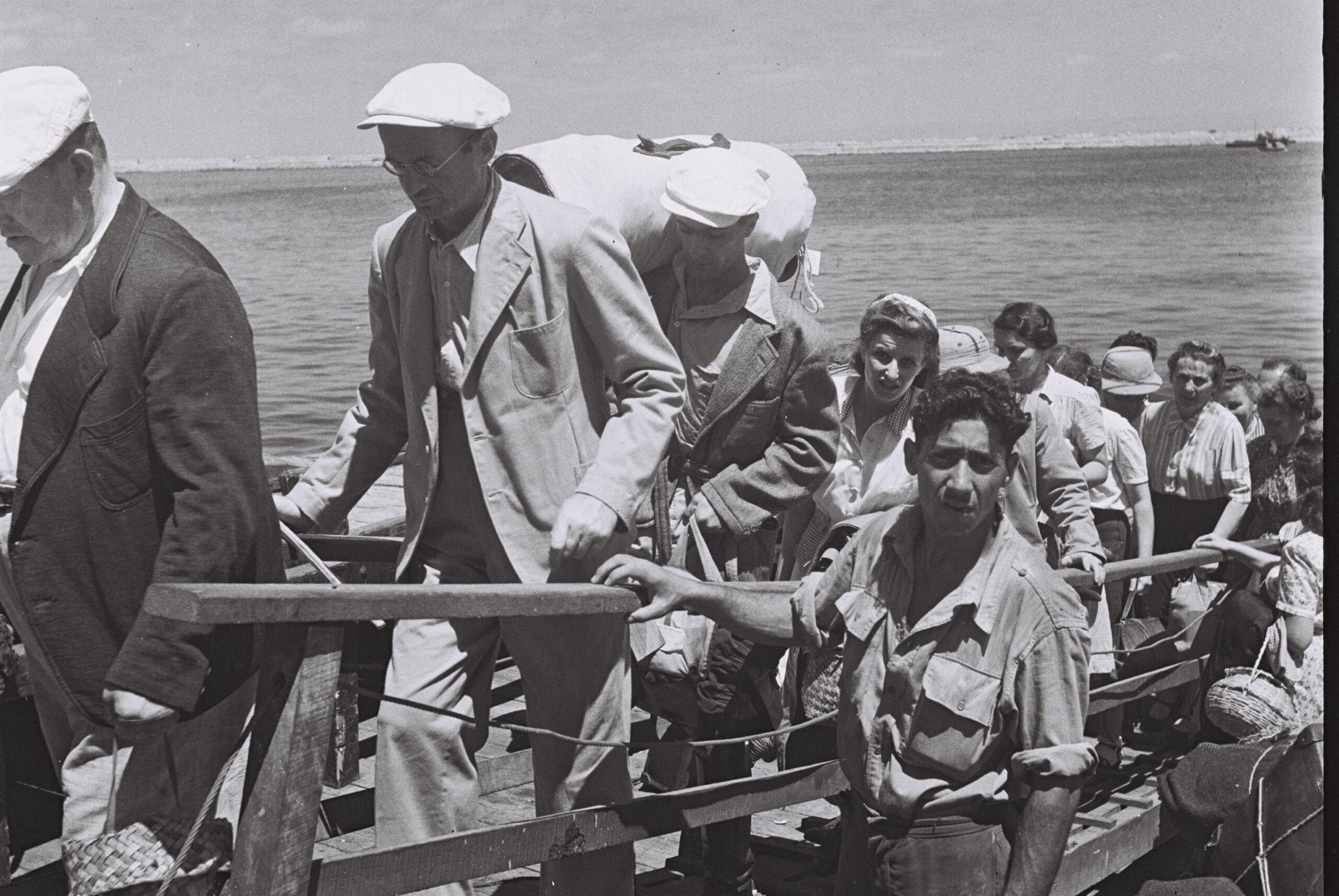
The IDF Spokesperson’s Unit announced Wednesday morning that nearly 78 years after he fell during a daring escape attempt from the Caraolos internment camp in Cyprus, the burial site of the late Shlomo Haimson, a Cyprus deportee, has been officially identified. Following an extensive investigation by the IDF’s Missing Persons Branch, in collaboration with the Military Rabbinate, the Ministry of Defense, and the Cyprus Pioneering Ascendents Association, it was determined that Haimson is buried in grave 11, row 2, within the Pioneering Ascendents section at the Haifa cemetery.
Aliyah Bet immigrants in Haifa | Photo: Zoltan Kluger, National Photo Collection
Haimson was born in Romania in 1930. After World War II, in which he lost his father, he decided to immigrate to Israel with his mother Ita and his girlfriend Perla aboard the immigrant ship “Pan York – Kibbutz Galuyot.” The ship was captured by the British and its passengers were deported to Cyprus. In the camp, Haimson joined the Haganah’s “Defender Ranks,” where he trained to serve as a fighter in the Land of Israel. In September 1948, news reached him that his daughter, Miriam, had been born. Haimson determined to escape the internment camp and make his way to Israel. On the night of September 29–30, 1948, he and eight companions breached the camp fences in an escape attempt. British guards spotted the group and opened fire. Haimson was hit and killed, while his companions were captured and returned to the camp.
The next day he was buried in the Jewish cemetery in the town of Margoa, Cyprus. No name was recorded on his grave because camp officials did not know his identity. In 1970, as part of “Operation Margoa,” 163 bodies were brought to Israel from the Cyprus cemetery, including about 120 whose identities were unknown. They were buried in a special section at the Kfar Samir cemetery in Haifa, and many were buried anonymously. Efforts to identify the buried individuals continued over the decades. In 2010, Amir Rogel, co-founder of the Cyprus Clandestine Pioneering Ascendents Association, launched an initiative to uncover the identities of the deceased and engrave their names on the headstones. During the project, it emerged that Haimson was officially recognized as a fallen soldier of Israel’s security forces, prompting a joint investigation between the Department for Families and Commemoration and the IDF Missing Persons Branch.
Photograph aboard the Aliyah Bet ship “29th of November” (“Giovanni Maria”), which arrived at the shores of Israel on December 28, 1947, carrying 700 immigrants under the command of Moka Limon | Photo: Yad Vashem
In 2023, a specialized investigation team was established within the IDF, conducting exhaustive research that included retrieving and analyzing archival documents worldwide, collecting testimonies, deciphering historical photographs, and conducting archaeological surveys. The findings conclusively proved that Haimson was buried in Margo and that his remains were reinterred in Israel in 1970 at grave 11, row 2, in the Haifa Pioneering Ascendents plot. Haimson’s family—including his daughter Miriam, as well as grandchildren and great-grandchildren living in Rio de Janeiro, Brazil—were informed of the investigation’s conclusion on Tuesday evening. The news was delivered at the family home in the presence of Israel’s Defense Attaché to Brazil, Col. Uri Ron, alongside senior officials from the IDF Casualty Department and the Ministry of Defense.
In the near future, the family will travel to Israel for an official state military ceremony, where a personalized headstone bearing the name of the late Shlomo Haimson will be dedicated. Almost eight decades after his fall, the circle will close, restoring the name and memory of a fallen soldier buried for decades as an unknown. Responding to the emotional news, the family of the late Shlomo Haimson stated: “We are deeply moved, fulfilled, and eternally grateful for the unwavering dedication, meticulous efforts, and sensitivity demonstrated by every professional and researcher involved in this noble mission. Witnessing the moral commitment of the Israel Defense Forces and the State of Israel to honor the memory and dignity of our beloved father and grandfather fills us with immense pride and touches the depths of our souls. Knowing that his story of bravery, his love for the Land of Israel, and his devotion coinciding with the birth of his daughter, Miriam, now culminates in a final resting place identified with his name brings indescribable peace to our family here in Rio de Janeiro.”
Over the past weekend, the left-wing feed on Israeli social media was in an uproar. The reason: the son of Rabbi Yoshiyahu Pinto got engaged, and several senior Likud ministers attended the celebration—including Defense Minister Israel Katz, Minister of Environmental Protection Idit Silman, Minister of Culture and Sport Miki Zohar, and Minister of Regional Cooperation David Amsalem.
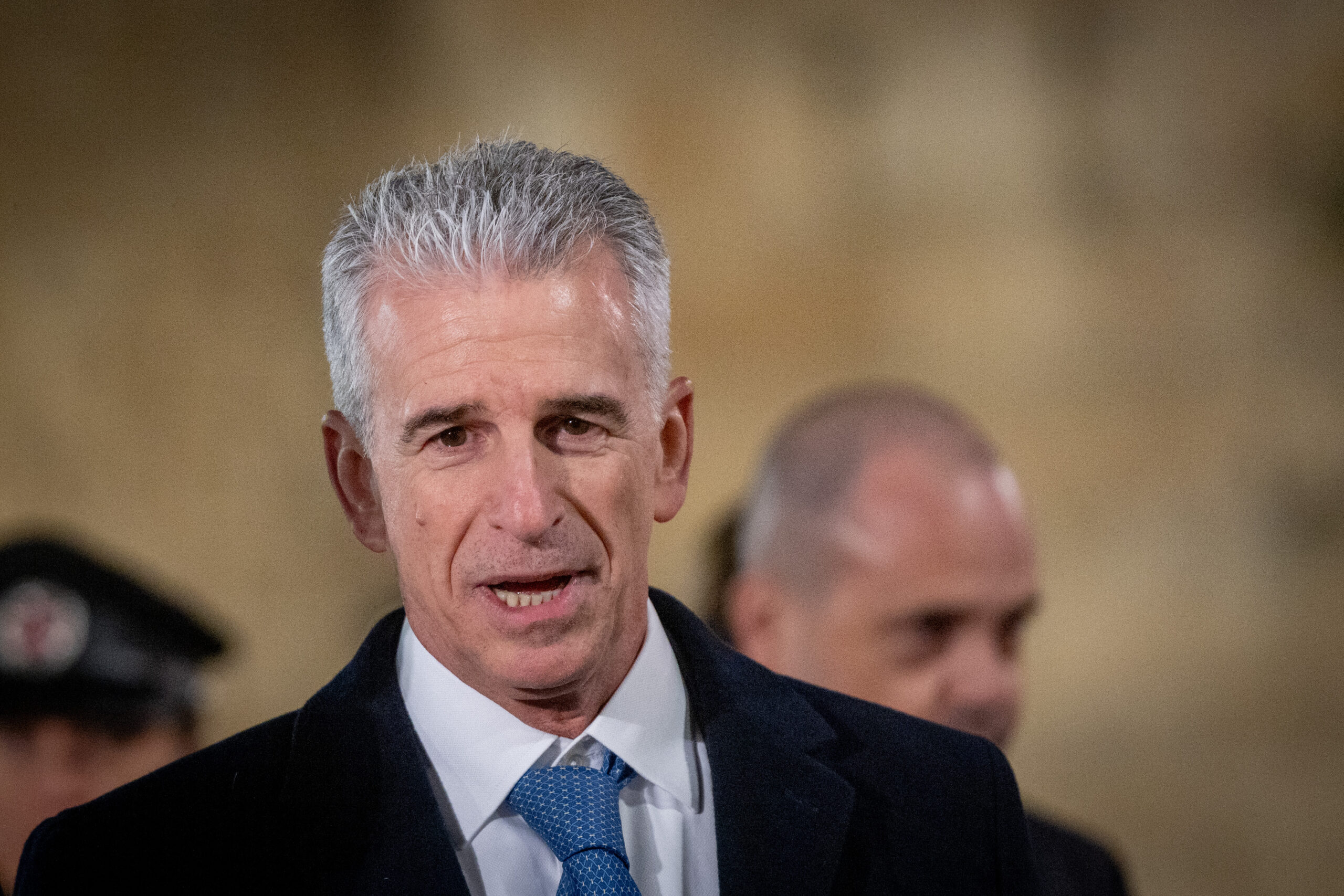
Former Mossad Chief David Barnea toasts Rabbi Yoshiyahu Pinto on his son’s engagement | Photo: Israel Cohen / X
It did not stop at senior Likud ministers. One of the more surprising figures who participated in the joyous occasion was former Mossad Director David Barnea, who concluded his tenure this past June. As expected, left-wing commentators took issue with their decision to participate, pointing to the fact that Rabbi Pinto previously served a prison sentence following a conviction for bribery and obstruction of justice.
Former Mossad Chief David Barnea embraces Rabbi Yoshiyahu Pinto at his son’s engagement party | Video: Photo: Josh Breiner / X
The event, which actually took place on August 6th, continued to generate posts and tweets from left-wing journalists and commentators who struggled to digest the sights. For instance, Haaretz police reporter Josh Breiner tweeted yesterday: “I already told you there’s really nothing to see here, nothing that would make you cringe with embarrassment over what the hell is happening here—it’s just the man who was one of the heads of the defense establishment, Mossad Chief David Barnea, palling around with convicted felon and his bestie Yoshiyahu Pinto.” Social media users who stumbled upon Breiner’s tweet were quick to push back, commenting: “To remind you, we are Jews, and if someone is invited to a celebration—why on earth not?”
Photo: Uncredited
Barnea, who recently concluded a career spanning nearly three decades in the Mossad, is currently adjusting to life after the defense establishment. Just last week, it was reported that the former Mossad chief is turning a new page in his career by joining the Nasdaq-traded defense technology company Ondas. Barnea was appointed Global President of Ondas Defense and Chairman of the company. In his new role, he is expected to lead its business and technological strategy, expand operations into international markets, advance next-generation defense technologies, and lead M&A processes and business-technological integration.
Upon assuming the position, Barnea stated that he looks forward to working with the company’s team, supporting its global expansion, and assisting in the development of the next generation of multi-dimensional, AI-driven defense systems.
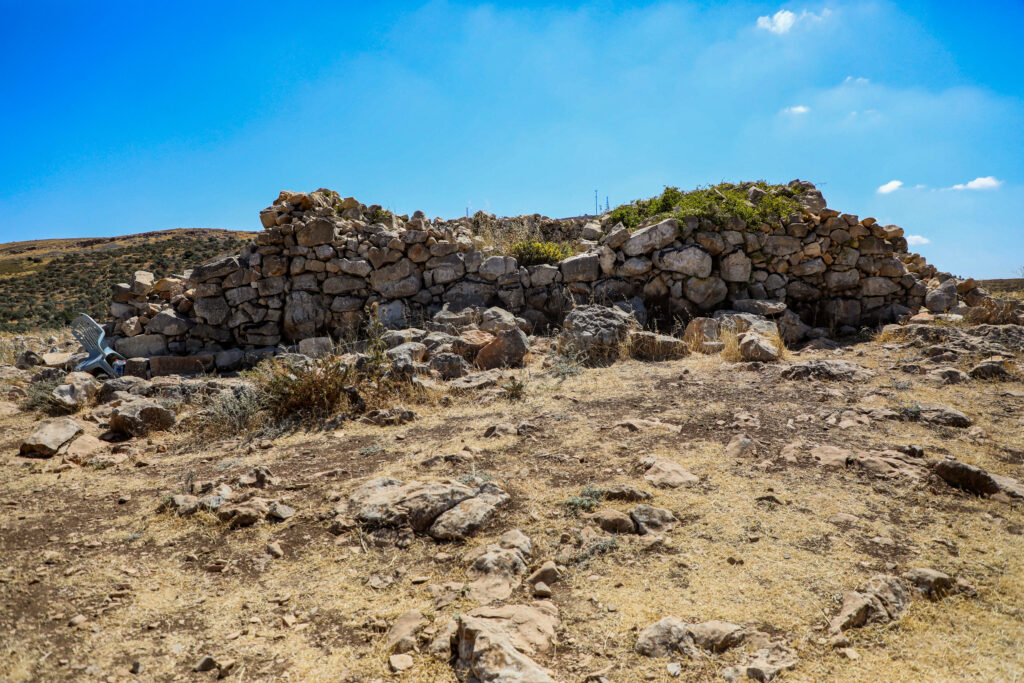
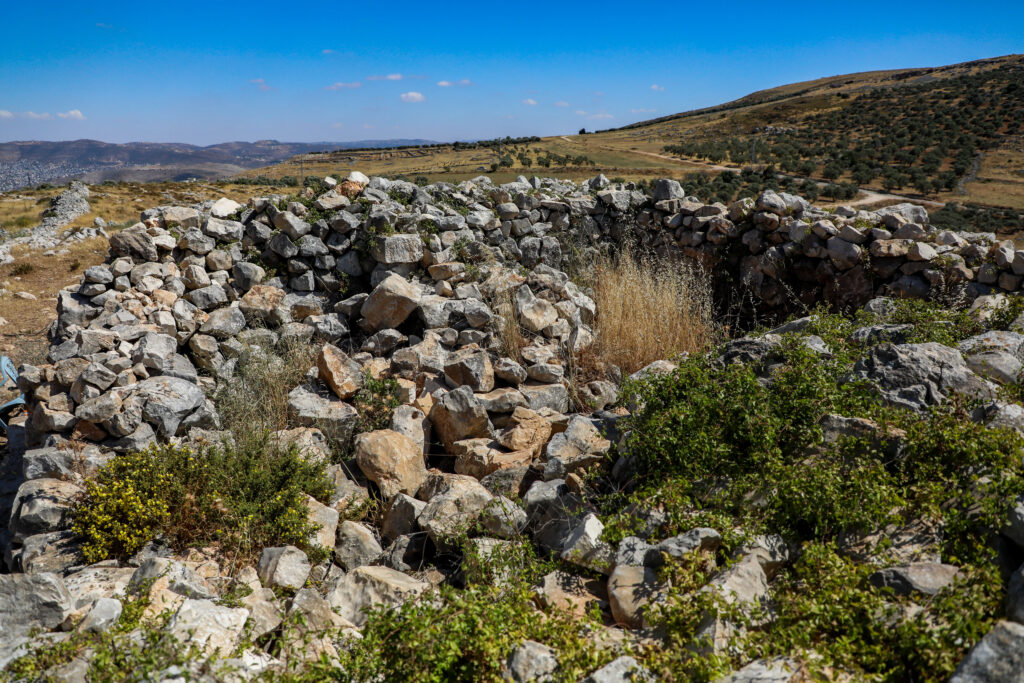
Mount Ebal is the kind of site where a single biblical verse can turn into a decades-long archaeological question. According to the Book of Joshua, after entering the land, Joshua builds an altar on Mount Ebal. The event is presented as part of a significant transformation: a people who lived forty years as nomads now had to become a society of permanent settlements, families, agriculture, property, and institutions. Along with homes and land, they needed to build a shared identity. Within this process, the altar on Mount Ebal takes on broader meaning. It marks an attempt to preserve unity of worship and faith precisely when the tribes were scattering across the land and being exposed to the local cultic centers of the Canaanite peoples.
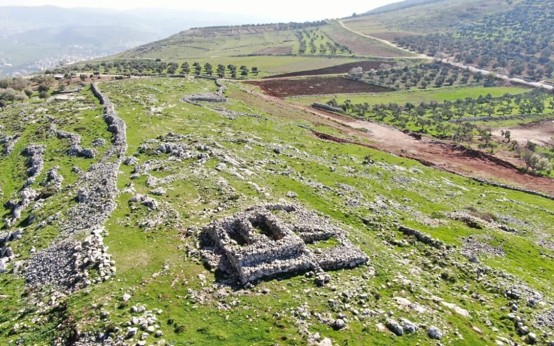
View of an archaeological site where archaeologists claim to be the “Altar of Joshua bin Nun”, in Mount Ebal, Samaria | Photo by Nasser Ishtayeh/Flash90
Then came archaeology
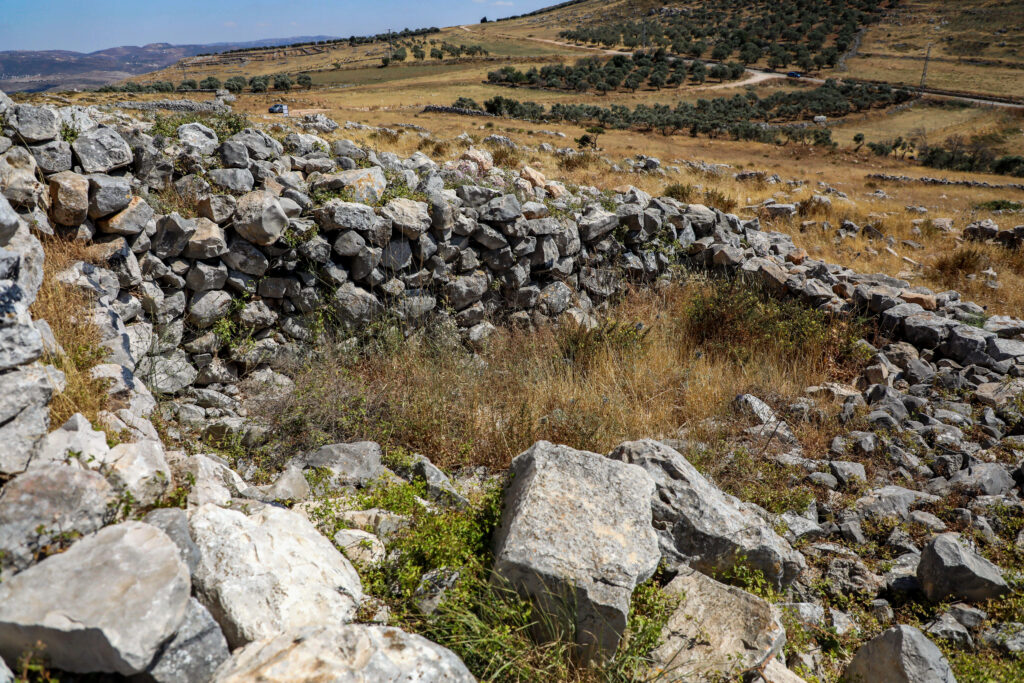
Between 1982 and 1989, as part of the Manasseh Hill Country Survey, Professor Adam Zertal uncovered a stone structure with a ramp on the northeastern slope of Mount Ebal, containing remains of ash and bones. Zertal dated the site to the last quarter of the 13th century BCE and identified it with the altar described in the Book of Joshua. The structure was built from whole stones not worked with iron. At the site were found pottery vessels, cultic remains, and bones of kosher animals, including sheep, cattle, and donkey, while pig bones were absent from the finds. Additional discoveries, including scarabs and genizah pits, reinforced the understanding that this was a site with a cultic character. But Zertal’s identification sparked a controversy that continues to this day. Scholars who opposed the identification pointed to features that they claimed don’t align with known biblical altars, including the structure’s shape, the orientation of its corners, and the fact that roughly 70% of the ceramic finds at the site consisted of jugs used for daily life rather than cultic vessels. Most scholars agree that this is a cultic site from the early Iron Age or late Bronze Age. The question that remains open is whether it can be definitively identified with the biblical altar of Joshua.
View of an archaeological site where archaeologists believe to be the “Altar of Joshua bin Nun”, in Mount Ebal, Samaria | Photo by Nasser Ishtayeh/Flash90
It’s precisely this uncertainty that makes Mount Ebal a place that illustrates well the concept underlying the “Derech Eretz Moreshet” (Land Heritage Path) initiative. The initiative is advancing a program totaling approximately ₪113 million at more than 70 sites, based on the understanding that an archaeological site doesn’t end the day the excavation finishes. It requires preservation, protection, ongoing research, and especially accessibility that will allow the public to encounter the finds in the place where they were discovered. At Mount Ebal, this importance is particularly acute: even when scholars are divided on whether the uncovered structure is indeed the biblical altar of Joshua, there is broader agreement about its cultic nature and its importance for understanding the beginning of the settlement period.
Heritage Minister Amichai Eliyahu explains: “Mount Ebal is the kind of site that illustrates the power of the connection between the Bible, archaeology, and the landscape of the Land of Israel. Within the framework of the ‘Derech Eretz Moreshet’ initiative, we seek to ensure that places like these won’t remain the province of scholars alone, but will be accessible to the public.” According to him, “The questions that Mount Ebal raises are part of our heritage no less than the answers, and therefore our duty is to preserve the site and enable future generations to continue investigating it.”
View of an archaeological site where archaeologists believe to be the “Altar of Joshua bin Nun”, in Mount Ebal, Samaria | Photo by Nasser Ishtayeh/Flash90
You don’t have to arrive at the site to get a ready-made answer. You can come to encounter the question itself: to stand beside the stones, to read the biblical text, to see what archaeology found, and to understand how research, tradition, and landscape meet—and sometimes even argue.