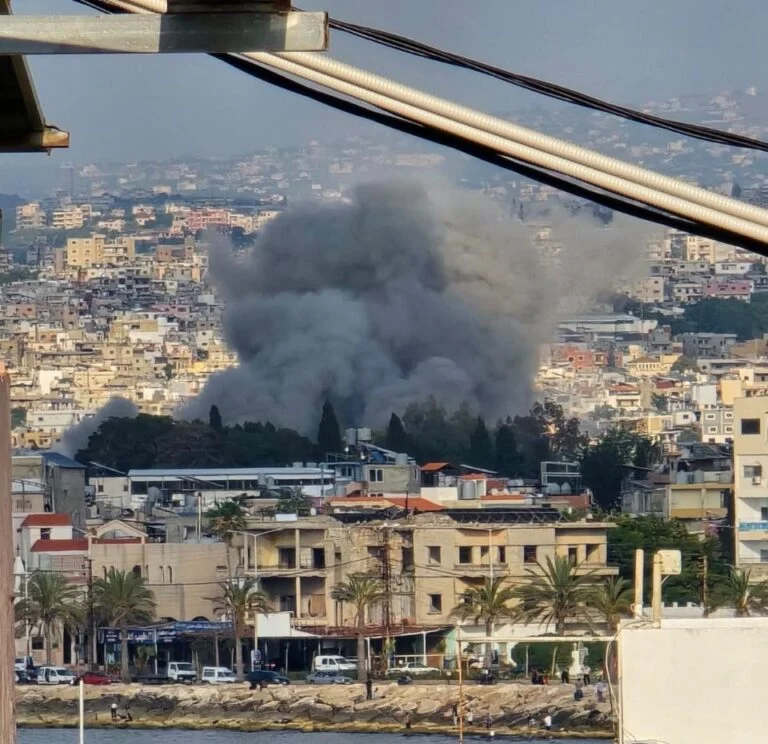
Israeli forces killed Abu Ali Hamza, Hezbollah’s commander for the Tyre district in southern Lebanon, in a targeted strike yesterday, the Israel Defense Forces (IDF) confirmed. The military said the operation was a precision strike that eliminated Hamza.
Israeli forces attacking in the city of Tyre | Photo by: Arab social networks
The elimination of the terrorist comes after the defense establishment stated yesterday that the IDF is preparing for a significant deepening of additional strikes deep within Lebanon and in Beirut. Furthermore, today, under the instruction of Minister of Defense Israel Katz and Prime Minister Benjamin Netanyahu, our forces struck terror targets in the Dahiyeh district of Beirut, following what they defined as “repeated violations” of the ceasefire by the Hezbollah terror organization and the attacks carried out against Israel.
In a joint statement, it was reported that “following the repeated violations of the ceasefire in Lebanon by the Hezbollah terror organization and the attacks against our cities and citizens, Prime Minister Benjamin Netanyahu and Minister of Defense Israel Katz instructed the IDF to strike terror targets in the Dahiyeh district of Beirut.”
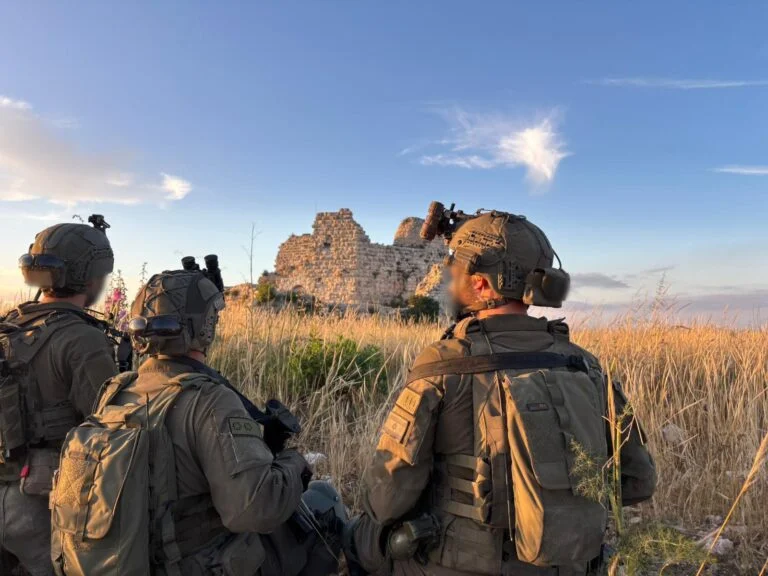
The capture of the Beaufort | Photo by: IDF Spokespersons Unit
This follows the Defense Minister’s dramatic announcement that the capture of the Beaufort Ridge and the return of our forces to it after 26 years—is only the beginning of a new and powerful phase against the Hezbollah terror organization.
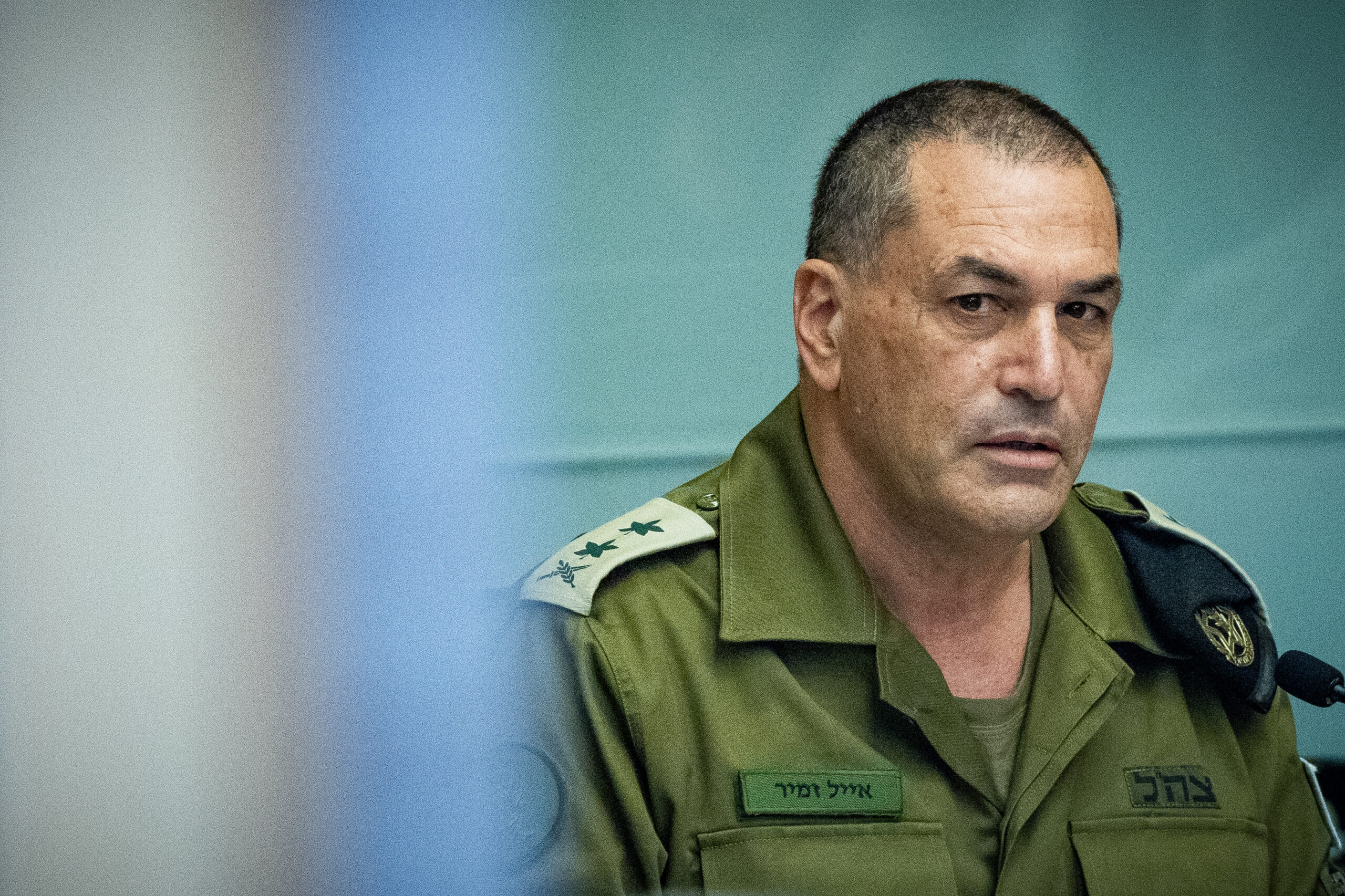
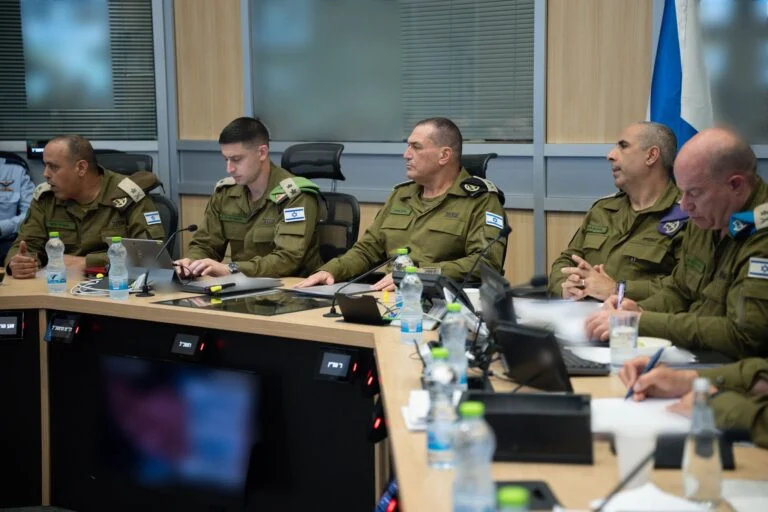
A meeting between senior IDF officers led by Chief of Staff Eyal Zamir and mayors from northern Israel was scheduled for Monday morning but was canceled overnight after most of the northern mayors declined to confirm their attendance.
The mayors said they canceled their participation in the meeting with the IDF chief of staff because they’re traveling to the Knesset to attend a hearing on benefits for residents of their region.
On Tuesday, the Knesset Finance Committee will attempt to merge proposed legislation on benefits for communities along the northern confrontation line with parallel benefits for Judea and Samaria. Northern mayors are demanding that the benefits available to their residents match those provided to Gaza border communities.
The Israel Defense Forces (IDF) announced today (Monday) the death of Staff Sergeant Adam Tzarfati, a soldier killed in action in southern Lebanon. His family has been notified.
Staff Sergeant Adam Tzarfati | Photo by: IDF Spokespersons Unit
Full details of the incident have been provided to Tzarfati’s family, and the public is asked to respect the family’s privacy during this difficult time.
In the incident in which Tzarfati was killed, another IDF soldier was seriously wounded and two others were lightly wounded. All the wounded soldiers were immediately taken to the hospital for medical treatment, and their families have been notified of their condition.
The IDF continues to support the families of the fallen and wounded. Details and photographs of IDF fallen soldiers are published and updated regularly on the IDF’s official website in their memory and honor.
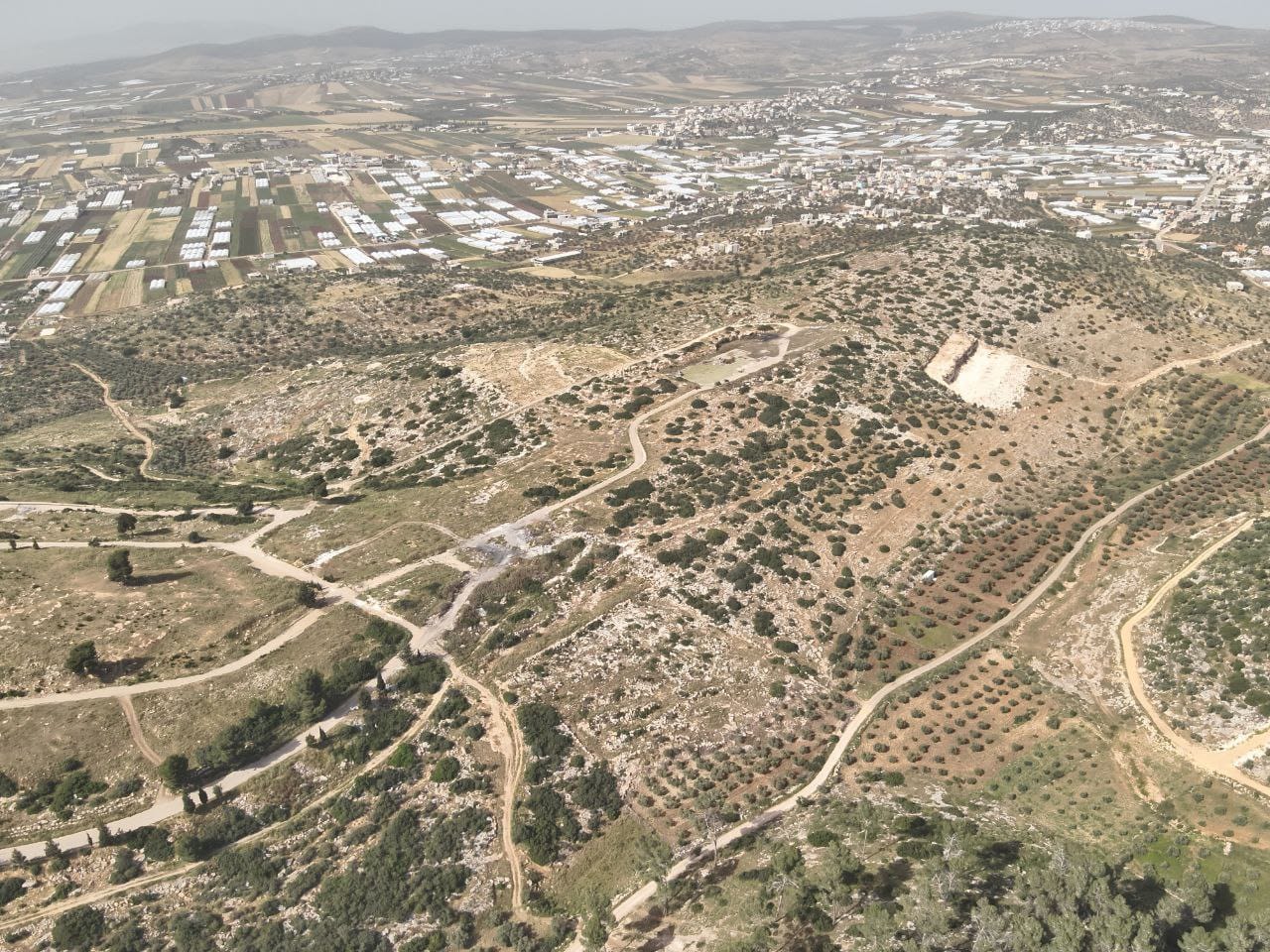
For the first time since the abandonment of Joseph’s Tomb in 2000, a civilian prayer visit took place this afternoon at the Joseph’s Tomb compound. MK Zvi Sukkot and Samaria Governor Yossi Dagan entered the tomb in the first civilian daytime visit since its abandonment.
MK Sukkot stated: “The rectification of a historical injustice, one that must happen in full.” Dagan declared: “A permanent return to this holy site, with the Israeli flag flying, will restore justice and security.”
The visit was conducted with the approval and backing of Defense Minister Israel Katz and Foreign Affairs and Defense Committee Chairman MK Boaz Bismuth, and in coordination with IDF Chief of Staff Lt. Gen. Eyal Zamir and the commanders of Central Command and the Samaria Brigade.
MK Sukkot and Governor Dagan are leading the campaign for a permanent return to Joseph’s Tomb together with bereaved father Rabbi Dudu Ben Natan, whose son Shuval Ben Natan fell during the Iron Swords War. Shuval had been an active advocate for the return to Joseph’s Tomb.
Until now, the public campaign had secured morning visits to the site, building on earlier nighttime visits. This afternoon’s entry marks a significant escalation in the effort to restore a permanent military presence at Joseph’s Tomb and to re-establish the Od Yosef Chai Yeshiva, which was uprooted when the site was abandoned in 2000.
For 23 years, the Samaria Regional Council has been organizing monthly visits to Joseph’s Tomb to keep the site present in Israeli public consciousness. Until today, these visits have taken place exclusively at night. Following the breakthrough of morning visits, this is the first time a civilian afternoon entry has been permitted.
Samaria Governor Yossi Dagan welcomed the historic development, emphasizing its national and moral significance: “This is a meaningful step toward historical rectification and the restoration of full Israeli sovereignty over the holy compound of Joseph’s Tomb. Sovereignty in Judea and Samaria, and over our holy sites, is not merely a legal or security matter. It is recognition of historical justice and of our right to this land.”
Dagan added, “The situation in which a Jewish presence at Joseph’s Tomb is treated as an exceptional and restricted event must change. Our clear objective is to return the Od Yosef Chai Yeshiva to its rightful place within the compound, and to see the Israeli flag flying above Joseph’s Tomb.”
Dagan expressed gratitude to Defense Minister Israel Katz, the Judea and Samaria Division commander, the Samaria Brigade commander, and the Border Police commander for Judea and Samaria, “as well as to the commanders and fighters who escorted the visit, and to the volunteers of the Joseph’s Tomb and Holy Sites Administration of the Samaria Regional Council, who have been accompanying these visits with dedication for years.”
MK Zvi Sukkot, chairman of the Foreign Affairs and Defense subcommittee on Judea and Samaria, thanked Defense Minister Katz for approving the move and stated: “As part of the broader campaign we are leading for a full Jewish return to Joseph’s Tomb, we were privileged today to hold the first Mincha prayer service during a visit conducted entirely in daylight. This is an important and meaningful step in the process of rectification. Further steps will follow until we reach our goal: a full Jewish return to Joseph’s Tomb.”
Sukkot emphasized that the return to Joseph’s Tomb “is the rectification of the injustice of abandoning the site on October 7, 2000, when Israel fled from terrorism and surrendered its territory for the first time in the face of escalating terror.” In his words, “This is a moral and security rectification of the highest order, one that must happen in full.” Sukkot also thanked the IDF forces who escorted the visit, and Samaria Governor Yossi Dagan for joining him in leading the effort to restore a Jewish presence at Joseph’s Tomb.
This exclusive interview first appeared on our sister publication, MIGNews, in Russian | Translated and adapted to English by C14 Global
These days there is active discussion about signing an agreement with Iran. One would very much like to call it a “peace agreement,” but its contents are not yet known. What can you say about the possible agreement with Iran?
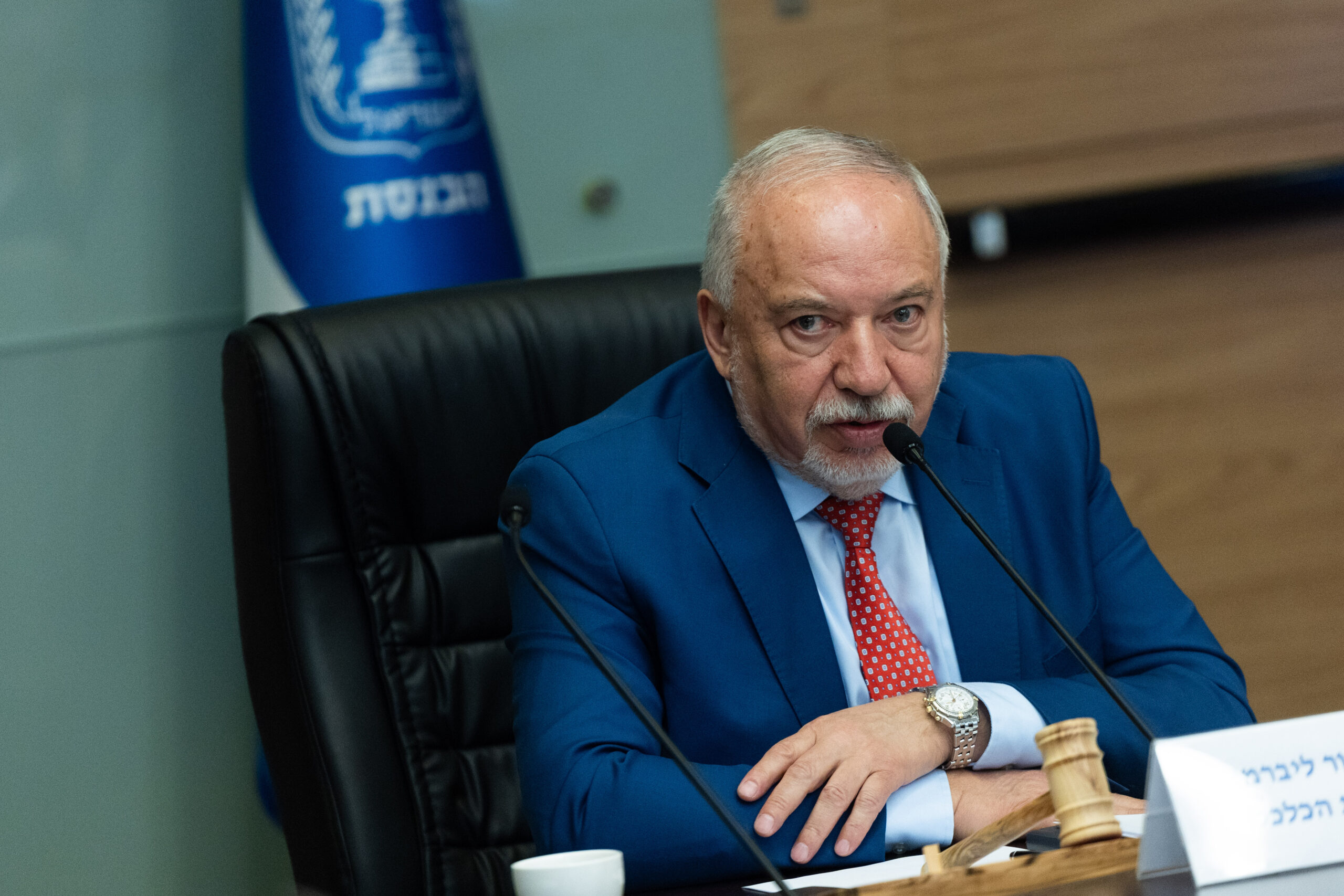
MK Avigdor Liberman: Any agreement with Iran is a catastrophe for Israel. The ayatollah regime cannot be trusted, at least not on any matter that concerns Israel. They openly declare that their goal is the destruction of the State of Israel. Whatever agreement Iran signs, they will still proceed toward the creation of nuclear weapons, and that is a threat not only to Israel but to the entire Middle East. Moreover, such an agreement entails the “unfreezing” of Iranian bank assets. That is 100 billion dollars that will most likely go toward arming Iran.
How do you see Prime Minister Netanyahu’s actions in connection with the signing of an agreement between the United States and Iran?
Liberman: Netanyahu has already clearly demonstrated that Israel under his leadership has turned into a “banana republic.” We wait to see what “big brother” says, or what he permits. Never before has our country been so dependent [on someone else] in its decisions.
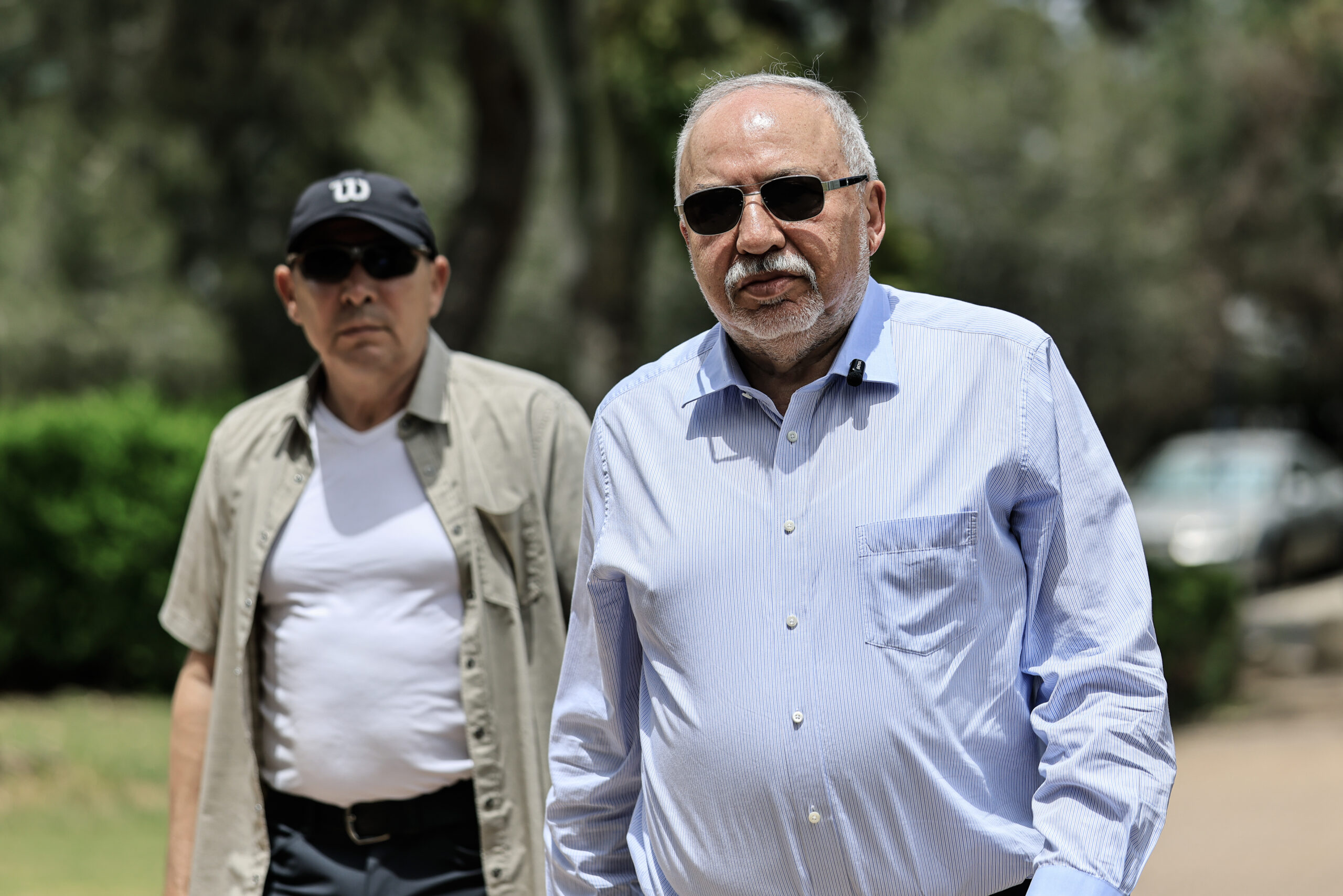
Photo by Tsafrir Abayov/FLASH90
The closer we get to elections, the more frequently people bring up the notorious 53 billion NIS that you allegedly allocated to the Arab population. There is a great deal of contradictory information on this matter. Please clarify for our readers what is true and what is fiction or slander.
Liberman: The basis for all these speculations is Government Resolution No. 922, passed by the Netanyahu government in December 2015, titled “Economic Plan for Reducing Gaps in Arab Society by 2026.” That resolution addresses a range of measures to improve the standard of living for Israel’s Arab citizens.
To be clear again: this concerns only citizens of the State of Israel from the Arab sector. The Netanyahu government planned to allocate these funds to construction, education, and combating crime. At the time this resolution was adopted I was not a member of the government, having returned only in May 2016. In 2021, Netanyahu stated at an event in Nazareth that he had invested 15 billion shekels in the Arab sector, more than all previous Israeli governments combined.
When the “government of change” replaced the Netanyahu government, Resolution 922 was revised, and subsequently 4.7 billion shekels were allocated, of which more than half went to road construction and the remainder to combating crime. These funds produced results: crime in the Arab sector decreased during the tenure of the “government of change.” Again, this was a continuation of Netanyahu’s program, and less than 5 billion was allocated.
When the “October 7th government” came to power, it could perfectly well have annulled Resolution 922, as it annulled, for example, the “Protection of the North” program, but it did not do so. And it allocated a further 10 billion. So the story about 53 billion is complete fiction.
Recently there has been increasing talk about merging Yisrael Beiteinu with Gadi Eisenkot’s party and with Naftali Bennett’s party. Are you prepared to unite?
Liberman: There is no talk of unification at this point. We are prepared to cooperate with any Zionist party that shares the same goals as Yisrael Beiteinu:
Toppling the “October 7th government”
Establishing a state commission of inquiry into the events of October 7th
Drafting all citizens of Israel who have reached the age of 18 into the army, regardless of nationality, gender, or religion
Preserving the Zionist character of the state
However, following Eisenkot’s statement that he is prepared to grant exemptions from service to 4,500 draft evaders, we understand that 4,500 today becomes 10,000 within a year and the current situation will soon repeat itself. I am not prepared to accept that.
Do you believe you will be Israel’s next prime minister?
Liberman: Of all the contenders I have the broadest experience in various government positions, and so I consider it entirely logical that the person elected to this post should be someone who can bring maximum benefit to the state. Appointing an inexperienced person as prime minister is a situation that opens the door to problems. I have held the most critical positions: Minister of Defense, Minister of Foreign Affairs, Minister of Economy, and others. These positions have given me enormous experience. I have always been consistent in my decisions, faithful to the principles of true Zionism, and that is precisely why I consider myself the most qualified for this role.
What do you consider the primary task for the Israel Defense Forces and the government in the sphere of security?
Liberman: I would divide my answer into two parts. First and foremost, we must ensure the protection of the country’s north. Over the past several months I have visited the north several times, more than any other Member of Knesset. The north of the country is turning into a wasteland. Businesses are closing, people are leaving, and all of this simply because they do not feel protected and no longer believe the government’s promises. Urgent measures are needed.
But the most important thing is the complete destruction of Hezbollah. No ceasefires, no agreements. We can see clearly now that the ceasefire allowed Hezbollah to reach a new level, and our army is facing a new type of weapon: exploding drones. If we do not find ways to counter them in the shortest possible time, these drones will soon be appearing in the skies over Tel Aviv. Only complete destruction, and ideally in partnership with other countries of the region, first and foremost the government of Lebanon itself and Saudi Arabia. This opportunity exists, and failing to take advantage of it would be an enormous strategic mistake.
Twenty-one years after Israel’s disengagement from its heartland forced the expulsion and destruction of Jewish communities in northern Samaria, Governor Yossi Dagan is launching what he calls the “Reconnection Plan”— a direct counter to the 2005 pullout.
Under the plan, 18 new towns will be established in the area, including the four communities uprooted in 2005: Homesh, Sa-Nur, Ganim, and Kadim, plus 14 new communities. Some have already received government approval. The rest are pending cabinet authorization.
The Samaria Regional Council, working with the Amana movement and the Israeli government, has spent recent months forming community cores through an organized work plan. Once the government gives final approval, residents will move to the new communities – some this summer, others later.
Official Samaria Expansion Plan | C14
The Samaria Million:
The layout emerged from the council’s Samaria Million plan, launched in recent years to bring one million residents to the region. The plan puts heavy emphasis on northern Samaria, based on the belief that Israel would repeal the disengagement law and restore community life to the area—something now already happening on the ground.
What seemed unrealistic to many in the political establishment just a few years ago is becoming reality. Discussions have moved from theoretical stages to practical preparations for moving onto the land, planning educational institutions, and absorbing hundreds of families. Leading the effort is Samaria Governor Dagan, who was himself expelled from his home in Sa-Nur and recently returned when the community went back up.
For 20 years—from the “Homesh First” days through his three terms as Governor—Dagan has worked to repeal the disengagement law. Now, Dagan leading the return to Israel’s ancestral heartland alongside Finance Minister Bezalel Smotrich and Defense Minister Israel Katz.
Dagan said: “Re-establishing the communities is the state returning to its foundational values—Zionism, building the land, Judaism, and love of Israel. The ‘Reconnection Plan’ that the Samaria Regional Council is leading together with the government of Israel in an official, state-sanctioned, and organized manner is a direct and intentional opposite to the term ‘disengagement.’”
Dagan made his position clear: “The State of Israel is done with the Oslo concept, the expulsion, and the flight from Zionism and Judaism. The State of Israel is returning to the Jewish and Zionist values of building the land, national unity, and Zionism—and that’s what will bring security from here in northern Samaria to all of the State of Israel.”
The Samaria Regional Council has launched a major effort to recruit hundreds of families who will move to the 18 new communities, some this summer, others later pending government approval. The council’s strategic planning presents a diverse community mix, including religious and secular people. Among the communities designated for secular residents are “Mitzpe Yam” and “Aloney Shomron.” The council notes that this combination of religious and secular residents holding different views is a hallmark of Samaria.
Alongside residential homes, educational and religious institutions will be established in some of the towns. Some of these cores are led by reservists and graduates of pre-military academies. Among other things, branches of well-known educational institutions are expected to open, including a branch of the Bnei David yeshiva from Eli, headed by Rabbi Neriya Bulak, as well as pre-military yeshiva institutions headed by Rabbi Chaim Baruch from Tiberias, Mevorchim, and Lod.
The plan is being carried out in full partnership between the Samaria Regional Council and the government of Israel, with close coordination with Defense Minister Israel Katz and Finance Minister Bezalel Smotrich, with the Amana movement led by Zeev Hever (Zambish), with the ‘Settlement Division’ in the Defense Ministry headed by Yehuda Eliahu, and with the relevant Ministry.
Photo: Flash 90
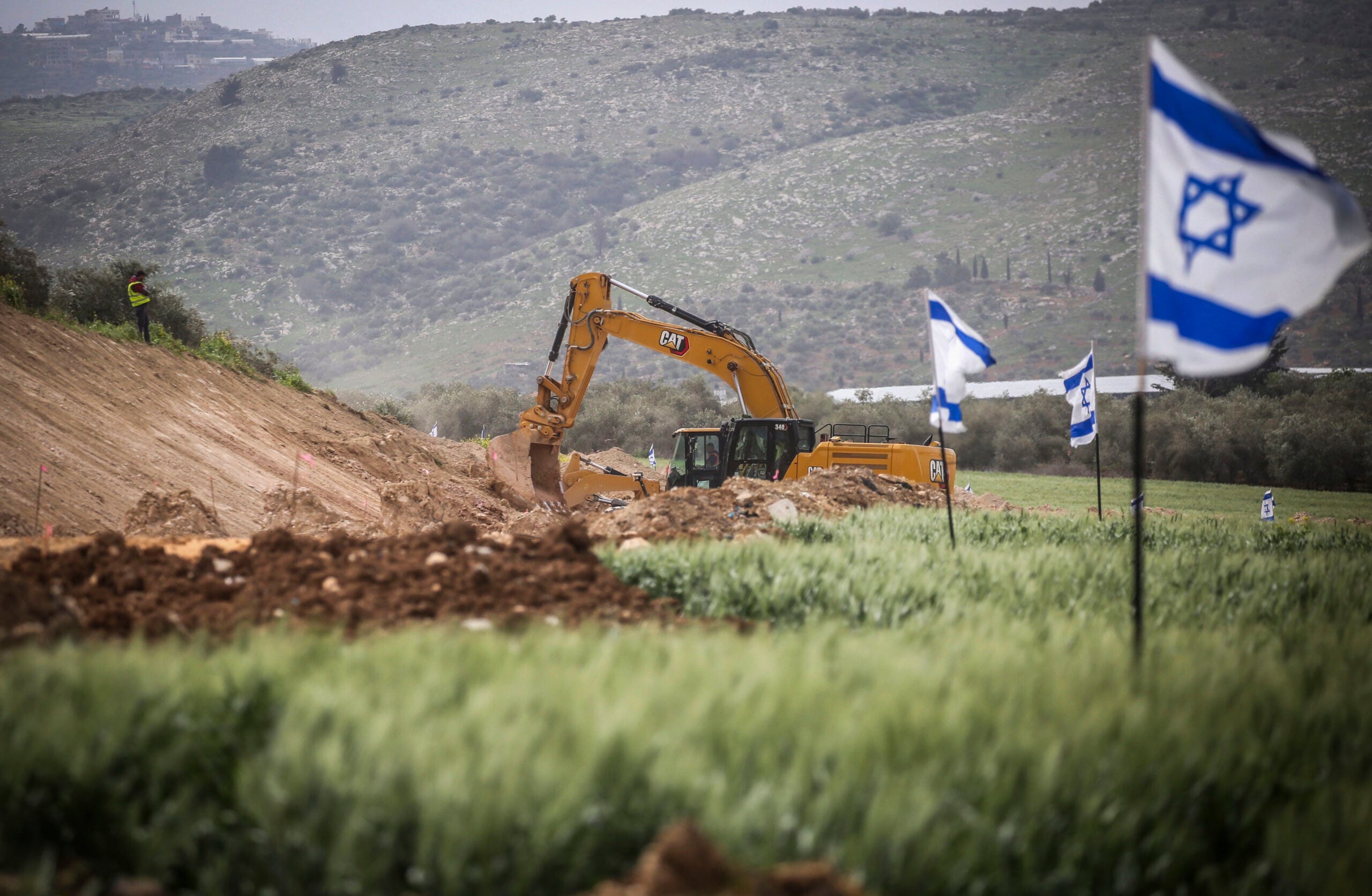
One of the peak moments in the return to northern Samaria was the ground-breaking ceremony for the community of Sa-Nur held about a month ago. At the ceremony, Finance Minister Smotrich said: “We are erasing the disgrace of the expulsion, killing the idea of a Palestinian state, and returning to the community of Sa-Nur. This is a day of celebration.” Defense Minister Israel Katz said: “The legalization of more than 140 farms in Judea and Samaria soon constitutes another step in strengthening Israeli presence and weakening Palestinian attempts to establish themselves in the area.”
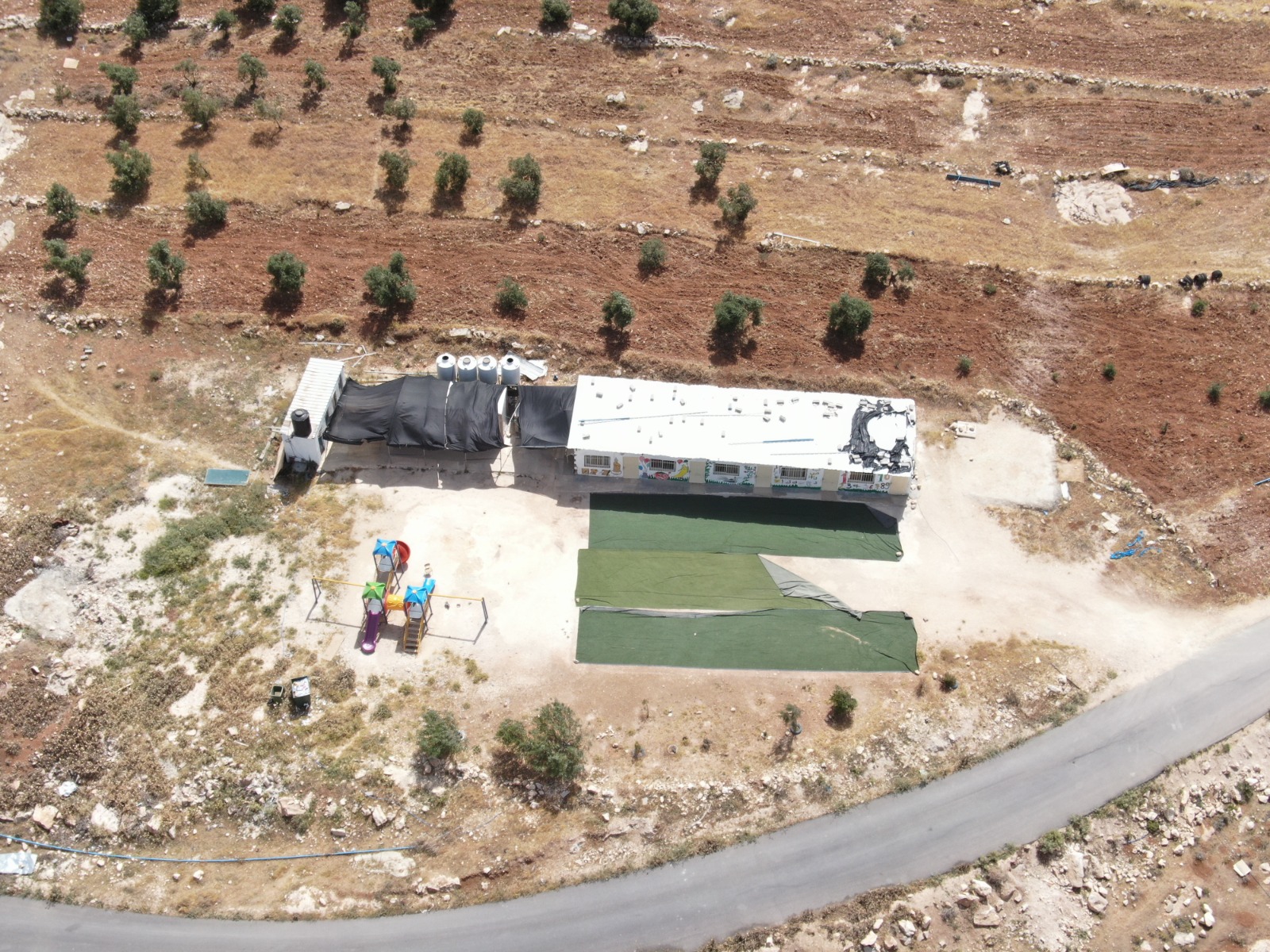
The European Union has sanctioned Israeli NGO Regavim after the organization filed a court petition to dismantle an illegal structure built near the Herodium in Judea and Samaria. The structure was EU-funded, built in Area C without permits, in direct violation of the Oslo Accords.
The EU describes the structure as a school and has accused Regavim, whose mission is to protect Israeli land, of “facilitating and encouraging human rights abuses.” Regavim says a professional engineering assessment found the structure to be a safety hazard to both children and staff.
Regavim responded to the sanctions with a pointed statement: “The EU builds illegally, Israel enforces the law, and Regavim gets sanctioned for exposing it.”
A wave of construction and renewal is sweeping northern Samaria: alongside plans to establish 18 new communities in the area, the first spiritual and educational anchors are now being set with the founding of two new yeshivas in the Dotan Valley and in the rebuilt community of Ganim. Dozens of Zionist youth have left everything behind to live in the area and study at these institutions.
The new community now being established in the Dotan Valley and the rebuilt community of Ganim signal the new reality taking shape in northern Samaria these days: the establishment of dozens of new communities targeting diverse audiences—from the religious and ultra-Orthodox public to communities intended for the general population. As part of solidifying these communities, the Samaria Regional Council decided to emphasize establishing educational and Torah institutions, recognizing them as a powerful engine for community growth.
In the Dotan Valley, work has already begun on one of the new yeshivas, alongside graduates who chose to make their home specifically in this revitalizing area. In addition, dozens of young men also came to the Bnei David institutions to register for another new yeshiva set to open in Ganim—a community destroyed during the Disengagement and now being rebuilt from scratch.
The founders of the yeshiva in Ganim, together with the institutions’ rabbis, are already setting their sights on turning the place into a spiritual center that will lead young settlement in the area. For Samaria residents and organizations working there, this represents an emotional full circle—alongside the physical return of residents to the land and the strengthening of Israeli sovereignty. Northern Samaria is thus becoming before our eyes a vibrant hub of construction, community, and Torah study.
A Channel 14 poll conducted today (Thursday) by NEXT DATA among 615 adults from the general population shows that the Likud party continues to lead significantly with 33 seats. In addition, Prime Minister Benjamin Netanyahu enjoys broad support as the most suitable candidate to serve in office, with 49% of respondents. However, this is a 5% drop in support from the previous survey published about two weeks ago.
In the distribution of seats, the joint Bennett-Lapid and Yashar parties each win 15 seats. Shas rises to 11, the Democrats party is stable at 9 and Yisrael Beiteinu rises to 8 seats. United Torah Judaism and Ben Gvir’s Otzma Yehudit each win 7 seats. Religious Zionism, Hadash Ta’al and Ra’am each win 5 seats. Balad does not pass the threshold with 2.1% support, as does Benny Gantz’s Blue and White, which, after a strengthening trend that lasted several weeks, is falling and receives only 1.2%.
Gadi Eisenkot | Photo: Arik Marmor
In terms of the division of the blocs, the right-wing bloc is strengthening and reaches 63 seats. In contrast, the left-wing bloc is weakening and amounts to only 47 seats, with the Arab parties winning 10 seats together. In the survey to elect the prime minister, Gadi Eisenkot receives 23% support, Naftali Bennett 20%, Avigdor Lieberman 7%, and Benny Gantz only 1%.
Disclaimer: The survey conducted using NEXT DATA on 615 graduates from all swaths of the populace was conducted today, May 28, 2026. Analysis: Shlomo Filber.
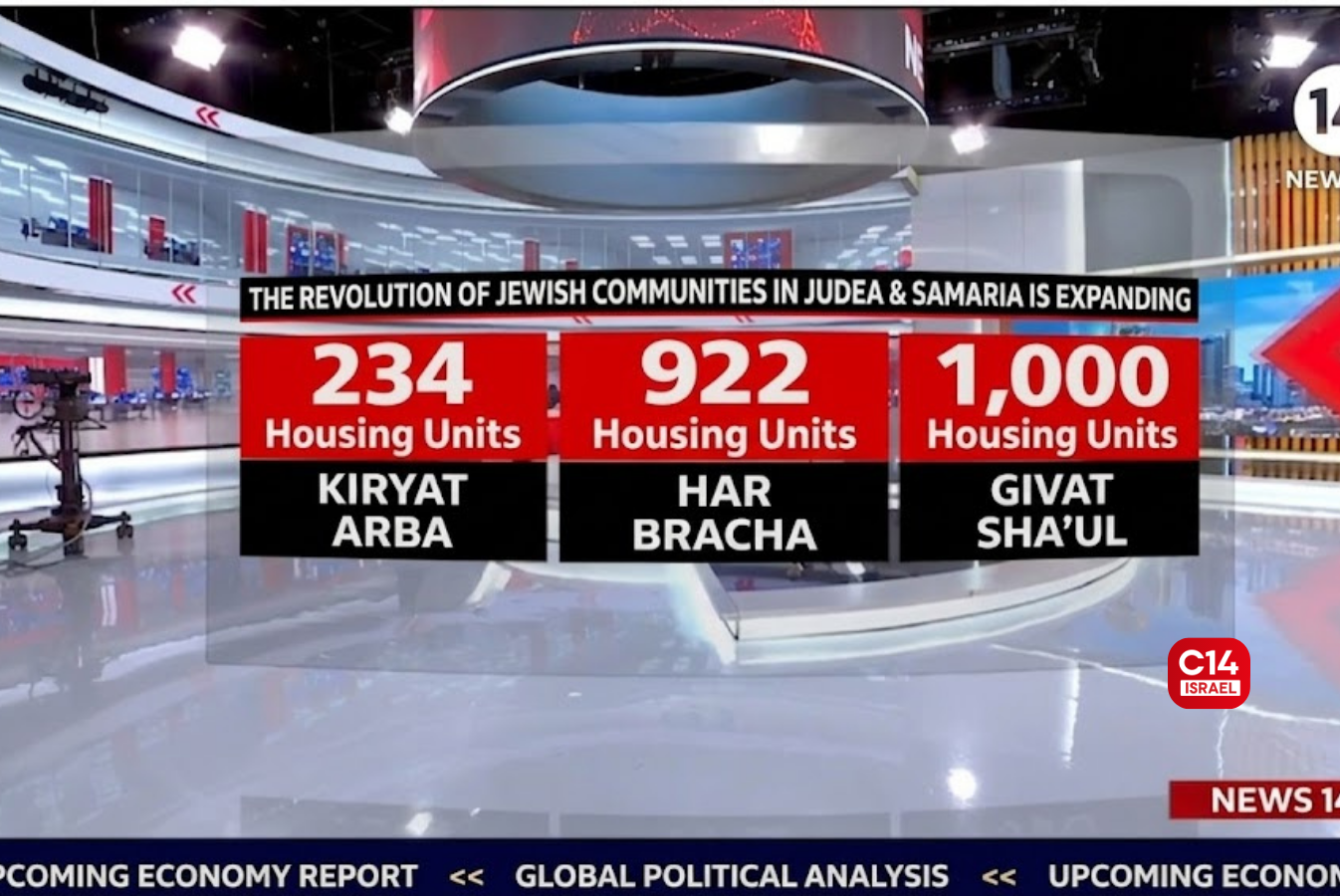
Israel’s Supreme Planning Council will immediately advance thousands of housing units in several key communities in Judea and Samaria, in line with Finance Minister Bezalel Smotrich’s policy to deepen Israeli presence in Israel’s heartland (Israeli territory which is often erroneously called ‘The West Bank,’ following Jordan’s occupation of Israel and attempt to erase millennia of Jewish presence in the broader region). The move will push forward 2,162 new housing units across multiple communities. As a result, the town of Givot will become a city, and Har Bracha is set to triple in size.
Photo: Haim Goldberg, Flash 90
In the new urban area of Givot in Gush Etzion, 1,006 housing units will be advanced. Final approval of the plan will enable growth, development, and absorption of thousands of new residents, which was approved by the cabinet in March a year ago. This comes alongside planning for thousands of additional housing units currently being advanced with the goal of transforming the location into a city.
Massive growth is also expected in Har Bracha in Samaria, where 922 housing units will be advanced. This is a popular community with very high demand, and advancing the current plan will triple its current size and enable its continued rapid development.
Significant reinforcement is also expected in the City of the Patriarchs, Kiryat Arba, where 234 new housing units will be advanced within the local council’s territory. The move represents another strategic layer in changing the reality on the ground, removing years-long planning obstacles, and making Jewish life in the Israeli heartland an inseparable part of the State of Israel’s official development map. As stated, this is a decisive Zionist response proving that land development and nation-building continue with full force in all sectors.
Photo: Jonathan Zindel, Flash 90
Finance Minister Bezalel Smotrich said: “We continue to build the Land of Israel in practice….this is not just a planning move but a national move that establishes our hold on the ground, strengthens Israel’s security, and sets clear facts that prevent the establishment of an Arab terror state in the heart of the land.
“I thank Gush Etzion Regional Council head Yaron Rosenthal, Samaria Governor Yossi Dagan, and Kiryat Arba Local Council head Israel Bramson for their cooperation. We will continue to lead a broad wave of construction and regulation because this is the path to victory, security, and growth. Thanks to the Civil Administration and the Settlement Administration for leading the processes.”