Category: Israel

  • IDF Kill Terrorist Who Kidnapped Hostages on Oct. 7th

    IDF Kill Terrorist Who Kidnapped Hostages on Oct. 7th

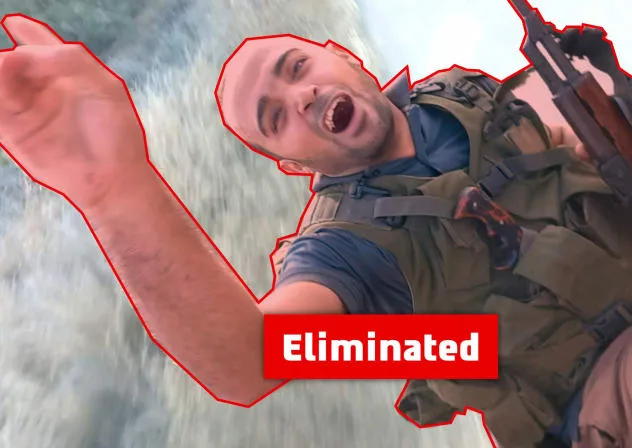
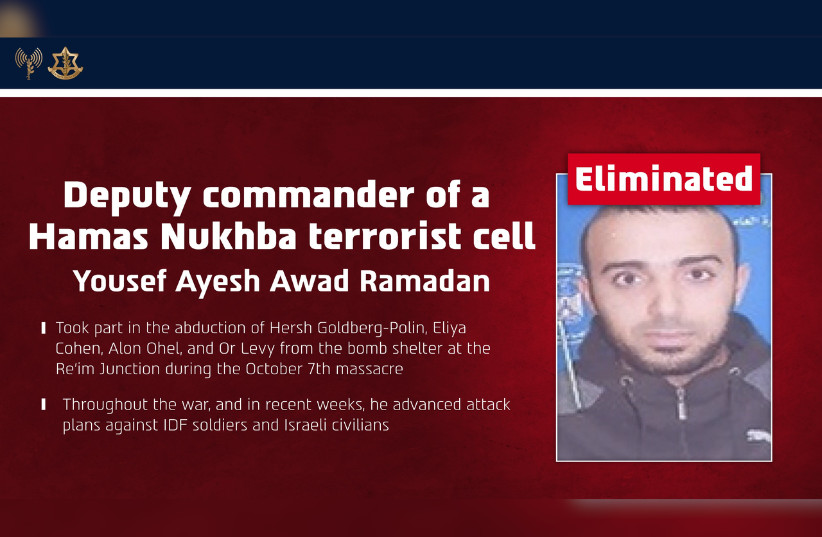
    The IDF killed Yuosef Ayesh Awad Ramadan, deputy commander of a Hamas Nukhba terrorist cell, in an airstrike in central Gaza on Monday, the military announced Tuesday evening.

    According to the IDF, Ramadan was one of the terrorists who infiltrated Israeli territory during the October 7 massacre and participated in kidnapping Hersh Goldberg-Polin, Eliya Cohen, Alon Ohel, and Or Levy from the shelter at Re’im Junction—one of the deadliest and most remembered scenes from the day of the attack. Goldberg-Polin was later killed in captivity.

    Photo by: IDF Spokespersons unit

    The military said that beyond his involvement in the massacre and kidnappings, Ramadan continued throughout the war to advance terror operations against IDF forces and Israeli civilians. Because of his activities, he was classified as an immediate threat to forces operating in Gaza and to the Israeli home front.

    The strike was carried out as part of IDF Southern Command operations, which continue across the Strip to eliminate threats and thwart terror operatives. The IDF emphasized that forces are deployed throughout the area in accordance with existing agreements and will continue to act against any identified threat.

  • Rubio: Iran Agrees to Discuss Nuclear Program 1st Time

    Rubio: Iran Agrees to Discuss Nuclear Program 1st Time

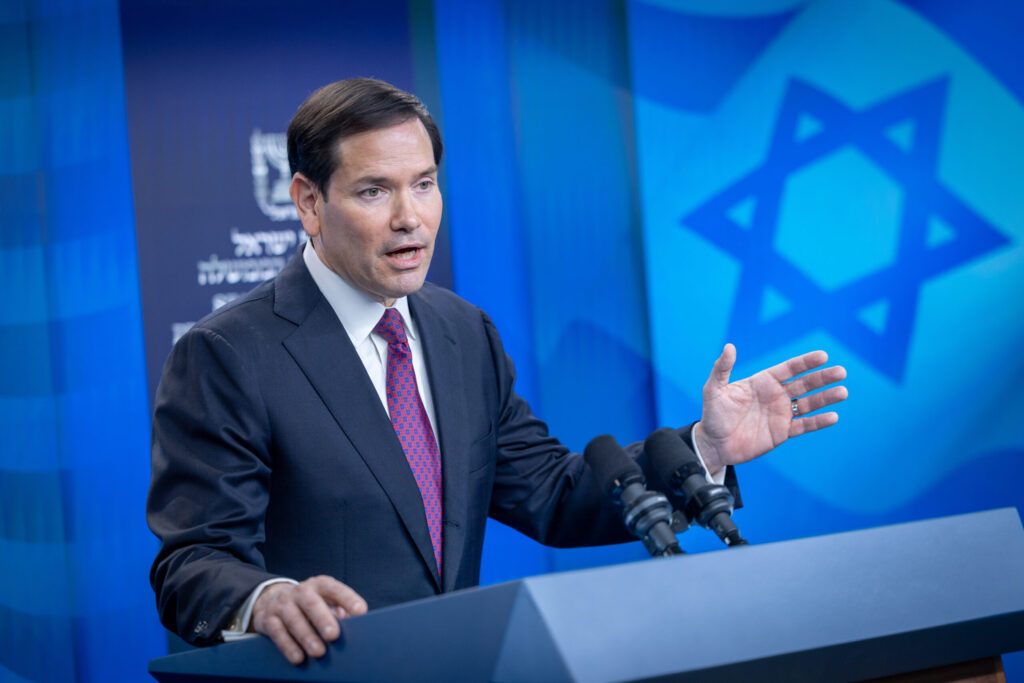
    U.S. Secretary of State Marco Rubio revealed a short while ago (Tuesday) to the Senate the progress in negotiations with Iran. According to him, the Iranians have agreed for the first time to discuss elements regarding the nuclear issue—a clause that a month or a year ago they did not even agree to mention. Rubio emphasized that this does not mean a deal will definitely be signed, but it is a possible scenario that could happen even today, tomorrow, or next week.

    Photo by: Chaim Goldberg/Flash90

    Rubio’s statement comes after President Trump said last night that a potential diplomatic breakthrough with the Islamic Republic exists. The leader of the free world confirmed that the talks with Iran are continuing at a high pace, just a few hours after Tehran announced a absolute halt of diplomatic channels with Washington.

    In a phone call that Trump held with ABC’s Chief Washington Correspondent, Jonathan Karl, the President was asked about the diplomatic crisis that was revealed earlier that day, when Iran decided to cut contact in protest of the Israeli aggression in Lebanon. Trump clarified that the situation is under full control: “It looks good, looks good. There was a small glitch today, but I turned it around very quickly, as you probably noticed earlier. The Iranians were upset by Israel’s strikes in Lebanon.”

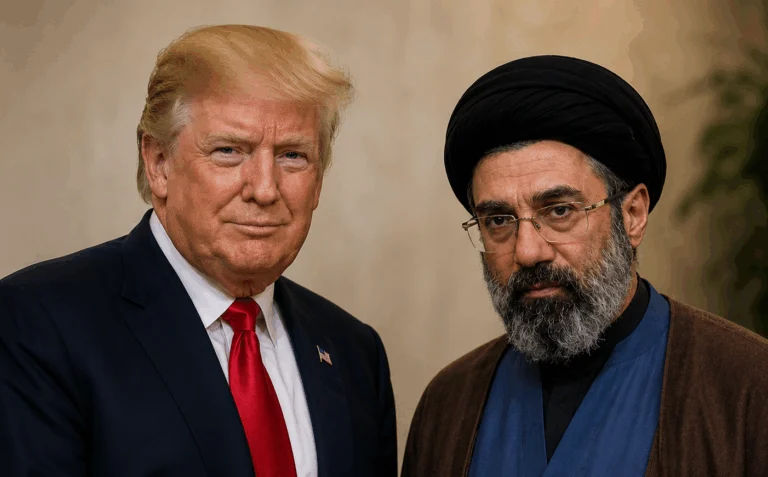
    Trump and Khamenai | edited by AI

    Earlier, in a conversation he held with the NBC network, Trump noted that it is his intention to ask Netanyahu for explanations and to ask him “what is happening with Lebanon,” this in parallel to his statement that Iran did not update the U.S. in advance regarding its decision to temporarily freeze the communication channels between them.

    Trump expressed great hope regarding the chances to end the international crisis that has paralyzed global shipping lanes, and noted that the official memorandum of understandings for the opening of the Strait of Hormuz and the extension of the ceasefire is within reach: “I think we are talking about the coming week. I still have not agreed to it finally because I still need to achieve a few more points. But a peace agreement with Iran could be even better than a military victory.”

  • Record 87% of Israelis Say They Are Proud to Be Jewish

    Record 87% of Israelis Say They Are Proud to Be Jewish

    A comprehensive survey released Tuesday reveals a sharp rise in Israelis’ connection to Jewish-national identity, with the highest levels measured in the past decade. The data shows a majority of citizens now define themselves more as “Jewish” than simply “Israeli.”

    The findings were published as part of Diaspora Week and reveal a striking figure: 87% of Israel’s public in 2026 are proud to be Jewish. The survey also found that even amid current tensions, Israel’s value-based and communal commitment to world Jewry remains deep and rooted in Israeli society.

    The data shows a surge in Jewish-national identity from last year: 57% of the public now define themselves as Jewish before “Israeli,” compared to just 34% in last year’s survey. Additionally, 87% are proud to be Jewish and see it as a significant component of their identity—an increase compared to the previous two years.

    Regarding closeness to Diaspora Jews, 72% of Israelis believe the State of Israel has a commitment to Diaspora Jewry—the highest figure measured in recent years. The survey also found that 85% agree that Judaism is far more than a religion, symbolizing belonging to one people with shared history and roots. A sharp increase in this view was recorded even among the secular public, where it reaches 82%.

    94% of Israelis expect world Jewry to act on behalf of the state during wartime. Additionally, 66% of Israelis define assimilation as a significant threat to the Jewish people. Alongside this, there’s a strengthening of personal Jewish identity, parallel to rising awareness and concern about the phenomenon: 54% said assimilation troubles them personally—a significant increase compared to recent years. The rise in concern comes mainly from the secular and traditional public, not just from the religious and ultra-Orthodox sectors.

    On the other hand, there’s a decline in the sense of practical responsibility attributed to the State of Israel toward Diaspora Jewry, as part of a process of “identity consolidation”—strengthening the Jewish nation and understanding that we are one people. The survey shows that as Jewish identity strengthens, support for practical commitment weakens: only 20% of Israelis today support allocating financial resources to assist Jews living in the Diaspora, a sharp drop from 40% last year. The percentage willing to donate their own money to strengthen Jewish identity in the Diaspora also fell to just 22%.

    The 2026 Public Attitudes Index on the Connection Between Israel and the Diaspora comprises ten central variables reflecting different aspects of identity, mutual responsibility, and perception of obligation. The index is based on a survey conducted among a representative sample of 1,216 Israeli Jews aged 18 and over. The Ministry of Diaspora Affairs and Combating Antisemitism conducts this survey annually among Israeli society, aiming to reflect an updated situation and compare to previous years, while examining perceptions of identity, mutual responsibility, and commitment between Israeli society and Jewish communities worldwide.

    Diaspora Week is a national week led by the Ministry of Diaspora Affairs and Combating Antisemitism and the Ami administration, dedicated to strengthening the connection and mutual responsibility between the State of Israel and Jewish communities around the world. The week takes place between May 31, 2026 and June 6, 2026, and features events, meetings, and educational and community initiatives throughout the country, with participation from educational institutions, youth movements, pre-military academies, and social organizations.
  • Israel’s Defense Exports Hit Record $19.2B

    Israel’s Defense Exports Hit Record $19.2B

    The Defense Ministry released dramatic figures today (Tuesday) showing an unprecedented leap in Israel’s defense exports in 2025, crossing the $19 billion threshold for the first time. According to the data, defense exports reached a record $19.2 billion (over 53 billion shekels), a roughly 30% jump from the previous year. Defense exports have now more than doubled in five years and quadrupled in a decade.

    The significant surge is attributed in part to reforms initiated by the Defense Ministry to increase exports, which led to a record volume of government-to-government (GTG) deals reaching roughly $10 billion in 2025—more than half of all transactions. Defense Ministry Director-General Maj. Gen. (res.) Emir Baram and head of the Defense Export Controls Agency (SIBAT), Brig. Gen. (res.) Yair Kulas, presented the report to Defense Minister Israel Katz, noting hundreds of new contracts signed worldwide. Over half the deals are worth at least $100 million.

    Missile, rocket, and air defense systems continue to lead export sectors with 29% of all deals, while observation and optoelectronics systems recorded an impressive surge with 22% of all transactions, compared to just 6% the previous year. The Defense Ministry notes that unprecedented operational achievements, including during Operation Rising Lion in Iran in June 2025, together with the operational experience gained by Israeli developments in all combat arenas, they created great demand for Israeli technology.

    Defense Minister Israel Katz commented on the data and said: “The fact that even during a third year of fighting, Israel continues to break records in defense exports is proof of the great appreciation that the defense establishment enjoys in the wider world. This achievement relies on the capabilities of our forces and the other security branches, both in Gaza, Lebanon, Iran, and Yemen.” Defense exports are a reflection of Israeli strength, sophistication, creativity, and the ability to think outside the box.”

    Director General of the Ministry of Defense, Maj. Gen. (Res.) Amir Baram, added: “The sharp surge in defense exports is an expression of the quality of Israeli industry, global demand, the operational successes of our forces, and our unique ecosystem, but it is also the result of a profound reform carried out by the Ministry of Defense last year to reduce regulation and open new markets that led to huge deals. Today, our force-building budget relies heavily on these partnerships, but we must not be satisfied with that.”

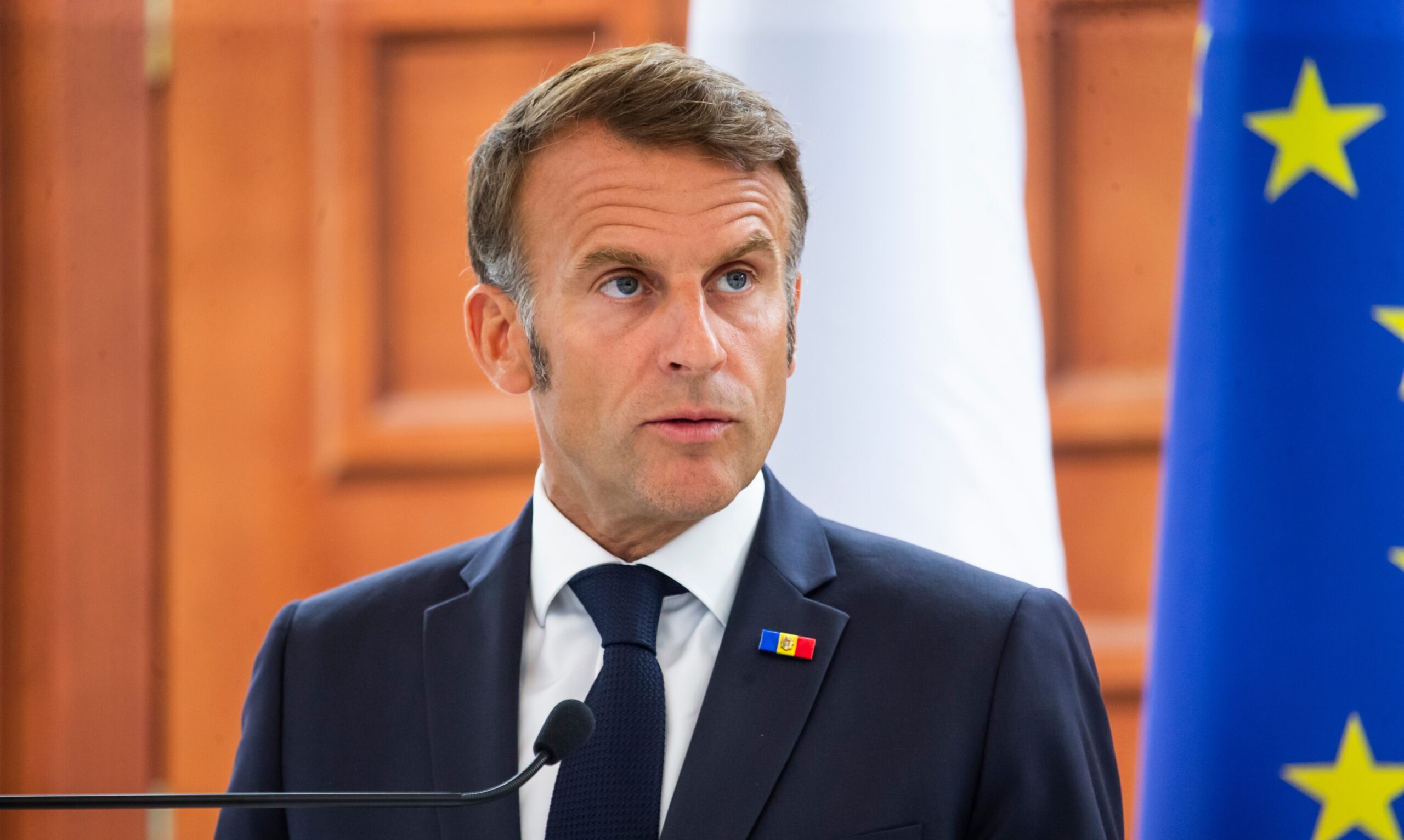
    As a reminder, the Ministry of Defense spokeswoman issued a strong statement of condemnation yesterday following the French government’s decision to ban the State of Israel from official participation in the EUROSATORY defense exhibition, which will be held later this month in Paris. As a result of the decision, the Ministry of Defense will not be able to set up a national pavilion at the exhibition, as part of France’s condemnation of Israel since October 7th and even more so since Israel began fighting the threat of the terrorist organization Hezbollah.

  • Israel Extends Rocket Warning Time in North

    Israel Extends Rocket Warning Time in North

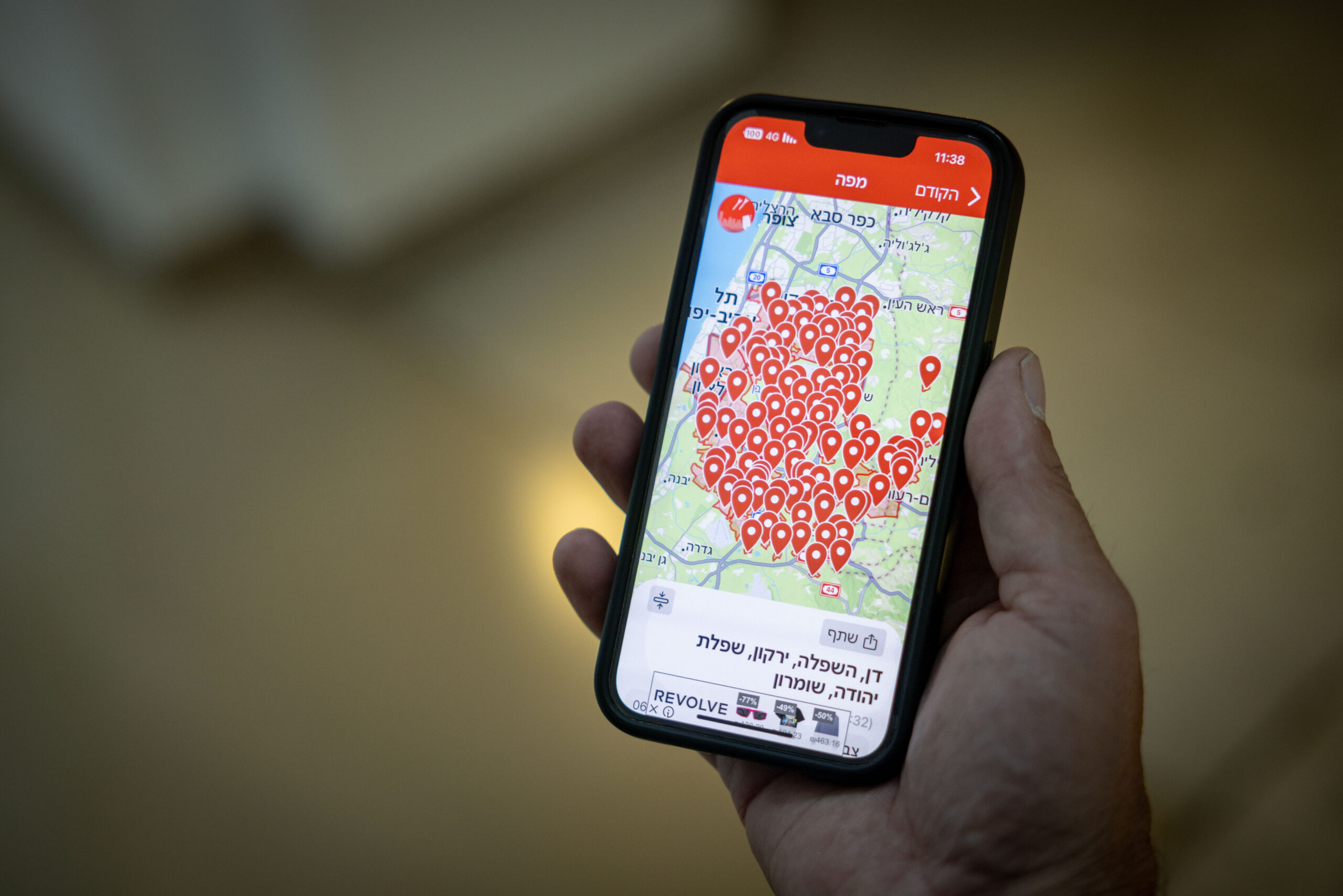
    Home Front Command announced today (Tuesday) that it is extending the warning time for rocket alerts in 161 communities across northern Israel, including Haifa, the Krayot suburbs, and the Carmel region.

    The change increases the time residents have to reach shelter from 60 to 90 seconds and took effect Tuesday at 4:00 p.m. The move is intended to improve civilians’ ability to protect themselves in these areas.

    The decision followed a comprehensive professional process conducted by a team of experts established specifically for this purpose. The team examined a range of operational and technological considerations and carried out a series of necessary adjustments. The change was also presented to local authority heads by Home Front Command representatives.

    Home Front Command said the extension comes as part of ongoing efforts to improve civilian protection and response capabilities.

    The Home Front Command chief said: “We continue to invest significant effort in learning, drawing lessons, and improving our response to civilians, as part of the understanding that extending warning times can save lives.”

    The IDF Home Front Command added that it will continue reviewing and updating warning times in additional areas based on operational conditions and capabilities.

  • Netanyahu: Iran’s Terror Regime Will Fall

    Netanyahu: Iran’s Terror Regime Will Fall

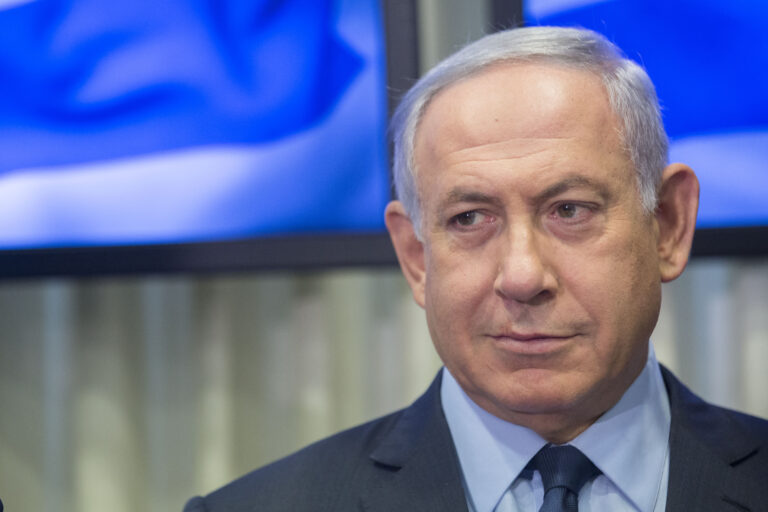
    Prime Minister Benjamin Netanyahu spoke last night (Monday) at the farewell ceremony for the outgoing Mossad chief, warning that Israel’s enemies would fail in their efforts against the state.

    “Let anyone plotting against Israel know that their schemes will fail. The price they will pay will be very heavy. The price Iran has already paid is very heavy. The foundations of this terror regime in Iran have cracked. It will never be what it was, and I tell you—it will fall.”

    Netanyahu also referred to Israel’s achievements over the years, saying the country has created globally recognized “brands” across multiple fields.

    “Over the years, Israel has created many brands that conquered the world. The fruits of our innovation are synonymous with excellence—in technology, defense industries, smart transportation, medicine, agriculture, and many other fields. There’s another Israeli super-brand—the Mossad. Many consider it the leading intelligence and counterterrorism organization on the international stage.”

    He praised the Mossad and its personnel, calling the organization “a beacon of human strength, technological sophistication, and operational daring,” and added: “I salute you, the people of Israel salute you, and many in the world salute you as well.”

    Netanyahu concluded by addressing the outgoing chief personally, saying: “Dedi, great things were accomplished during your tenure. This farewell event marks the end of five intense and dramatic years—some of the most fateful years in our history. Tonight, I have come to say thank you on behalf of the citizens of Israel and on behalf of the entire nation—for 30 years of dedicated service in the Mossad, and for the recent years that have yielded notable achievements for Israel’s security.”

  • Israel Slams France’s Ban from Paris Defense Expo

    Israel Slams France’s Ban from Paris Defense Expo

    The Defense Ministry issued a sharp rebuke Monday after France banned Israel from official participation in the EUROSATORY defense exhibition, set to take place later this month in Paris. The decision prevents the ministry from setting up a national pavilion at the show.

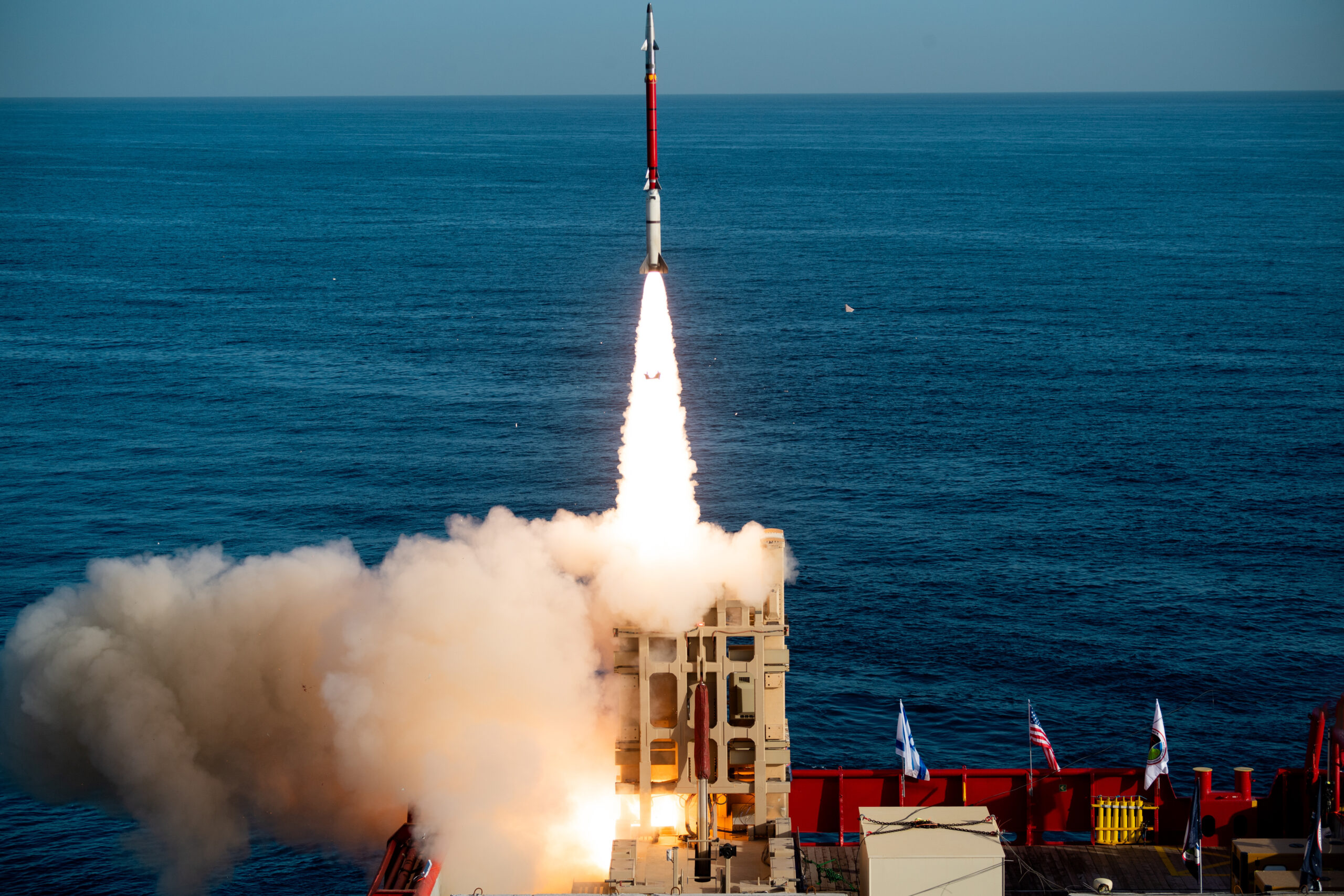
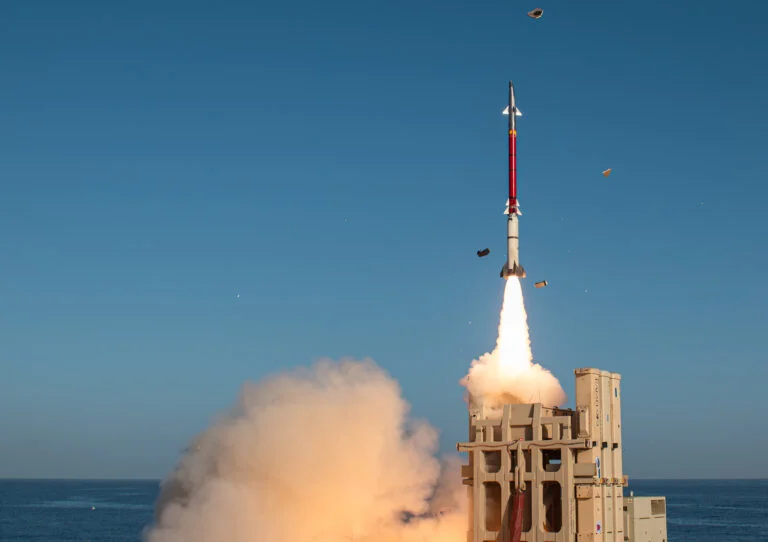
    David’s Sling, archive footage | photo by: The Media and Public Affairs Bureau of the Israel Ministry of Defense

    France’s restrictions bar government representatives from attending, block the opening of an Israeli national pavilion, and prohibit defense companies from displaying offensive weapons systems—allowing only air defense products. The limitations apply exclusively to Israel, breaking with standard practices at international exhibitions and treating Israeli firms differently than other countries’ defense industries.

    The Defense Ministry called the decision “shameful,” saying it “reeks of political and commercial considerations.” Officials said the move was unsurprising, fitting a consistent pattern in French conduct in recent years that places France “again and again on the wrong side of history.”

    Iron Dome, archive footage | Photo by: Eyal Margolin/Flash90

    The ministry added that France, which prides itself on values of liberty and democracy, is acting in complete contradiction to those principles. Officials accused Paris of hiding behind a “fake policy consideration” to exclude Israeli offensive weapons—despite their vastly superior quality to French systems and Israeli technologies’ exceptional performance against terrorist organizations and regimes.

  • Breaking: Trump Announces Agreement with Hezbollah

    Breaking: Trump Announces Agreement with Hezbollah

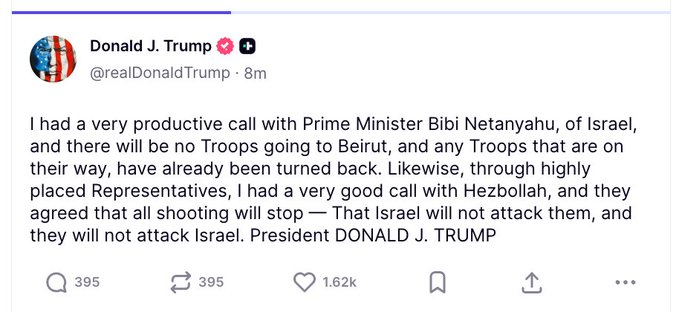
    President Trump announced on his social media account on Truth that he has reached an agreement between Israel and Hezbollah.

    Screenshot from president Trump’s Truth account

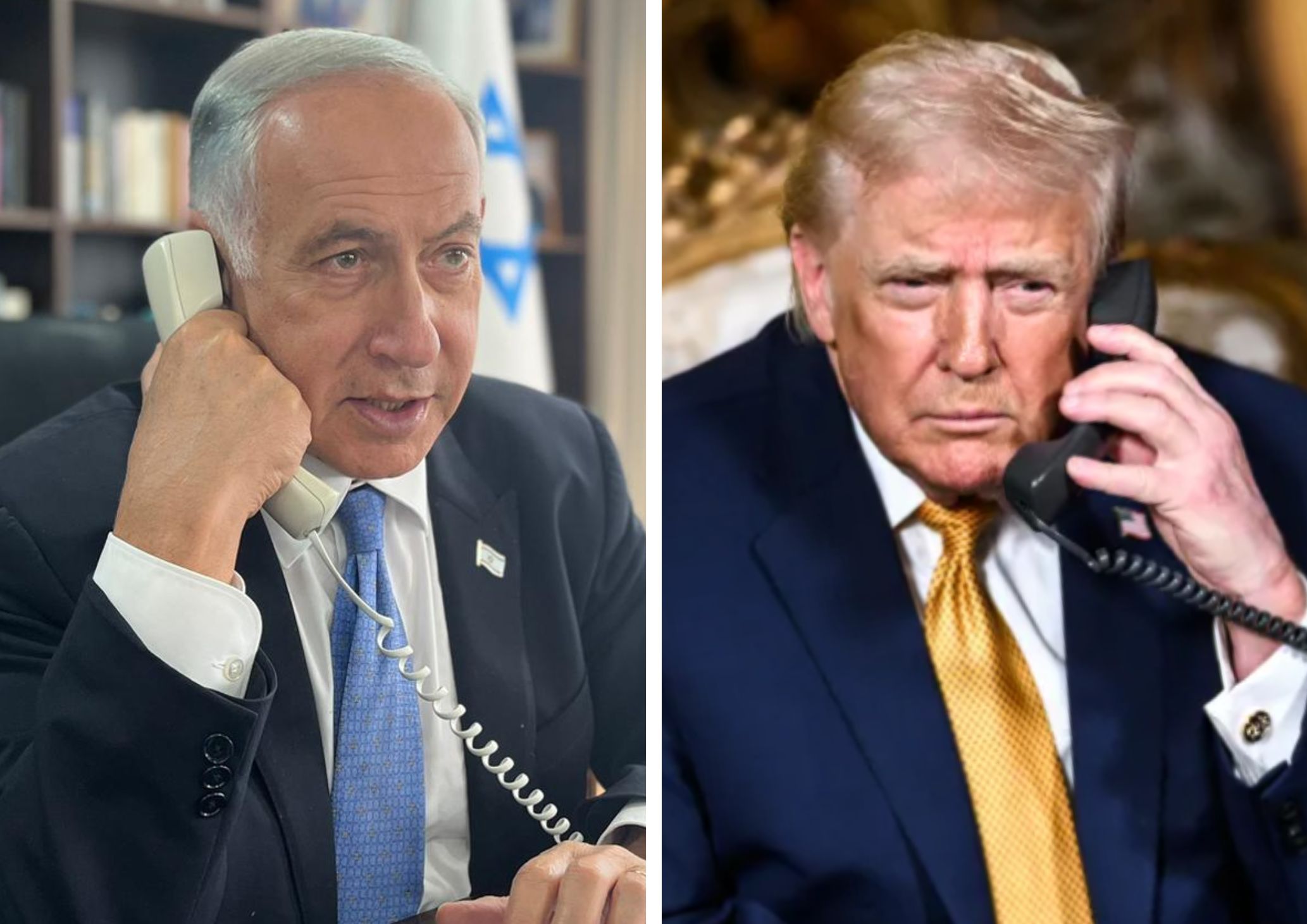
    The president wrote: “I had a very productive call with Prime Minister Bibi Netanyahu, of Israel, and there will be no Troops going to Beirut, and any Troops that are on their way, have already been turned back. Likewise, through highly placed Representatives, I had a very good call with Hezbollah, and they agreed that all shooting will stop — That Israel will not attack them, and they will not attack Israel.”


  • Iran Reopens Internet and War Videos Flood Out

    Iran Reopens Internet and War Videos Flood Out

    After long months of an almost total disconnection from the global network, the internet in Iran has reopened—and dramatic footage from the war against the United States and Israel is beginning to stream onto social networks one after another. Many web users described the videos as “crazy” and “insane,” after a long period during which almost no authentic footage emerged from inside the country.

    Photo by: Reuters

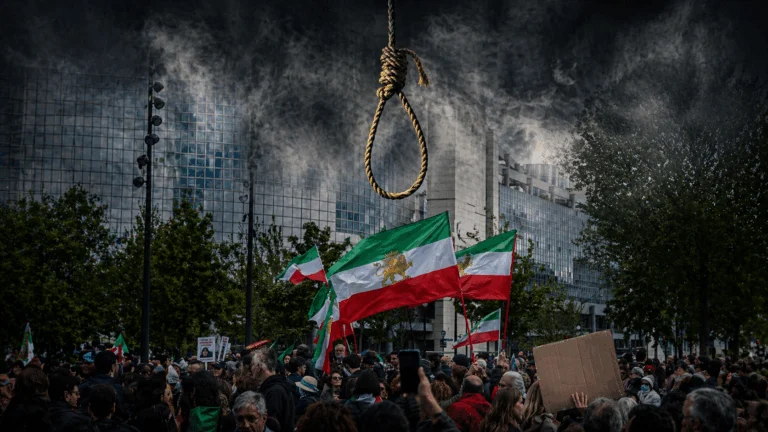
    The block in Iran was considered one of the harshest and longest internet shutdowns in modern history. It began on January 8, 2026, against the backdrop of a widespread wave of protests against the Iranian regime, which attempted to prevent footage of the violent suppression and the events in the streets. Later, with the outbreak of the military conflict against the US and Israel at the end of February, the restrictions were tightened even further.

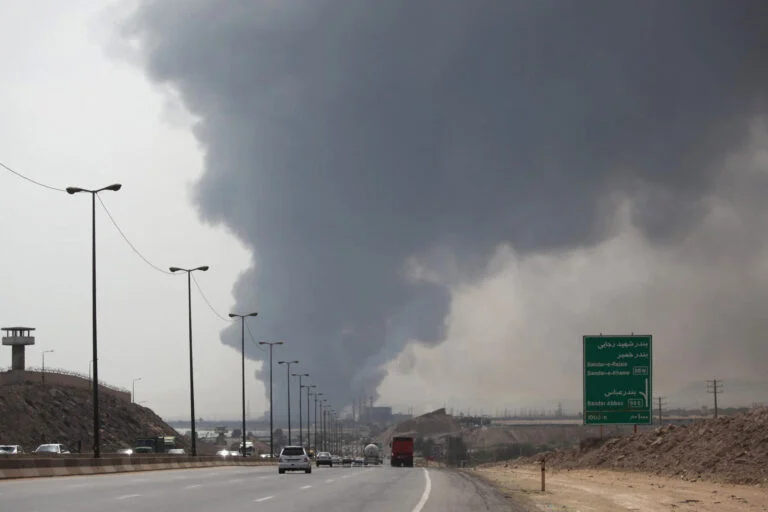
    Attacks in Bendar Abbas, Archive | Photo by: Reuters

    According to reports and international monitoring organizations, approximately 90 million citizens in Iran were cut off almost completely from the world for about 88 days—a period that included severe damage to the economy, communications, education, and the healthcare system. During the block, many citizens attempted to bypass the restrictions using VPN services, but these too were repeatedly blocked by the authorities.

    Photo by: ChatGPT

    At the end of May, Iranian President Masoud Pezeshkian ordered the reopening of access to the international internet, and web traffic in the country gradually began to recover. Since then, social networks have been filling up with new footage of the bombings, the damage in the streets, and the chaos that ensued during the months of fighting and protests.

  • Judea and Samaria Added to Israel’s Tax Benefit Map

    Judea and Samaria Added to Israel’s Tax Benefit Map

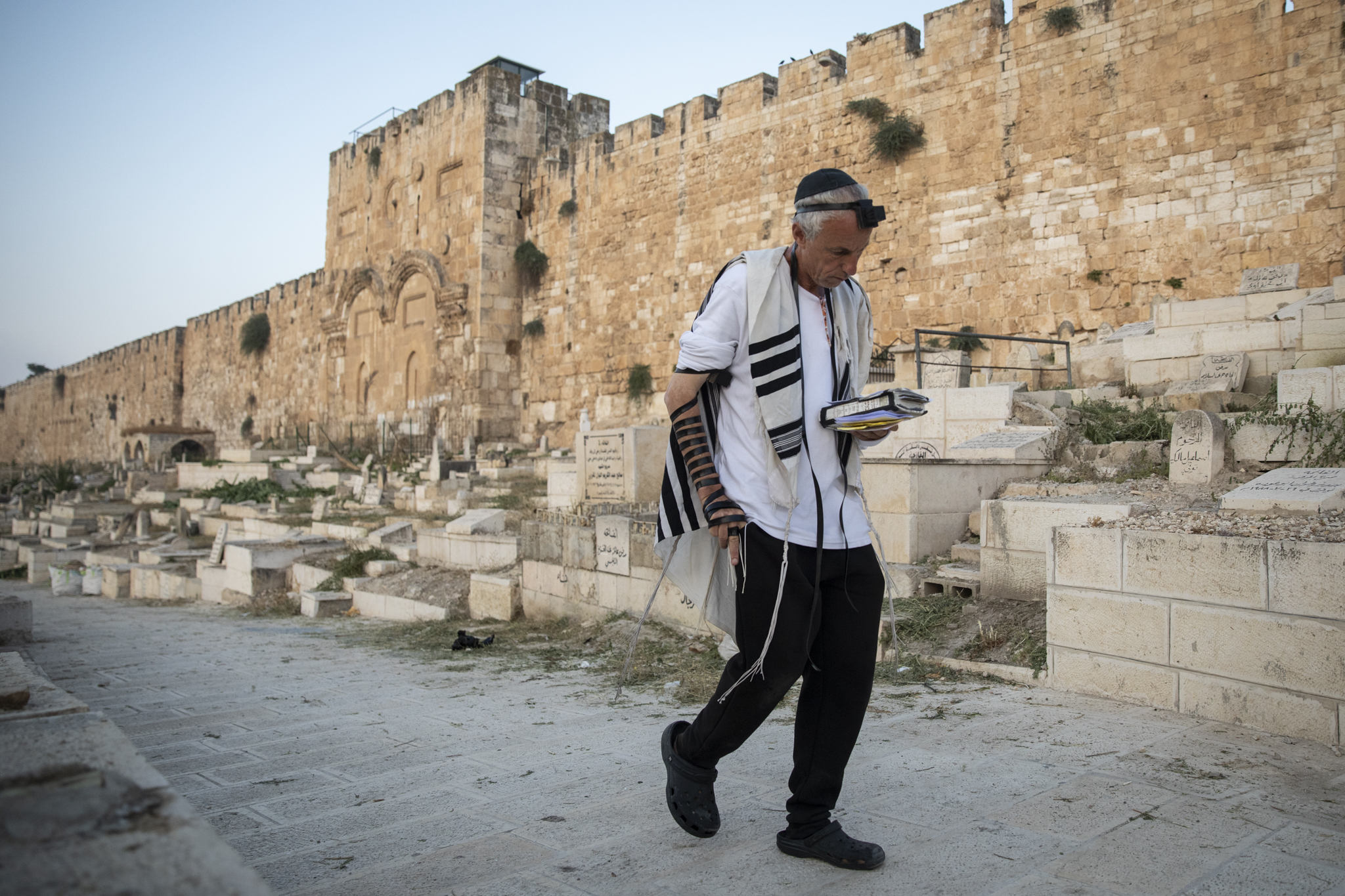
    The Knesset Finance Committee approved Monday legislation that extends tax benefits to towns Judea and Samaria classified as under security threat—placing them on equal footing with communities near the Gaza Strip and Lebanon border that have long received such breaks.

    No photo credit

    The bill, sponsored by Knesset member Tzvi Sukkot, passed its second and third readings and amends Israel’s Income Tax Ordinance. It creates a new designation called the “Eastern Confrontation Line Zone” covering areas in the eastern Judea and Samaria within 2 kilometers of the separation barrier. Judea and Samaria towns requiring armored buses for student transportation will receive an additional 25 points under the tax benefit calculation mechanism—matching southern and northern confrontation line communities that receive a 7% annual tax break.

    The legislation corrects what supporters describe as a decades-old inequity: while Israel’s national priority map includes threatened towns in Judea and Samaria, they were never actually included in the criteria granting tax benefits under the Income Tax Ordinance. Residents of communities near Gaza and in the north have been recognized as living under persistent security threat and receive tax relief, but Judea and Samaria residents living under similarly complex security conditions received no such recognition.

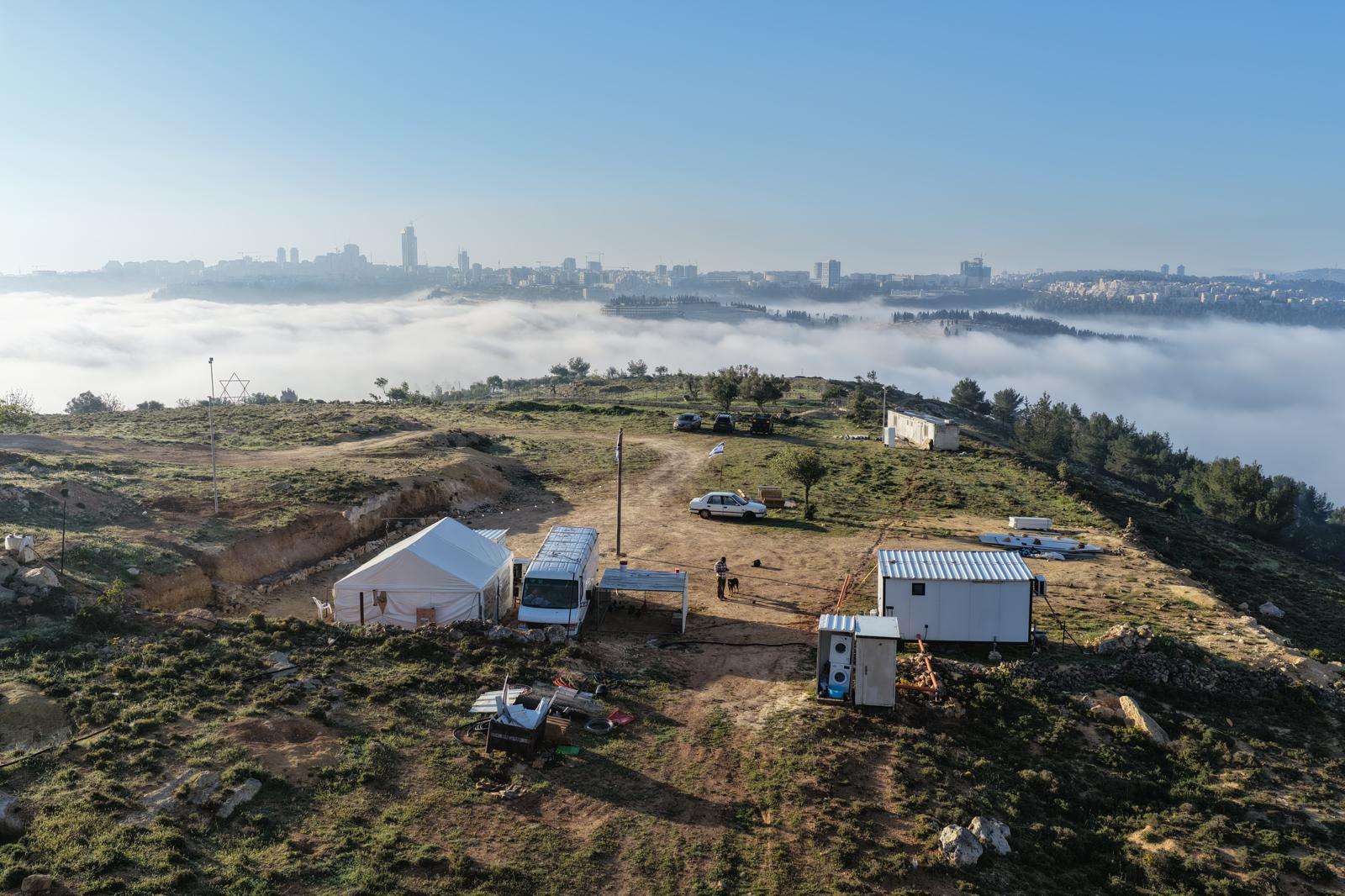
    Judea and Samaria | Photo credit: None

    “The people of  Judea and Samaria stand on the front lines of defense and constitute the security buffer of the State of Israel, and today the time has come for the state to express this through tax policy as well,” Sukkot said. “This is a step of fairness and recognition of the reality of life for thousands of families who sacrifice their lives to protect the Land of Israel.”

    Finance Minister Bezalel Smotrich added: “We are correcting an injustice of decades. The residents of Judea and Samaria stand courageously in a complex security reality and protect parts of the homeland that constitute de facto Israel’s security buffer.”