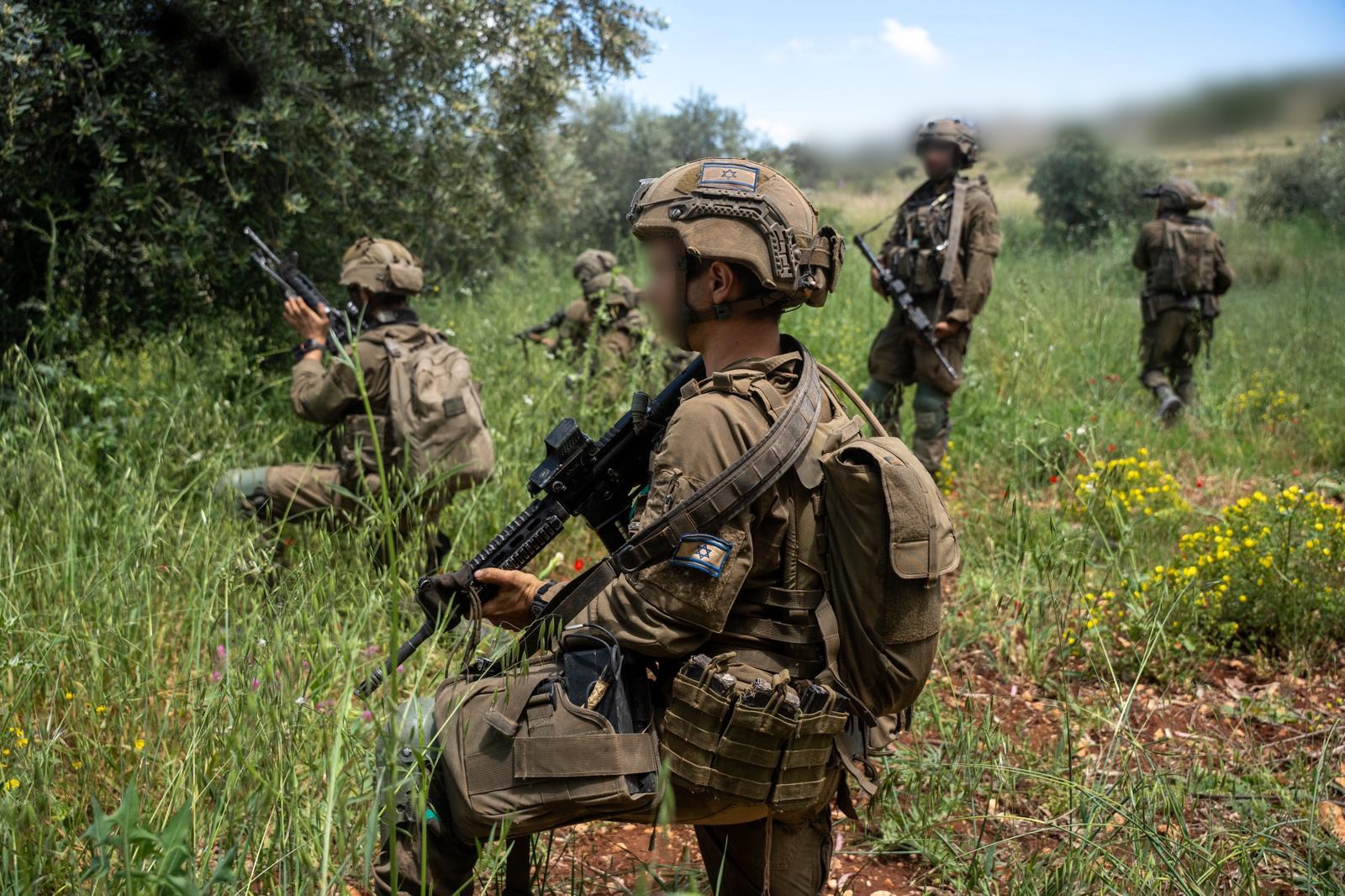
IDF forces killed an armed terrorist spotted in the security zone near troops operating in southern Lebanon over the weekend. The incident occurred when soldiers from the 551st Brigade, operating under the 91st Division, identified the terrorist carrying a weapon in the Majdal Zoun area. As soon as they spotted him, the soldiers opened fire and launched a determined chase to eliminate the threat.
Photo: IDF
After a chase and extensive searches the soldiers conducted in the field, they managed to close in on the terrorist and killed him. An IDF spokesperson said forces will continue to act decisively to remove any threat to troops operating in the field, and will not allow the Hezbollah terror organization to harm Israeli citizens. The elimination joins a series of successful operations by the brigade in the sector.
The 551st Brigade has been operating intensively in southern Lebanon in recent weeks, particularly in the Majdal Zoun area. Just recently, forces uncovered and destroyed a massive strategic underground compound belonging to Hezbollah in the village, which served as a base for launching drones and storing large quantities of combat equipment. Current operations continue with the goal of clearing the area of terror infrastructure and terrorists.
Alon Ohel, a freed hostage who was released after 738 days in captivity in Gaza, performed with American artist John Ondrasik aboard a U.S. aircraft carrier during celebrations marking America’s 250th Independence Day. Ohel was invited by Ondrasik himself, and the two performed Ondrasik’s hit “Superman” together during the official reception on the carrier’s deck.
The event was attended by senior U.S. government and military officials, including the Chief of Naval Operations, the U.S. Ambassador to the UN, and many others. The two performed the song before thousands of attendees and an aerial flyover.
Alon Ohel, a resident of Lavon in the Upper Galilee, is a talented and gifted pianist who grew up in a loving and creative family. Ohel was kidnapped from the Nova music festival when, as the shooting began, he and 26 other partygoers fled to the “death shelter” at the Re’im junction. After terrorists stormed the structure, he was abducted while bleeding and semi-conscious.
Photo: From Alon Ohel’s Instagram account
Alon started playing piano at age 9, studied music in high school, drew inspiration from classical music and jazz, and performed recitals. He used to participate in jam sessions and improvise, and planned to continue his musical studies at the Rimon School of Music in Tel Aviv after returning from a trip to the Far East in October 2023.
During the Nukhba terrorists’ raid on the Nova festival, the hostages defended themselves heroically and threw grenades outside, but the terrorists broke in, murdered many of them, and dragged out four: Alon Ohel, Hersh Goldberg-Polin, Eliya Cohen, and Or Levy. Alon was seriously wounded by shrapnel—in his eye and body—and was taken to Gaza in a van, bleeding and semi-conscious. About a month before his release, the terror organization cynically released a propaganda video exposing his severe condition.
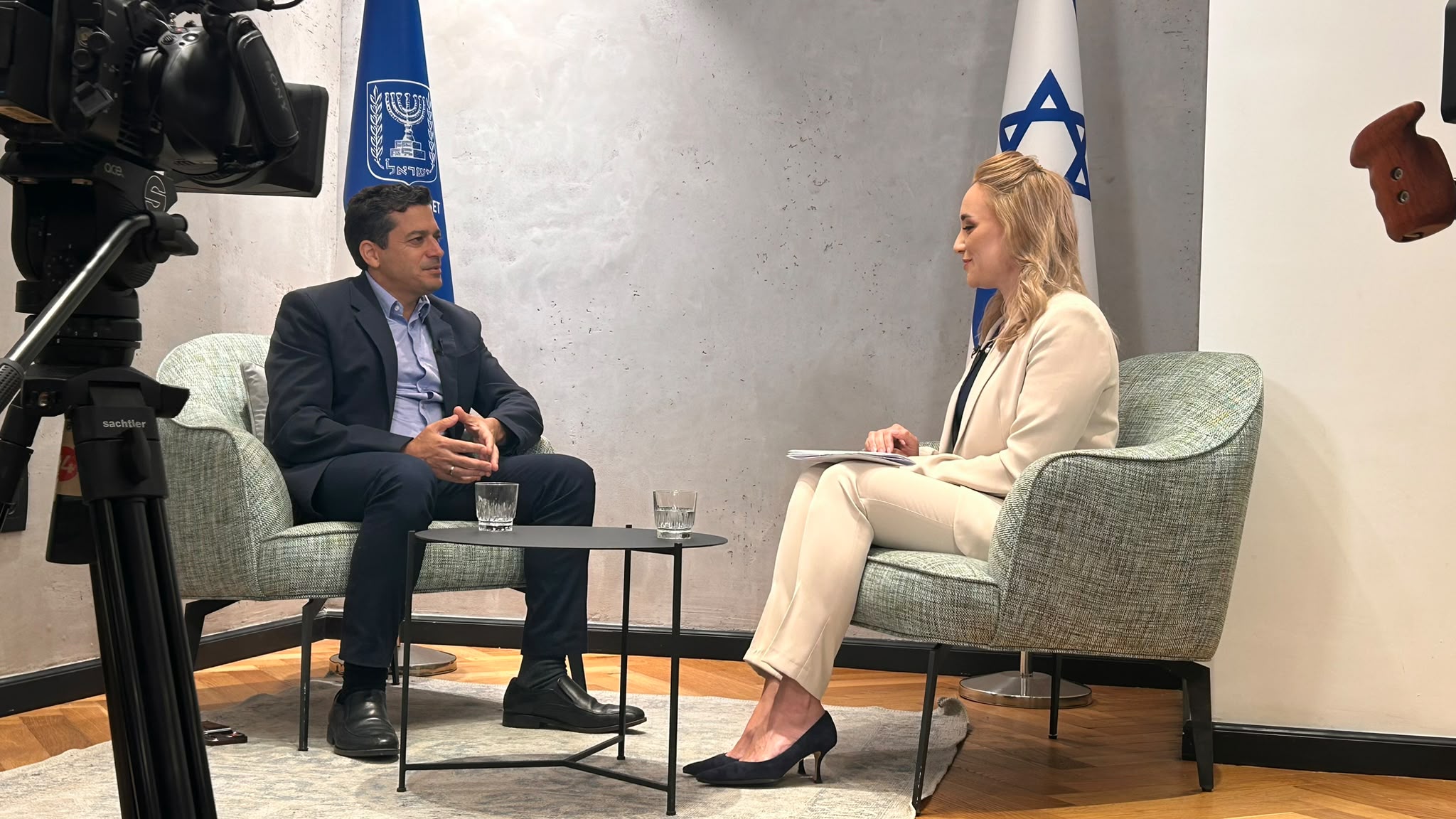
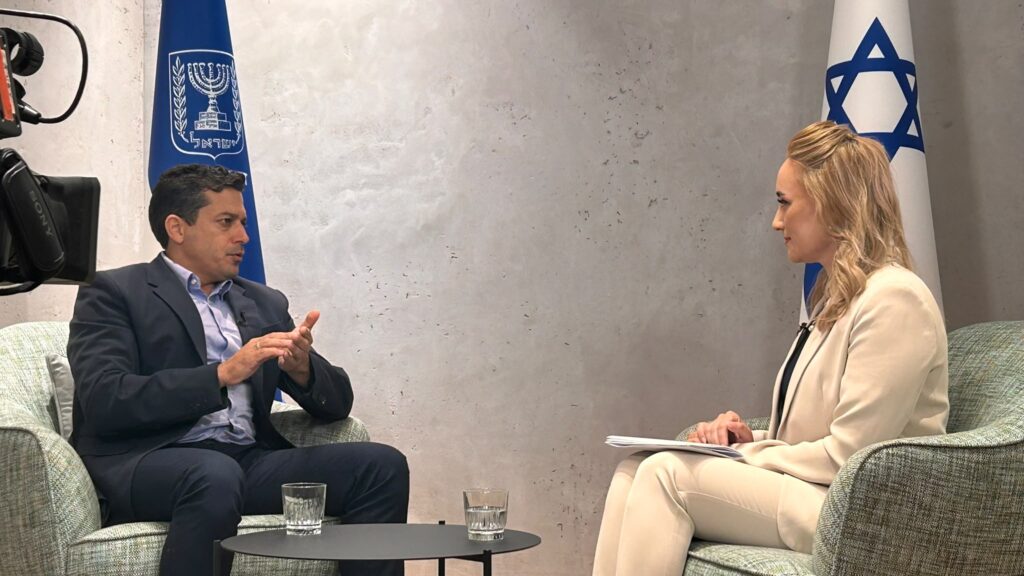
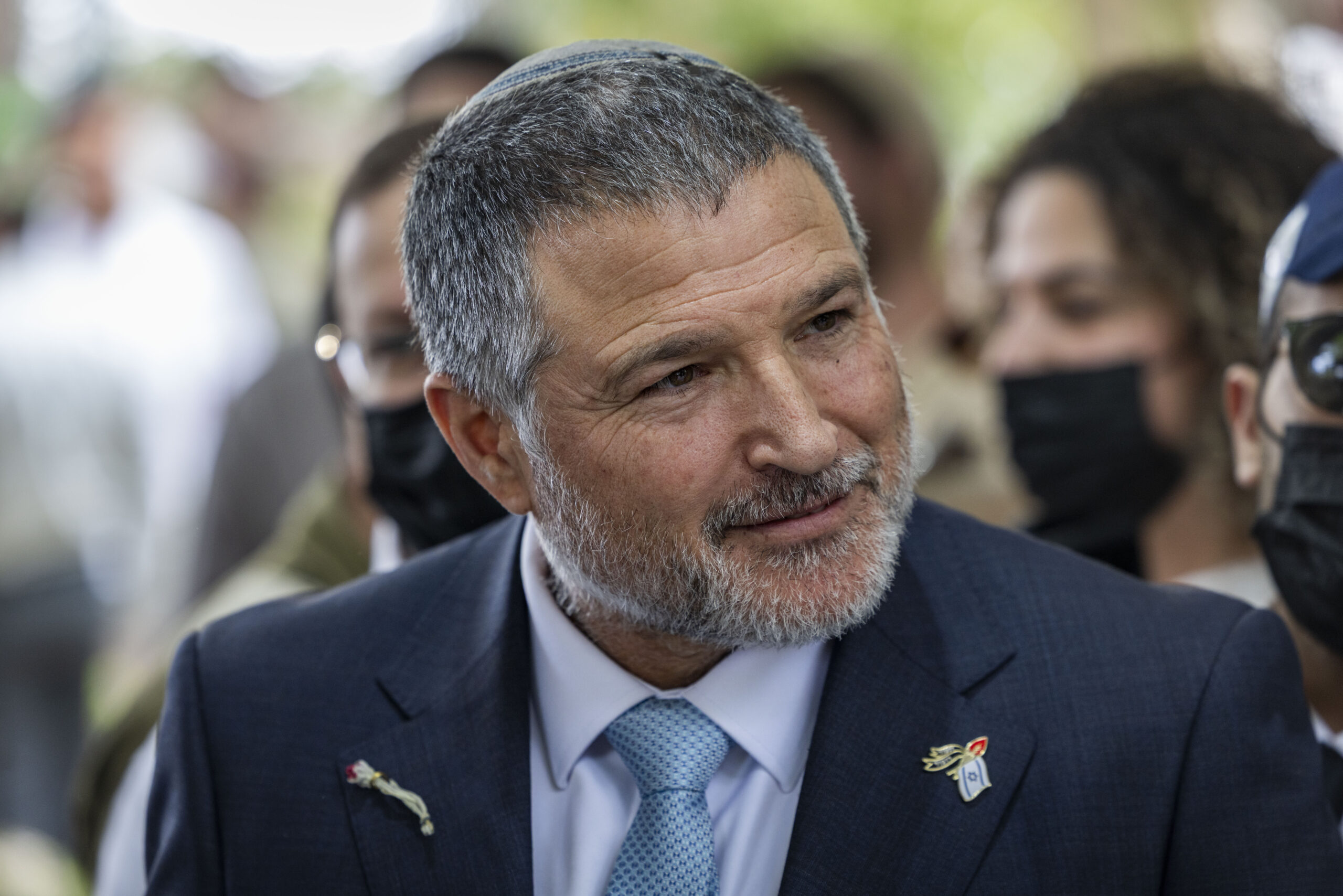
Diaspora Affairs Minister Amichai Chikli sat down with C14’s Sophia Tupolev at the Knesset this week for a wide-ranging interview from assimilation, education, sovereignty, who gets to enter the state of Israel, and beyond.
Chikli described what he sees as a crisis facing Jewish communities across Western Europe and North America. Belgium, the Netherlands, and the UK, he said, are struggling under the weight of immigration policies that brought in large numbers of unintegrated migrants. He linked this directly to what he called a rise in antisemitism, arguing that failed integration combined with what he termed “woke ideology” left European institutions unable to respond.
On the question of Jewish continuity, Chikli pointed to a different set of numbers. Outside Orthodox communities in North America, he said, fewer than five percent of Jewish children attend Jewish day schools. He called this the central threat to Jewish survival in the Diaspora, more urgent than external hostility. This week, Chikli’s ministry announced a major funding commitment tied to that concern: 100 million shekels, matched by federation partners for a total of 200 million shekels, directed toward formal Jewish education.
Photo courtesy: Israel Diaspora Affairs Ministry
The funding extends the ministry’s existing Aleph Bet program, which began before the war but was constrained by budget limits during it. Early pilots of the program showed a five percent increase in day school enrollment over two years, according to Chikli, starting from a baseline he described as “around 3%.
“Nothing can replace home,” he said. “And nothing can replace school, formal education.”
Chikli said he considers the education push, alongside the broader shift in Jewish philanthropic priorities toward this issue, among his top achievements as he approaches the end of his term. On Judea and Samaria, where Chikli argued that major Diaspora institutions have historically avoided investment for political reasons. He named Ariel, Eli, and Maale Adumim as communities he believes deserve philanthropic support, alongside archaeological sites in Shiloh, Bethel, and Hebron.
Asked directly about the term “settler,” Chikli declined to distance himself from it.
“We are proud settlers,” he said. “We’re settling new villages in our homeland. What’s wrong with that?”
Chikli elaborated on his role in Israel’s visa enforcement policy, under which he has recommended denying entry to a number of high profile figures, including relatives of Turkish President Erdogan earlier this year. Chikli described a documented set of criteria used to flag potential entrants: support for the BDS movement, accusations of genocide or ethnic cleansing against Israel, expressions of support for Hamas, or framing of the October 7th attacks as understandable “in context.”
Asked if this is a lifetime ban, Chikli responded, “If they will make teshuva,” he said, using the Hebrew term for repentance, “maybe we’ll change our decision.”
Chikli also addressed his outreach to right wing European parties, including France’s National Rally, Spain’s Vox, and Hungary’s Fidesz, several of which carry documented histories of antisemitism within their ranks. He argued that leadership within these parties has shifted meaningfully in recent years, pointing to Marine Le Pen’s public break from her father Jean-Marie Le Pen and her participation in a march with the Jewish community following October 7th. He acknowledged that Austria’s Freedom Party carries a more difficult history but said the relationship has moved toward requiring formal steps, including adoption of the IHRA definition of antisemitism, before further cooperation proceeds.
The interview closed on the subject of sovereignty. I noted that Prime Minister Netanyahu has recently reiterated ruling out a two state framework, while Israel takes no formal stance against Sharia law. Chikli said he’d like to see the Muslim Brotherhood banned, including Ra’am, Mansour Abbas’ party in Israel.
Pressed on why the Muslim Brotherhood’s political arm remains active in Israel, including Raed Salah’s banned northern branch of the Islamic Movement and the legally operating Ra’am party, Chikli offered a direct answer.
“Because of the Supreme Court,” he said. “Because we’re not a full democracy.”
Israeli drivers have been dealing with intense frustration since the start of the war on October 7, as deliberate GPS jamming causes navigation apps to jump their location to airports in Beirut or Amman. The disruptions make daily commutes difficult, especially in unfamiliar areas. Now, according to a report by Geektime, Waze is developing a new feature designed to serve as a safety net for Israeli drivers.
Photo: Shutterstock
Smart Detection of Interference
The new system monitors “jumps” and inconsistencies in user locations. When the system detects many drivers in the same area whose locations aren’t continuous, it will classify the area as a GPS jamming hotspot. The goal is to generate an early warning that lets drivers familiarize themselves with the route before reaching the point where navigation becomes impossible.
According to the report, the feature has started appearing for beta users on both Android and iOS devices. For now, the new capability is available exclusively in Israel—an unusual move in the world of global feature rollouts. The alert will appear on screen for 30 seconds with the explicit message “GPS disruptions in the area,” once per trip.
Photo: Screenshot
Testing and Rollout Phases
As part of the trial, beta testers were asked to report on the accuracy of the alerts and flag cases where they experienced disruptions without advance warning. Waze wants to ensure the system doesn’t generate false alerts and that it responds correctly to dynamic changes on the ground. The information collected will help the company refine the tool before deciding on a wide rollout to the general public.
It’s important to note that despite the optimism, many features tested in beta versions are ultimately shelved and never make it to the stable release. That said, given the dramatic impact of wartime disruptions on transportation in Israel, this appears to be one of the most needed tools for us in recent years.
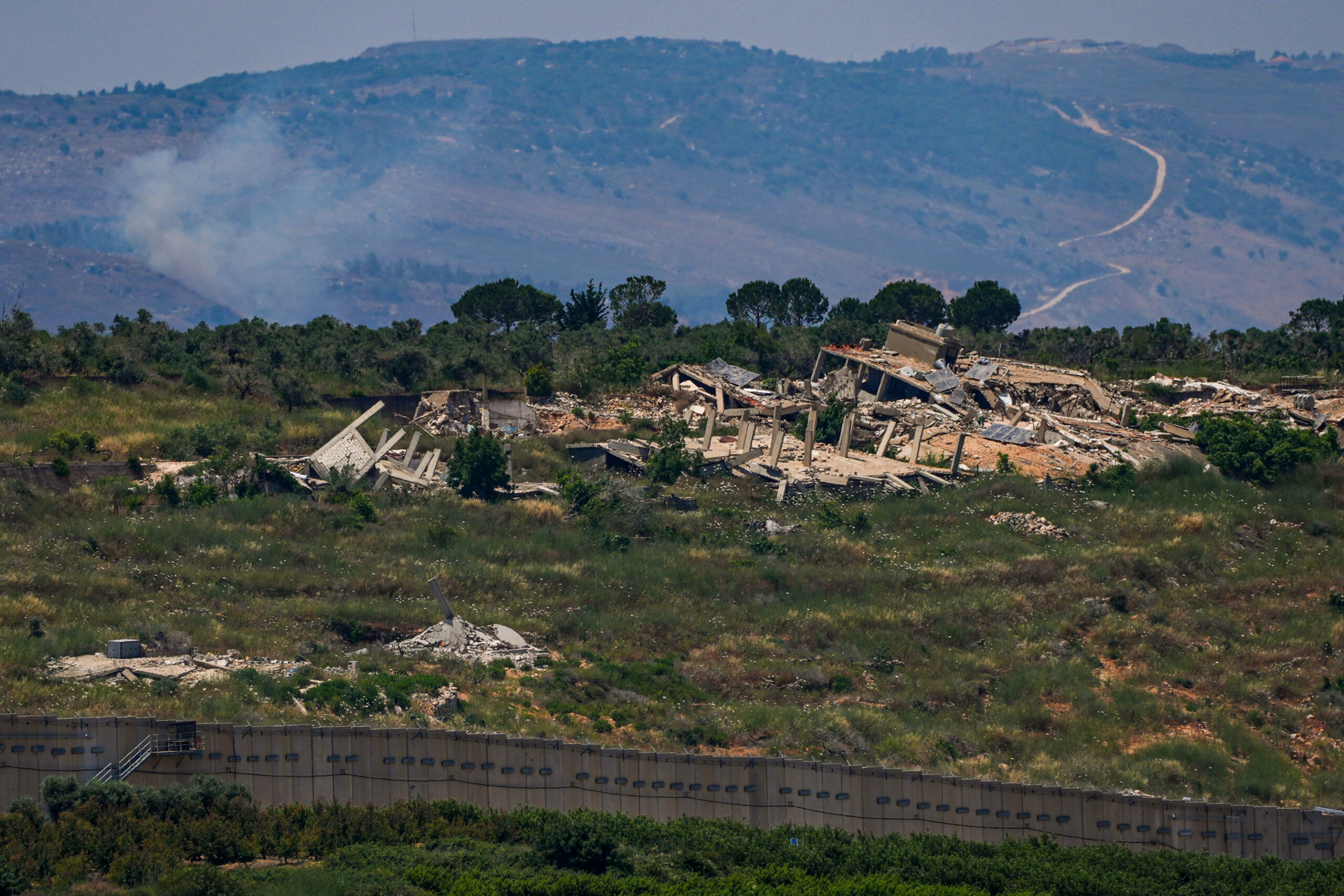
The security zone the IDF established in southern Lebanon consists mainly of Shiite towns and villages, but it also includes several significant Christian communities with an estimated 20,000 Lebanese Christians. Recently, against the backdrop of dramatic developments in the area, Christian community leaders approached IDF representatives and asked that Israel annex their villages and grant residents Israeli citizenship.
Photo: IDF
It’s an extremely sensitive issue, since Hezbollah’s propaganda apparatus consistently claims Israel seeks to control the territories the IDF entered in Lebanon indefinitely. Against this backdrop, the Christian leaders were told annexation is off the table, as it contradicts the memorandum of understanding reached with the government in Beirut, under American auspices, and Israel’s commitment that it has no territorial ambitions in Lebanese territory. Still, the Christians were assured the IDF would protect them as needed from Hezbollah and the Shiite population in the area.
Photo: IDF
From Israel’s perspective, despite the sensitivity, there’s also a positive aspect to this appeal, as it demolishes the blood libel that the IDF is deliberately acting to harm the Christian population in Lebanon on religious grounds—a story spread recently mainly among antisemitic elements in the Christian right in the United States. Either way, until Hezbollah disarms, Israel intends to remain in southern Lebanon, and the Shiite terror organization, which brands itself as “Lebanon’s shield,” is currently the only reason Israeli soldiers are present on the country’s soil.
Catherine Beth Washburn, a 37-year-old New York woman, has been charged with providing material support to ‘Palestinian’ Islamic Jihad in Gaza and funding terror attacks against Israel with tens of thousands of dollars. According to the indictment, Washburn faces a maximum sentence of up to 20 years in federal prison and a $250,000 fine.
According to the U.S. Attorney’s Office in New York, Washburn led an anti-Israel, pro-Gaza organization shortly after the October 7 massacre. Investigators also found she corresponded with a ‘Palestinian’ Islamic Jihad operative in Gaza, expressed support for attacks against Israel, and wrote: “I wish every day was October 7th.”
In another message, Washburn wrote that she “felt excited every time I see a report of an occupation soldier being killed.” One prosecutor stated in court that “this defendant, driven by hatred she herself describes toward Israel and the Jewish people, made extensive efforts to provide financial support to terrorist organizations.”
Kibbutz Re’im after October 7 | Photo: Yossi Zamir, Flash 90
According to the indictment, Washburn made approximately 80 cryptocurrency transfers totaling over $30,000 to an account used by the Islamic Jihad terrorist. Investigators also found a message in which she joked about her actions and the punishment she’d face if caught: “Based on my past fundraising and posts I’m going to be imprisoned for several life sentences,” she wrote, adding a laughing emoji.
Colt Markovsky, deputy assistant director of the FBI’s Counterterrorism Division, declared following the case that anyone supporting terrorist organizations in the United States will be prosecuted. “The defendant, as alleged in the criminal complaint, transferred funds to a foreign terrorist organization engaged in violent operations,” he added. “The FBI is committed to cutting off the funding sources of terrorist organizations and will continue to work in close cooperation with our partners at the Department of Justice to ensure that anyone engaged in terrorism or assisting such organizations is held fully accountable within our justice system.”
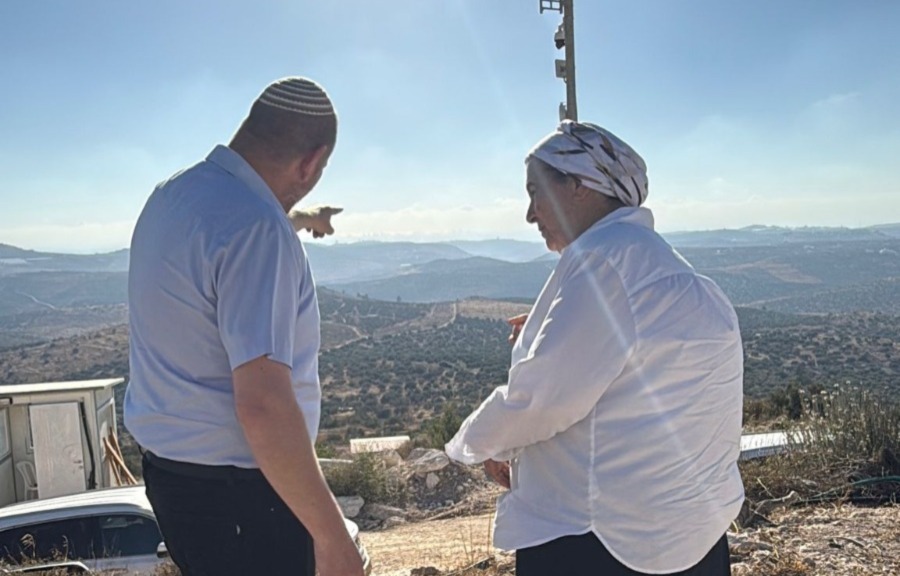
Residents of Kedumim and public figures celebrated today (Thursday) night the first anniversary of the establishment of the “Nofei Gideon” neighborhood (formerly Har Kidan), named after Gideon Peri, who was murdered in the nearby Bar-On industrial area. The event highlighted the construction boom, with representatives from all the communities coming to congratulate the families of the new neighborhood.
Photo: Kedumim Council
The event was attended by Rabbi Tzvi Perbstein, heads of the Nachala movement Daniella Weiss and Tzvi Elimelech Sharbaf, council head Uzi’el Vatik, and many residents. Daniella Weiss shared a personal memory, recounting how council head Vatik came to her late at night with the bold idea to establish the neighborhood: “At first I rejected him, but after I saw that nothing scares him, that he was determined and that he paved the way to the place himself—I decided to join him. We fulfilled a dream of decades here.”
Rabbi Tzvi Perbstein blessed the residents and noted that the people in Kedumim act out of simple faith in the words of the prophets, and therefore are not afraid to bring the vision into reality on the ground.
Photo: Kedumim Council
In his speech, council head Uzi’el Vatik presented the transformation that has occurred over the past year, from a dark and isolated hill to a vibrant neighborhood already in its third phase. Vatik revealed that the ascent to Har Kidan completely stopped takeover attempts by Arabs from the village of Qadum toward Kedumim’s neighborhoods, and provided increased security to Mitzpe Kedumim, Givat Shalem, and Kedumim North.
“In ascending the mountain, we are strengthening the security of Kedumim in particular and all of Samaria,” Vatik emphasized. He praised the families for their extraordinary dedication throughout a winter filled with winds and rain, and detailed the technological security components installed on the mountain at an investment of hundreds of thousands of shekels, including a tower with cameras, radars, and a fortified position.
Photo: Flash90
Alongside integrating the neighborhood into the council’s regular services, such as organized garbage collection, Vatik opened a window to plans and announced the start of an unprecedented strategic project: paving the “Western Road.” This new road will wrap around Kedumim from the west and directly connect all the western neighborhoods, from the Rishonim neighborhood (Ashkoviot) and Kerem HaLevi, through Mitzpe Kedumim and Har Hemed, to Nofei Gideon. Additionally, Vatik announced the council’s intention to expand to Jebel Akra to create an absolute buffer between the village of Qadum and the Jewish town, and plans for a long and impressive street as part of the neighborhood’s fourth phase.
Vatik concluded his remarks with deep thanks to partners from the Nachala movement, to the council’s various departments (security, civil administration liaison, landscaping, and education) that connected the neighborhood through a blooming planting promenade, and to the courageous families. “We have many more missions, and we don’t have time to rest,” the council head summed up. “As people operating in Kedumim, we are committed to the pioneering and entrepreneurial spirit. We will all work together to further develop the town and the entire region, because all of the Land of Israel was given to the people of Israel, and it is our historical duty to live in it and develop it.”
Israel’s Channel 14, a conservative television network often compared to Fox News in the United States, has reported that the newly appointed Director of the Israel Security Agency (Shin Bet), Maj. Gen. David Zini, wants to open an investigation into the alleged leak of the timing of the joint U.S.-Israeli military operation against Iran.
According to the report, the head of the Shin Bet’s Investigations Division, who was appointed by the previous Shin Bet director, Ronen Bar, shortly before leaving office, and the agency’s legal adviser have allegedly refused to cooperate with the proposed investigation. Channel 14’s senior political commentator, Yaakov Bardugo, further reported that sources close to Director Zini claim that Israel’s Attorney General, Gali Baharav-Miara, is blocking the investigation.
For American readers, it is important to understand the institutional context. Unlike the U.S. Attorney General, Israel’s Attorney General is not a political appointee who serves at the pleasure of the elected government. The office is held by a career legal official who exercises broad independent authority over criminal investigations and government legal policy. This institutional structure has been at the center of Israel’s constitutional and political debates in recent years.
If the Channel 14 reports are accurate, the implications extend far beyond Israeli domestic politics. The alleged leak concerns the timing of one of the most consequential military operations jointly undertaken by Israel and the United States in recent years. Any unauthorized disclosure of operational timing could have endangered not only Israeli pilots and soldiers but also American personnel and broader allied strategic interests.
According to Bardugo, one of the leading presenters on Israel’s Channel 12 reportedly stated that “half the country knew” when the operation would begin. If that statement accurately reflects reality, it raises obvious questions about the existence of a significant operational leak. Whether those questions are ultimately substantiated is precisely what a professional investigation would be expected to determine.
The decision regarding when to launch military action against Iran was among the most consequential national security decisions made by the United States and Israel. Had operational details reached Iranian intelligence before the operation commenced, the consequences could have included loss of American and Israeli lives, damage to strategic deterrence, and broader geopolitical consequences affecting U.S. interests in the Middle East and beyond.
For that reason, it is difficult to argue against the basic proposition that any credible allegation of such a leak deserves a thorough, professional, and independent investigation.
Given the exceptionally close intelligence relationship between the United States and Israel, it is reasonable to assume that American intelligence agencies maintain close liaison relationships with their Israeli counterparts. If reports that an investigation is being blocked are accurate, I believe American officials should seek clarification from their Israeli counterparts regarding whether the matter is being appropriately investigated, particularly if American operational interests may have been placed at risk.
Separately, I note that approximately 100,000 Israelis have signed a public petition calling on President Donald Trump to impose sanctions on Attorney General Gali Baharav-Miara and Israeli Supreme Court President Yitzhak Amit. The petition reflects the view of its supporters that Israel’s legal system has become excessively powerful and politically partisan. These allegations remain the subject of intense political controversy within Israel.
In addition, congressional oversight efforts concerning U.S. funding connected to Israeli protest organizations remain ongoing. Among the issues reportedly under review are whether U.S. federal funds were used in ways inconsistent with their intended purposes and whether any related legal or tax violations occurred. Those inquiries have not yet reached final conclusions.
Israel and the United States stand together in defending shared democratic values and common security interests. Precisely because of that partnership, any allegation involving a potential compromise of sensitive operational information affecting both countries deserves careful scrutiny, wherever the facts ultimately lead.
Israel’s Foreign Ministry published today (Thursday) a tender for the appointment of Israel’s next ambassador to Bogotá, Colombia. The move follows a phone call between Foreign Minister Gideon Sa’ar and Colombia’s President-elect Abelardo de la Espriella, in which Sa’ar congratulated him on his election victory and the two agreed on a mutual commitment to immediately restore relations between the countries.
Photo: Shalev Man
The preparation joins a warming trend in Israel’s relations with Latin American countries, after ties with Bolivia were restored last December following a two-decade break. Colombia was considered for years a historic and close ally of Israel on the continent, but the relationship was unilaterally severed in an announcement by outgoing President Gustavo Petro in May 2024.
Following the tensions, ambassadors from both countries were recalled home in June.
The early preparation for appointing an ambassador is designed to ensure relations return to their track and are elevated to a high level immediately after the new president’s inauguration on August 7.
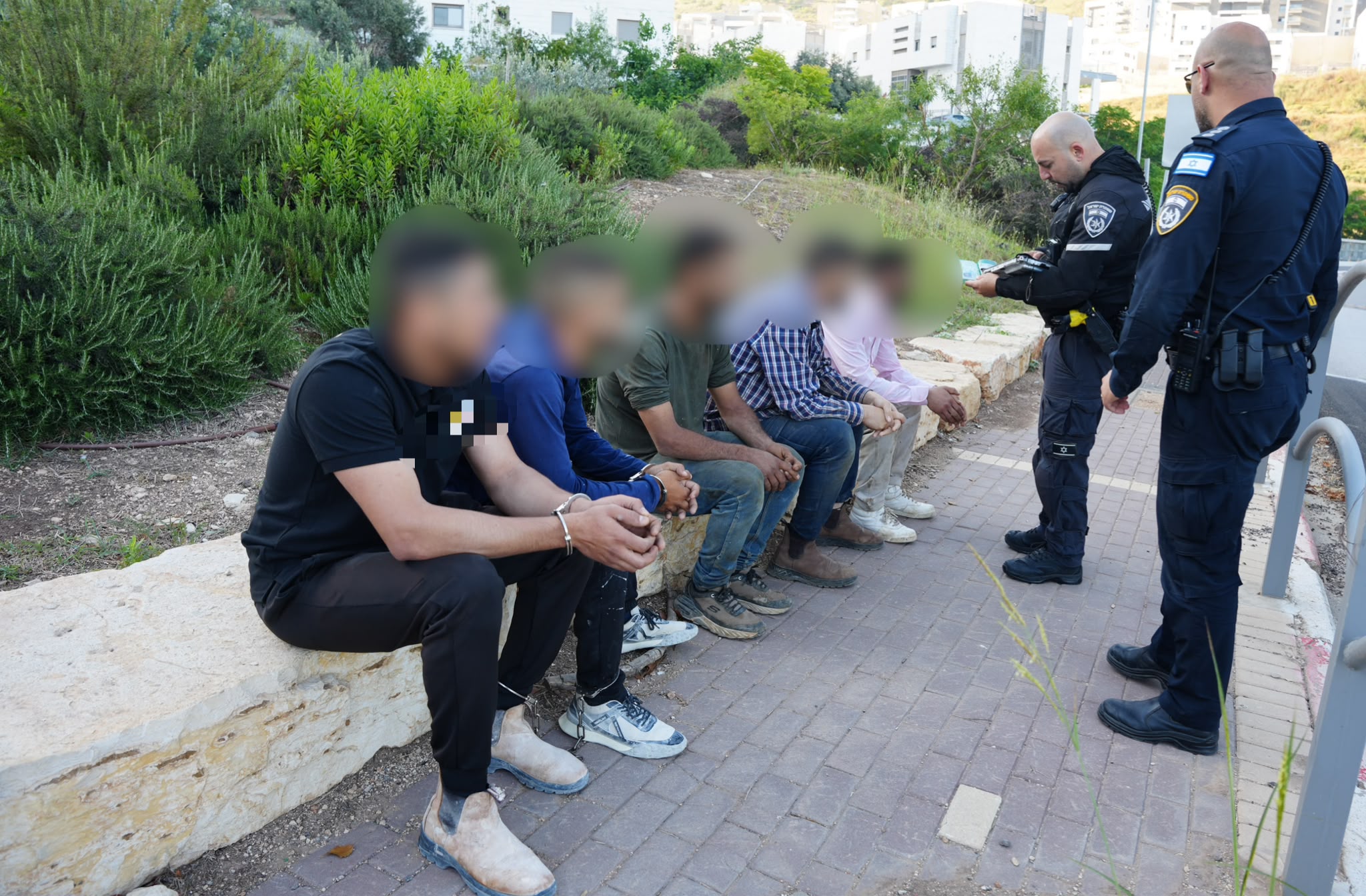
The Economy and Industry Ministry announced yesterday (Wednesday) evening a new allocation of 5,000 foreign workers from countries at peace with Israel for the commerce and service sectors. The move, led by Economy and Industry Minister Nir Barkat, is designed to address the labor shortage in the Israeli economy. The step’s central goal is to completely sever the Israeli economy’s dependence on ‘Palestinian’ workers and illegal residents from the ‘Palestinian Authority’. To date, Minister Barkat has advanced the arrival of over 50,000 foreign workers who have replaced ‘Palestinian’ laborers.
Photo: Noam Moskowitz, Knesset Spokesperson
The current decision comes as a direct continuation of the security and economic policy Minister Barkat has led since the outbreak of the Swords of Iron War. Following October 7th, a fierce confrontation developed in the cabinet, with then-Defense Minister Yoav Gallant and senior security officials pushing to return ‘Palestinian’ workers to employment in Israel. Minister Barkat led the opposition front to this move, arguing it was a dangerous conception that must be uprooted for the sake of state security. Ultimately, his position prevailed and the workers’ return was blocked.
The new worker allocation is intended to provide oxygen to many businesses suffering from severe labor shortages, including garages, event halls, and retail chains. The approved distribution framework divides the quota into two main tracks: a track for new employers who will receive up to 1,000 workers through a call for applications, and a track for existing employers who will receive approximately 4,000 workers without needing to submit a new application. The move is expected to provide a permanent solution for business owners and prevent the need to employ ‘Palestinian’ workers in these sectors.
Photo: Israel police
Economy and Industry Minister Nir Barkat emphasized that the era in which the Israeli economy was dependent on the terror-supporting ‘Palestinian Authority’ has ended. Barkat noted that with the backing of Prime Minister Benjamin Netanyahu, the ministry continues to block the entry of workers from the corrupt ‘Palestinian Authority’ and is bringing in workers from countries at peace with Israel instead. According to him, this is a strategic step that strengthens national security for generations to come, while providing the best and most professional response to various business owners in the economy who need workers.