


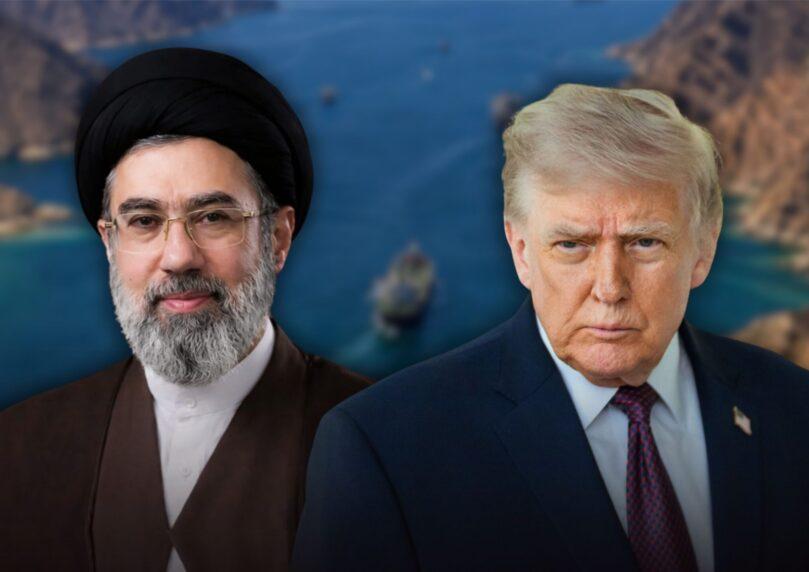

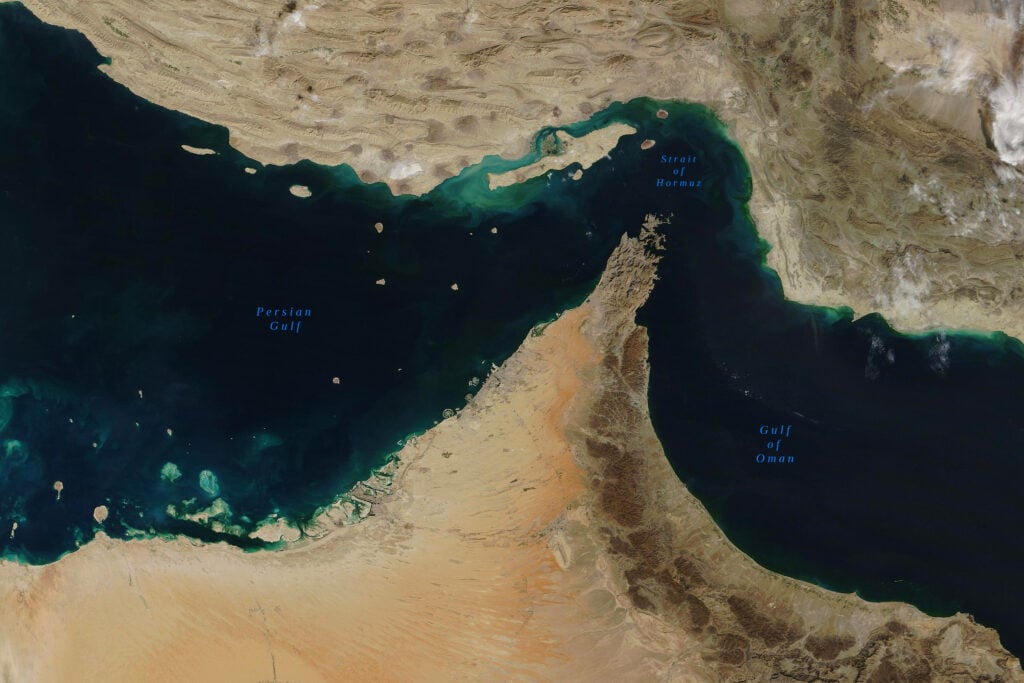
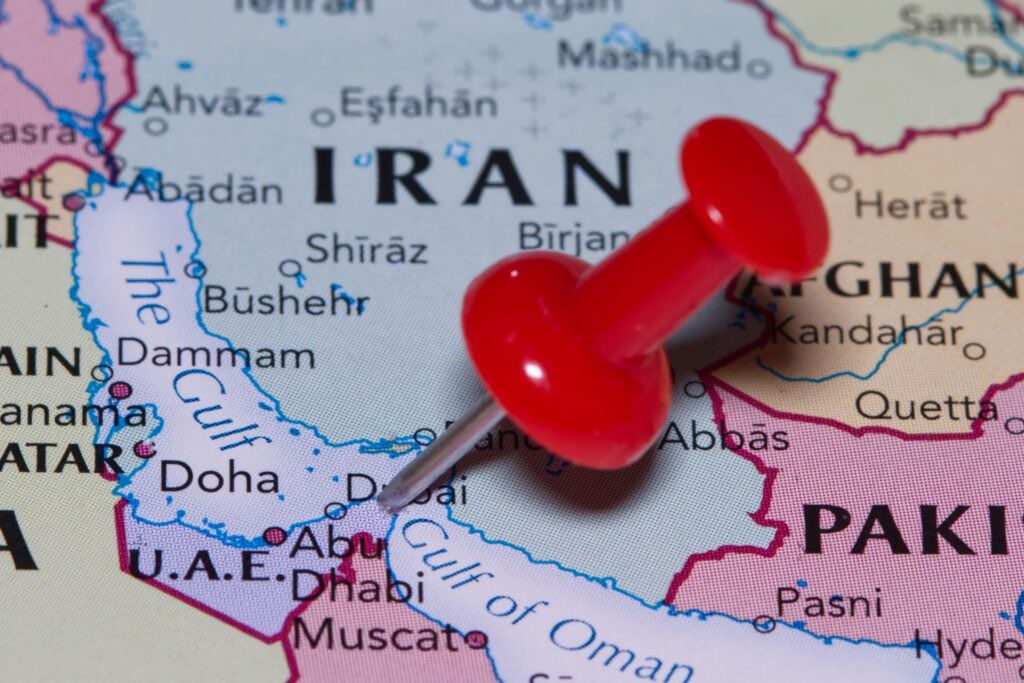
Iran is ramping up pressure on shipping lanes in the Strait of Hormuz, with attacks on commercial vessels hitting their highest level since the war broke out in late February. That’s according to data CNN published Sunday, based on reports from the UK Maritime Trade Operations center. The escalation comes as global oil prices drop, an American blockade hammers Iran’s revenue, and Tehran fights to preserve its influence over one of the world’s most critical energy chokepoints. Meanwhile, President Donald Trump is blaming Iran for increased aggression following the midterm elections, making clear Washington doesn’t need a deal with the Iranian regime.

 6+
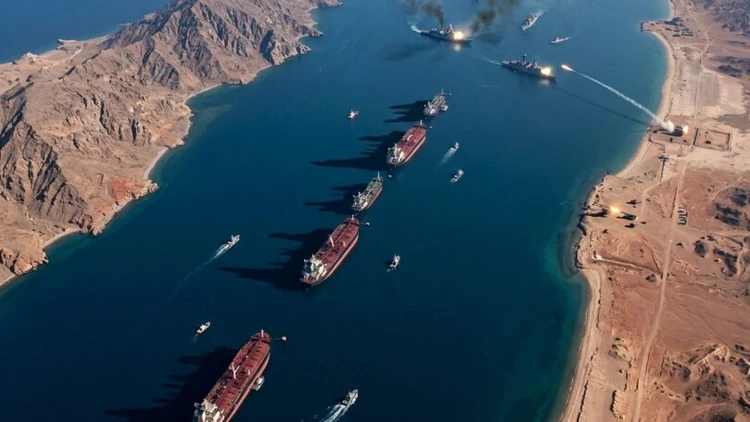
According to an analysis of UK Maritime Trade Operations data, more than 30 attacks on vessels were reported in October in the Strait of Hormuz, the Persian Gulf, and the Gulf of Oman. That’s the highest monthly total since the U.S.-Iran war began in late February. In November, as of Sunday, at least 22 attacks have already been reported—the second-highest monthly figure since the conflict started. By comparison, in the months before October, incidents averaged around 10 per month.
But British officials estimate the actual numbers are even higher. The UK center includes only incidents confirmed through primary sources, and in a report published last Friday, it said it knows of additional events that couldn’t be independently verified. In an earlier report published in mid-October, the center noted it’s struggling to present an accurate picture of the scale of attacks because many damaged ships avoid reporting incidents.
 6+
At the same time, many commercial vessels in the area have started turning off their tracking systems to avoid detection and attacks. The Iranian military, for its part, reports incidents almost daily involving commercial ships crossing the strait, and often attributes the damage to sea mines rather than drone or missile strikes.
The recent escalation played out in a series of attacks on three tankers leaving the Strait of Hormuz on Friday and Saturday. According to maritime risk management firm Marisk, on Friday the chemical and oil tanker Captain Leon, flying the Marshall Islands flag, was hit by a projectile in its forward section. Fire broke out on deck following the strike, but all crew were reported safe. Early Saturday morning, the crude oil tanker Turkel, flying the Hong Kong flag, was hit in its aft section, causing a fire. Less than an hour later, another Hong Kong-flagged tanker, Arina, was struck by a missile that hit its engine room.
 6+
Marisk didn’t definitively determine who was behind the attacks, but assessed Iranian involvement as a likely possibility. According to the company, the sequence of events illustrates the severe threat level facing commercial shipping in the area, particularly in the southern shipping corridor near the Omani coast, which Iran vehemently opposes using. In another incident on November 17, a ship was hit near Khasab, Oman, by a projectile from an unidentified source, and according to the UK center, the strike caused a fire that spread across the deck.
According to the International Energy Agency, the recent price drop stems partly from recovering oil exports from the Gulf. Further declines came after the U.S. midterm elections, as fears of additional American military action in the Middle East eased. Hamidreza Azizi, a senior Iran researcher at the International Crisis Group, told CNN that markets increasingly assume a return to full-scale war isn’t expected and that oil supply will continue recovering gradually.
 6+
However, he said, that assumption could change quickly if Iran decides to escalate the conflict. Experts estimate that as oil prices fall and regional states manage to keep exporting, Iran’s ability to use the Strait of Hormuz as leverage against Washington erodes. In that scenario, the Tehran regime might choose further escalation to extract American concessions.
While Iran tries to pressure maritime traffic, the American blockade continues to batter its ability to sell oil to international markets. According to maritime tracking firm Kpler, Iran’s oil export revenue is in sharp decline, with the last oil shipments that were en route outside the American blockade zone already unloaded in China in early November.
 6+
In a report the company published in late October, it wrote that the amount of Iranian oil at sea outside the American blockade zone had dropped to zero. The company then estimated Iran’s oil revenue could hit zero by mid-December. These figures explain the mounting pressure on Tehran, whose financing capacity is being hit precisely as it continues to wage military conflict with the United States and tries to preserve its regional influence.
President Donald Trump made clear this month that he no longer sees a need for a deal with the Iranian regime, and even instructed his deputy J.D. Vance to turn his attention to other issues: “We don’t need a deal with Iran. Those days are long gone!” Trump wrote on his social network. He went on to claim the United States holds Iran’s money, hundreds of billions of dollars, according to him, and that it controls the Strait of Hormuz. Trump also made clear he won’t hesitate to resume military strikes on Iranian territory if he sees fit.
 6+
In another post on his social network, Trump linked the midterm election results to Iran’s behavior in recent weeks. The president claimed he predicted two scenarios in the event of a Democratic victory: significant stock market drops and increased aggression from the Islamic Republic. “As everyone remembers, I predicted two things regarding the midterm elections held on November 3,” Trump wrote. “One—that if the Democrats win, the stock markets will drop significantly, and that’s exactly what happened; and two—that the Islamic Republic of Iran will increase its aggression, and that’s exactly what happened.”
Trump further claimed the Iranian regime is responsible for the deaths of 81,000 protesters, a figure he presented without additional substantiation in the post. According to him, in the past week Iran launched more drones and missiles than in any other period in the past year, but all launches were intercepted and caused no damage: “Iranian leaders see the Democrats as weak, incapable, and destroying the country—but I won’t let that happen!” the president declared.
 6+
Trump also accused the Democrats and Iran of working, each for their own reasons, to keep oil prices as high as possible. According to him, since the elections there’s been a sharp drop in energy prices: “Too bad voters didn’t understand this before they went to the polls, but the elections were all very ‘strange,'” the president wrote, concluding with a declaration: “In the end, America will win!”