



While millions of gamers worldwide rushed to play GTA 6—the first new installment in 13 years—Iranian players hit a wall of economic collapse, sanctions, and censorship. The game has no physical copy available for offline play in the country and no official way to buy it, but many are still trying to get it at any cost.

 2+
After the war with Israel and the United States that broke out last February, when the Tehran regime cut off internet access for months, the fear of another blackout hangs over every download. Amin, a 31-year-old translator and gamer who bought the game through an unofficial Telegram seller, told The National: “Foreigners joke online that we’ve waited so long for this game that a nuclear war might break out and it’ll never come out. That joke is a real fear for a lot of Iranians.”
The first obstacle is the impossible price tag. According to a report in Iran International, the game’s cost in Iran is estimated at around 210 million rials—110 times the price of GTA 5 in 2013 and more than 500 times the price of GTA 3 in 2001. While the global price rose just 60% to $80, the rial’s collapse has driven the dollar’s exchange rate on Tehran’s free market up more than 33,000%. The result: one legal copy costs more than the country’s monthly minimum wage, which stands at less than $80.
 2+
Even those who manage to save up the money—after already getting a PS5 or Xbox console in the absence of a PC version—run into the sanctions wall. Gaming companies have no official presence in Iran and local credit cards don’t work, so a legal purchase requires the cumbersome buying of foreign gift cards. “I went through absolute hell to buy it,” one user described on X, while another posted his bank account number and joked he was only 1.9 billion rials short of a console.
The common solution in Iran runs through gray-market Telegram channels, where access to “shared accounts” sells for around $30—someone with foreign credit buys one copy and sells access to multiple players who split the playing hours. According to data from the Iranian Cyberspace Research Institute, about 65% of the country’s gaming market already operates through unofficial channels. Still, digital rights activist Mahdi Yahyanejad warns of widespread scams where sellers disappear with the money and buyers have no consumer protection.
 2+
But even after securing access to the game comes the most frustrating test of all: downloading a massive file of around 200 to 210 gigabytes over weak, filtered, outage-riddled internet infrastructure that took hits to antennas during the war and recently got up to 40% more expensive. While an Iranian living abroad shared that he downloaded the game in just 32 minutes, gamers inside the country reported wait times of 15 hours, 27 hours, and even 72 hours on ADSL connections.
The frustration over the digital divide erupted in a wave of bitter satire on social media. “With Iran’s internet speed, I think downloading GTA’s 200 gigs will finish by the time the next GTA comes out,” one user joked. Another wrote bitterly: “The whole world is playing GTA 6 and enjoying it, and I don’t even have enough internet to watch it in 240p quality.” Another account even circulated an edited screenshot showing an estimated download time of 86 years and 22 days.
سرعت دانلود جی تی ای ۶ تو ایران:) https://t.co/QpwwOSSfAS
— zamani (@zamwni) November 11, 2026
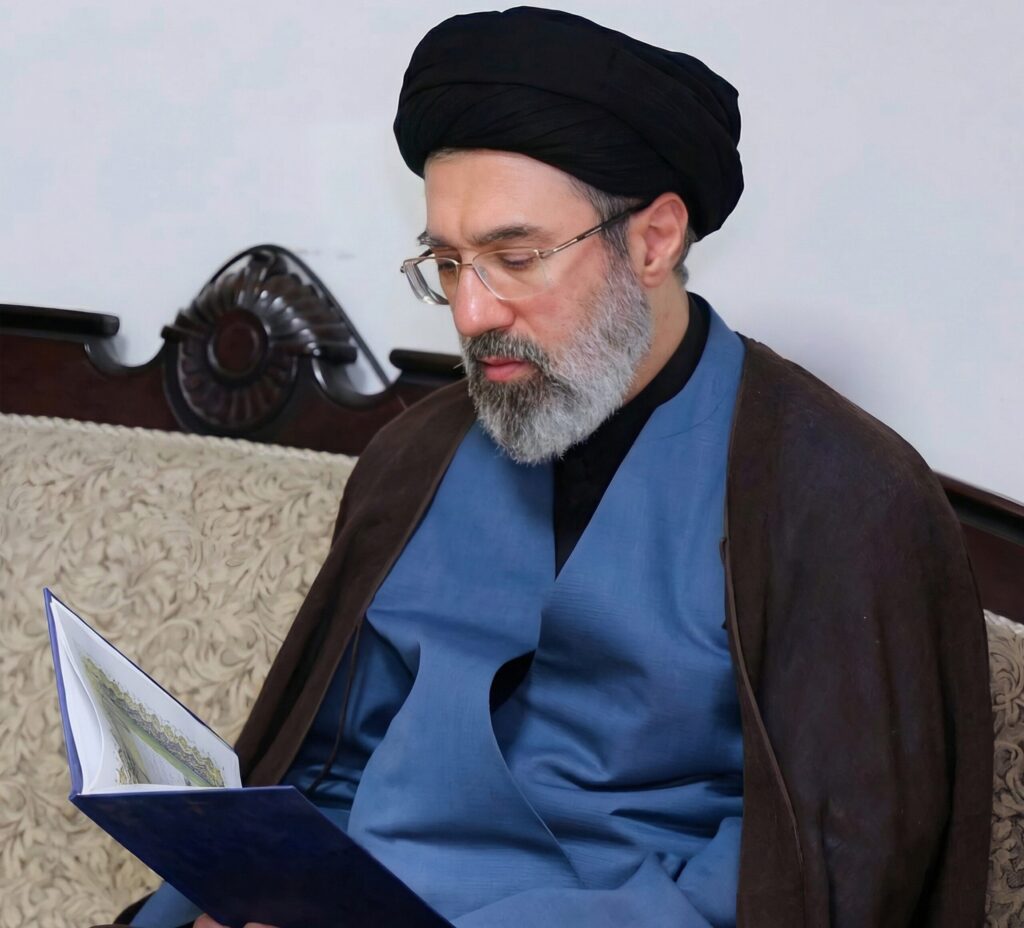
The satire soon turned directly on the regime’s leadership. One user posted an edited image showing the reflection of the new Supreme Leader, Mojtaba Khamenei, on a TV screen downloading GTA 6. In another biting post, the remaining download time was replaced with the caption “until Mojtaba appears”—a sharp jab at the new leader’s continued absence from public view since his father Ali Khamenei’s assassination and his rise to power.
دریافتی: https://t.co/0DHxXzhiAY
— Potypto ᛃ (@potypto) November 13, 2026
The rush for GTA 6 also exposes the internal contradiction of the ayatollahs’ regime. Officially, the National Foundation for Computer Games, subordinate to the Ministry of Culture and Islamic Guidance, rejects content including crime, violence, and Western values, and the GTA series has even been called a “box of sins” in Iran. In practice, while the regime harshly enforces modesty laws on the street, behind closed doors young people bypass the blocks using VPN services and create a reality where everything is forbidden—and everything exists.
According to official data published in Tehran, the country’s active gaming community shrank within three years from 34 million to about 29 million players against the backdrop of economic erosion. Still, for young people, games remain a rare escape from daily hardship. “We’re that powerless in controlling our own fate,” one of them says.