


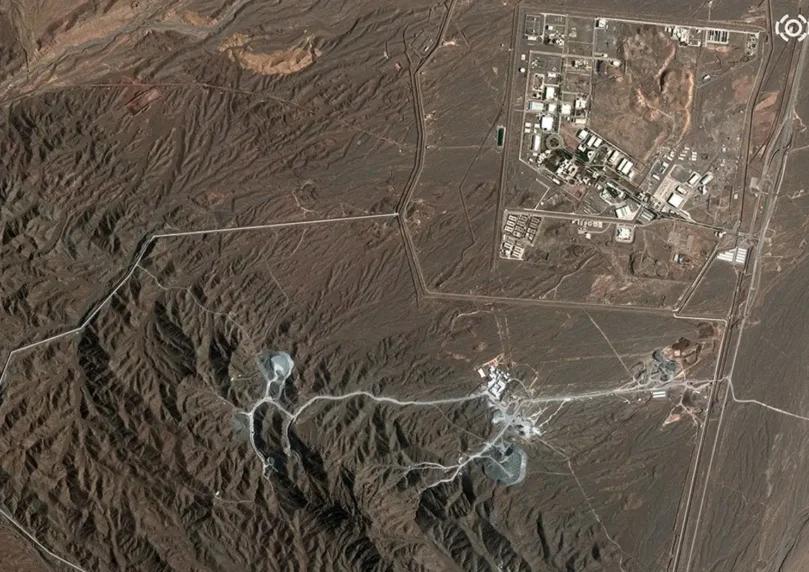

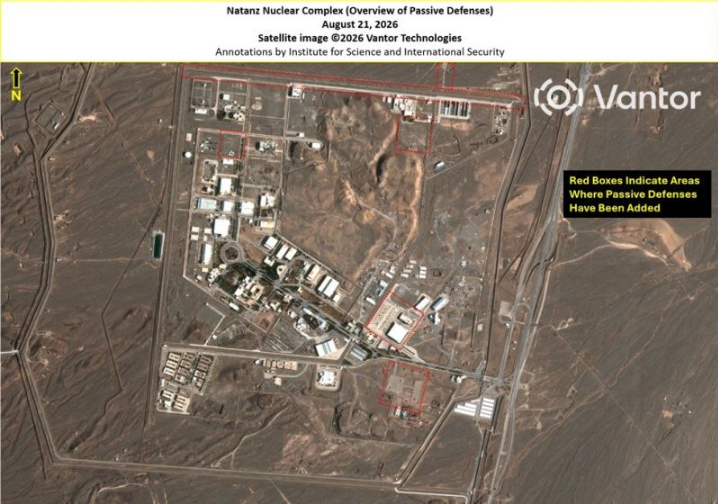
Iran is digging in underground as threats from Washington intensify. New satellite imagery shows Tehran continuing to expand defensive measures at Pickaxe Mountain, a heavily fortified underground complex near the Natanz nuclear facility that President Donald Trump recently identified as a potential target for U.S. strikes.

 3+
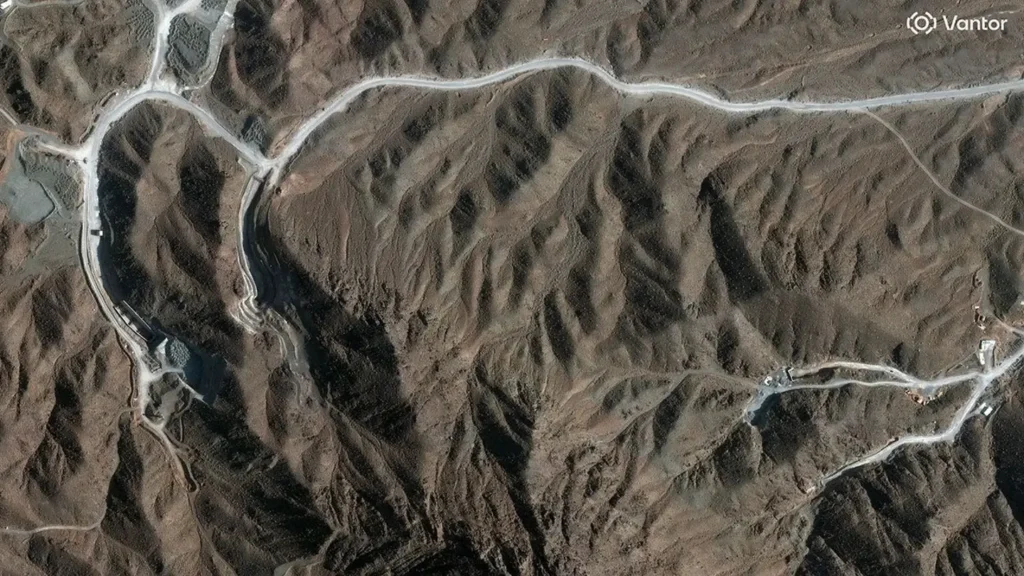
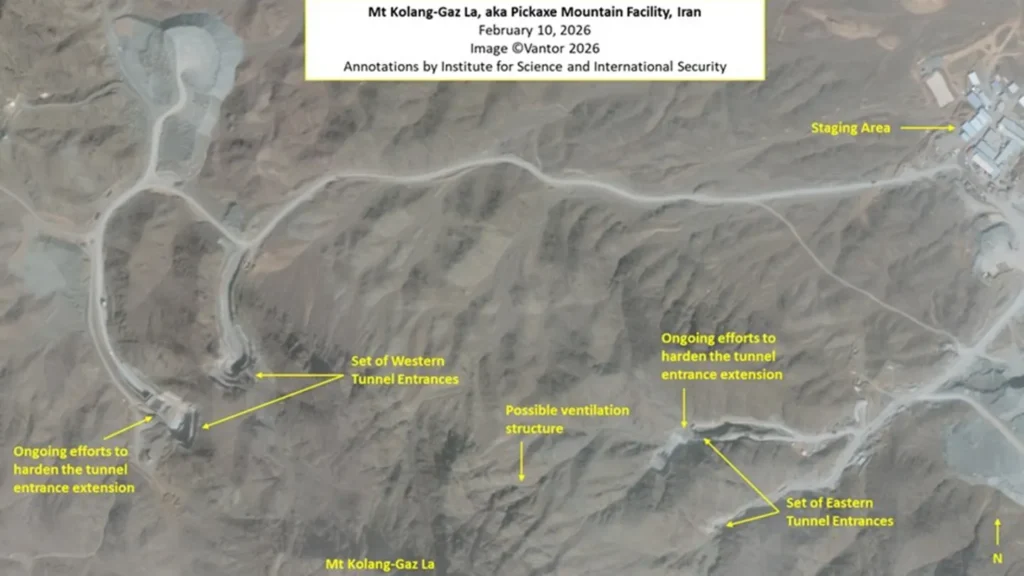
3+According to a new report from the Institute for Science and International Security, Vantor Technologies imagery from Sept. 11 shows earthen roadblocks still obstructing vehicle access to the western tunnel portals, while additional soil has been piled over tunnel entrances to provide greater protection against aerial bombardment. The institute assesses that the restricted access suggests the facility is not currently being used for routine operations, but may contain valuable equipment or materials.
The new fortifications come days after Trump issued an explicit warning to Tehran over activity at the site. “We notice there’s a little bit of activity at Pickaxe,” Trump told reporters last week, warning Iran “not to get cute” and saying the U.S. would hit the country “very hard” if necessary. Trump had already publicly identified Pickaxe Mountain as a possible U.S. target in July.
 3+
3+The Pickaxe Mountain complex was constructed roughly two kilometers from Natanz following a 2020 sabotage operation against Iran’s centrifuge assembly facility, providing Tehran with a far more deeply buried and protected location. Experts estimate that portions of the complex lie at least 100 meters underground, making it an extraordinarily difficult target even for the heaviest conventional bunker-busting weapons. Recent CSIS analysis described the site as a deeply buried granite fortification and found that construction activity there surged during 2026.
The Institute for Science and International Security has assessed that U.S. forces could still target the tunnel entrances and potentially block access to the underground complex even if destroying the facility itself proves considerably more difficult. Iran, meanwhile, has denied that nuclear activity is taking place at the site.
 3+
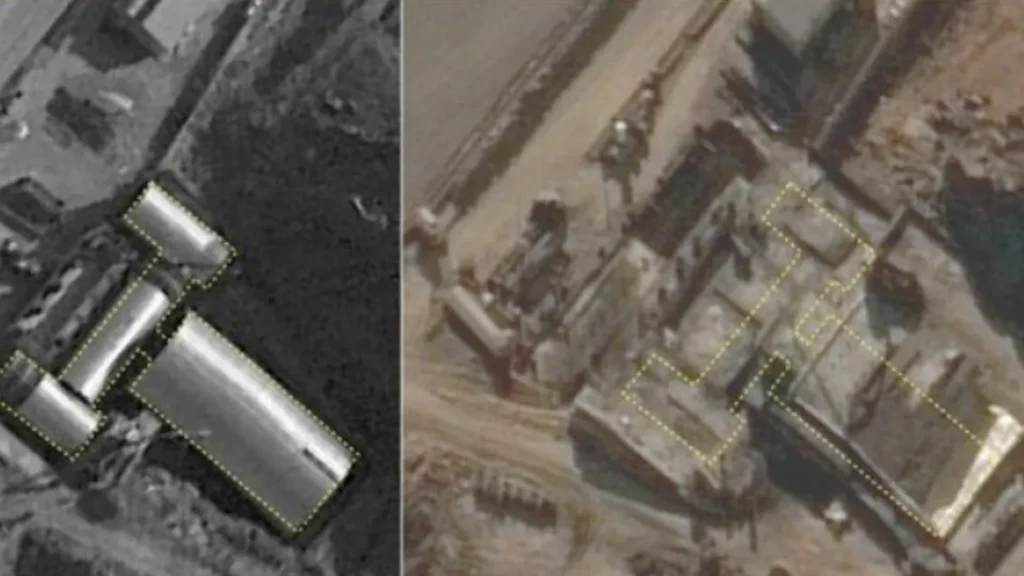
3+Satellite imagery is also revealing significant activity at another sensitive Iranian facility. Vantor imagery from Sept. 13 shows Tehran rapidly reconstructing Taleghan 2 at the Parchin military complex, a facility previously associated with Iran’s nuclear weapons research and struck by Israel. Iran has erected a massive tarp over the damaged underground structure, obscuring the reconstruction work beneath it from satellites and aerial reconnaissance. Around it, satellite imagery shows dump trucks, bulldozers, concrete pump trucks, mixers and cranes actively working at the site.
 3+
3+Repair work began in June, including concrete caps placed over penetration holes caused by bunker-buster weapons. Iran has since constructed additional concrete reinforcement intended to provide greater blast protection against another aerial attack. Taleghan 2 was struck by Israel in October 2024 and again in March 2026.
Western intelligence has previously linked the facility to research relevant to nuclear weapons development, while the IDF has said it was used for advanced explosives development and sensitive experiments connected to Iran’s former AMAD nuclear weapons program. Taken together, the latest imagery shows Tehran simultaneously hardening access to one of its deepest underground complexes and rebuilding and concealing another sensitive facility previously struck by Israel—even as Washington publicly warns that Pickaxe Mountain remains in its sights.