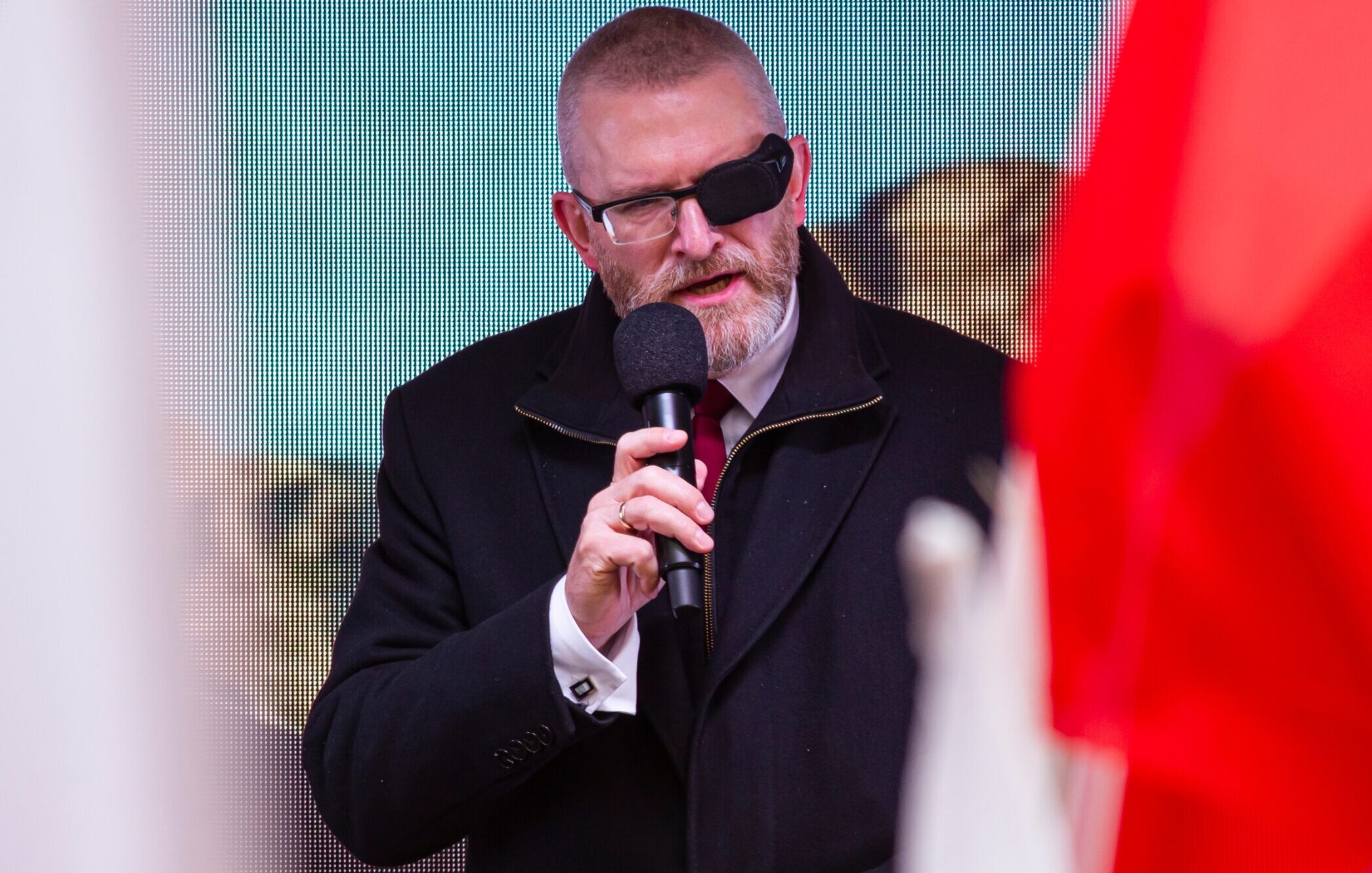
Grzegorz Braun, leader of the far-right Confederation of the Polish Crown party and a sitting Member of the European Parliament, appeared on Tuesday before the Institute of National Remembrance (IPN) in Kraków, where he was formally charged with the denial of Nazi crimes. A demonstration of supporters gathered outside the institute during his appearance.
European Parliament Building | Photo: Shutterstock
Braun, notorious for a long record of virulent antisemitic outbursts and provocations, faces two distinct counts of Holocaust denial stemming from incidents last year, according to the IPN:
Jedwabne (July 2025): Braun publicly denied the historical reality of the gas chambers at Auschwitz-Birkenau, falsely declaring them to be a “fake.”
Warsaw (2025): Braun reiterated identical claims disputing the operation of gas chambers at the Nazi extermination camp.
Interrogated as a formal suspect by the IPN, Braun pleaded not guilty to the criminal charges but did not dispute that he uttered the recorded statements, according to local Polish reports.
Braun during an antisemitic outburst in parliament | Photo: Nati Langermann
The indictment represents only a fraction of Braun’s extensive history of antisemitic actions. As previously reported by Channel 14 correspondent Nati Langermann, Braun notoriously attacked a public Hanukkah menorah display inside the Polish Sejm in late 2023, extinguishing the candles with a powder fire extinguisher in a shocking display of bigotry.
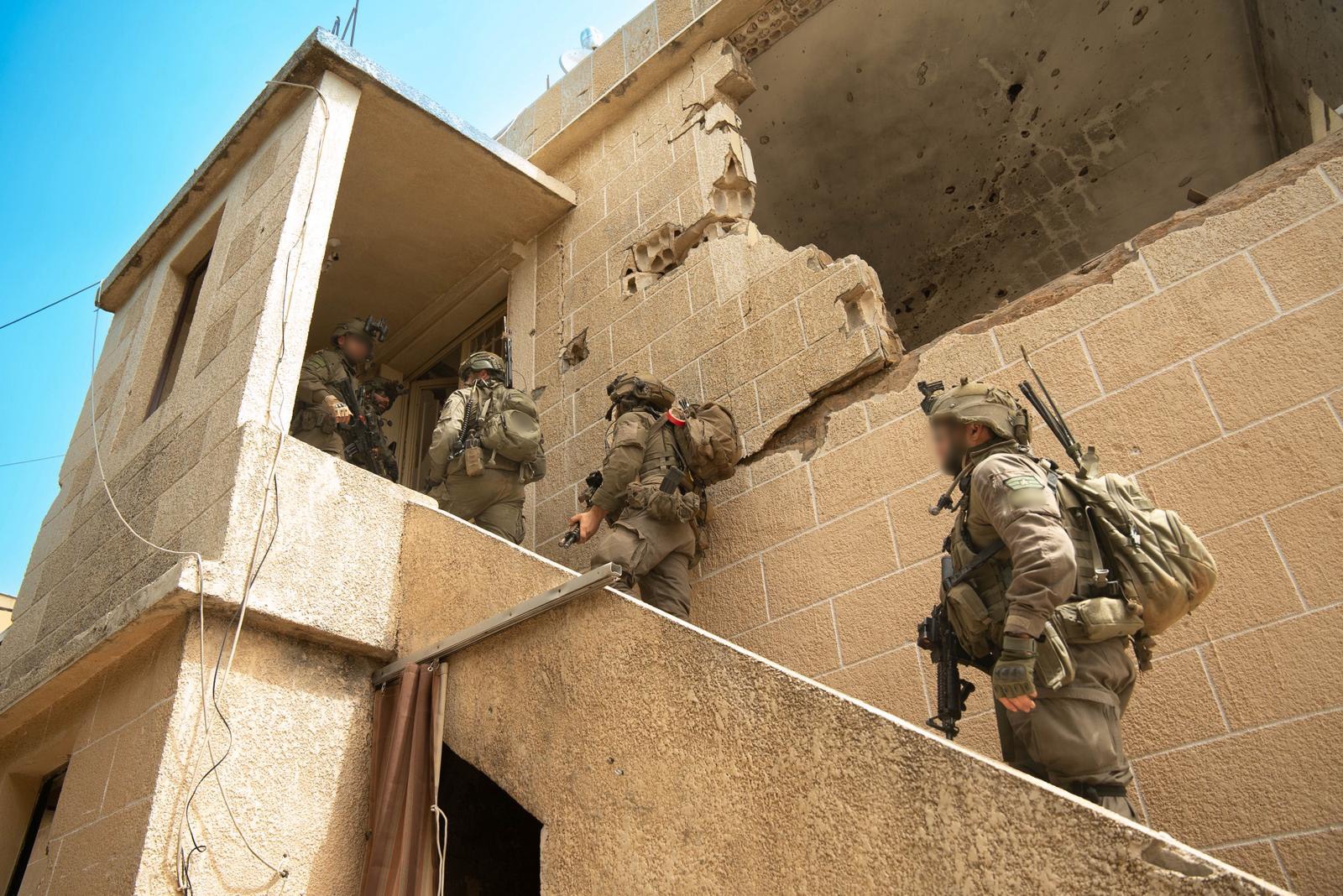
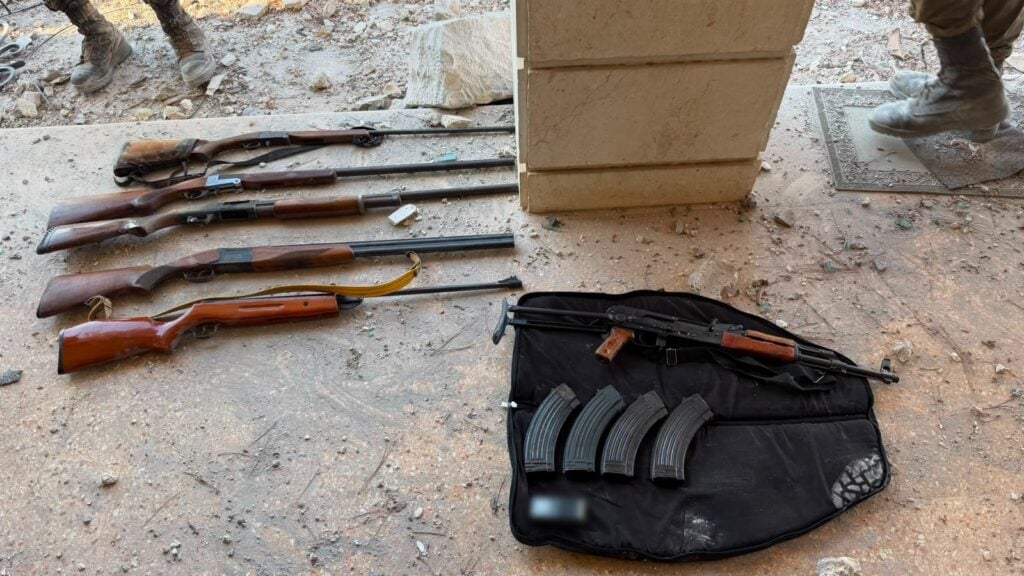
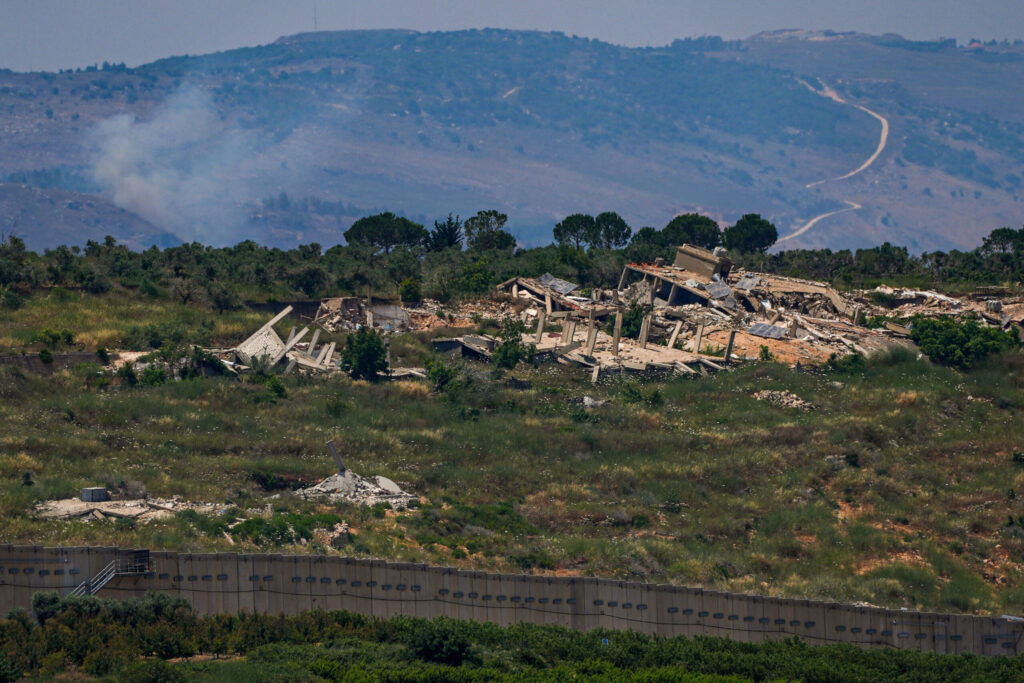
Troops of the Golani Brigade Combat Team, operating under the command of the 36th Division within the security zone in southern Lebanon, have destroyed more than 400 Hezbollah terror infrastructure sites and seized vast weapons stockpiles over recent weeks, the IDF announced on Wednesday.
Weapons and Ammunition Seized in Lebanon | Photo: IDF Spokesperson’s Unit
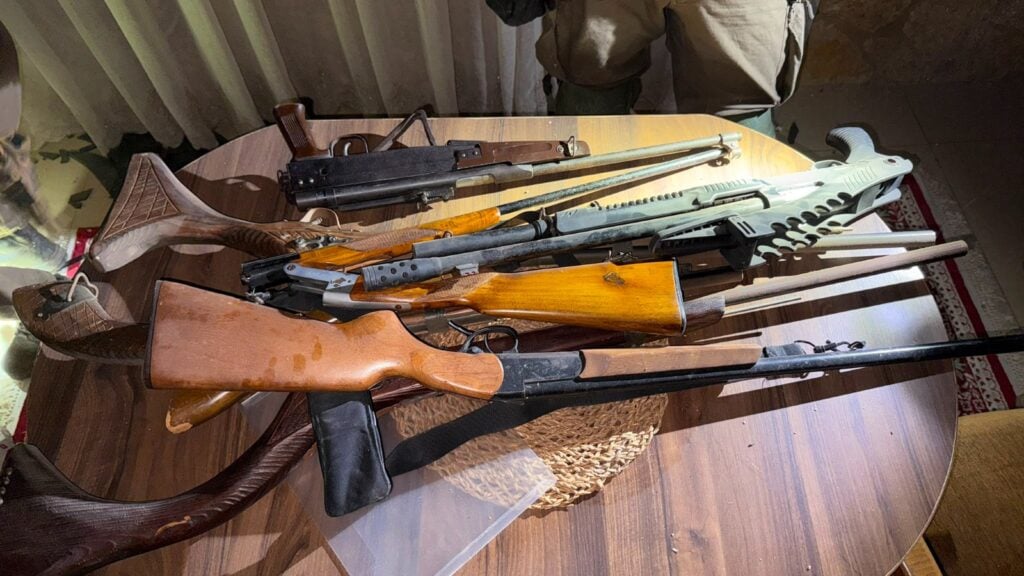
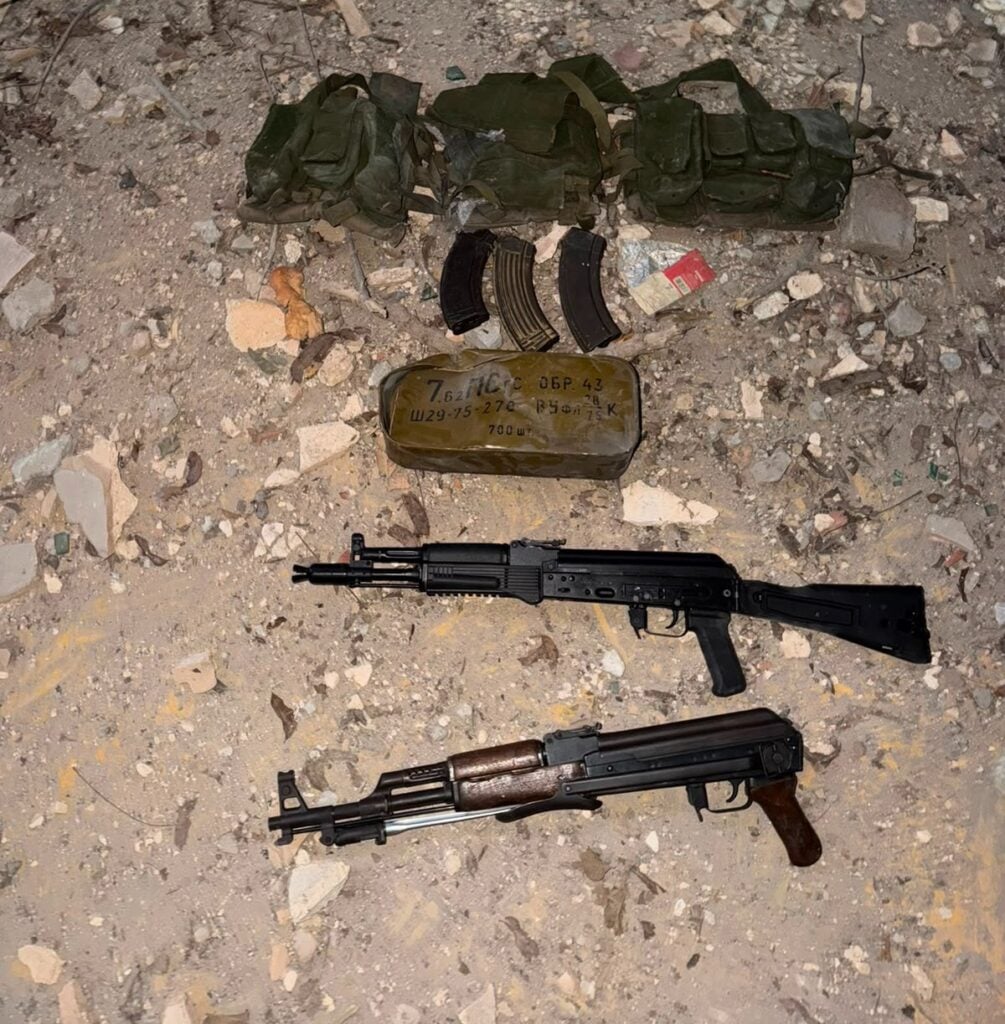
The targeted operations are focused on systematically locating, dismantling, and neutralizing lethal assets positioned to target the State of Israel and IDF forces operating along the northern frontier. During scans across the mountainous sector, Golani soldiers uncovered extensive weapons caches containing anti-tank guided missiles (ATGMs), anti-aircraft missiles, heavy explosive devices, Kalashnikov assault rifles, and mortar shells. “The IDF will not allow the Hezbollah terror organization to harm the citizens of the State of Israel or its forces, and will continue to act to remove threats while remaining committed to the ceasefire understandings,” the military stated.
Weapons and Ammunition Seized in Lebanon | Photo: IDF Spokesperson’s Unit
Continuous Counter-Terror Raids
The latest dismantlement follows a series of high-impact raids executed by Golani fighters across southern Lebanon:
July 2026: Troops uncovered and demolished fortified underground weapons depots housing launchers, heavy machine guns, IEDs, and rockets designed for cross-border raids against northern Israeli towns.
April 2026: Forces seized explosive suicide drones, remote-detonation firing systems, RPG launchers, and grenades, eliminating armed terrorists in close-quarters combat and coordinated drone strikes alongside the Multidimensional Unit.
March 2026: Golani forces neutralized eight terrorists in targeted engagements, including an operative belonging to Hezbollah’s elite Radwan sniper unit, subsequently destroying an underground shaft and subterranean staging room packed with anti-tank weaponry.
Weapons and Ammunition Seized in Lebanon | Photo: IDF Spokesperson’s Unit
Securing the High Ground: Beaufort and Saluki Operations
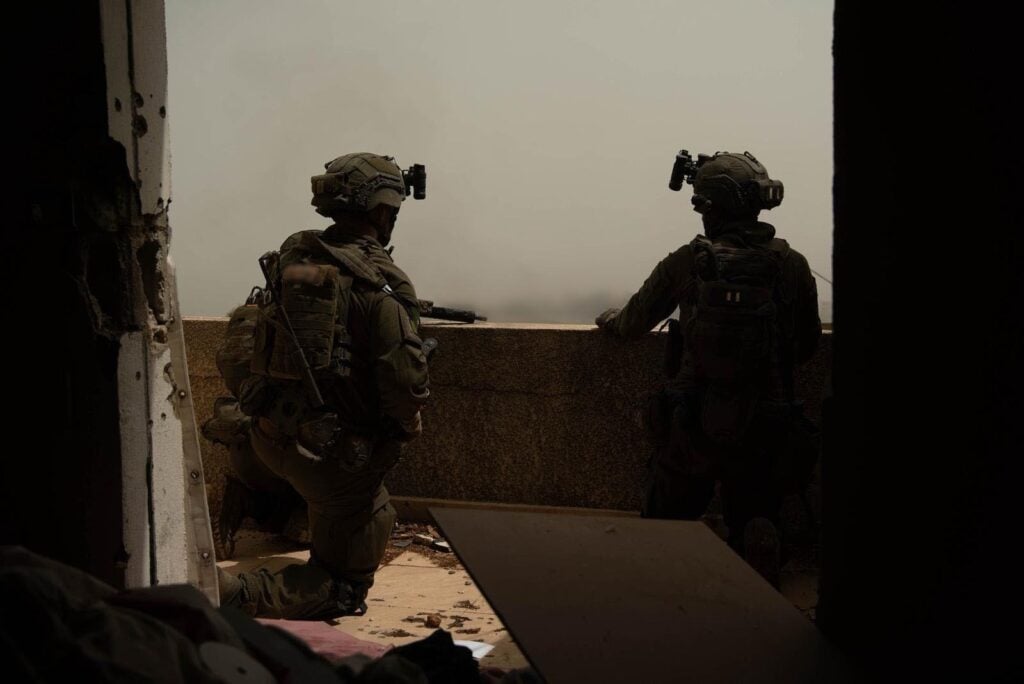
The ongoing sweeps are part of an extensive strategic push initiated in late May across the Beaufort Ridge and the Wadi Saluki basin. Operating alongside the 7th Armored Brigade, Givati, artillery units, and the Multidimensional Unit under 36th Division command, Israeli forces seized commanding positions along the Beaufort and Ali Taher ridges to eliminate direct fire threats facing Metula and the Galilee Panhandle.
Israeli Forces in Lebanon, Archive | Photo: IDF Spokesperson’s Unit
During an operational assessment at the Beaufort Ridge in July, IDF Chief of Staff Eyal Zamir underscored the scale of the Iranian-backed buildup dismantled by Israeli forces, describing the area as a heavily saturated terror complex: “For decades, subterranean networks were carved deep into the mountain to serve as command headquarters, combat management hubs, and firing positions to launch terror attacks against northern communities. Golani and our forces are systematically erasing this threat.”
Escalating Rhetoric: Erdogan Warns ‘Plotters and Provocateurs’ as Ankara-Jerusalem Friction Mounts
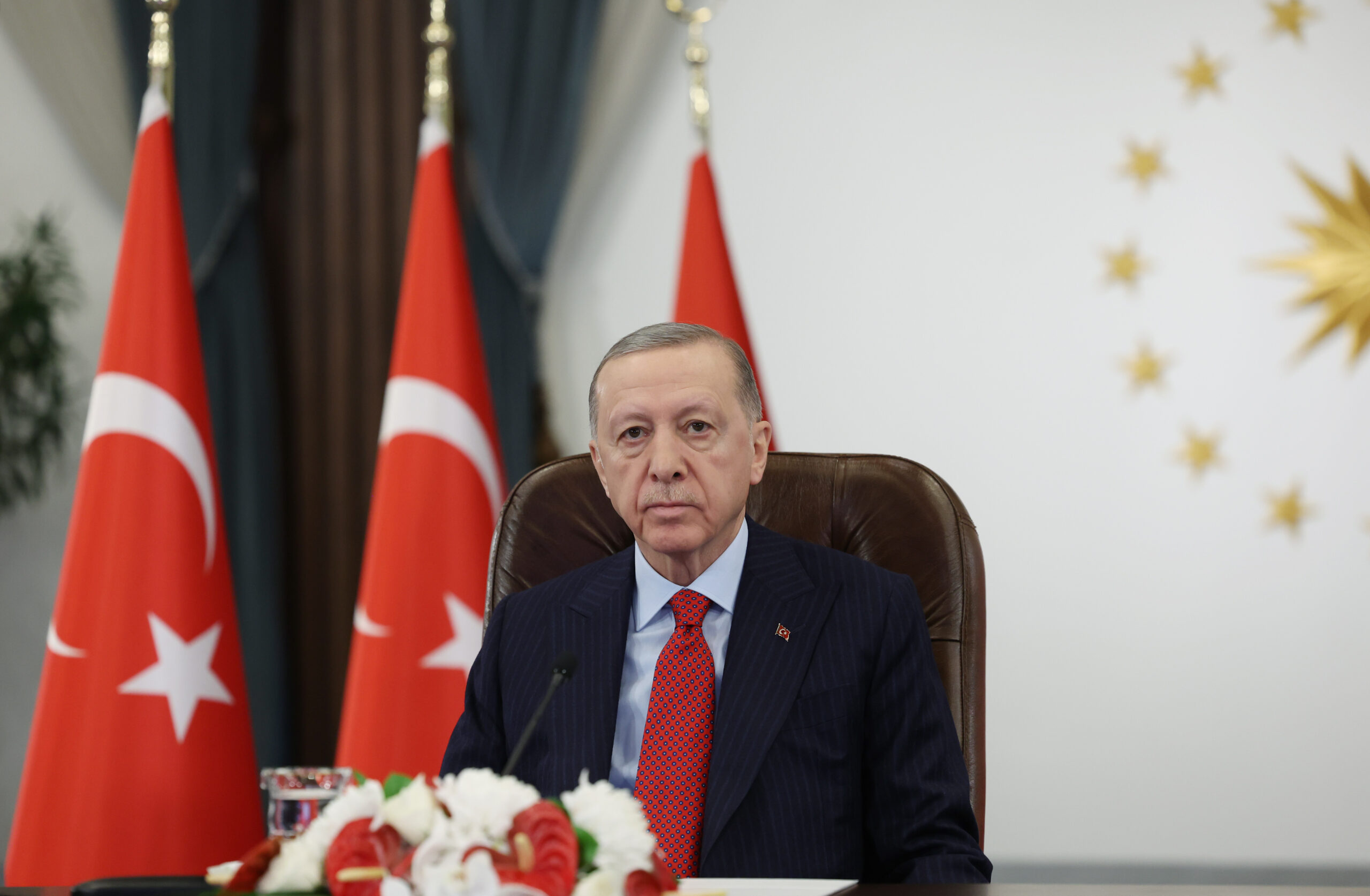
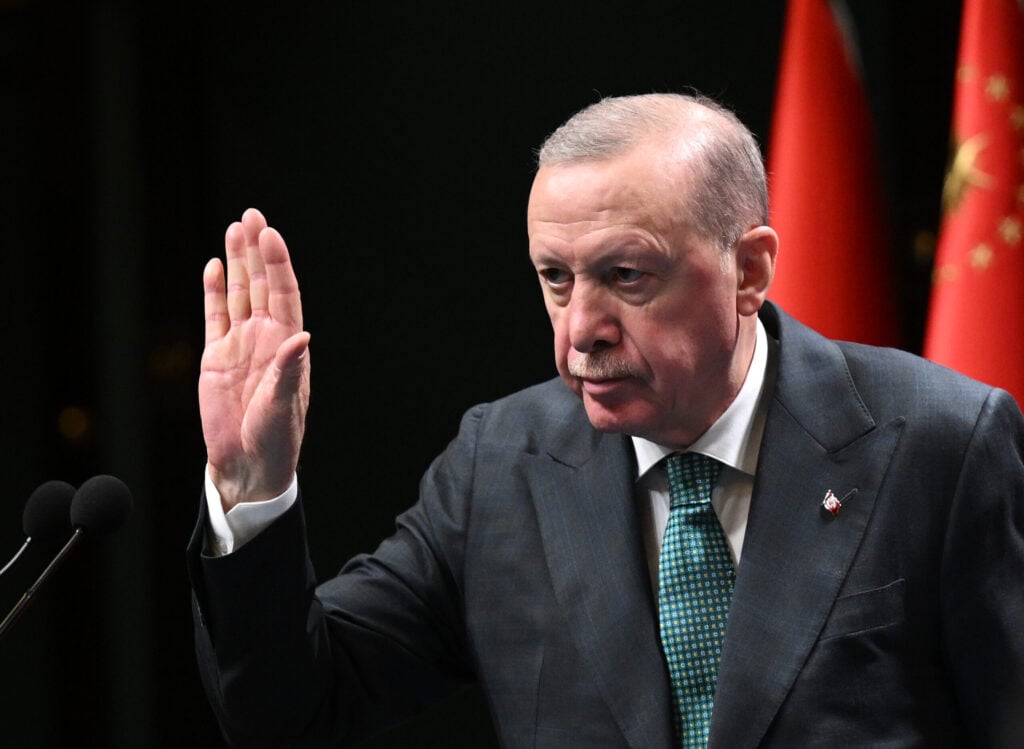
Turkish President Recep Tayyip Erdogan delivered a sharp, veiled message on Wednesday, warning that external attempts to deter Turkey and the Turkish people through “provocations, plots, and traps” are doomed to failure. Erdogan proclaimed that Ankara will not alter its regional trajectory under foreign pressure, though he avoided mentioning Israel by name or explicitly specifying the target of his warning.
Recep Tayyip Erdogan, Archive | Photo: Reuters
“Anyone who believes they can stop the sacred march of Turkey and the Turkish nation through incitement, plots, and traps is destined for disappointment,” Erdogan stated. “We will not deviate from the path we believe to be right, nor will we take alternative paths due to anyone’s provocation.” Addressing a ceremony marking the 955th anniversary of the Battle of Manzikert, Erdogan stressed that Turkey has no choice but to remain powerful and unified, asserting: “When the future of our nation and people is at stake, we bow our heads to no one.”
Soaring Tensions Over Syria Airbase Strike
While Erdogan refrained from directly naming the Jewish state, the fiery rhetoric comes at a peak in diplomatic and military friction between Ankara and Jerusalem. Regional tensions escalated sharply earlier this month following an Israeli Air Force strike on the Abu al-Duhur military airbase in northern Syria. Israel revealed that the Syrian regime was preparing to grant Turkish military forces operational deployment at the strategic base, warning that a permanent Turkish presence on its doorstep poses a direct national security threat.
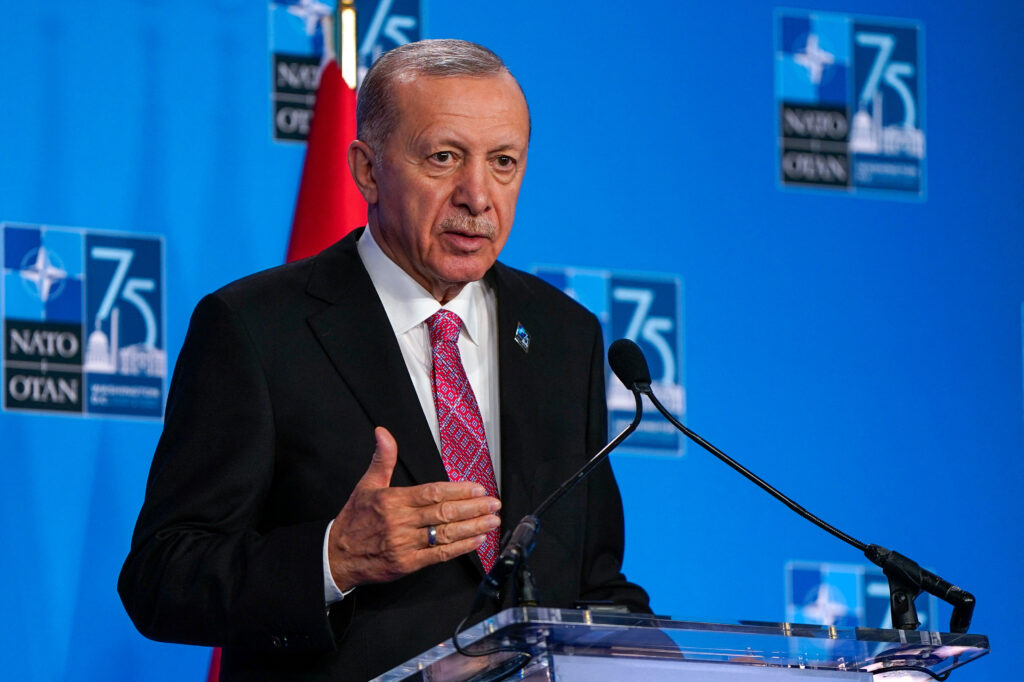
Turkish President Recep Tayyip Erdogan at NATO Summit | Photo: Reuters
According to Syrian sources, the Israeli strike occurred mere hours after a Turkish military delegation inspected the site. While Ankara and Damascus denied plans for a permanent installation, Israel warned against Turkish “reckless adventurism” in Syria. The dispute centers on Ankara’s expanding military footprint and alignment with Damascus. In Jerusalem, defense officials view any forward deployment of Turkish assets or forces near Israeli borders as an intolerable strategic threat. The friction prompted the United States to intervene to establish deconfliction mechanisms and prevent clashes between Israeli and Turkish interests on Syrian soil.
Interpol Lawfare Against Netanyahu
The friction over Syria runs parallel to escalating diplomatic hostility. On August 21, Ankara announced plans to request an Interpol “Red Notice” against Prime Minister Benjamin Netanyahu over Israel’s lawful interception of a Gaza-bound blockade flotilla in May. The Prime Minister’s Office dismissed the move as a transparent attempt to intimidate Israeli leadership.
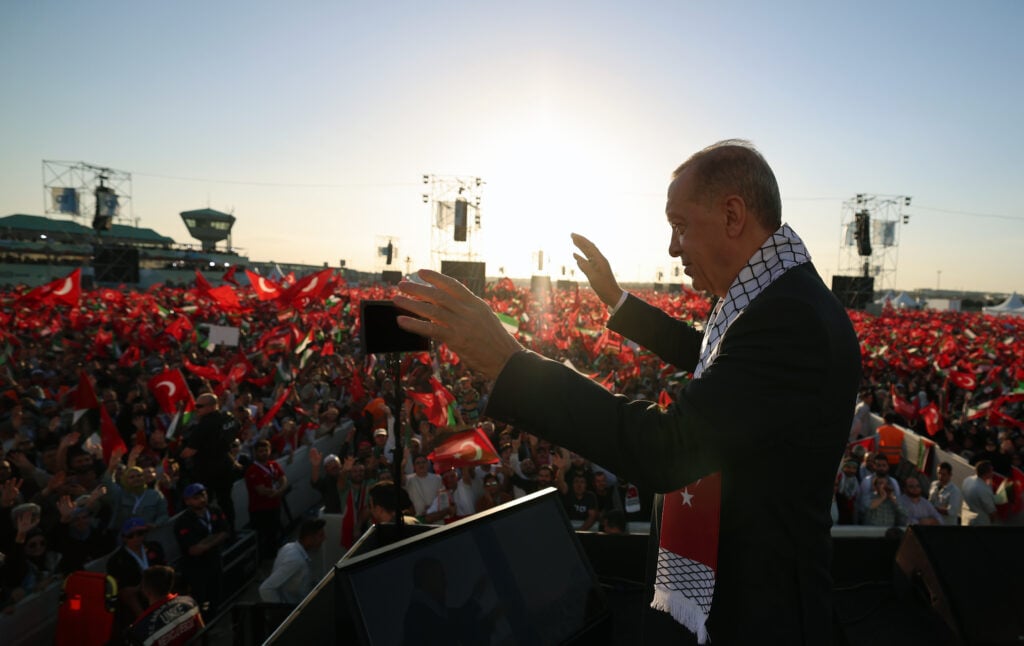
Erdogan at a Pro-Gaza Rally in Istanbul | Photo: Reuters
The remarks follow previous attacks by Erdogan, who claimed in a phone call with U.S. President Donald Trump that Israeli actions against Palestinians had intensified, while referring to regional adversaries as “merchants of blood.”
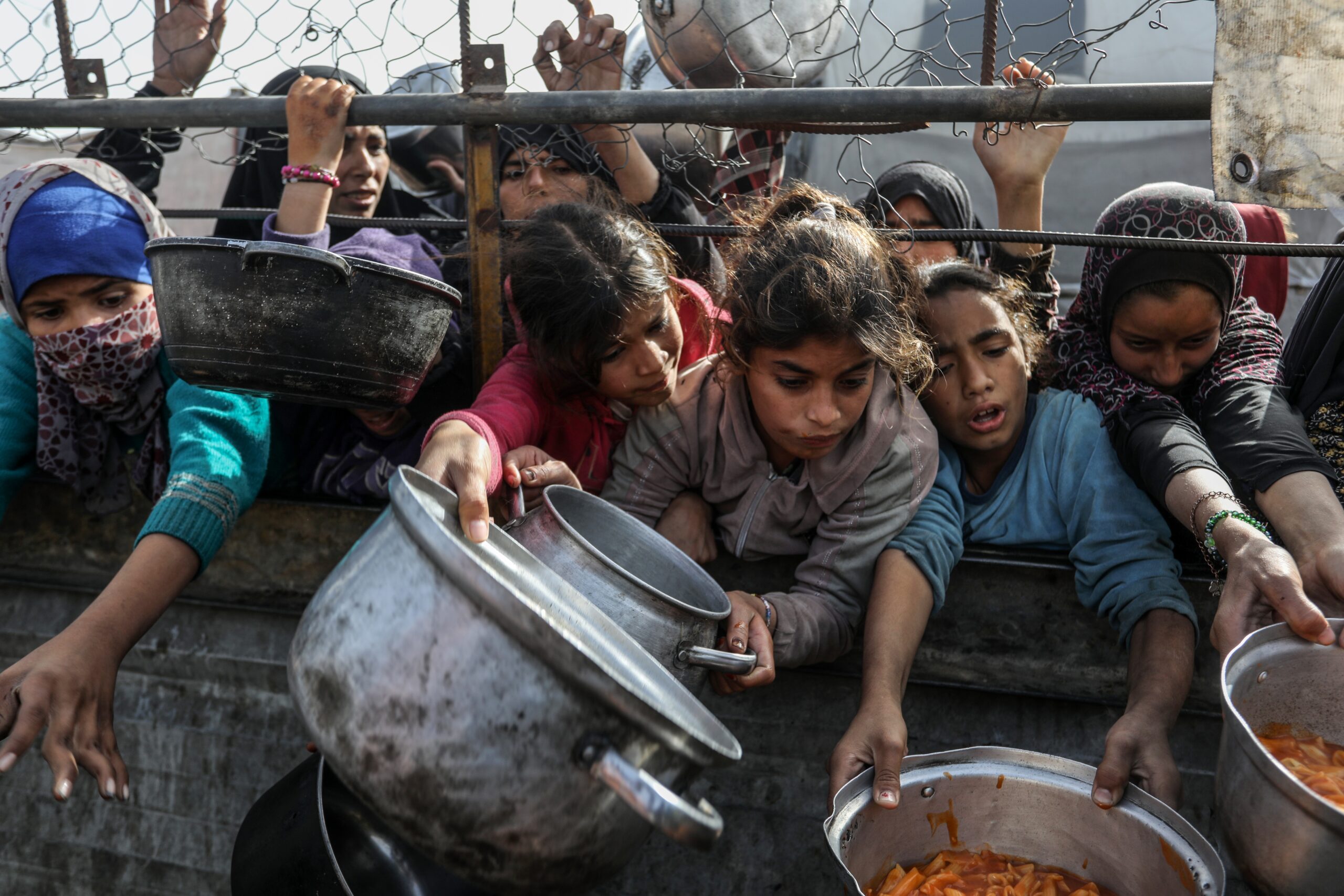
The Board of Peace posted an official statement on its X (formerly Twitter) account on Wednesday, highlighting that the latest international assessments provide undeniable proof of widespread humanitarian relief inside the Gaza Strip, directly countering persistent anti-Israel propaganda campaigns. “The latest UNICEF report on Gaza provides undeniable evidence: food supplies have dramatically increased, nutrition has dramatically improved, health continues to see critical advances. These indicators demonstrate the humanitarian progress of the last months,” the Board stated. The Board of Peace emphasized the road ahead, noting: “Much work remains to transform Gaza into an environment of peace, prosperity, and security for Israel. For this to happen—we need all parties to honor their commitments and fully implement President Trump’s comprehensive peace plan.”
Hundreds of aid trucks | Photo: Abd Rahim Khatib, Flash 90
Reality on the Ground vs. Global Incitement
While anti-Israel advocacy groups and international media continue to fuel the false “starvation” narrative against Israel, the physical reality on the ground shows hundreds of humanitarian aid trucks entering the Strip daily via Israeli crossings—often in the face of fierce domestic criticism from opposition figures who oppose aiding the Strip while hostages remain held.
The data highlighted in the Board of Peace’s statement builds directly upon meetings held roughly a month ago between Prime Minister Benjamin Netanyahu, senior Board of Peace officials, and Jared Kushner. Those high-level consultations concluded with the formation of two dedicated working task forces to address the post-war future of the Gaza Strip, alongside an additional joint team focused specifically on sanitation infrastructure, clean water supply, and public health initiatives.
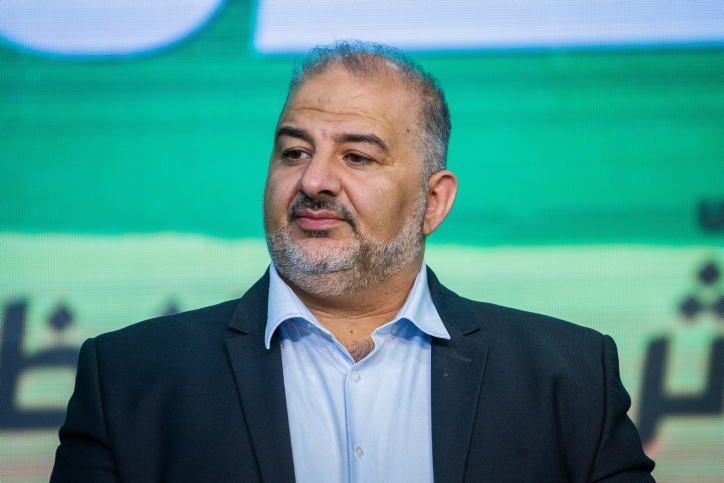
Prime Minister Benjamin Netanyahu released an AI-generated video today (Wednesday) responding to the political storm triggered by Ra’am chairman Mansour Abbas’s recent remarks in Arabic. Netanyahu captioned the post simply “Trojan Horse.”
The video shows Gadi Eisenkot and Avigdor Lieberman riding atop a large wooden horse being carried toward a gate labeled “Government of Israel.” Hidden inside the horse are Abbas and Democrats chairman Yair Golan, smiling at each other. Abbas signals to Golan to stay quiet. The video is designed to convey Netanyahu’s claim that any future government led by his rivals would rely on Abbas’s support.
Netanyahu chose to respond to the political firestorm not with a lengthy written statement but with an AI video. In the tweet accompanying the video, he used just two words: “Trojan Horse.” The video draws on the familiar imagery of the Trojan Horse story to present Netanyahu’s political argument. Eisenkot and Lieberman appear riding the large wooden horse, which is carried by people toward a gate bearing the inscription “Government of Israel.” Inside the horse, Abbas and Golan are shown hiding and smiling at each other. The two are portrayed as if they would enter the government concealed inside the “horse” that Eisenkot and Lieberman are leading. Abbas also signals to Golan to be quiet. At the end of the video, a message appears stating that “Eisenkot will form a government with Yair Golan and the ultra-Orthodox parties.” The video itself is a propaganda message from Netanyahu and does not in itself indicate any agreements to form such a government.
The video was released against the backdrop of a political storm that developed following remarks Abbas made in Arabic, in which he addressed recognition of Israel as a Jewish state and the need to conduct himself in a way that would prevent Ra’am from being disqualified from running for the Knesset. The remarks triggered a wave of sharp responses. Finance Minister Bezalel Smotrich called Abbas “a dangerous enemy—a wolf in sheep’s clothing” and claimed he operates using the “taqiyya” method. Gilad Erdan claimed Abbas is “working the public with open eyes,” and MK Tally Gotliv called for preventing Ra’am from running for the Knesset. Otzma Yehudit also announced that following the remarks, it intends to file a demand to disqualify Abbas from running in the elections.
Photo: Flash90
Netanyahu’s response takes the debate surrounding Abbas a step further and connects it directly to the battle over the composition of the next government. Through the Trojan Horse imagery, Netanyahu seeks to portray Eisenkot and Lieberman as those who might enable, according to his claim, the entry of Abbas and Golan into centers of influence in a future government. The choice to depict Abbas and Golan hiding inside the horse is meant to illustrate Netanyahu’s claim that voters might get a government with a different composition than what is presented to them publicly. This is a political message from Netanyahu as part of his battle against his rivals, not an established fact about the composition of a future coalition.
The debate over cooperation with Ra’am has accompanied the political system since the party joined the coalition formed by Naftali Bennett and Yair Lapid after the 2021 elections. Since then, the possibility of relying on Abbas to form a government has become one of the prominent lines of conflict between the political camps.
Soldiers from the elite Nahal Reconnaissance Unit (Sayeret Nahal) apprehended a female Arab terrorist a short time ago. The suspect was secured on-site and transferred to security forces for ongoing interrogation. No casualties were reported among Israeli forces during the operation.
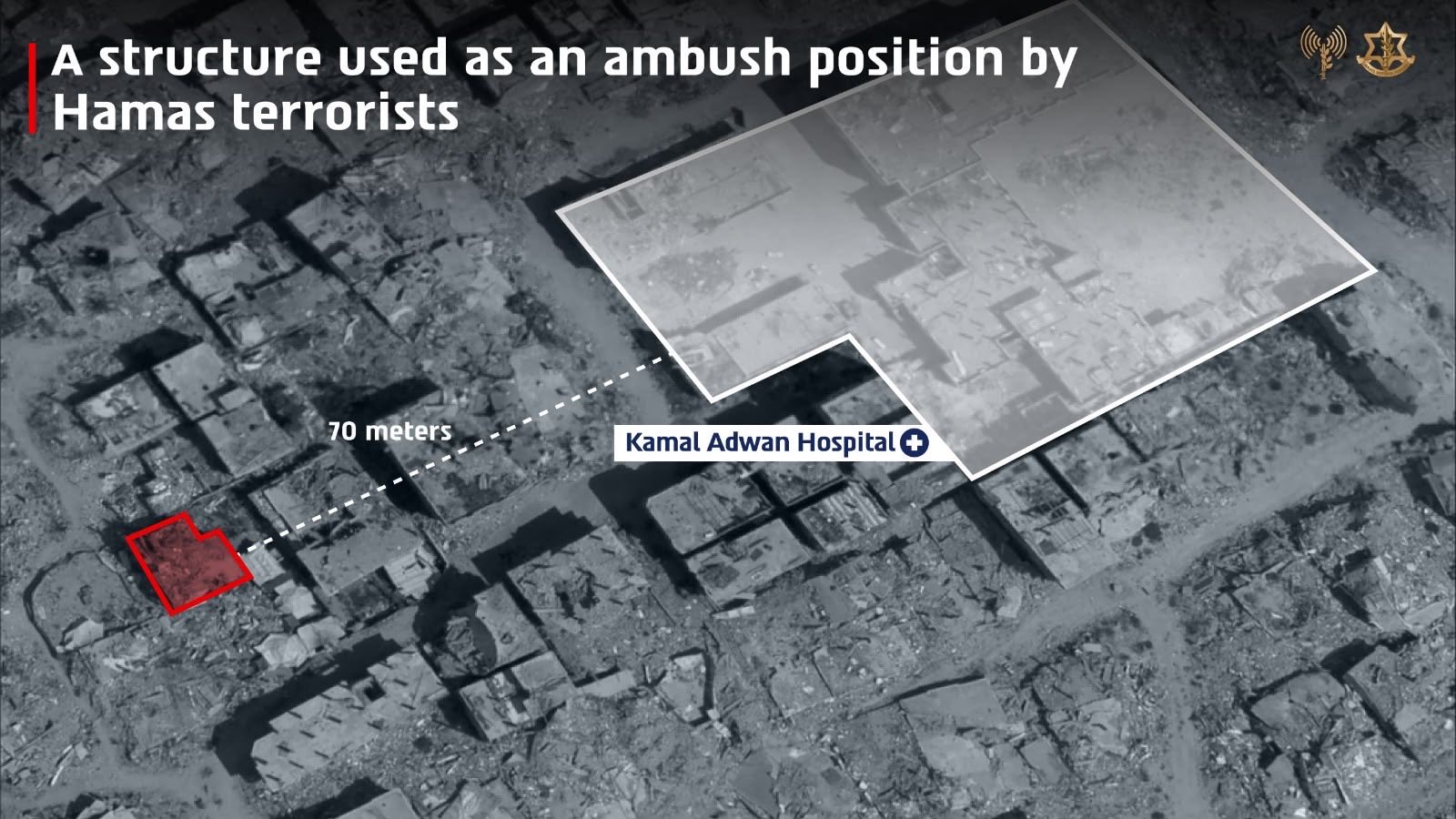
Israeli forces struck and destroyed a structure in Jabalia, northern Gaza, on Tuesday that served as an operational ambush position and weapons storage facility for Hamas terrorists, the IDF Spokesperson’s Unit announced. Several terrorists were eliminated in the strike.
The ambush point was situated approximately 50 meters from the demarcated Yellow Line, posing a direct threat to troops operating in the sector in accordance with existing operational frameworks. Additionally, the terror site was embedded within a sensitive civilian environment, located just 70 meters from the Kamal Adwan Hospital and roughly 170 meters from a school.
The military stated that the compound was being used to plan terror operations against Israeli troops and to reconstitute localized Hamas combat capabilities. Security forces under Southern Command remain deployed across the sector in accordance with operational understandings and will continue targeting any immediate threats to force protection.
The United States Secret Service confirmed on Tuesday night that it is actively monitoring and assessing an extraordinary segment aired on Iranian state television discussing the potential assassination of Barron Trump, the 20-year-old youngest son of U.S. President Donald Trump. The three-minute broadcast claimed that Barron is under surveillance and alleged that a $10 million bounty had been placed on his life.
Barron Trump | Photo: Shutterstock
In response to the broadcast, the Secret Service reiterated its operational mandate to evaluate all potential threats against protectees while maintaining strict operational security regarding tactical responses. Secret Service spokesperson Nate Herring confirmed the agency is reviewing the material: “The United States Secret Service is aware of the video and investigates anything that can be construed as a threat toward individuals under our protection. Out of concern for operational security, we do not discuss protective intelligence matters.”
Aired Threats and Protective Mandates
The Iranian state broadcast focused extensively on targeting the President’s son, claiming he was being tracked by hostile operatives alongside the purported $10 million bounty. While the claims prompted a formal review by American protective details, U.S. officials have not publicly validated whether an active operational plot or genuine financial bounty exists.
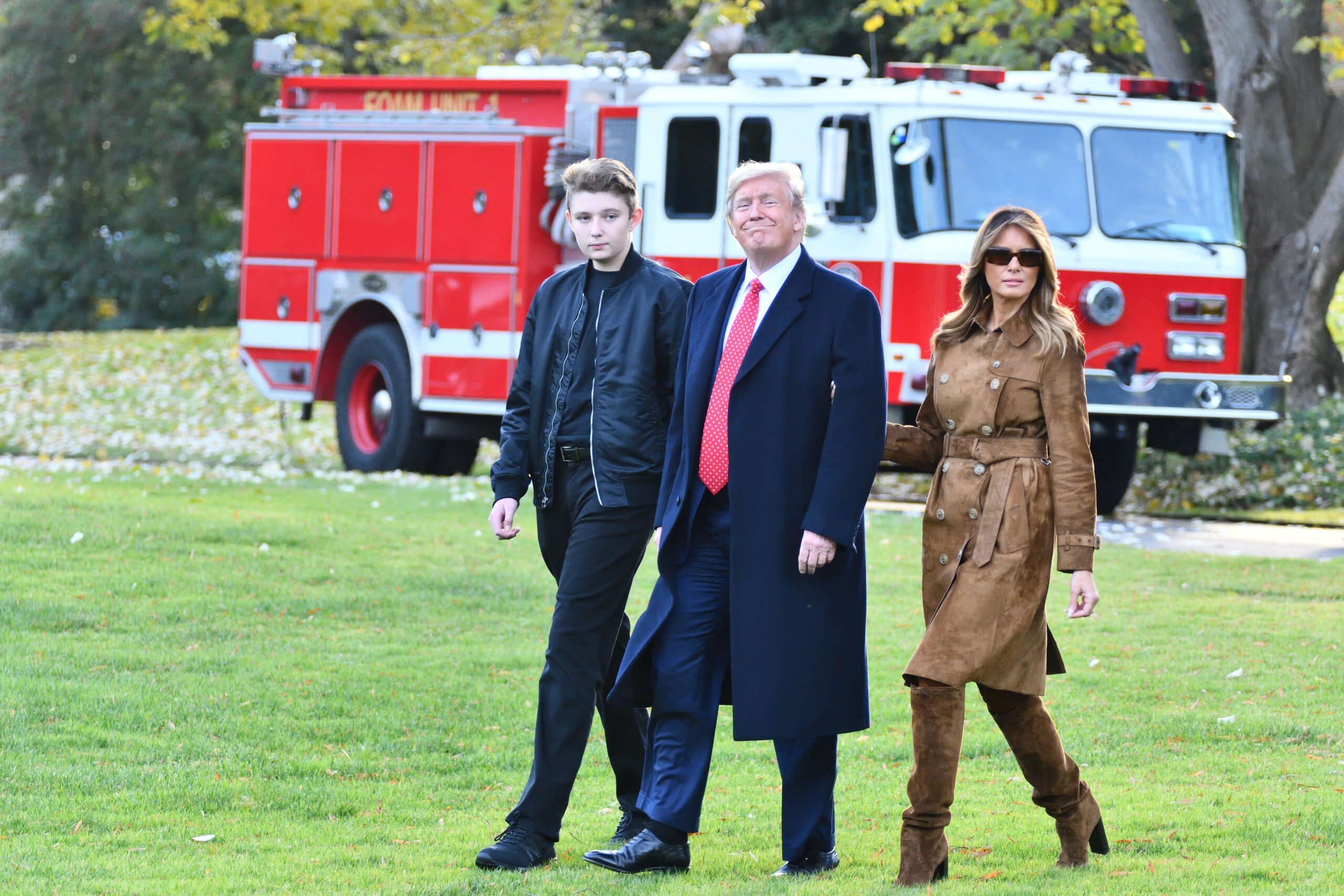
Barron Trump with his parents | Photo: Shutterstock
The development comes amid persistent threats directed at President Trump himself. According to reports by Reuters, the United States has received multiple intelligence warnings from Israel over the past year indicating active Iranian efforts to assassinate Trump, who previously stated publicly that he is “number one on Iran’s hit list.” The state-sanctioned broadcast expands Tehran’s public rhetoric from the President directly to his immediate family. Under federal law, the Secret Service is tasked with the security of designated presidential family members and continuously investigates intelligence indicating hostile surveillance or intent.
Barron Trump with his parents | Photo: Shutterstock
The threat parallels recent revelations by Israeli Prime Minister Benjamin Netanyahu, who disclosed in an exclusive interview with Channel 14’s Noam Amir that the Iranian regime had attempted to assassinate one of his sons. “Iran targeted one of my sons. Iran tried to kill, to murder one of my sons, which is why this security is not a luxury,” Netanyahu stated. Subsequent details revealed that the target was Yair Netanyahu, who had to be relocated from Miami following the emergence of concrete Iranian threats.
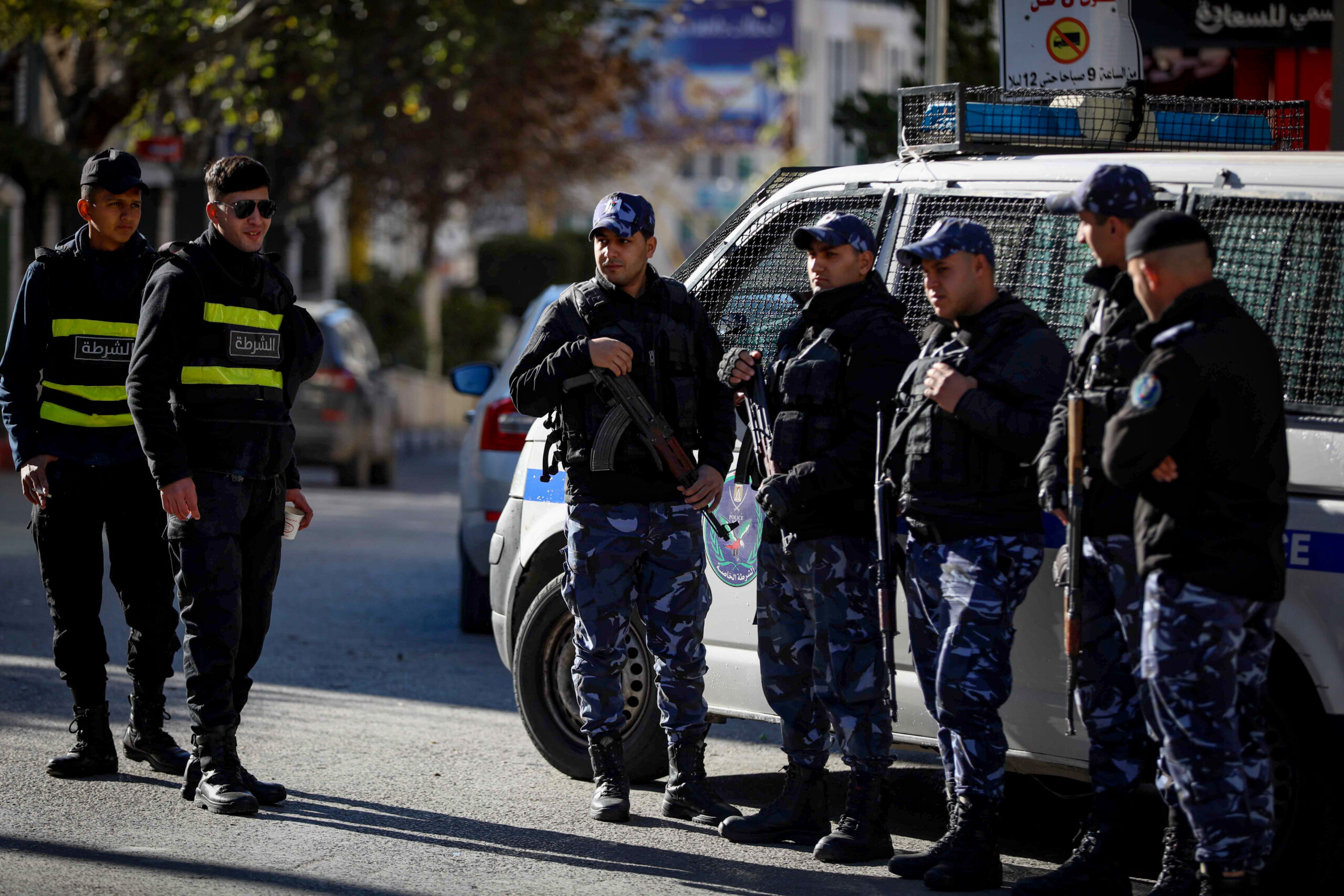
Initial findings from the preliminary investigation into the abduction of an IDF reservist on the Beitunia bypass road reveal an alarming erosion of operational control in the sector: the IDF has routinely allowed PLO/”Palestinian Authority” security forces to operate unhindered for years within Area C, a sector under full Israeli civil and military jurisdiction. The armed “PA” personnel who detained and abducted the reservist were operating inside the exact sector where the military had tacitly permitted their presence and movement in recent years. Furthermore, the IDF has so far refrained from imposing operational sanctions on the PLO forces involved and continues to avoid classifying the event as an abduction, despite clear physical evidence and eyewitness testimony.
Photo: Social media
The severe incident occurred two days ago when armed “PA” police erected an unauthorized checkpoint within Area C. The officers halted the reservist—a local resident on leave driving along the road—seized his issued firearm, pepper-sprayed him, and forcibly transported him into the “PA”-controlled city of Ramallah (Area A) in what community leaders and security experts termed an outright cross-border kidnapping. Despite the gravity of the armed confrontation in Israeli-controlled territory, the Binyamin Regional Council sharply condemned the Civil Administration for initially deflecting blame onto the abducted reservist by claiming he had “driven into a dangerous area.”
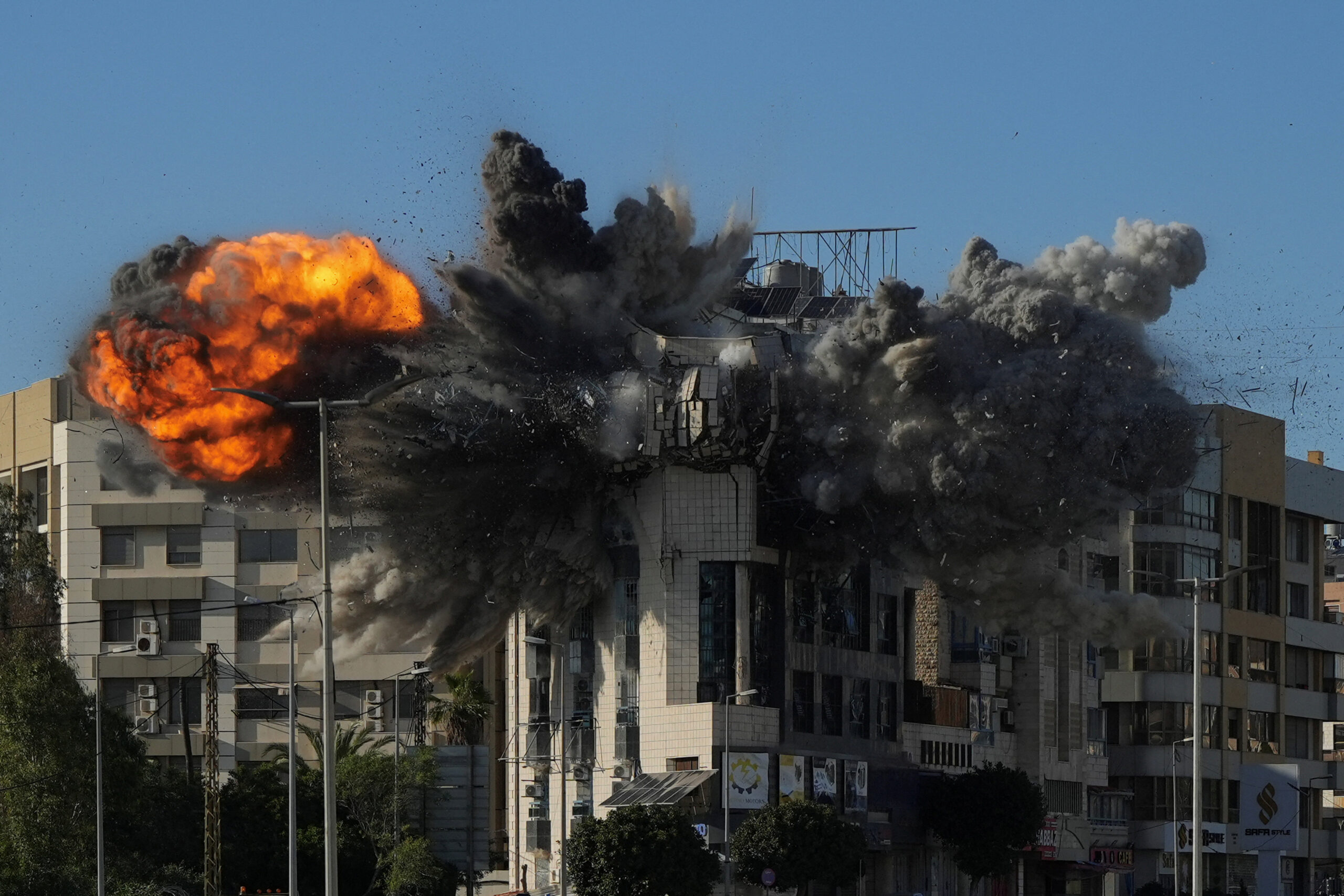
Israeli forces continued an intensive campaign of targeted airstrikes across southern Lebanon overnight, hitting multiple terror infrastructure sites in Nabatieh, Al-Qantara, Srebbine, and the Ali Taher ridge, according to Lebanese media reports.
Strikes in southern Lebanon, archive | Photo: Eyal Margolin, Flash90
Massive explosions were reported across additional sectors, including Khiam and Douhat Kafr Roummane, as the Israeli Air Force conducted heavy, sustained aerial operations throughout the southern sector.