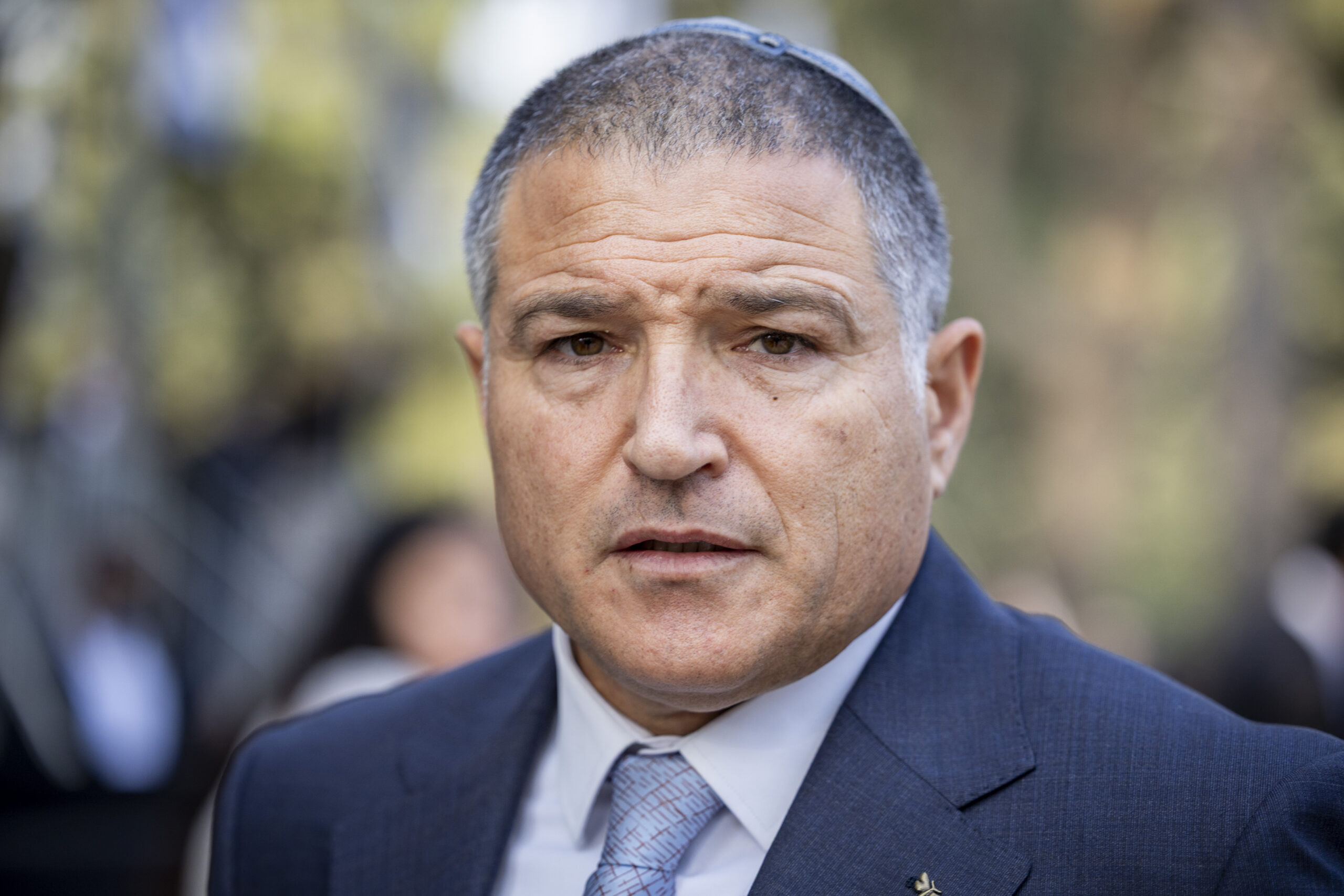
The IDF is hunting for a second terrorist who escaped after a ramming attack attempt in the Binyamin region Monday.
Troops rushed to the area near Kfar Ramon following reports of a burning vehicle and two terrorists—one armed with a knife. An Israeli civilian shot and neutralized one armed attacker.
Large forces are now pursuing the second terrorist who fled the scene.
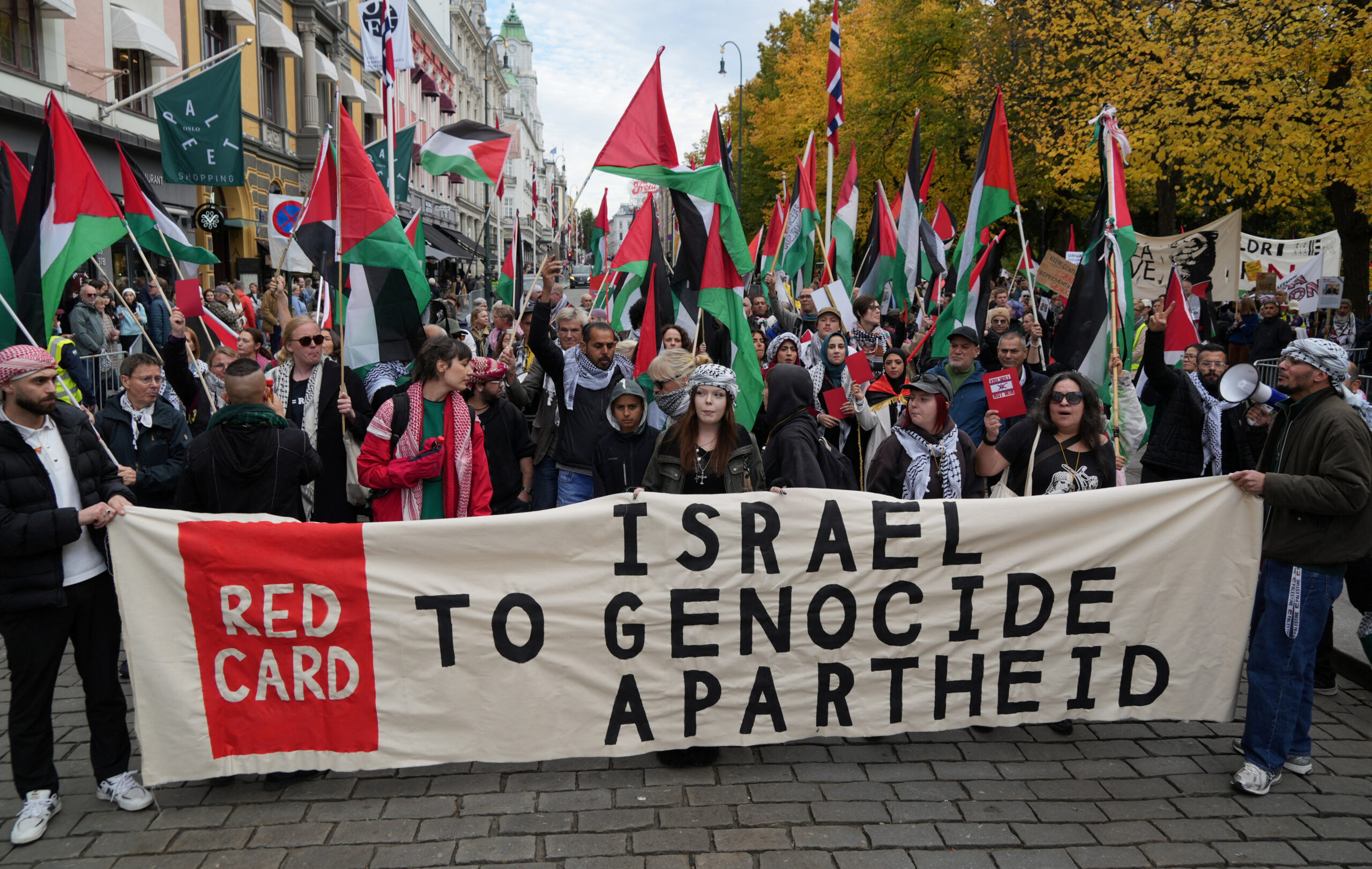
Israel’s Ministry of Diaspora Affairs and Combating Antisemitism released a report Monday tracking a wave of pro-‘Palestine’ protests worldwide around the anniversary of the October 7 massacre. The ministry’s national situation room identified 262 protest and solidarity events across 37 countries between October 1 and 14, 2026.
Pro-‘Palestine’ protest in the UK | Photo: Shutterstock
Of the total events tracked, 87 are classified as medium or high risk. Most protest activity is expected to concentrate on the weekend following October 7. The data shows the U.S. leading with 45 planned demonstrations, followed by Spain with 40 events. Australia recorded 21 events, Britain 19, and Italy 16. Germany and Canada each logged 14 events, France 10, and the Netherlands 8.
Peak activity is expected the weekend of October 10-11, when 121 events—46% of all tracked protests—are scheduled. October 10 alone will see 96 planned events, while October 7 itself has 75 identified demonstrations. Ministry officials estimate the weekend concentration is designed to maximize participation and media coverage.
Pro-Palestinian protests outside the Israel vs. Norway match in Oslo | Photo: Reuters
Canada stands out with four high-risk events, alongside Greece, Italy, the U.S., and Australia, each with two such events. Additional hotspots were identified in Barcelona, Bogotá, Paris, Istanbul, Bangkok, Santiago, London, Berlin, and Amsterdam.
45 events are expected near Israeli embassies, consulates, or properties associated with Israel, with 30 of them located within 2.5 kilometers of these sites. Protests were identified at Dam Square in Amsterdam, in Helsinki about 300 meters from the embassy, on Parliament Hill in Ottawa roughly 350 meters from the embassy, and in Frankfurt about 370 meters from a hotel hosting Israeli visitors, along with events in Italy near Israeli properties.
Coinciding with the start of the state ceremony marking three years since the October 7 massacre at Mount Herzl, a vehicular ramming attack was attempted this morning (Monday) near the community of Ma’ale Hever in the Hebron Hills.
Initial reports indicate the incident took place in the Bani Na’im area, within the Judea Brigade sector. There were no injuries; the assailant was neutralized at the scene, and IDF forces were deployed to the location and are investigating the circumstances.
Hatzala Judea and Samaria reported that during an attempt to ram a force positioned between Ma’ale Hever and Nabi Yaqin, troops responded with gunfire and neutralized three suspects.
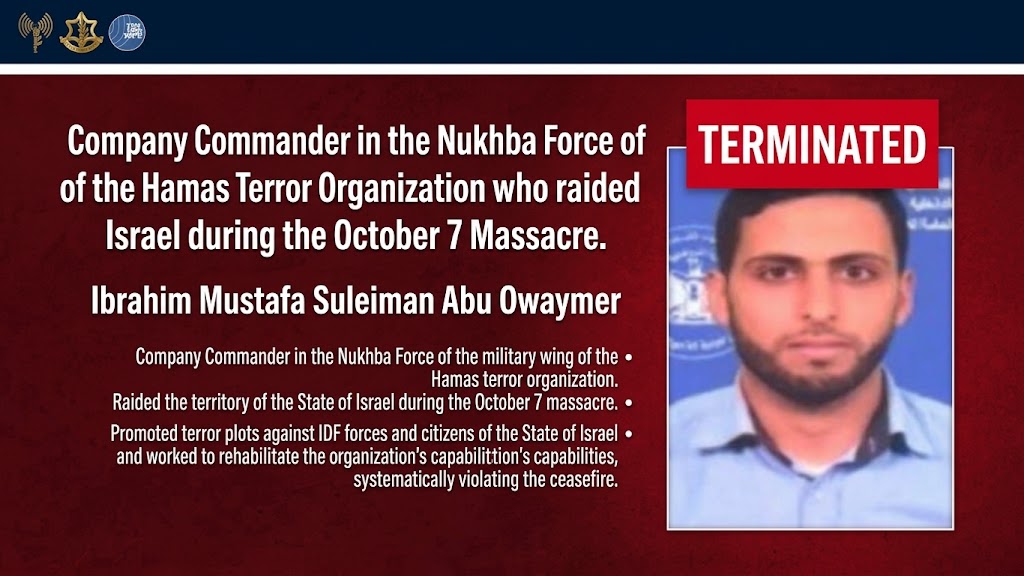
Israeli forces and the Shin Bet struck in the Nuseirat area of central Gaza over the weekend, eliminating Ibrahim Mustafa Suleiman Abu Owaymer, a Nukhba terrorist in Hamas’s military wing. According to the IDF, the jihadist infiltrated Israel during the October 7 massacre and was killed to remove the immediate threat he posed to Israeli security.
Details of the operation show that Abu Owaymer had recently been advancing multiple terror plots against IDF soldiers and Israeli civilians. At the same time, he was actively working to rebuild Hamas’s operational capabilities—all while systematically violating the ceasefire. Based on his dangerous activities and accumulated intelligence, Israeli forces carried out the precision airstrike.
The IDF emphasized that Southern Command forces remain deployed in the area in accordance with the agreement, maintaining high operational readiness for any scenario. Security officials made clear that Israeli forces will continue to act decisively at all times in Gaza to thwart terror plans and eliminate any immediate threat to security forces and Israeli civilians.
Ahead of tonight’s (Sunday) security cabinet meeting, Gaza border regional council heads sent a letter to Prime Minister Benjamin Netanyahu and cabinet ministers demanding a public commitment that no reconstruction of the Gaza Strip will proceed and no IDF forces will withdraw under the emerging deal before Hamas is completely and verifiably disarmed and its rule in the Strip ended.
Prime Minister Netanyahu | Photo: Yonatan Sindel, Flash90
The letter is signed by Sha’ar HaNegev Regional Council head Uri Eshstein and Eshkol Regional Council head Michal Uziyahu. The two are responding to plans presented by the Peace Council on the sidelines of last week’s UN General Assembly, which include advancing reconstruction in Gaza, deploying international forces, and a gradual IDF withdrawal.
The regional heads make clear that for them, the condition for any progress isn’t limited to disarming Hamas, but also eliminating its ability to continue ruling the Strip behind the scenes. They say Hamas’s command structures, terror infrastructure, and weapons production must be dismantled, and Hamas must be prevented from ruling through proxy figures or controlling funds and resources flowing into Gaza reconstruction.
IDF operations in Gaza, archive | Photo: IDF Spokesperson’s Unit
In the letter they demand the government make a public commitment that no reconstruction effort and no withdrawal will be carried out before these conditions are met. Even deploying an international force, they say, isn’t sufficient on its own, and its authorities and actual ability to enforce the dismantling of the threat and prevent its resurgence must be examined.
“We will not accept a return to a reality where a terror organization builds strength beyond the fence, and our residents are asked to rely on assessments about its intentions,” they wrote, adding that “the commitment to changing the security reality must be realized on the ground.”
Finance Minister Smotrich | Photo: Avshalom Shoshani, Flash90
The regional heads’ letter comes against the backdrop of another dispute surrounding the plans the Board of Peace is advancing. Days earlier, Finance Minister Bezalel Smotrich and National Missions Minister Orit Strock sent a letter to Prime Minister Benjamin Netanyahu, claiming that the plan presented by Board of Peace officials contradicts understandings reached with Israel.
According to the ministers’ letter, the Board of Peace presented 66 reconstruction projects costing $2.45 billion ready for immediate implementation, alongside $885 million for “security expenses.” Additionally, immediate deployment of 500 multinational force soldiers was presented, followed by establishment of a base in Rafah for 5,000 soldiers.
Netanyahu signs agreement with Rubio to join the Board of Peace | Photo: Avi Ohayon, GPO
But according to Smotrich and Strock, the understanding reached with Israel was different, stipulating that all reconstruction, all entry of foreign forces, and all IDF withdrawal would not occur before complete demilitarization of the entire Gaza Strip.
The two claimed that presenting a process where demilitarization occurs area by area, with new governance entering each evacuated area and the IDF withdrawing, is effectively an attempt to revive the “roadmap” that Israel already announced it would not accept.
Residents of the Gaza envelope demand the complete dismantling of the terrorist organization; archive | Photo: Flash90
In their letter the ministers also raised another gap: they said the cabinet approved entry of only 200 international force soldiers, while the presented plan spoke of 500 soldiers immediately and thousands later. They further claimed that Hamas isn’t disarming, but continues to arm itself, grow stronger, and train, and therefore in their view there’s no feasibility to beginning reconstruction projects at this stage.
Now the Gaza border regional heads are joining the pressure, demanding this principle become a public Israeli commitment: first dismantle Hamas and end its rule, and only then can reconstruction of the Strip be discussed.
The IDF will present to the cabinet its Central Command operational plans for dealing with a potential security escalation scenario in Judea and Samaria—a contingency first revealed by Hallel Bitton Rosen on Channel 14’s main evening broadcast.
Photo: Haim Goldberg, Flash90
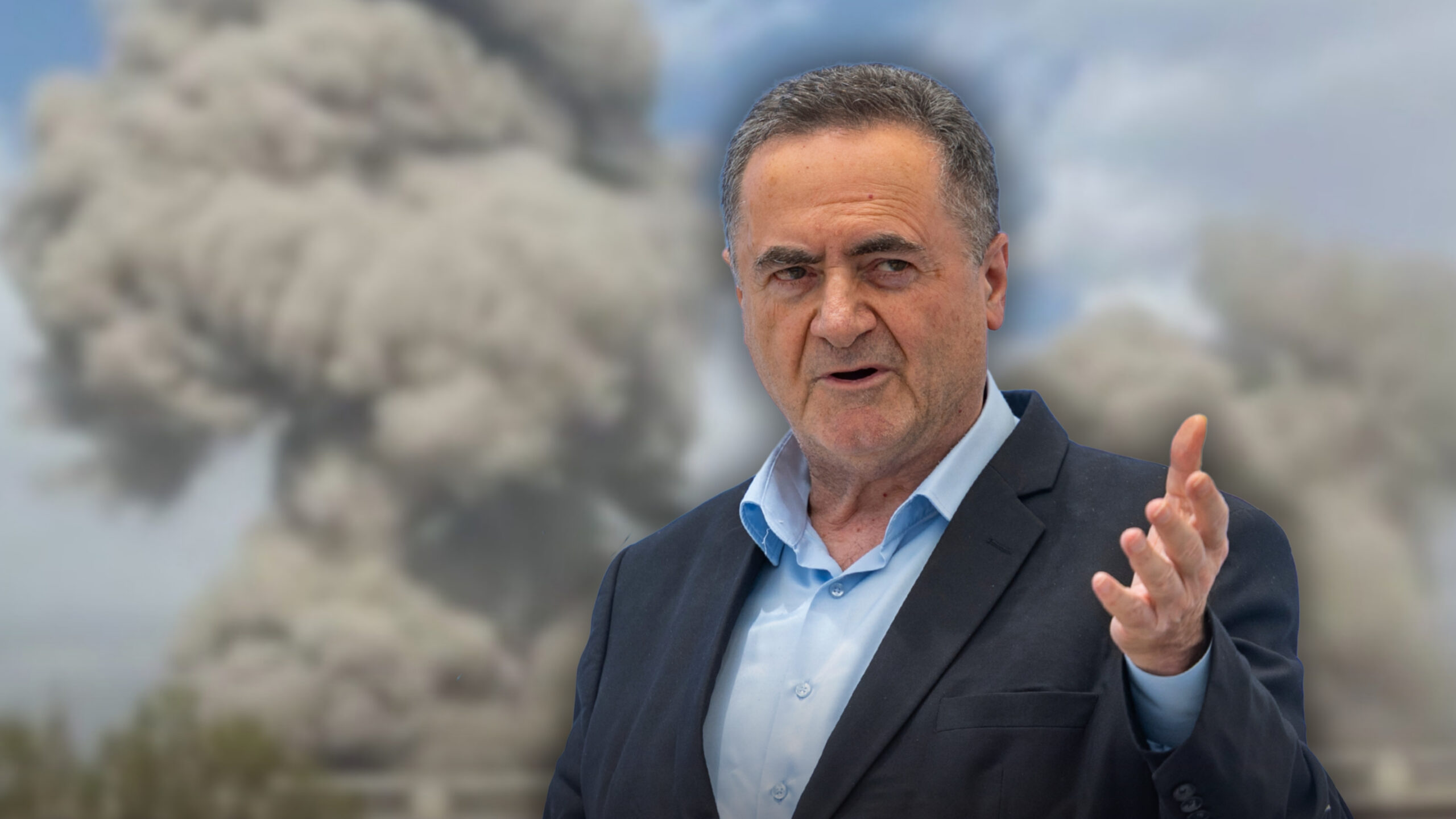
Defense Minister Israel Katz accepted the military’s recommendation and ordered a general closure of Judea and Samaria and the closure of Gaza Strip crossings to goods on October 5 and 7, in accordance with the security assessment.
Those who did receive authorization are essential workers from Judea and Samaria in the health sector, as well as passage in cases where the state has commitments to the High Court of Justice or for needs related to the seam zone.
Israeli forces struck Khan Younis in southern Gaza early Sunday, killing Maad Jamal Abu Ntsira, a commander in Hamas’s military wing. The operation was part of ongoing efforts to target the terror group’s command chain in the Strip and eliminate immediate threats.
In a separate strike Saturday, Israeli forces killed Mahmoud Ibrahim Dib Alyan, a Hamas surveillance operative. Alyan was recently identified promoting terror operations against IDF forces in the Yellow Line area and working to rebuild the organization’s capabilities—a systematic violation of the ceasefire agreement, the military said.
The IDF emphasized that various measures were taken before the strikes to minimize civilian harm, including the use of precision munitions and continuous aerial surveillance. IDF forces in the Southern Command remain deployed across the area in accordance with the agreement and will continue to act decisively to remove any immediate threat to Israeli forces and state security.
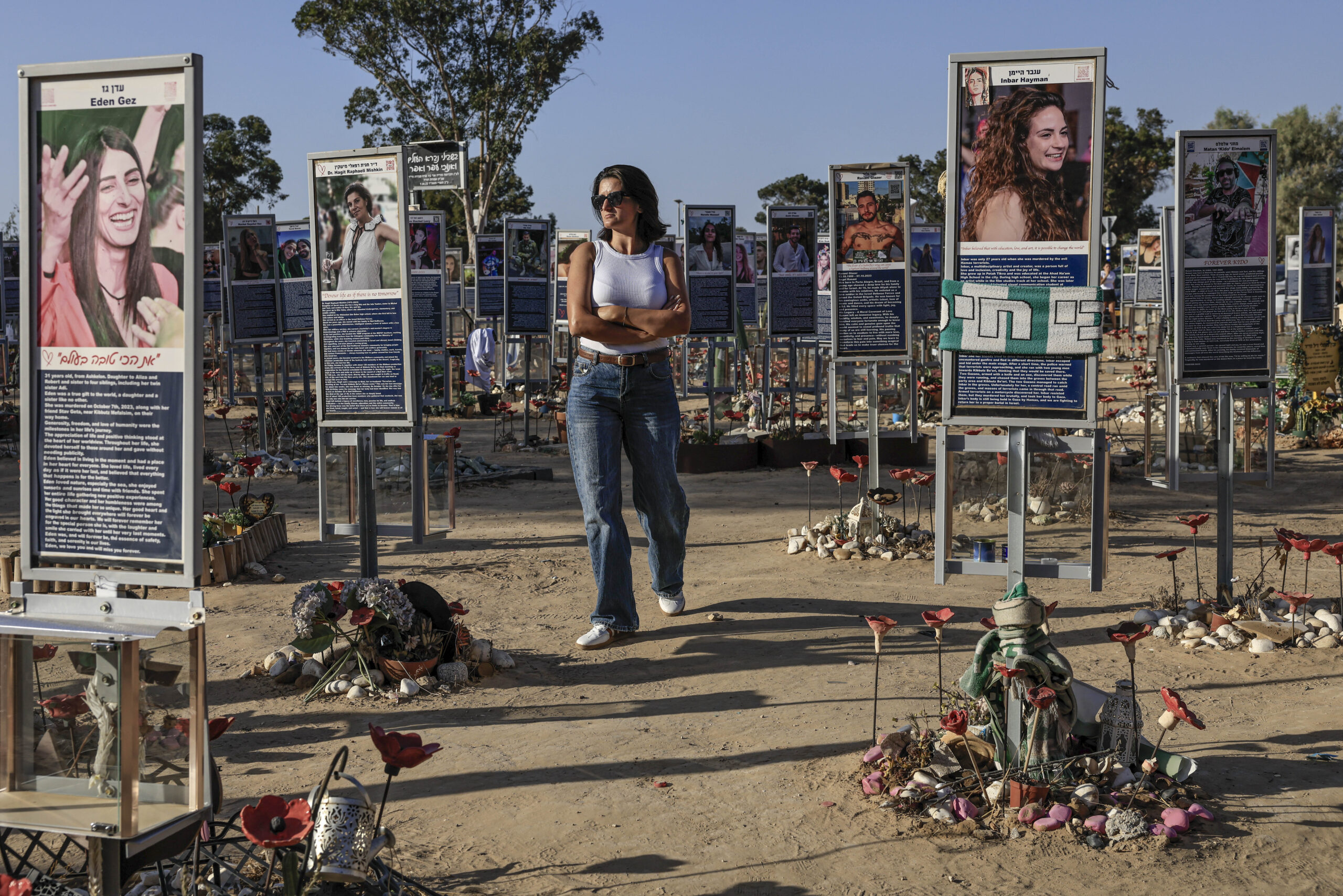
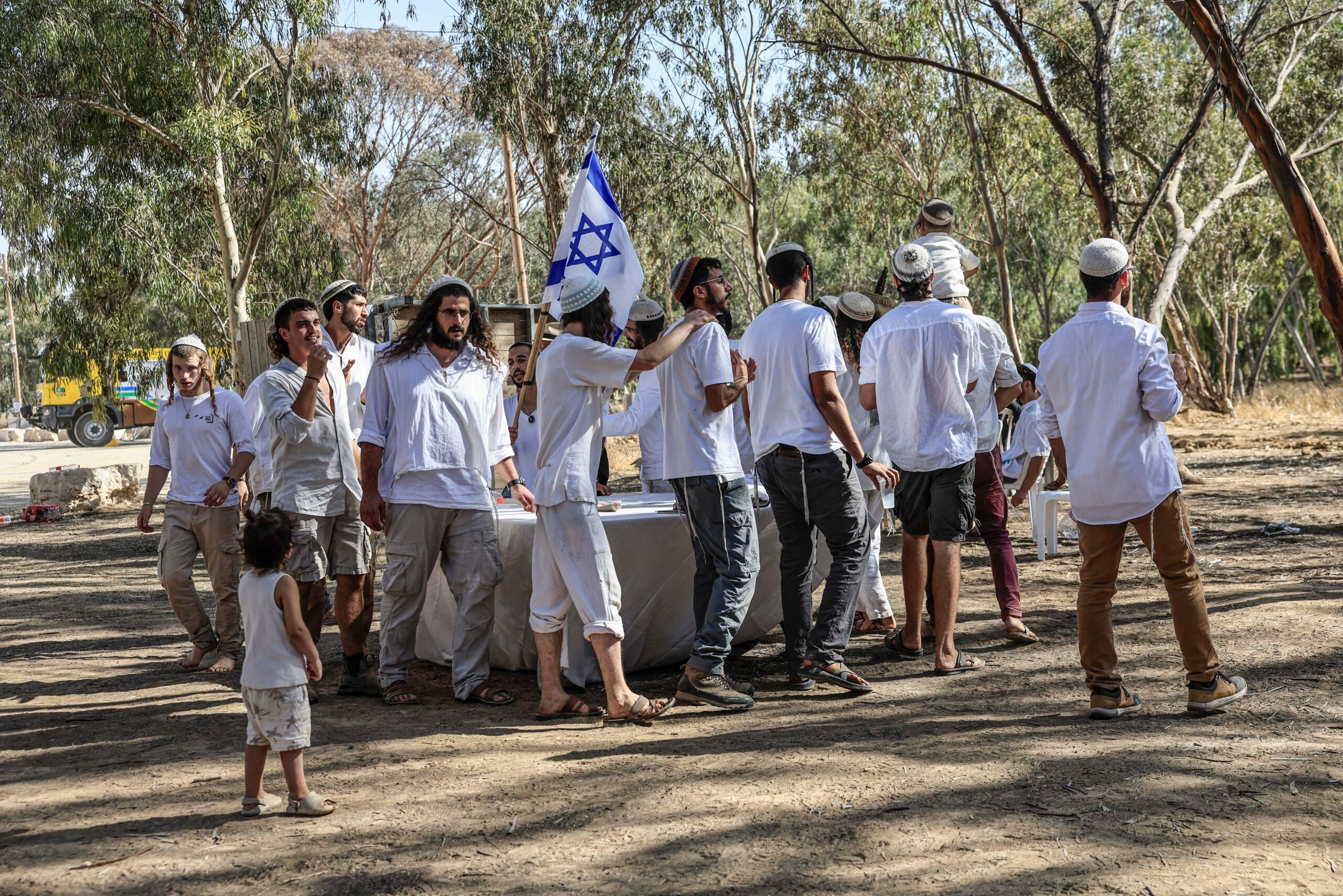
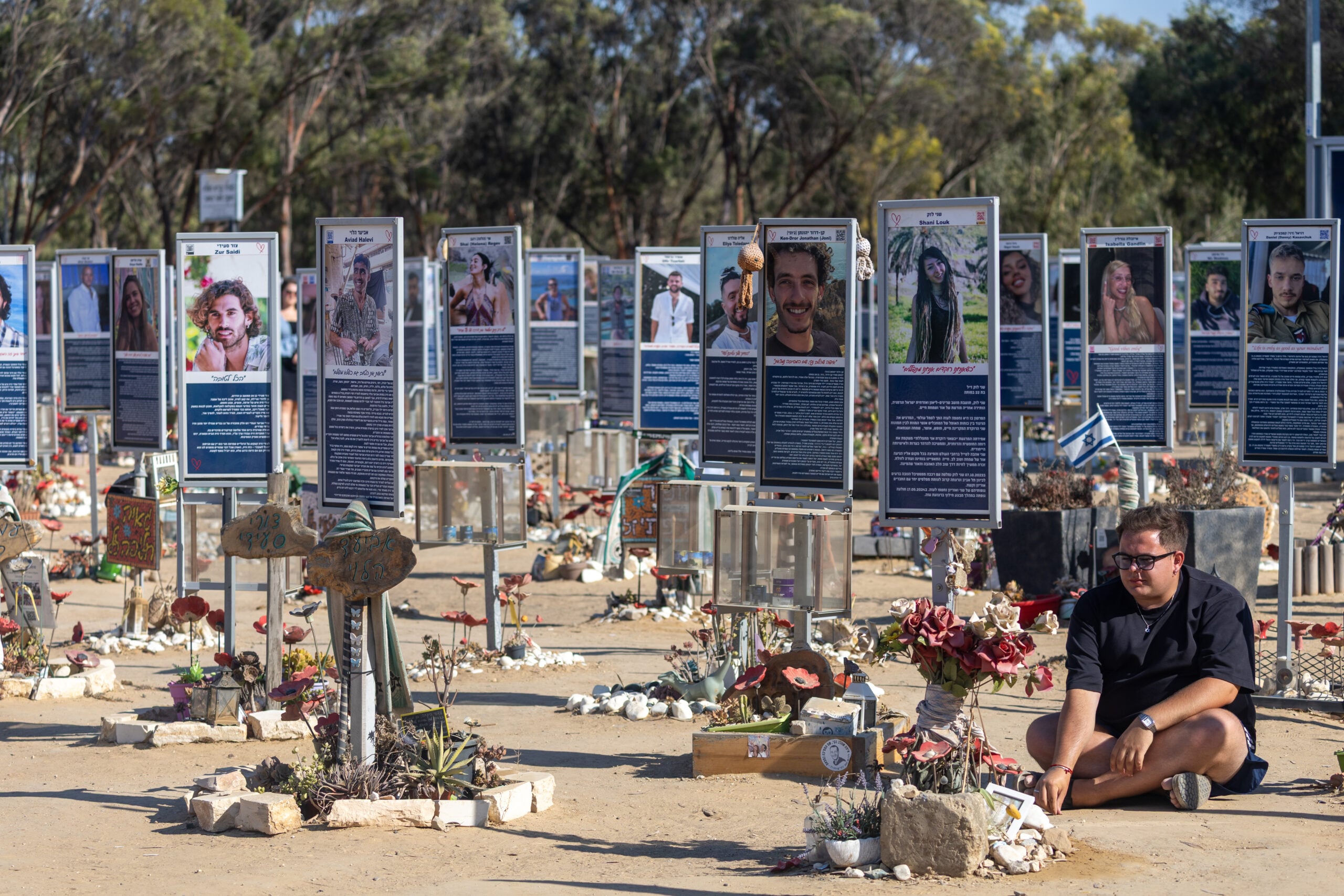
The State of Israel marks three years since the day of tragedy, the day of divine hiddenness that befell our people on the Shabbat of Simchat Torah three years ago. The day approximately 1,200 Israelis were brutally murdered and fell in battle. The day when operational failure and security blindness—the strategic concept reaching its zenith—brought the murderous savages of the Hamas terror organization directly into Israel’s border communities.
Simchat Torah at the Nova site | Photo: Tsafrir Abayov, Flash90
Throughout this week, memorial services will be held to commemorate and recount the courage of the heroes, the slaughtered, the fallen, those who charged into fire to defend at all costs, and those who reached out to save their fellow brothers under unimaginable conditions. During this solemn week, we unite to sanctify the memory of the holy souls who fell in this grueling campaign.
Yet history reminds us that even in the Yom Kippur War, with 2,800 soldiers lost in battle, Israel ultimately overturned the operational reality, culminating in a historic military triumph 100 kilometers from Cairo and 40 kilometers from Damascus.
The Nova site | Photo: Yossi Aloni, Flash90
In this campaign as well, the nation knew how to pivot, executing a profound conceptual overhaul alongside decisive, sweeping combat operations against our enemies across every active theater. Three years later, we do not forget for a single moment the murdered, the butchered, and the fallen soldiers.
Above all, our eyes turn toward those hundreds of meters separating the Gaza Strip from Israeli communities—those very fields tended by the resilient pioneers of the Gaza envelope. There, the wheat continues to sprout and grow today, rising green and unbroken toward tomorrow, standing as the ultimate symbol of our enduring victory.
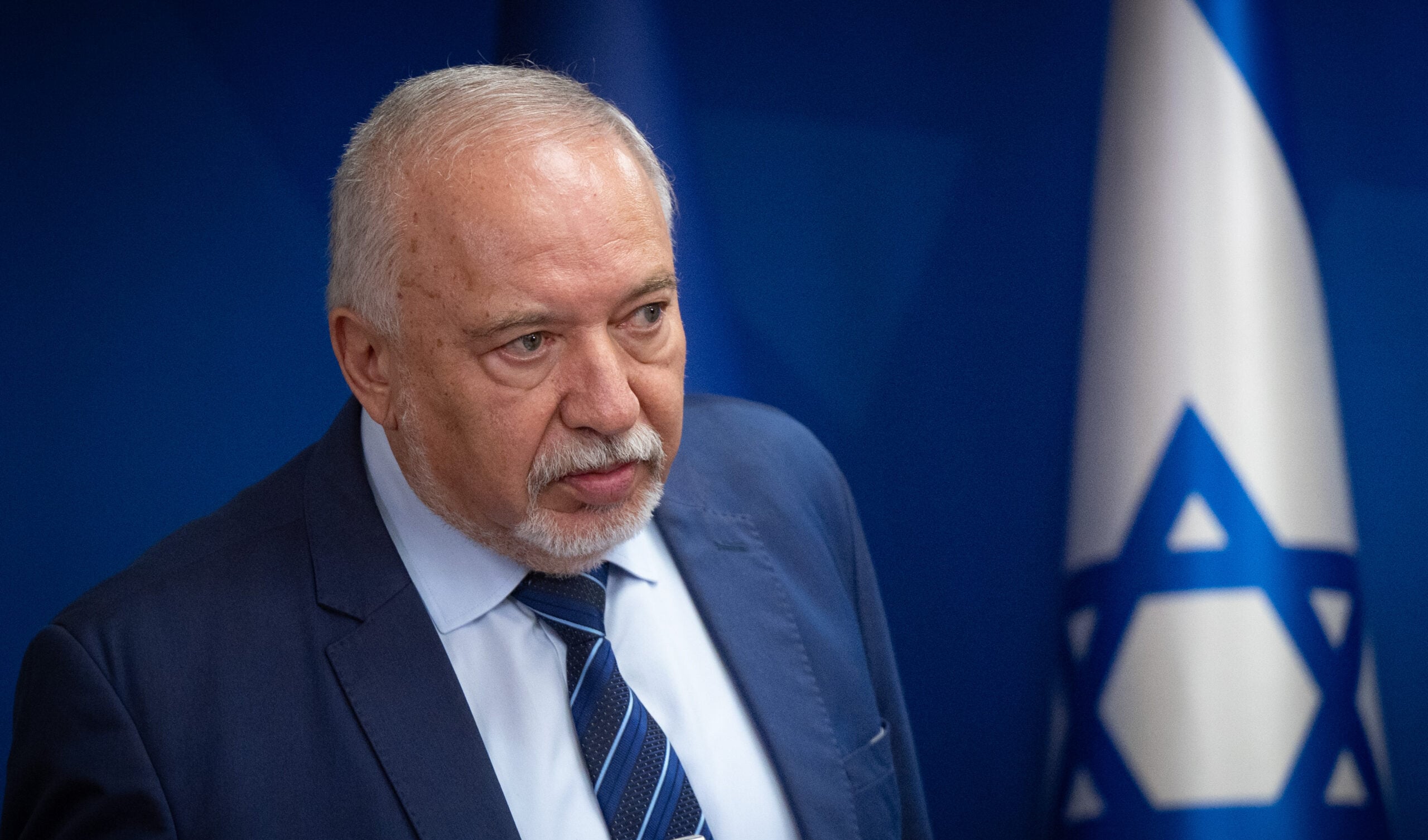
In the wake of the thwarted terror hijacking attempt aboard flydubai Flight FZ1073 bound for Tel Aviv, Israeli opposition leaders seized upon the event on Sunday to launch a scathing attack against the government and the appointment of David Zini as head of the Shin Bet (Israel Security Agency). Addressing the harrowing incident, in which a catastrophic mass-casualty disaster was averted solely due to the quick intervention of heroic passengers, Yisrael Beiteinu Chairman MK Avigdor Liberman declared: “The head of the Shin Bet must draw personal conclusions and step down. Were I prime minister, I would not leave him many choices.”
Liberman | Photo: Chaim Goldberg, Flash90
Liberman voiced sharp criticism over the conduct of state security and counter-terror agencies, questioning the oversight mechanisms in place: “How is it conceivable that a pilot dismissed from two separate airlines following rapid religious radicalization, who openly shared Al-Qaeda propaganda on his social media accounts, lands in Israel, conducts pre-operational reconnaissance, and enters the country as if nothing were amiss? Worse still, disturbing press reports have uncovered alarming details regarding Iranian and Syrian pilots employed by foreign carriers operating direct flights into Israeli airspace.”
The assault was joined by the Democrats’ Chairman Yair Golan, who accused the governing coalition of gross negligence and dereliction of duty: “The flydubai flight failure is living, definitive evidence of the absolute rot infecting this government of destruction. Netanyahu and his cabinet ministers have compromised the lives of Israeli citizens for the sake of cheap political wheeling and dealing, criminal amateurism, and the political appointment of unqualified cronies.”
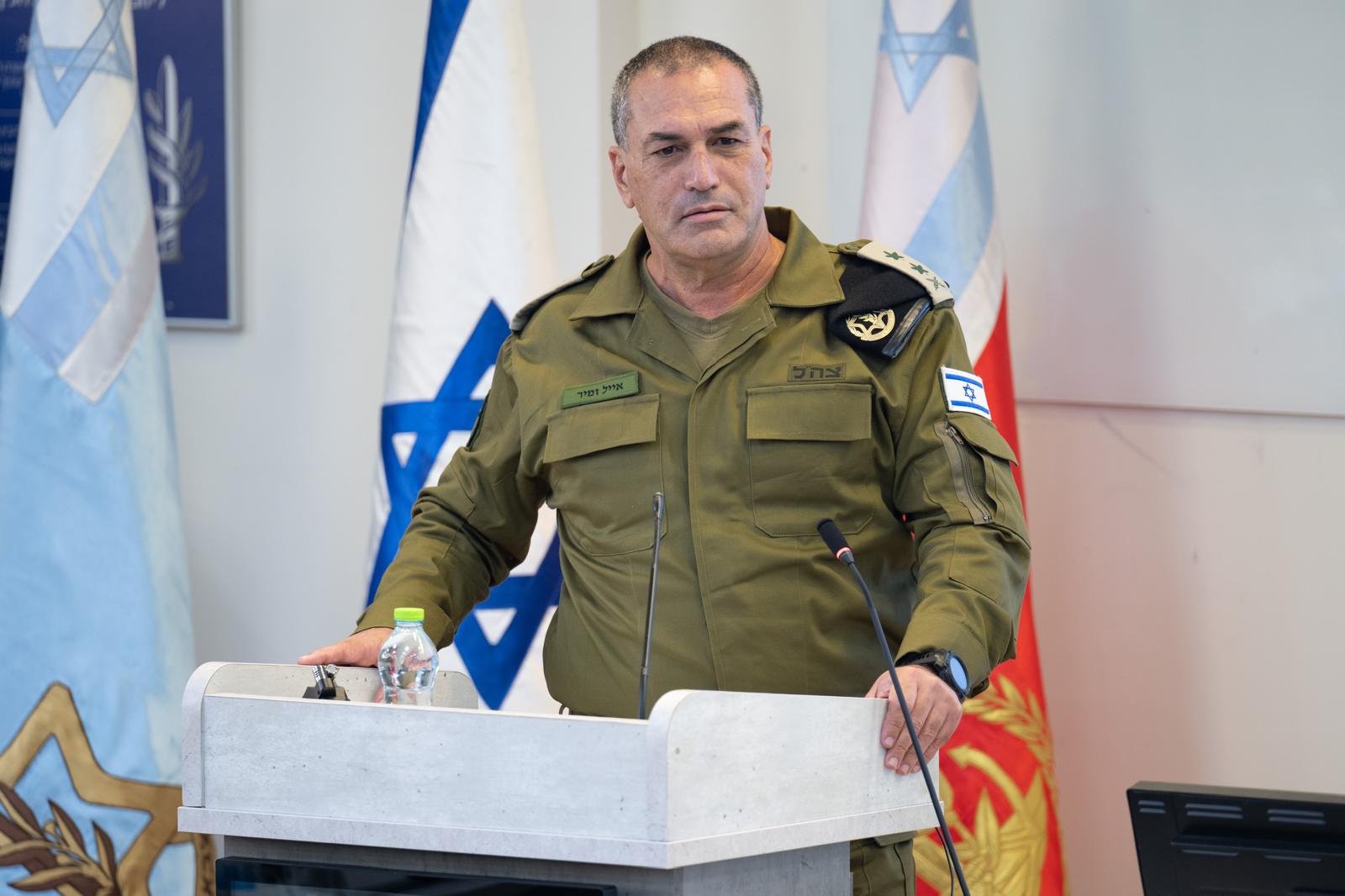
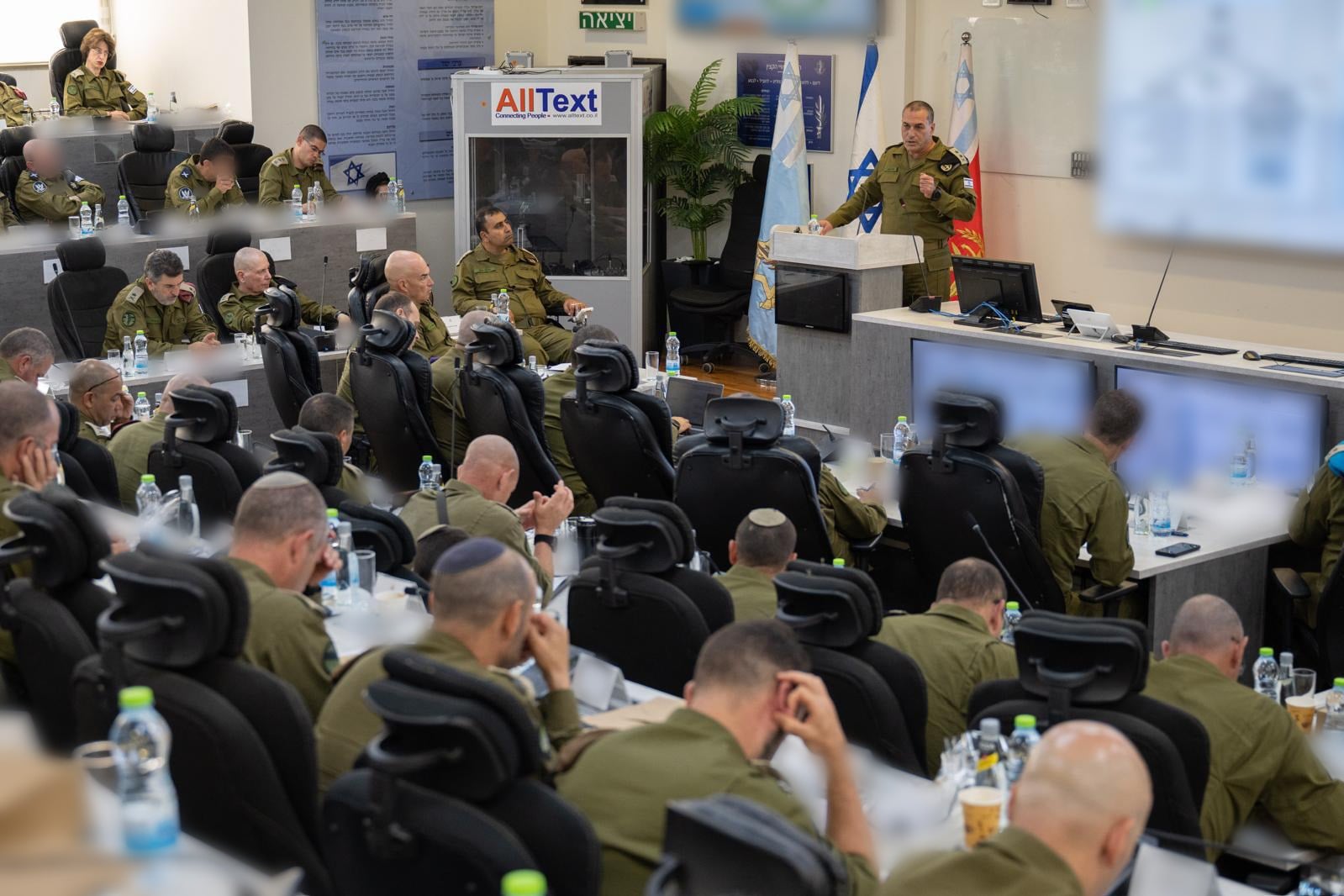
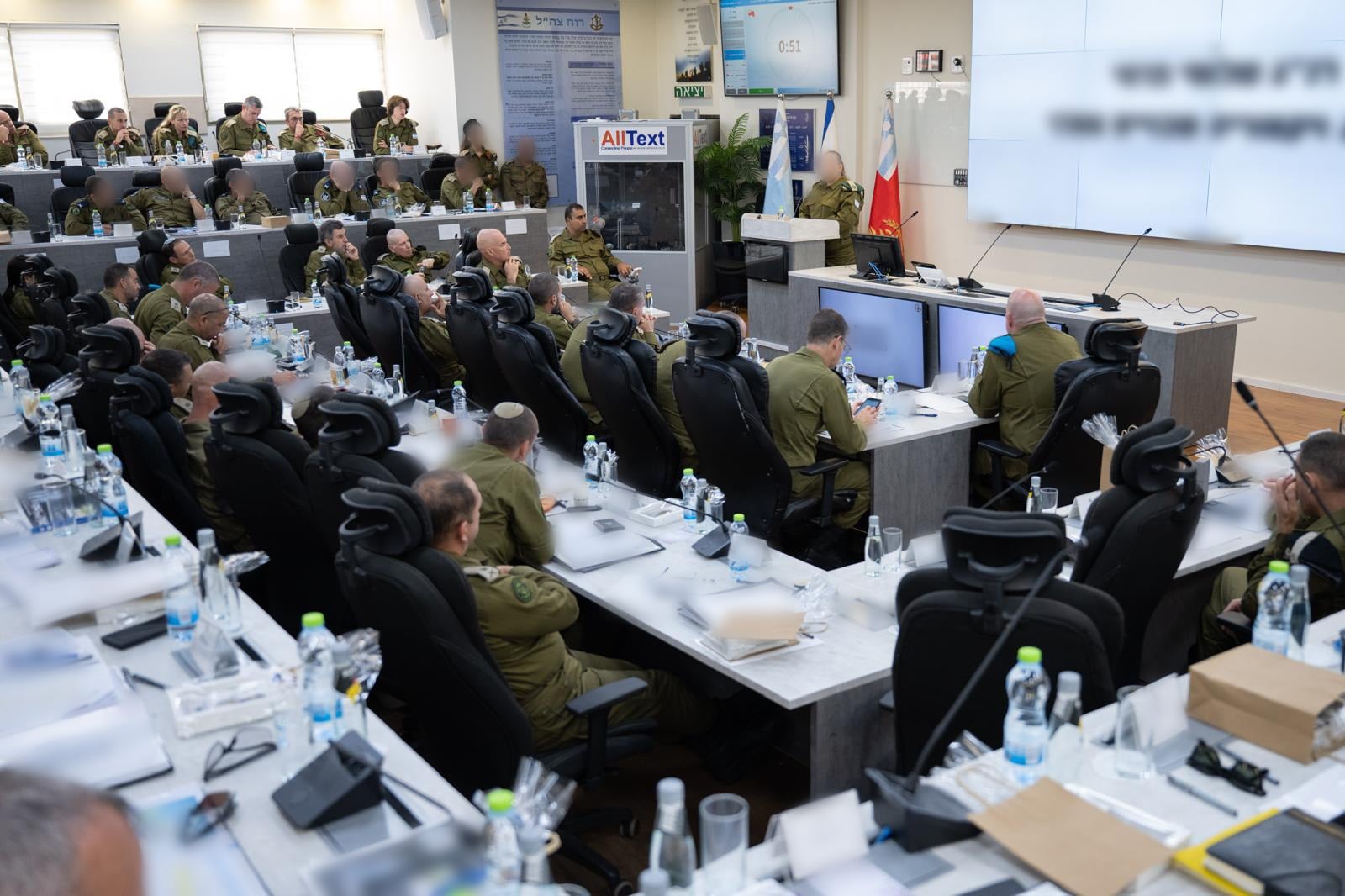
IDF Chief of Staff Lt. Gen. Eyal Zamir convened the military’s senior command forum at the Glilot military base on Sunday, on the eve of the National Memorial Day for the events of October 7, for an extensive conference dedicated to summarizing operational investigations, gleaning lessons, and institutionalizing systemic changes throughout the armed forces.
Photo: IDF Spokesperson’s Unit
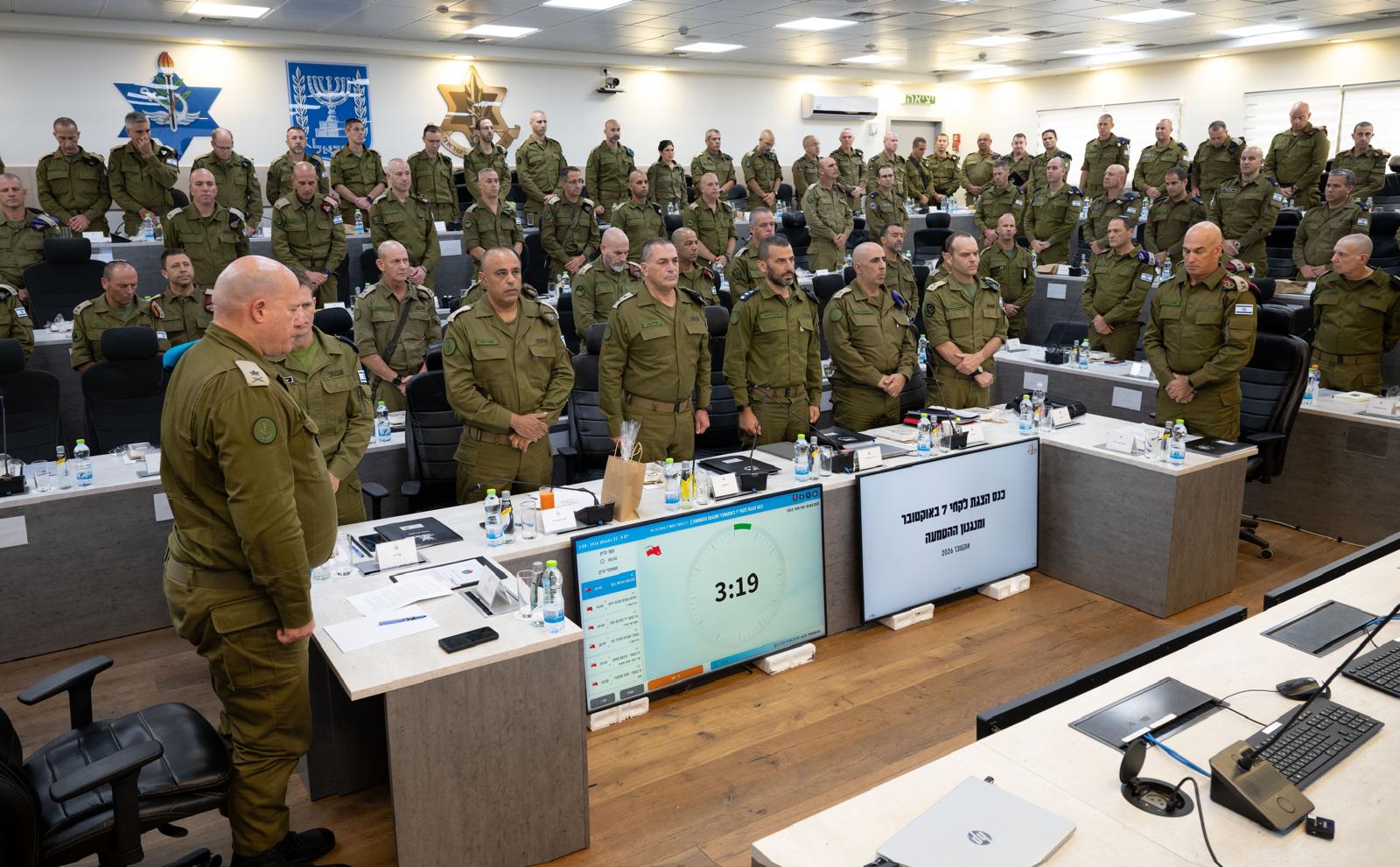
The summit was attended by commanders holding the rank of brigadier general and above from across all territorial commands, general staff directorates, and military branches. Proceedings commenced with a solemn minute of silence in memory of those fallen and murdered in the October 7 massacre.
“I chose to convene the senior commanders forum of the IDF today, on the eve of the National Memorial Day for the events of October 7, as an intentional message,” the Chief of Staff stated. “We are evaluating the status of implementing lessons from the October 7 investigations out of full recognition of the scale of the failure, alongside the imperative that we must not sink into despair, but rather learn, draw lessons, improve, and move forward.”
Photo: IDF Spokesperson’s Unit
Zamir stressed that the scars of October 7 continue to accompany the military daily, emphasizing that the command’s primary duty is ensuring such a catastrophe never recurs. According to Zamir, Sunday’s summit marks the first phase of a broader multi-year evaluation process, with 2027 designated as the formal review year to examine the entire multi-front war.
During the conference, General Staff teams presented the core operational findings of the October 7 probes, outlining organizational implementation and oversight mechanisms. Ensuing phases will review operational debriefs from Operation “Lion’s Roar” and compile overarching lessons learned across all fronts.
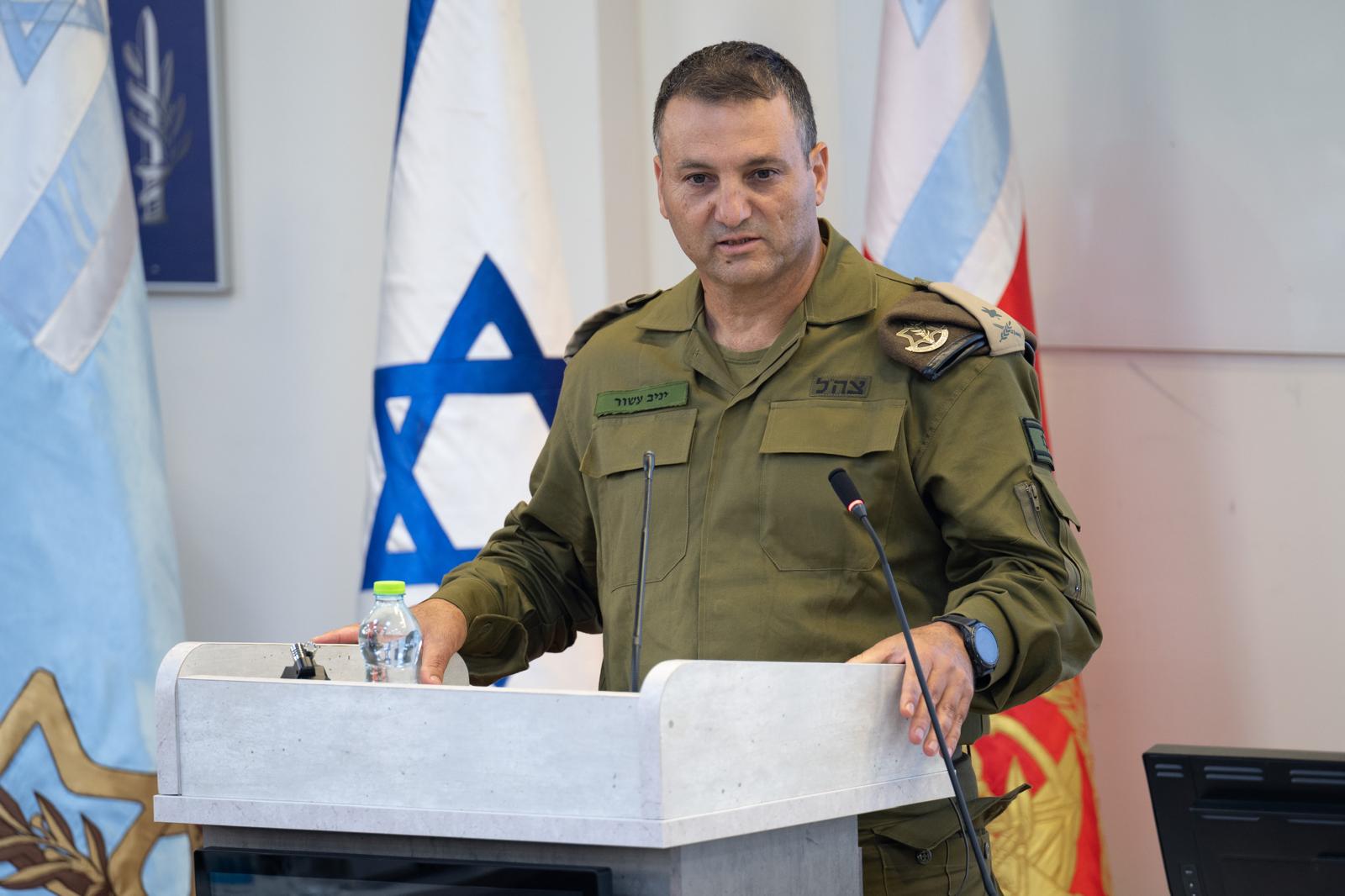
Southern Command Head Maj. Gen. Yaniv Asor | Photo: IDF Spokesperson’s Unit
Addressing Israel’s evolving strategic posture, Zamir outlined how the IDF is constructing its future security architecture: “We are framing the IDF’s strategy with our benchmark scenario anchored in readiness for surprise war, including the preemptive neutralization of severe threats as they materialize—this serves as our operational compass.”
Zamir directly addressed the military’s performance on that fateful day: “On October 7, the IDF failed utterly. Yet the IDF rose to its feet, proved its unyielding spirit, and delivered an unprecedented, historic multi-arena victory.”
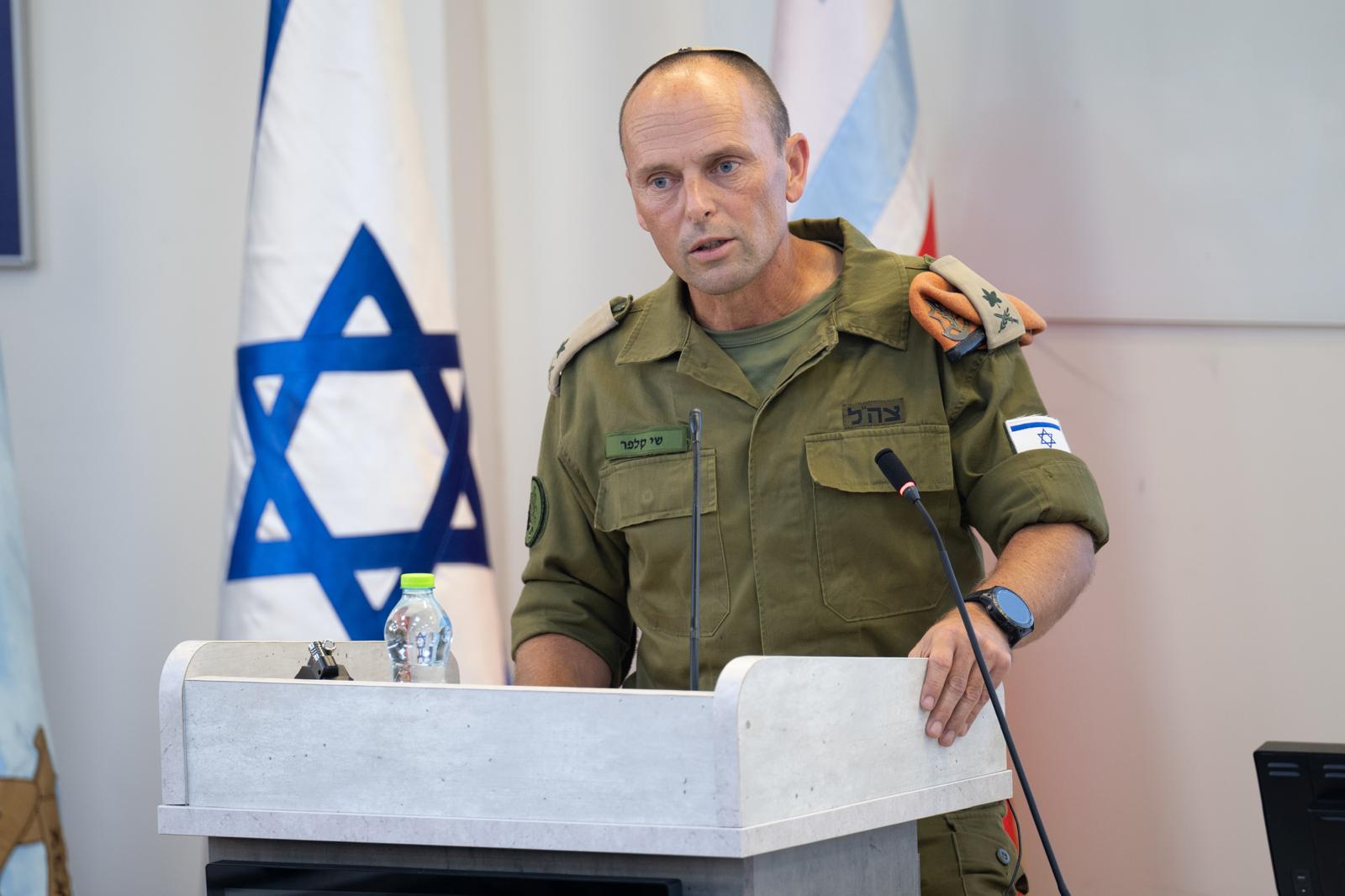
Home Front Command Head Maj. Gen. Shai Klapper | Photo: IDF Spokesperson’s Unit
A central operational takeaway from the fighting, Zamir noted, is the urgent requirement to expand troop capacity and widen Israel’s margins of security: “The State of Israel is geographically compact, lacking territorial depth, while surrounded by multi-arena threats.
We must enlarge the IDF’s order of battle to confront all threats. The sheer size of the IDF is our strategic depth.” He underscored that the military must operate earlier against evolving perimeter threats: “Whoever threatens to harm us and builds capabilities to do so—we will strike preemptively and deliver a decisive blow.”
Photo: IDF Spokesperson’s Unit
During the gathering, the Chief of Staff awarded a formal citation of excellence to Chief Warrant Officer V. of Unit 8200, who famously warned superiors before October 7 that Hamas was actively finalizing preparations for a massive invasion. Praising her conduct as an exemplar of “intellectual courage and professionalism,” Zamir delivered an explicit directive to the high command: the IDF must root out sycophantic discourse, suppression of internal dissent, and “intellectual tyranny,” urging commanders to actively foster independent critique as a vital pillar of operational culture.
Concluding his remarks, Zamir touched upon current regional posture, warning that the military remains in a state of high operational vigilance: “We are navigating a period of heightened readiness and tension, and every commander in their respective sector must remain sharp and prepared. We are actively building our future and moving forward.”