




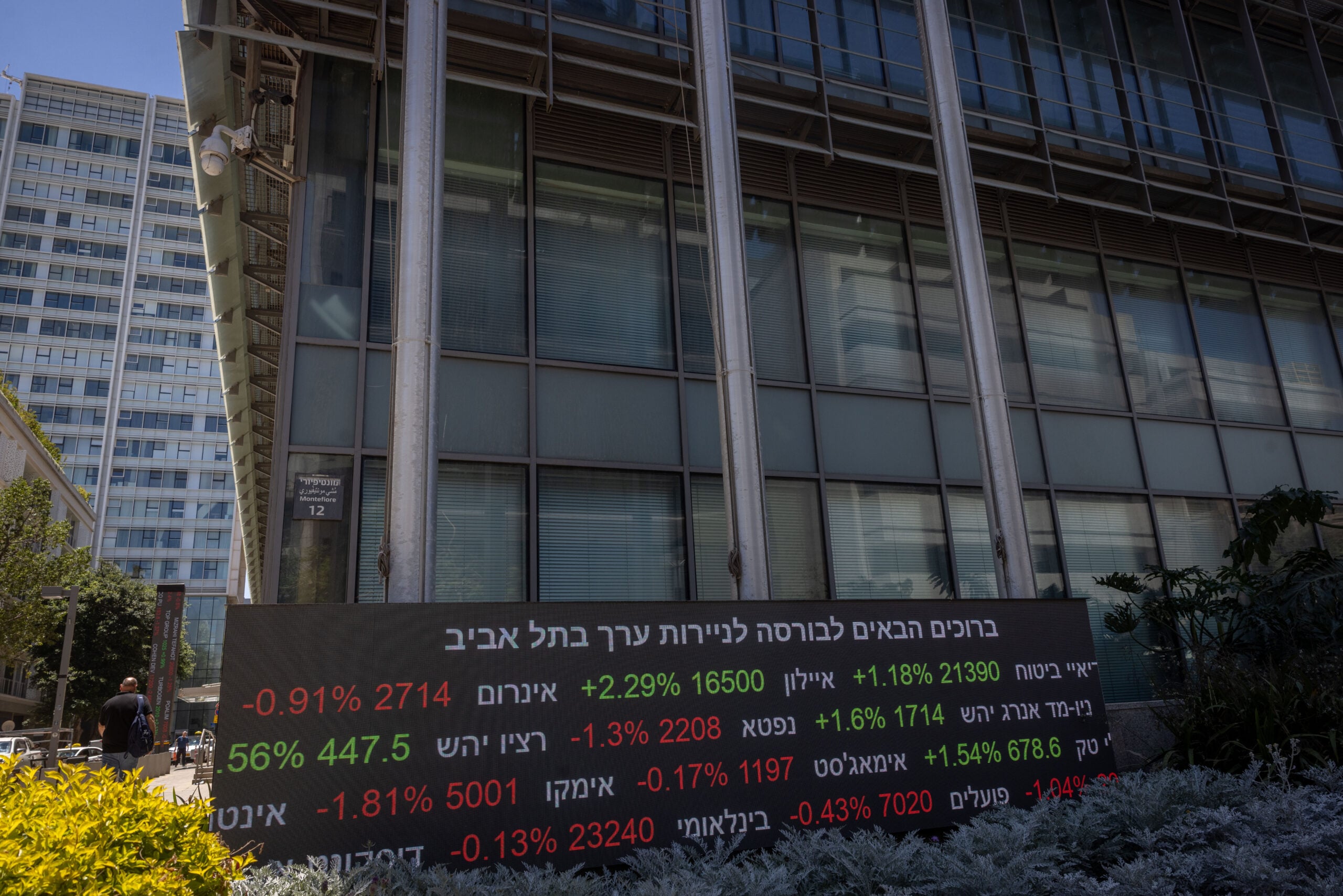
Trading on the Tel Aviv Stock Exchange opened in negative territory on Wednesday, as renewed security tensions in the Middle East and a sharp U.S. response to Iranian aggression in the Strait of Hormuz roiled markets. The TA-35 index fell about 1%, the TA-125 dropped 1.1%, and the TA-90 lost 1.6%. The declines followed Tuesday’s negative trend, when the leading indexes shed about 2% of their value.
 1+
1+The market turbulence comes after the U.S. military launched overnight a sweeping series of strikes against more than 80 targets in Iran, in response to an Iranian attack on three commercial vessels crossing the Strait of Hormuz. Following the severe incidents, the U.S.-led Joint Maritime Information Center raised its threat assessment for vessels in the region to “severe,” while Iran retaliated with strikes on its Gulf neighbors.
The security tensions are directly impacting global oil prices, which continue to spike: Brent crude is trading around $77 per barrel, and WTI crude is trading around $73 per barrel. Meanwhile, the dollar continues to strengthen against the shekel, trading above 3.05 shekels after its representative rate was set Tuesday at 3.02 shekels. The American currency’s strengthening also comes against the backdrop of Bank of Israel Governor’s decision Monday to cut interest rates.
 1+
1+In local trading, the banking index rose about 2.23% and the insurance index climbed about 0.84%, boosted by the rate cut to 3.50%. In contrast, Nayax shares plunged about 5.99% after reporting a cybersecurity incident to the U.S. Securities and Exchange Commission. Other notable stocks posting declines were Delek Group, which lost about 2.43%, and Azrieli, which fell about 1.16%, while Bank Hapoalim led the gainers with a rise of about 2.29%.
Markets are expected to remain volatile as investors monitor further developments in the region and the potential for continued escalation.