Category: Israel

  • Netanyahu: We’re Watching Iran, Speaking with Trump

    Netanyahu: We’re Watching Iran, Speaking with Trump

    Prime Minister Benjamin Netanyahu opened a special cabinet meeting marking Jerusalem Day at the Knesset Museum in Beit Froumin with a series of announcements about Israel’s military operations.

    “We eliminated Hamas’s number one, the arch-murderer al-Haddad,” Netanyahu said. “I promised we would return all our hostages—and we returned them all. Every architect of the massacre and every architect of the abduction will be eliminated down to the last one, and we are very close to completing the mission.”

    Netanyahu reflected on the historic venue—the original Knesset building. “This is the second time I’ve visited here after the restoration. I think everyone who comes here feels the uniqueness of this place, which essentially served as the home for the renewal of our people’s sovereignty in our land after thousands of years. It always stirs the heart,” he said. “As a Jerusalem kid, I remember being across the street and looking at this building. It was closed then to kids like me, but today it’s open to all the people of Israel.”

    The prime minister opened by sending condolences to the family of Captain Maoz Israel Recanati, who was killed in Lebanon. “Maoz left everything, left his fiancée whom he was supposed to marry in about a month, and led his fighters in battle in Lebanon and also fell. May God avenge his blood. May his memory be blessed.”

    Turning to Lebanon operations, Netanyahu said Israel is “doing a lot there—capturing territory, clearing territory, defending Israel’s communities but also fighting an enemy trying to outsmart us.”

    He detailed Israel’s evolving response to drone threats. “Six years ago in a cabinet meeting, I warned about the threat of drones. I saw it then primarily as a serious threat for assassinating individuals, but since then it has of course developed.” Netanyahu said he requested the IDF install canopies on tanks and convened a special team with Defense Minister and experts from inside and outside the defense establishment—”the best minds in the country, and I think the best minds in the world.”

    “I told them something at the meeting we held a few days ago that surprised them a bit: ‘You have no budget constraint.’ Whatever it costs, it costs. You also have no limitation, as I know, of creativity and imagination—because you’re the best in the world,” Netanyahu said. “I have no doubt that Israel will be the first country, as we’ve done in other areas, to bring a complete solution to this problem as well.”

    On Gaza, Netanyahu announced the weekend killing of Izz al-Din al-Haddad, whom he called “the arch-murderer” and Hamas’s number one in its military wing. “This despicable terrorist was responsible for the murder, injury and abduction of thousands of Israeli citizens and IDF soldiers. He used hostages as human shields, and he is no more.”

    “I promised two things, and the government with me: I promised we would return all our hostages, down to the last one. Down to Israel’s hero Roni Gvili. And we returned them,” Netanyahu said. “There were doubts. We had no doubts. We returned them.”

    “I promised a second thing—that every architect of the massacre and every architect of the abduction would be eliminated down to the last one, and we are very close to completing this mission as well,” he continued. “In Gaza now we’re holding not 50% anymore—already 60%. We are crushing Hamas. We know exactly what our mission is, and our mission is one—to ensure that Gaza will no longer pose a threat to Israel, and we are also carrying out this mission with the help of our heroic soldiers. They are truly heroes. In Lebanon, in Gaza and also in the skies of Tehran. Our fighters, our pilots, our female fighters and our female pilots—heroes and heroines.”

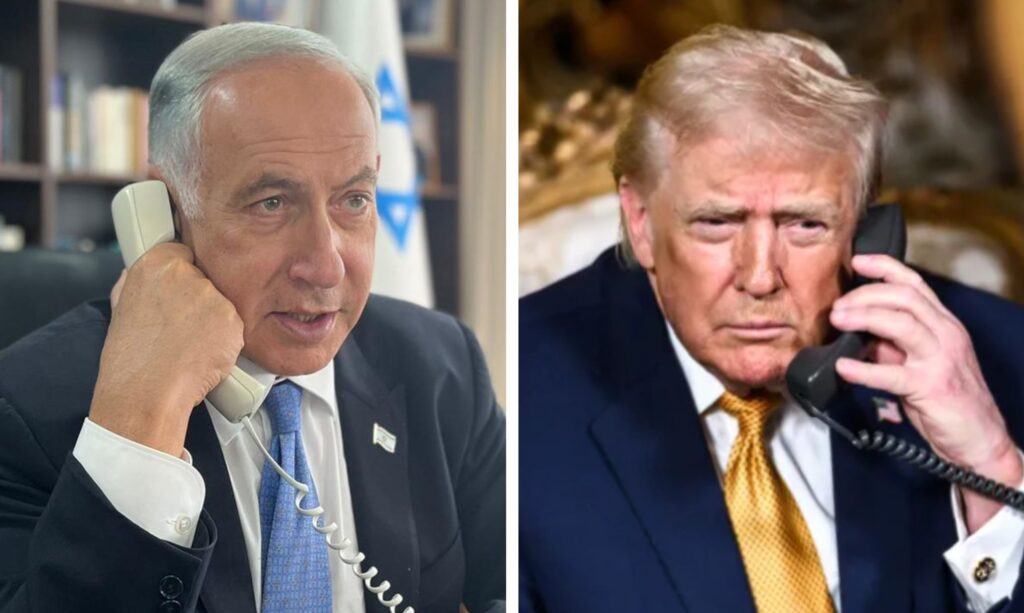
    Netanyahu concluded with Iran. “Our eyes are also open regarding Iran. I will speak today, as I do every few days, with our friend President Trump. I will certainly hear impressions from his trip to China, maybe other things too. There are certainly many possibilities. We are prepared for every scenario.”


  • Israel to Deploy Shin Bet Against Protection Rackets

    Israel to Deploy Shin Bet Against Protection Rackets

    The government will vote today (Sunday) on a proposal from the National Security Ministry that, if approved, would mark the most dramatic move yet against protection rackets—bringing in the Shin Bet, creating a government compensation fund for victimized businesses, establishing a witness protection unit, expanding police enforcement powers, and advancing a series of legislative reforms targeting organized crime. An emergency task force led by National Security Minister Itamar Ben-Gvir will be established, including the Shin Bet.

    Police attribute the surge in indictments to the creation of two dedicated protection racket units in the north and south, and to legislation championed by Itamar Ben Gvir’s Otzma Yehudit party in July 2023 that for the first time addressed the collection of protection money—not just extortion. According to the data, 309 indictments were filed in 2024, the number jumped to 573 in 2025, and as of April 2026, another 253 indictments have already been filed, alongside thousands of open investigations.

    According to the proposal, protection rackets are defined as a national threat harming personal security, governance, freedom of occupation, and the Israeli economy. The document states that crime organizations are effectively operating a “shadow tax” on business owners, contractors, and farmers, and that the costs ultimately roll down to the general public through the cost of living and state budgets. The damage to the Israeli economy from the phenomenon is estimated at approximately ₪4.5 billion per year.

    Under the plan, Ben Gvir would be authorized to lead a national emergency operation in cooperation with all government ministries, establishing special teams and an inter-ministerial forum including the police, Justice Ministry, Tax Authority, local government, and business owner representatives. In addition, the Shin Bet, Israel’s internal security agency, would be directed to take part in combating protection rackets for three years.

    The program also includes establishing a dedicated unit to protect witnesses and threatened business owners, providing professional support, protective measures, and personalized protection plans. Approximately ₪10 million per year and dedicated staff positions will be allocated for this purpose. Additionally, a government compensation fund will be created to compensate business owners for property damage and lost income resulting from protection rackets, alongside a recovery mechanism that will allow the state to collect the money back from the protection racketeers themselves.

    The proposal also includes expanded use of technological tools in crime areas, legislative amendments to allow protected testimony and early witness testimony, and advancing laws to prevent crime organizations from participating in public tenders and security companies.

  • Six Illegals Found Hidden in Car Trunks

    Six Illegals Found Hidden in Car Trunks

    Israeli police announced Sunday they foiled another smuggling attempt, arresting two drivers and six illegal Arabs from Judea and Samaria. The incident took place Saturday evening at the Maccabim crossing, following targeted intelligence work by officers from the Modi’in Illit station in the Judea and Samaria District.

    According to the police report, the operation began after intelligence was received at the Modi’in Illit station. Acting on the information, police forces stopped two vehicles for inspection at the Maccabim checkpoint. During the search, officers discovered six illegal residents crammed tightly inside the trunks of the two vehicles in an attempt to enter Israeli territory.

    The two drivers—a 22-year-old Jerusalem resident and a 43-year-old Eilat resident—were arrested on the spot along with the six illegal residents. All eight were transferred for further investigation at the Modi’in Illit police station. Meanwhile, the two vehicles used to commit the offense were seized by police and will be examined for administrative confiscation proceedings.

  • $85M Investment in Judea & Samaria Heritage Sites

    $85M Investment in Judea & Samaria Heritage Sites

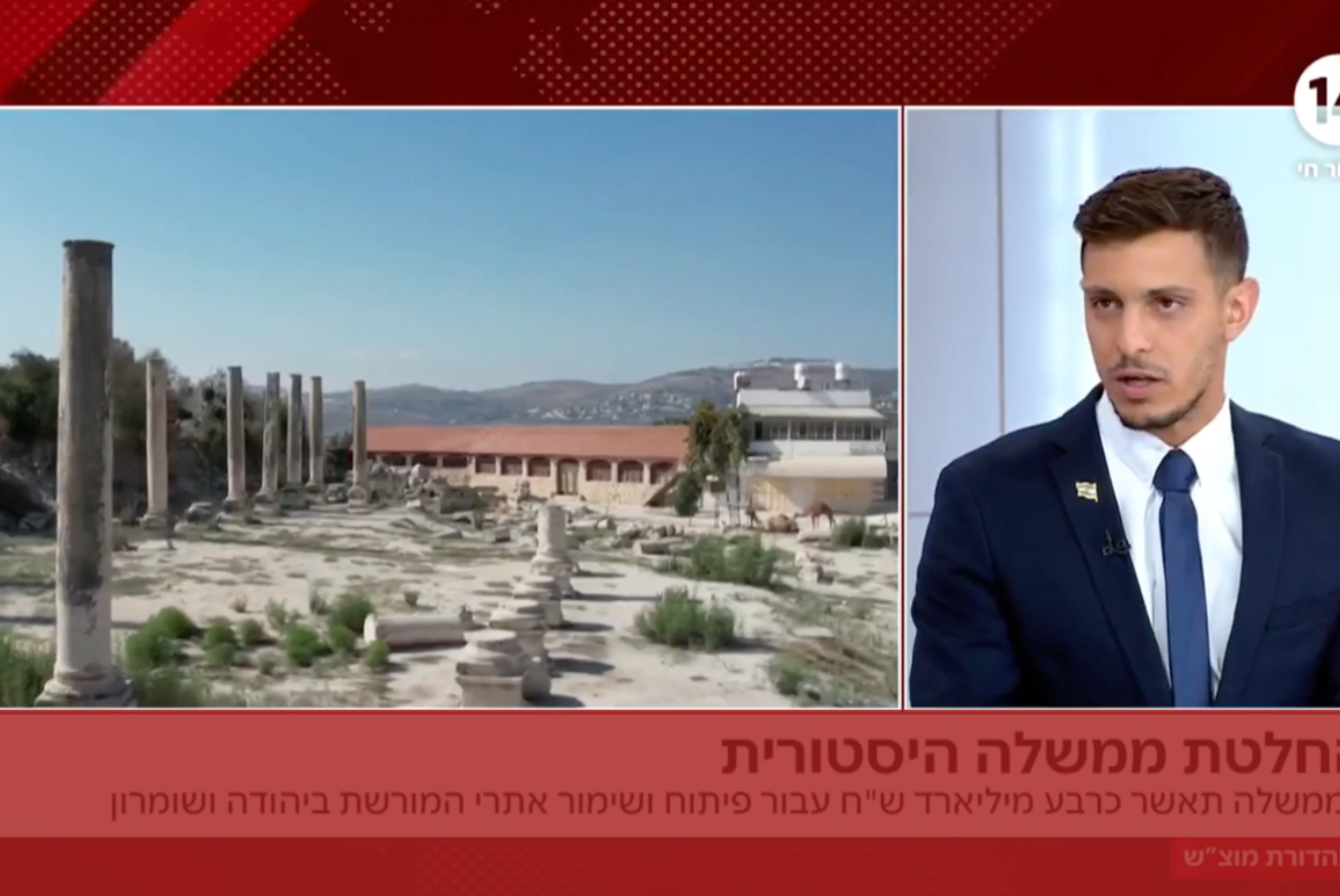
    Today, the Israeli government is set to approve a historic decision to invest roughly 250 million shekels (~$85 million) in a sweeping program to rescue, preserve, and develop heritage and antiquities sites in Judea, Samaria, the Jordan Valley, and the Judean Desert. The move comes as ‘Palestinians’ continue to desecrate biblical holy sites, in shocking acts like pouring concrete over UNESCO World Heritage sites earlier this month.

    Under the plan, new regional heritage centers will be established, tourism infrastructure will be developed, protection against looting and destruction of antiquities will be stepped up, and the Israeli public’s connection to the Jewish people’s historic heritage assets in the area will be strengthened.

    Photo: Chaim Goldberg, Flash 90

    The move is unprecedented, coming after decades of ongoing neglect of sites of paramount historical, cultural and national importance to the Jewish people.

    According to the decision, the new heritage centers will serve as anchors for research, education, tourism and community development, and will include visitor centers, interactive exhibits, educational activities and partnerships with academic and research institutions.

    Heritage Minister Amichai Eliyahu said: “After many long years in which the heritage sites of the Jewish people in Judea and Samaria were neglected and sometimes even abandoned to destruction and looting, the State of Israel is making a historic correction today.”

  • Eisenkot Opens Door to Haredi Coalition

    Eisenkot Opens Door to Haredi Coalition

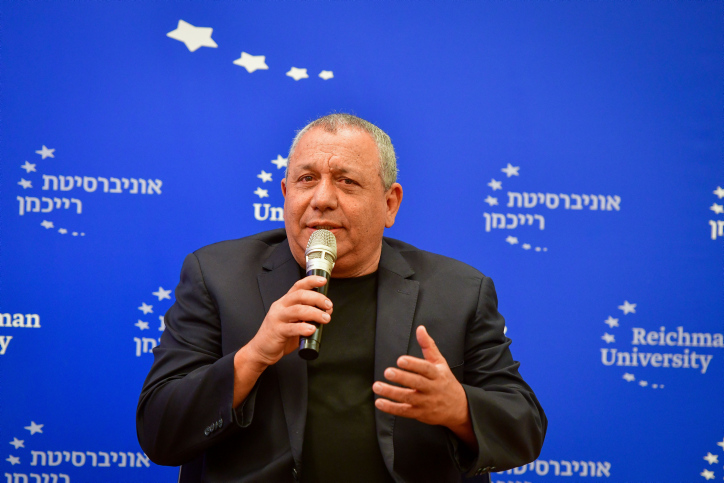
    The political system continues to brace for early elections, with all parties scrambling to open new channels of cooperation ahead of forming the next government. Gadi Eisenkot, leader of the Yashar party, was asked whether he would agree to sit with the haredi parties after the elections and responded unequivocally: “Of course, I’ll sit with anyone who strengthens the State of Israel.”

    Archive | Photo: Jonathan Zindel, Flash 90

    Eisenkot’s statement comes against the backdrop of the acute crisis over the conscription law and recent messages from the haredi parties, where they repeatedly emphasize that from their perspective, there is no longer absolute loyalty to the “right-wing bloc,” and that their central consideration will be who can regulate the status of yeshiva students and pass a conscription law.

    On Thursday, Motke Bloi, a United Torah Judaism figure, addressed the composition of the future government they might join after the elections in light of their declarations about “dismantling the right-wing bloc” and said they could sit with Eisenkot and “steal half of Likud.”

    Knesset member Yitzhak Pindrus | Photo: Screenshot

    During an interview on the “Patriots” program, Knesset member Yitzhak Pindrus from United Torah Judaism didn’t hesitate to place a question mark over the coalition’s future. When asked by host Yinon Magal about the possibility of joining the left-wing bloc, the Knesset member responded laconically but firmly: “We’ll check what the prices will be for that.” Pindrus explained that the perception that the haredi parties are “in the pocket” of one bloc has ended, and that the supreme interest of protecting Torah scholars will be what tips the scales.

    Meanwhile, the haredi parties are constantly trying to signal that after years of almost automatic commitment to Prime Minister Benjamin Netanyahu, they are now open to other political options as well. Eisenkot’s declaration is seen as a clear attempt to leave the door open for future cooperation with the haredi factions, especially if the balance of power in the next Knesset is tight.

    The roots of the current political crisis lie in the dramatic decision by United Torah Judaism’s spiritual leader, Rabbi Dov Landau. At the conclusion of a consultation at his residence with the party’s Knesset members, Rabbi Landau ordered them to act immediately to dissolve the Knesset. The immediate trigger was an announcement from the Prime Minister’s circle that there is no feasibility to pass the draft exemption law in its current version, which was perceived among the haredim as a fundamental breach of promise. In a sharply worded handwritten letter, Rabbi Landau stated: “We have no trust in the Prime Minister, we no longer feel like his partners. All kinds of talk about a bloc no longer exists.”

    Meanwhile, Yoram Cohen, who recently joined Eisenkot’s party, was asked whether there is a possibility of forming a government that would rely on abstention by the Arab parties, and replied: “It could be that’s what will happen.”

  • “All of Israel Is Ours”: Smotrich Calls to End Divide

    “All of Israel Is Ours”: Smotrich Calls to End Divide

    Finance Minister and Minister in the Defense Ministry Bezalel Smotrich delivered a forceful speech Thursday night at the Jerusalem Day rally at Mercaz HaRav yeshiva, calling for the abolition of the political divisions in Judea and Samaria. “The time has come to finally erase the lines separating Areas A, B, and C,” Smotrich declared. He revealed that he had placed a detailed plan on the matter before the cabinet this week and called on the Prime Minister to adopt it, emphasizing, “All of the Land of Israel is ours.”

    In his speech, Smotrich detailed the government’s achievements in Judea and Samaria communities. “We regularized all the young communities and approved more than a hundred new ones,” he said. He noted that 60,000 housing units have been approved over the past three years, and emphasized the historic correction of returning to northern Samaria towns evacuated during the disengagement: “We returned to Homesh, to Sa-Nur, to Ganim and Kadim. The people of Israel are coming home, and this time forever.”

    The minister also addressed the ongoing war, saying that despite the heavy costs, there are major achievements on all fronts. He cited the elimination of top terror leaders Sinwar, Haniyeh, and Nasrallah, and referenced legislation to prosecute Nukhba terrorists that will ensure, he said, “that soon they too will reach hell.” He added that Israel’s economy is showing tremendous resilience, with the shekel strengthening and the stock exchange breaking records, as a fulfillment of the prophets’ visions.

    Smotrich concluded his remarks with a reference to the teachings of Rabbi Kook, which he defined as “the spiritual engine of our entire national revival project.” He emphasized the importance of the physical building of the land as part of the manifestation of the Divine Presence in Zion. “Tonight we celebrate the miracle, and tomorrow we continue with the work, with building and planting,” the minister concluded to the crowd’s applause.

  • Revealed: Leftist Group Plans Mass Voter Airlift

    Revealed: Leftist Group Plans Mass Voter Airlift

    A left-wing effort to fly tens of thousands of overseas voters to Israel for upcoming elections is drawing fire after a senior leftist political party official let slip the operation’s real goal.

    Avi Dabush, a senior figure in Israel’s Democrats Party, discussed the so-called Aid Coalition’s planned airlift and said the aim is to bring “the right kind of voters”—a comment that exposes this isn’t a nonpartisan “get-out-the-vote” drive but a targeted political operation.

    Aid Coalition, linked to the Brothers in Arms protest movement and the Kaplan demonstrations, is working to charter hundreds of planes from the U.S. and Europe to fly in tens of thousands of eligible voters. While the operation is publicly framed as open to all Israelis, Dabush’s remarks reveal the true intention—a massive effort to boost opposition parties.

    Photo: InsectWorld, Shutterstock

    Following the revelations, Likud sent an urgent letter to Central Elections Committee Chairman Judge Noam Sohlberg demanding an investigation. “There is urgency and supreme importance to take all necessary early investigative and enforcement measures to obtain a clear and unequivocal answer to this question, so that the answer is not delivered on election day itself,” the letter states.

    This effort follows an earlier report in which a senior Brothers in Arms official was caught on tape saying the group plans to deploy “challengers” at polling stations—former special forces and combat unit veterans—raising additional concerns about organized interference on election day.

  • Israeli Law Over Judea, Samaria Nail in Oslo’s Coffin

    Israeli Law Over Judea, Samaria Nail in Oslo’s Coffin

    At Channel 14’s Sovereignty Conference on Wednesday, Yehudit Katsover and Nadia Matar, co-chairs of the Sovereignty Movement, presented their vision for applying Israeli law to Judea and Samaria. The two, who have been active in the field since the 2005 disengagement from Gush Katif, argued that the current situation—in which nearly a million Israelis live in territory without formal sovereignty—is a planning and economic distortion that must end.

    Katsover traced the beginning of their joint activism to the aftermath of the disengagement plan: “In 2005 everyone was broken, but we decided to continue our work with even greater intensity to prevent another expulsion. We started redeeming land in Gush Etzion as a response to Arab takeover of state lands, but we realized you can’t ’empty the sea with a spoon’—you need to lead comprehensive political change.”

    According to them, applying sovereignty is a simple step legally, already carried out in the past in Jerusalem in 1967 and 1980 and in the Golan Heights in 1981. Matar added that despite fears of world reaction, history proves such moves undergo “normalization” over time, as happened with the Trump administration’s recognition of Jerusalem.

    Matar presented during the interview the “National Outline Plan 35,” which shows Israel’s future development plans, and noted that Judea and Samaria appear in it as “a hole in the heart of the state.” “When the State of Israel doesn’t contain sovereignty, it signals to the world that it’s living in a rented apartment,” she explained. “In such a situation you can’t ‘hammer a nail’—entrepreneurs are afraid to establish factories or hotels in Judea and Samaria because everything is a question mark and everything can be overturned.”

    According to their view, sovereignty is a tool for security and ideological victory: “The enemy draws hope from the fact that Israel hasn’t yet decided the territory is hers. The moment there is sovereignty, the hope for establishing a Palestinian state will die.”

    The two emphasized that the events of October 7th specifically sharpened the need for the move. Katsover and Matar argued there’s no need to wait for formal cancellation of the Oslo Accords before applying sovereignty, but rather that sovereignty itself will cancel the agreements in practice.

    “Apply sovereignty and it will cancel Oslo and the Palestinian Authority,” Katsover declared. The two concluded their remarks with a call to Prime Minister Benjamin Netanyahu to adopt the 2017 Likud Central Committee decision and act to apply the law, based on the belief that “Israel must rule from the sea to the Jordan.”

  • Billion-Shekel Lie Funding Israel’s Public Broadcaster

    Billion-Shekel Lie Funding Israel’s Public Broadcaster

    Amit Segal recently opened his show with words viewers didn’t hear from him for a long time: “I came out looking like a sucker.” He mocked what he called “the most balanced broadcast on Kan Reshet Bet”—a hit job on Bezalel Smotrich that wasn’t an anomaly but a pattern. “The channel’s investigative program focuses again and again and again on attacks against the right,” he said, concluding: “There’s no reason why in the 21st century the Israeli taxpayer should fund with nearly a billion shekels a year someone who spits in his face… When the Israeli Public Broadcasting Corporation was established, I was really for it, I fought for it to be created. I think I was wrong.”

    The Israeli Public Broadcasting Corporation, ‘Kan’ | Photo by: Flash 90

    Segal’s frustration is understandable. But the assumption embedded in his words—that the biased agenda can be “fixed” if only the right people are replaced or the right public criticism is applied—misses the problem. The bias isn’t a malfunction in the mechanism; it’s its predictable output. And to understand why, you need to go back a decade, to a fee that was supposedly abolished.

    In 2015, Israel’s television license fee was abolished. That’s what politicians announced, and that’s what the headlines said. Anyone who believed that’s what actually happened should check their vehicle registration fee. Buried in that fee to this day is an amount transferred to the Israeli Public Broadcasting Corporation—a remnant of the radio license fee that wasn’t abolished but hidden. Most of Kan’s budget, about 650 million shekels, comes from there.

    This story isn’t about public broadcasting. It’s about a fundamental characteristic of government spending: it’s born easily, dies with difficulty, and usually doesn’t die at all—it just changes address.

    Photo Credit: Canva

    When a commercial company asks you for money, it must first convince you that you’re getting something in return. If the product isn’t good enough, you go to a competitor, or you don’t buy anything at all. When the state asks you for money for public broadcasting, the question of whether you watch, listen, or even live in the world of radio is irrelevant. The television license fee was imposed on anyone who owned a receiver “capable of receiving broadcasts,” even if their receiver was a computer on which they never once watched Channel Eleven. The radio fee in vehicles is paid today by people who only listen to podcasts, by people who have three cars at home, and by people who have never turned on the car radio. The connection between who pays and who receives service isn’t weak—it doesn’t exist.

    That’s why this model survives: those who make a living from customers please customers; those who make a living from a forced fee please those who approve budgets. Different customers, different results.

    This is also why Segal’s complaint sounds familiar to anyone who knows the arrangement. He’s not complaining about a new phenomenon but about the predictable output of the structure itself: when the consumer isn’t a customer but a forced revenue source, there’s no reason to please him. You need to please whoever controls the tap. And the tap of public broadcasting, even if well hidden inside the vehicle registration fee, is operated in the Knesset—not in the living room.

    Photo Credit: Shutterstock

    We know little about the cost of this model, because those who collect aren’t rushing to present the data. But in 2014, it emerged in the Knesset Finance Committee that the year before, the Broadcasting Authority paid about 30 million shekels—to lawyers who handled collection cases for it. Thirty million shekels paid not for production, not for content, and not for employees, but for chasing after citizens who didn’t want to pay for a product they didn’t want to consume. In any normal business, a check like that to lawyers is called “a sign that something in the business model isn’t working.” In public broadcasting it’s called “collection budget.”

    The classic defense of the fee is that “public broadcasting doesn’t have to be profitable.” That’s a correct claim, but it dodges the question. The question isn’t whether it has to be profitable. The question is who pays, and with what choice. David Ben-Gurion, who was more honest than his successors on this issue, saw radio as “a powerful propaganda tool for strengthening the government.” That is indeed a justification—but it’s not the justification used today, because in a democratic public it’s hard to sell. So they talk about “culture,” “heritage,” and “education,” and meanwhile they collect.

    When it was finally proposed to abolish direct collection, the result wasn’t that the state stopped taking the money, but that it moved the pipe. Instead of the television receiver—the vehicle. Instead of an envelope in the mailbox—one line within the registration fee. Anyone who looks at their pay stub once a year and locates the vehicle registration fee line knows: the amount went down, but not to zero. The amount was abolished, but didn’t disappear. This isn’t an anecdote, it’s a pattern. Programs are canceled, fees are canceled, taxes are canceled—and almost always they’re reborn under another name, sometimes in another pocket, but from the same taxpaying pocket.

    The lesson here isn’t about public broadcasting. It’s about how we think about “Cancellation.” The consumer cancels a subscription when he stops paying. The government “cancels” a fee when it moves it to a place where fewer people look. These are two different actions, and confusing them is exactly what enables the survival of the radio fee—thirteen years after it was supposedly abolished.

    Tamir Dortal is a lawyer, content entrepreneur, teacher, social activist and lecturer best known as the founder of the treatise “On Meaning,” which deals with political philosophy, conservatism, economics, Jewish identity and current affairs

  • Coalition Moves to Dissolve Knesset

    Coalition Moves to Dissolve Knesset

    Coalition Chairman Ofir Katz submitted a bill to dissolve the 25th Knesset together with coalition faction leaders.

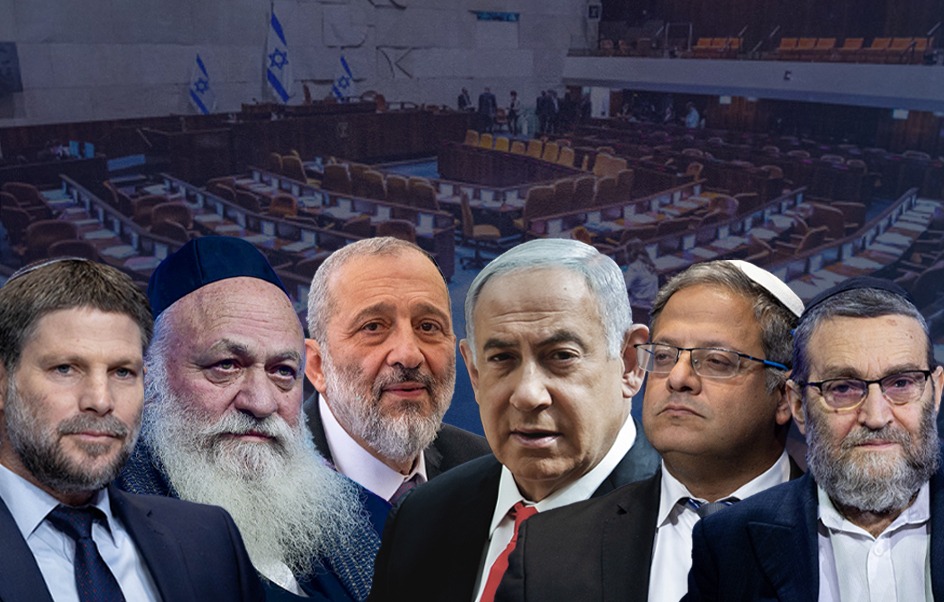
    Under the proposal, the election date will be set later during discussions in the Knesset Committee. The move comes against the backdrop of political turmoil following United Torah Judaism’s announcement that it would leave the coalition and the breakup of the right-wing bloc.