


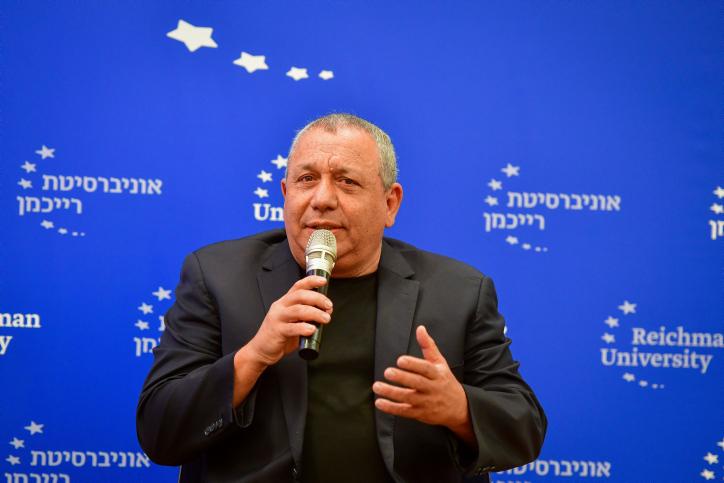

The political system continues to brace for early elections, with all parties scrambling to open new channels of cooperation ahead of forming the next government. Gadi Eisenkot, leader of the Yashar party, was asked whether he would agree to sit with the haredi parties after the elections and responded unequivocally: “Of course, I’ll sit with anyone who strengthens the State of Israel.”

Eisenkot’s statement comes against the backdrop of the acute crisis over the conscription law and recent messages from the haredi parties, where they repeatedly emphasize that from their perspective, there is no longer absolute loyalty to the “right-wing bloc,” and that their central consideration will be who can regulate the status of yeshiva students and pass a conscription law.
On Thursday, Motke Bloi, a United Torah Judaism figure, addressed the composition of the future government they might join after the elections in light of their declarations about “dismantling the right-wing bloc” and said they could sit with Eisenkot and “steal half of Likud.”

During an interview on the “Patriots” program, Knesset member Yitzhak Pindrus from United Torah Judaism didn’t hesitate to place a question mark over the coalition’s future. When asked by host Yinon Magal about the possibility of joining the left-wing bloc, the Knesset member responded laconically but firmly: “We’ll check what the prices will be for that.” Pindrus explained that the perception that the haredi parties are “in the pocket” of one bloc has ended, and that the supreme interest of protecting Torah scholars will be what tips the scales.
Meanwhile, the haredi parties are constantly trying to signal that after years of almost automatic commitment to Prime Minister Benjamin Netanyahu, they are now open to other political options as well. Eisenkot’s declaration is seen as a clear attempt to leave the door open for future cooperation with the haredi factions, especially if the balance of power in the next Knesset is tight.
The roots of the current political crisis lie in the dramatic decision by United Torah Judaism’s spiritual leader, Rabbi Dov Landau. At the conclusion of a consultation at his residence with the party’s Knesset members, Rabbi Landau ordered them to act immediately to dissolve the Knesset. The immediate trigger was an announcement from the Prime Minister’s circle that there is no feasibility to pass the draft exemption law in its current version, which was perceived among the haredim as a fundamental breach of promise. In a sharply worded handwritten letter, Rabbi Landau stated: “We have no trust in the Prime Minister, we no longer feel like his partners. All kinds of talk about a bloc no longer exists.”
Meanwhile, Yoram Cohen, who recently joined Eisenkot’s party, was asked whether there is a possibility of forming a government that would rely on abstention by the Arab parties, and replied: “It could be that’s what will happen.”