



The Iranian regime is expanding its covert activities in Europe—employing cyberattacks, espionage, and threats against U.S. military installations—in an attempt to deter European nations from continuing their cooperation with the United States, according to a report in the French newspaper Le Monde.
The report notes that since the beginning of October, a series of incidents has signaled a shift in Iranian policy toward Europe. These include attacks on the refrigeration systems of hundreds of supermarkets in France, the conviction of two individuals of Iranian descent for espionage in the United Kingdom, and the relocation of U.S. military aircraft from British bases following intelligence regarding potential threats from Tehran.
One notable incident occurred overnight between October 11 and 12, when hackers remotely seized control of the temperature-regulation systems in refrigerators across approximately 700 supermarkets in France. Altering the cooling settings resulted in damage to food products and even sparked fires.
On November 9, French Foreign Minister Jean-Noël Barrot attributed the cyberattack to the Islamic Revolutionary Guard Corps (IRGC) and announced his intention to push for additional European sanctions against Tehran. Iran, for its part, has denied the allegations. The Iranian threat is not limited to cyberattacks. In early October, the United States deployed approximately 12 B-1 bombers from RAF Fairford in the United Kingdom, following intelligence indicating the possibility of an Iranian attack.
During November, an additional 13 American aircraft were relocated from RAF Mildenhall to bases in Germany, Spain, Scotland, and the United Kingdom. According to reports, this move was prompted by threats from Iran, though no official confirmation was provided by the United States.
On November 11, Mohsen Rezaei—a member of Iran’s Supreme National Security Council—warned that American bases in Europe would become targets if they were used to launch attacks against the Islamic Republic.
The Iranian Strategy: Expanding the Conflict Beyond the Middle East
According to Arman Mahmoudian, a researcher at the Institute for Global and National Security and a lecturer at the University of South Florida, Israeli and American strikes against Iran have led the regime in Tehran to become increasingly willing to take risks. He notes that the closure of the Strait of Hormuz—which has been ongoing since July—has bolstered Iran’s confidence in its ability to strike at the economic and security interests of its adversaries.

However, the Iranian escalation also stems from a growing sense of threat to the very survival of the regime. According to the researcher, the killing of senior Iranian officials during Israeli and American strikes has convinced Tehran that it faces an unprecedented threat; consequently, it has chosen to expand the conflict rather than exercise caution.
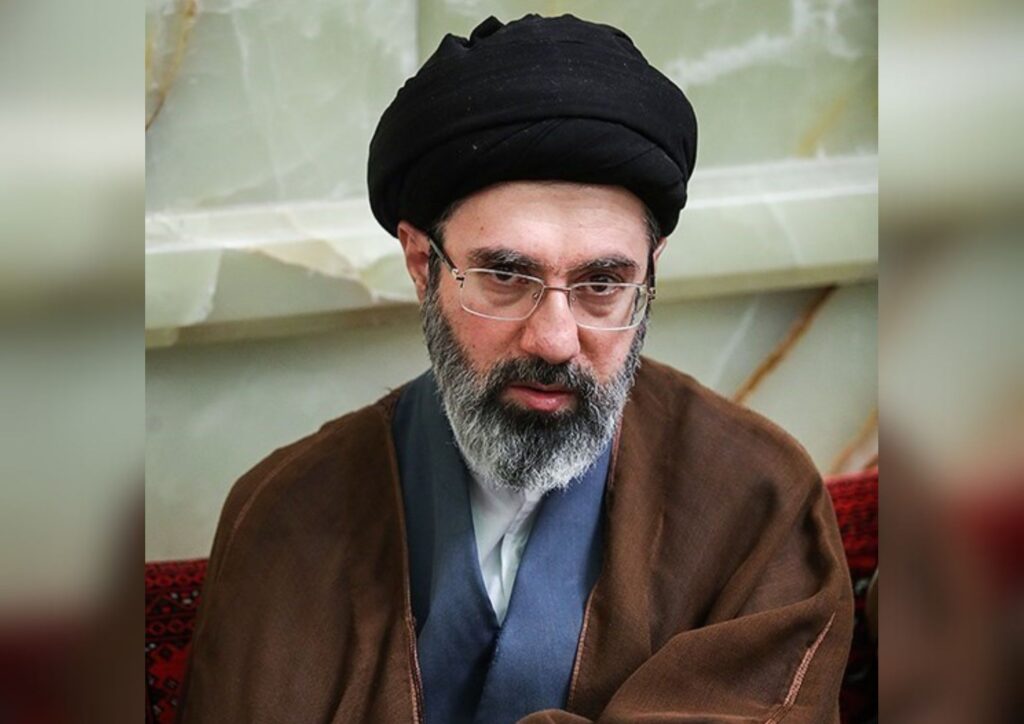
On October 31, Iran’s new ‘Supreme Leader’, Mojtaba Khamenei, ordered the armed forces to respond to any threat immediately and effectively, without geographical limitations. In doing so, the regime signaled that it does not intend to confine its activities solely to the Middle East.

Hamidreza Azizi, an Iran expert at the International Crisis Group, explained to the French newspaper that the cyberattack in France was intended to send a message to European nations: Tehran possesses the capability to strike not only military installations but also the daily lives of their citizens. The backdrop to these developments includes the deterioration of relations between Iran and European nations—following the reinstatement of international sanctions via the “snapback” mechanism—as well as the military cooperation between NATO member states and the United States.
According to an analysis in Le Monde, Tehran’s objective is to increase the cost to European nations for their support of Washington, while simultaneously pressuring them to urge the U.S. administration to scale back its actions against Iran. In doing so, the regime seeks to transform Europe into an additional theater of pressure within its ongoing confrontation with the United States.