


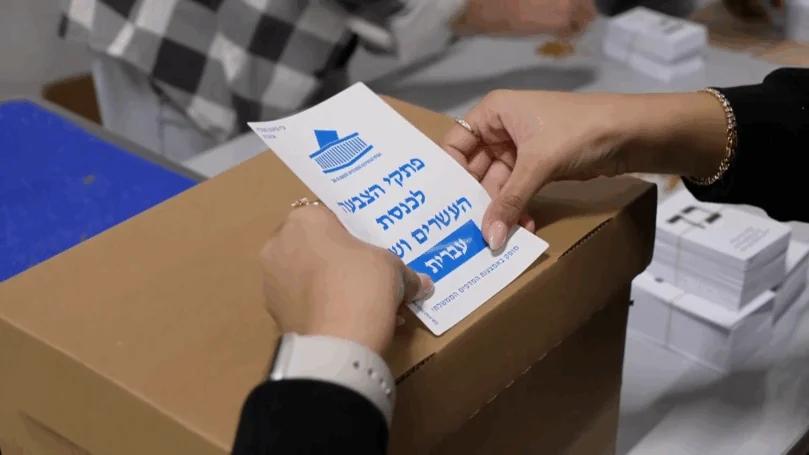

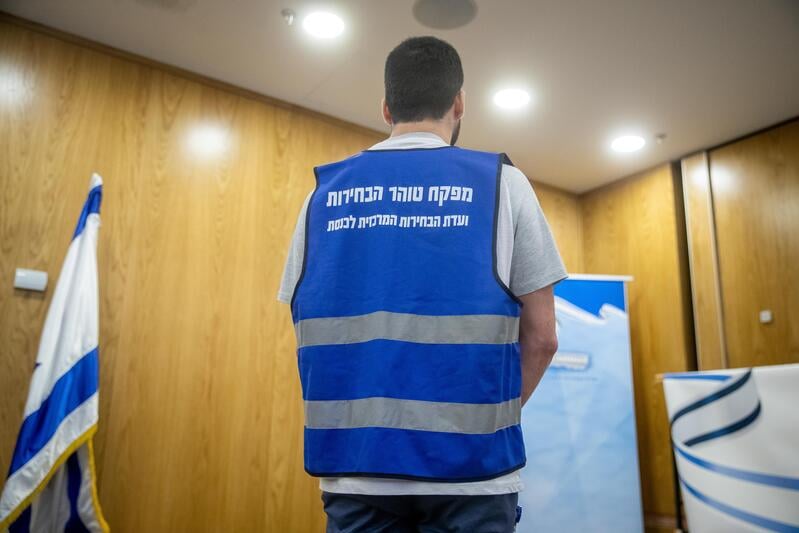
The Central Elections Committee’s election integrity unit received approximately 10,000 reports yesterday (Tuesday) regarding suspected compromises to the integrity of the election process during the voting for the 26th Knesset. The unit was deployed at all polling stations across the country, from the moment they opened until they closed. The Central Elections Committee stated that all reported incidents have been addressed and resolved.
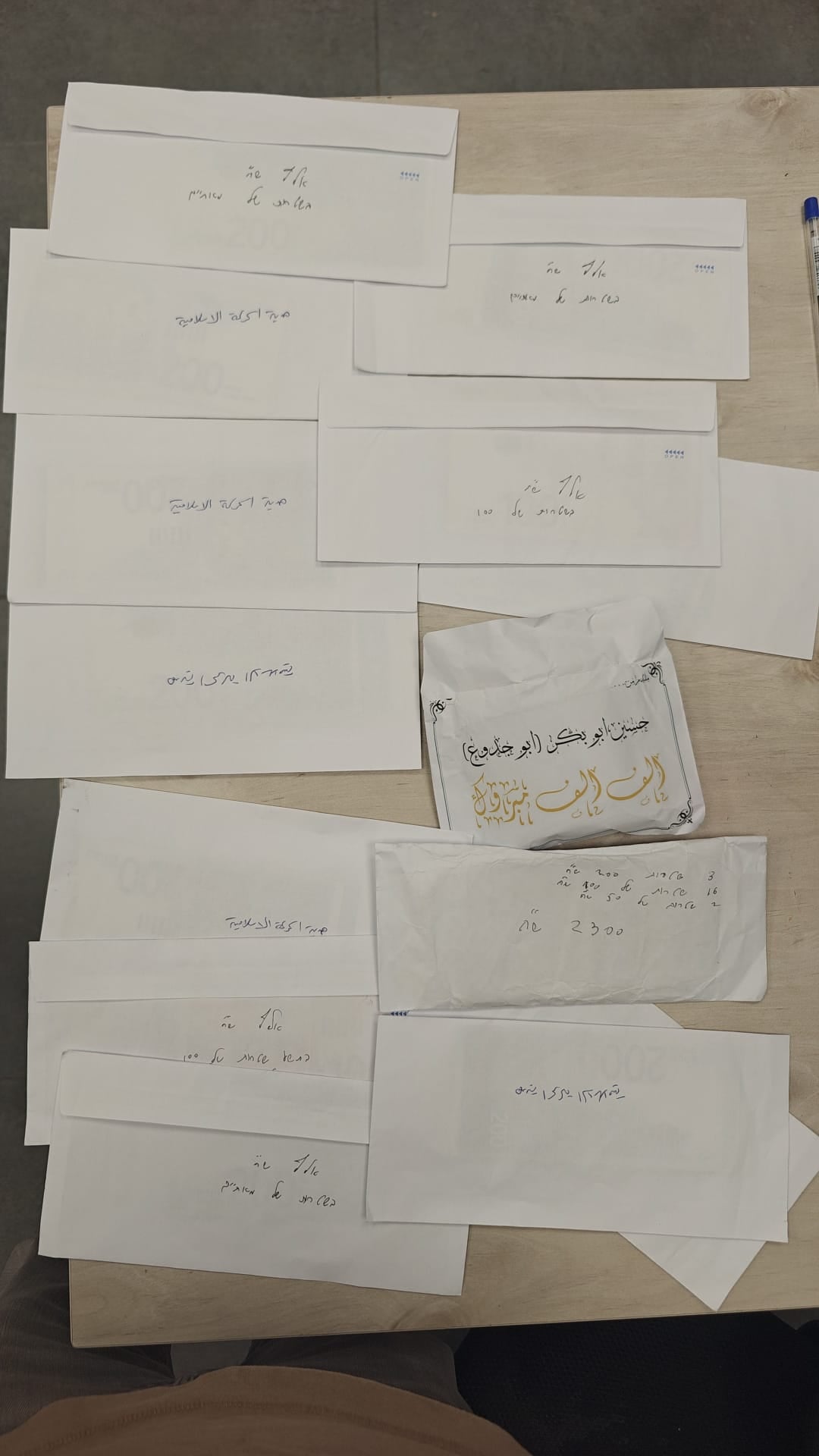
Meanwhile, a number of ministers and Members of Knesset sent a letter today to the Chairman of the Central Elections Committee, Justice Noam Sohlberg, and the head of the Shin Bet, David Zini, demanding an urgent investigation into the Ra’am party on suspicion of election bribery. This demand follows the arrest of three residents of the Negev who are associated with the party’s activities. According to the allegations, envelopes containing tens of thousands of shekels in cash were found in their possession.
The defacement or alteration of ballot slips accounted for approximately 10% of the reports submitted to the Committee—about 1,000 incidents in total. As we reported yesterday on C14, ballot slips bearing the letters “Mahal” (Likud) and “Gimel” (United Torah Judaism) were discovered at a polling station in the Ramot neighborhood of Be’er Sheva; however, they displayed the names of lists from the municipal elections.
The “Mahal” slips bore the inscription “Likud, led by Amnon Cohen, for the City Council,” while the “Gimel” slips read “Gesher, led by Shimon Tubul.” The Police Spokesperson’s Unit released images of these slips. A local resident recounted that she had placed one such slip into an envelope without noticing the text printed on it.
In light of these reports, the Central Elections Committee—chaired by Justice Sohlberg—issued a directive last night to polling station committees regarding flawed or damaged ballot slips. According to the directive, minor punctures, smudges, or scribbles—provided it is evident that they were not caused by the voter—do not necessarily… …would lead to the disqualification of the ballot.
The same applies to printing defects or minor deviations from the approved sample, provided that the list for which the vote was cast can still be clearly identified. Conversely, a ballot containing a defect that could potentially identify the voter is set aside until the count is concluded: if another ballot with the identical defect is discovered, both are counted; otherwise, the ballot is disqualified. “The guiding principle is to ensure the voter’s ballot is included in the final tally; a ballot should only be disqualified if it cannot be validated,” the directive states.
The most frequent issue reported to the committee—accounting for approximately 22% of all submissions—involved photography inside the polling station. Additionally, 13% of the reports concerned suspected interference with the voting process. Taking photographs within the polling station, including behind the privacy screen, is strictly prohibited for both voters and party representatives.
This prohibition is intended to safeguard the secrecy of the vote and prevent situations where a voter might be coerced into providing photographic proof of how they voted. During the initial screening, approximately 2,000 reports were identified as unrelated to election integrity and were automatically closed; of the remaining 8,000 or so reports, about 30% were classified as incidents concerning election integrity.