


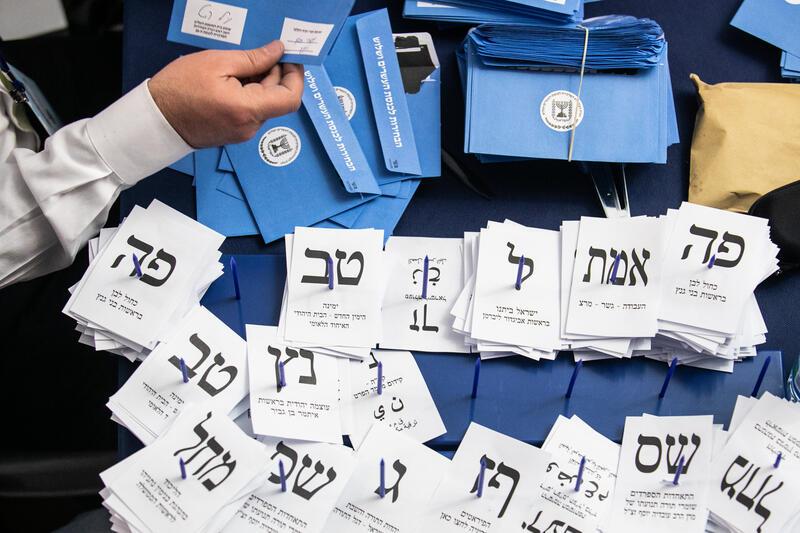

A double envelope is how eligible voters who can’t reach their assigned polling station on election day cast their ballots. The voter places the regular voting envelope containing their chosen party slip inside an outer envelope marked with their personal details. These envelopes aren’t opened at polling stations—they’re sent to the Central Elections Committee at the Knesset, where officials verify the voter is eligible and hasn’t voted twice before extracting and counting the inner envelope.
Soldiers at military polling stations vote by double envelope, as do prisoners and detainees in jails, hospitalized patients, and people with limited mobility using special accessible polling stations. In this election, evacuees who left their homes due to the security situation are also voting this way, along with Israeli diplomats at missions abroad. According to data from the Knesset Research and Information Center, the number of double-envelope voters has risen in each of the last five election cycles.

In the November 2022 elections for the 25th Knesset, 462,807 voters cast double-envelope ballots—about 9.7% of all voters, according to Central Elections Committee data. Of those envelopes, 458,714 contained valid votes. Likud received about 108,000 double-envelope votes, more than any other party. Religious Zionism, which ran together with Otzma Yehudit at the time, received 15.5% of double-envelope votes—higher than its nationwide share of 10.8%.
Double envelopes are counted only after regular polling stations finish their tallies, so results published on election night and the next morning aren’t final. Given the large volume, these votes can shift seats between parties and decide the fate of lists hovering around the electoral threshold. By law, the Central Elections Committee must publish final results within eight days of election day.