


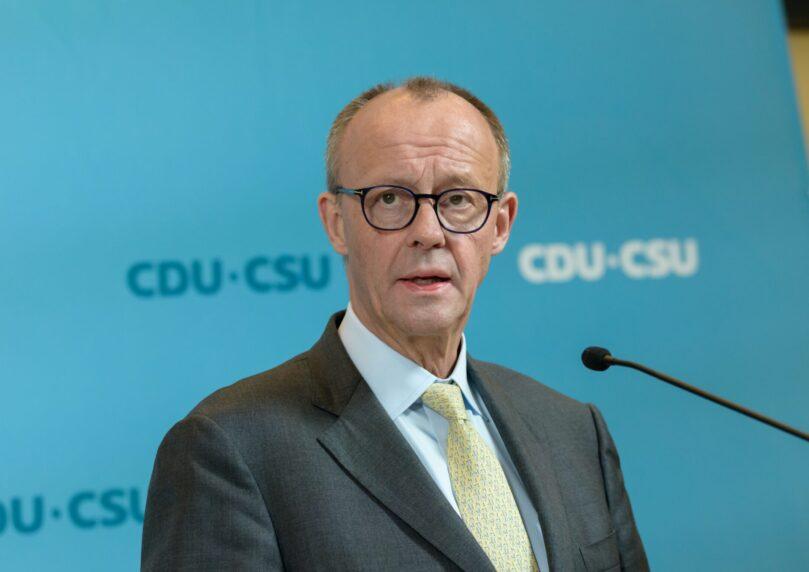

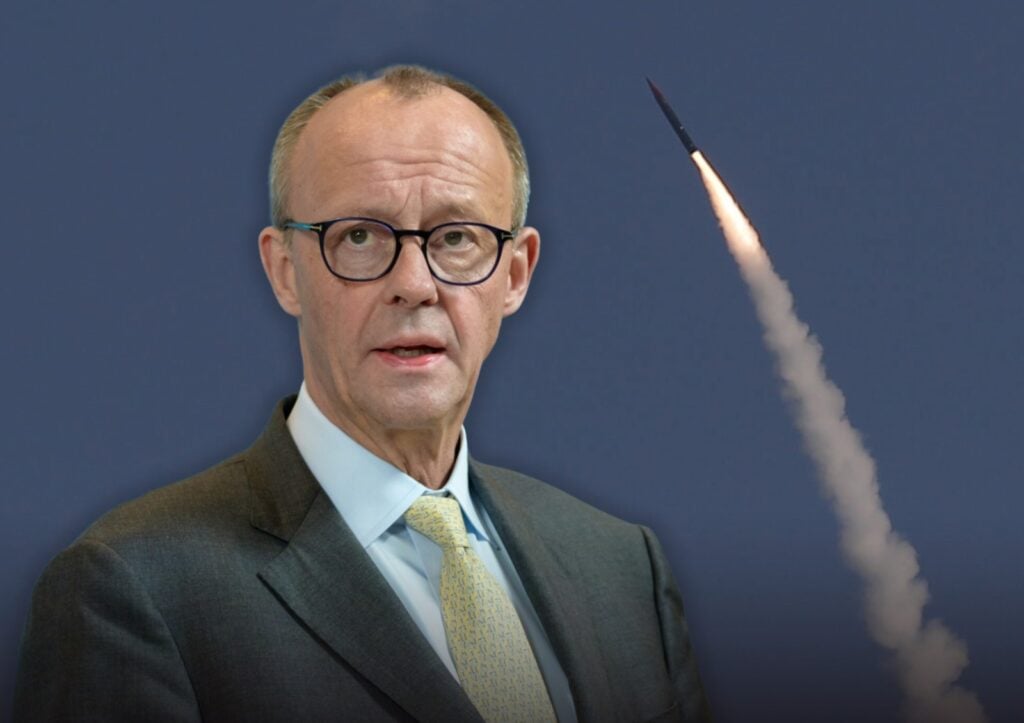
A political drama is unfolding in Germany today (Wednesday) over Chancellor Friedrich Merz’s future, as pressure mounts within his Christian Democratic Union (CDU) after a string of electoral failures—most notably a devastating loss in Saxony-Anhalt. Amid speculation that he could be replaced, the eight CDU state premiers issued a joint statement of support to present a united front. Meanwhile, Merz canceled his planned trip to the UN General Assembly in New York and is staying in Germany ahead of further political tests facing his party.

 4+
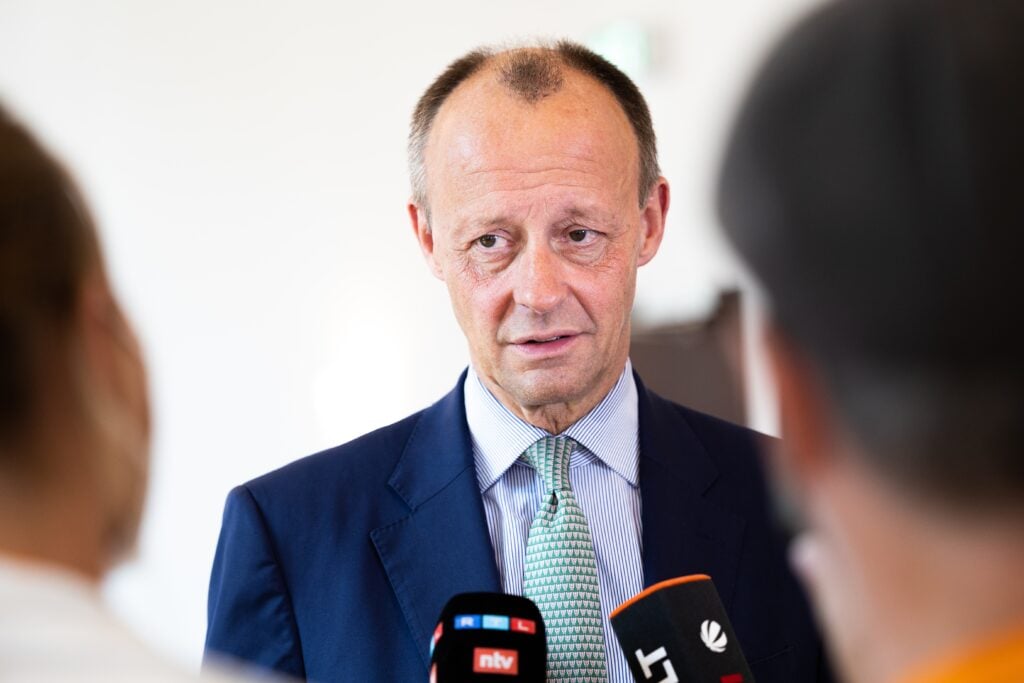
4+The crisis erupted after elections in the state of Saxony-Anhalt earlier this month. The conservative Alternative for Germany (AfD) won 43.8% of the vote, while the CDU crashed to just 17.2%—down from 37.1% in the previous state election. The shocking result deepened debate within the conservative camp over whether Merz is still capable of leading the party and stopping AfD’s rise.
Merz himself made clear after the defeat that he has no intention of leaving office and plans to complete his term. But his statements haven’t stopped the internal debate, and in recent days voices within the CDU have begun calling for a fresh start. The crisis isn’t just about one state election result. Nationwide support for the CDU and its Bavarian sister party, the Christian Social Union (CSU), has dropped in polls to around 18%–20%, with some surveys placing the bloc behind AfD. Personal support for Merz has also eroded significantly.
 4+
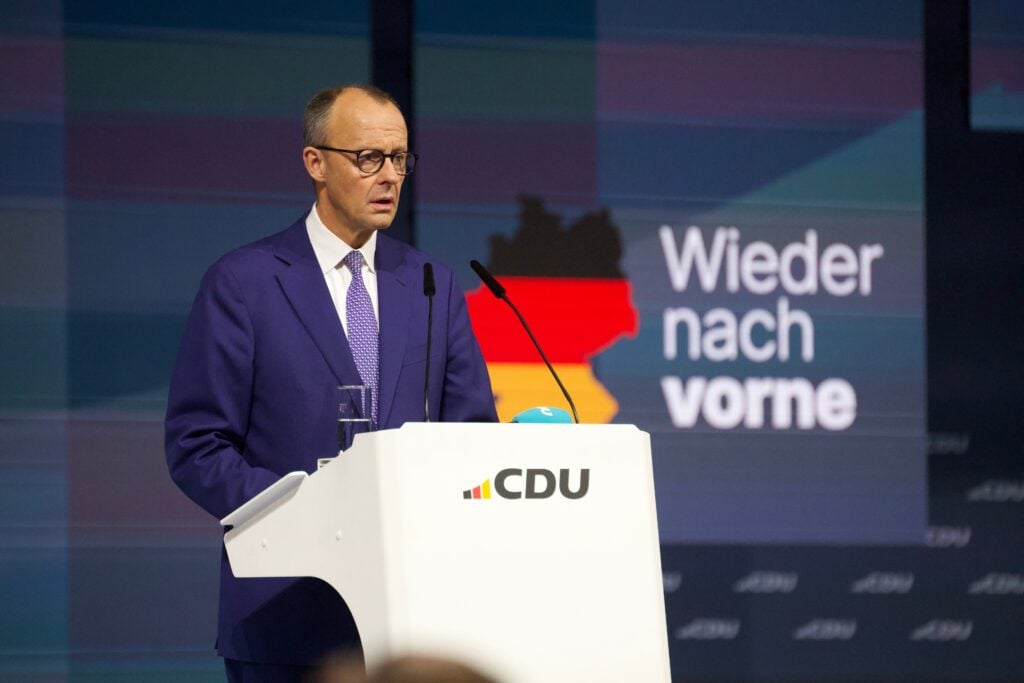
4+One of the clearest signs of the crisis came with Merz’s decision to cancel his participation in the UN General Assembly in New York. The chancellor was scheduled to travel to the U.S. next week and address the assembly, but chose to stay in Berlin as his party prepares for a special meeting and two more electoral tests. The decision came as the CDU tries to halt the sense of crisis and project unity around Merz’s leadership.
Thorsten Frei, chairman of the parliamentary group in the Bundestag, stood by him and made clear that as far as he’s concerned, Merz’s position is not in question even if the upcoming elections end badly. Markus Söder, leader of the CSU and premier of Bavaria, also tried to calm the storm. Asked about speculation regarding ousting the chancellor, he made clear that such a move would not come from his party.
 4+
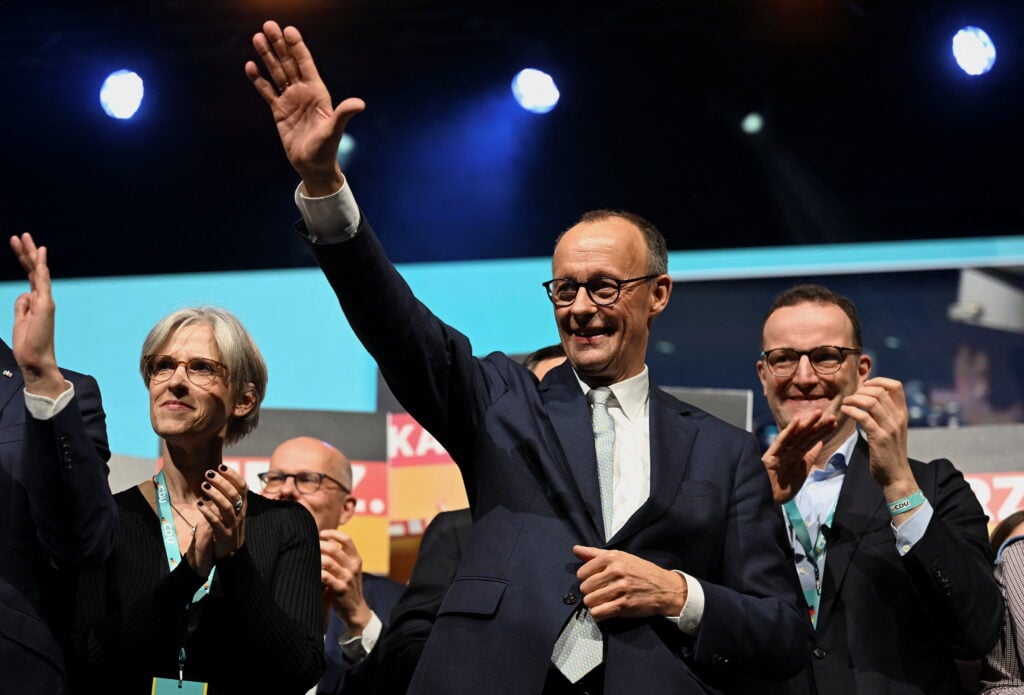
4+Today brought another coordinated response from CDU leaders. All eight CDU state premiers in Germany issued a joint statement backing Merz. In the statement, they called for an end to focusing on personnel questions and urged concentration on issues troubling the German public. The joint message was meant to make clear that, at least publicly, the CDU’s senior leadership does not support a move to replace the chancellor. But the very need to issue a joint statement of support underscores the intensity of debate surrounding Merz’s future.
Merz has almost no time to recover. Elections are scheduled for this Sunday in two more states—Mecklenburg-Western Pomerania and Berlin. In Mecklenburg-Western Pomerania, the CDU’s situation is particularly dire. An INSA poll published ahead of the election gave the party just 7%—a figure that brings it dangerously close to the 5% threshold required to enter the state parliament. In Berlin, too, the party faces a difficult election battle.
Sunday’s results are therefore seen in Germany as another test of Merz’s leadership. Further losses could deepen internal criticism, even though party leaders are insisting at this stage that his position as chancellor and CDU leader is not up for a vote.
 4+
4+Despite talk of ousting Merz, Germany’s constitutional mechanism makes such a move complicated. The Bundestag cannot simply vote no confidence in a chancellor and leave the position vacant. The German constitution establishes a mechanism called a “constructive vote of no confidence”: to remove a sitting chancellor, members of parliament must, in the same vote, elect another person by absolute majority to replace him.
The mechanism is designed to prevent a situation where a government falls without an alternative capable of winning a parliamentary majority. In the history of West Germany and unified Germany, such a move has succeeded only once: in 1982, when Chancellor Helmut Schmidt was ousted, and Helmut Kohl was elected in his place.
 4+
4+As of now, no vote of no confidence has been filed against Merz, and no consensus candidate has been presented who could win the majority needed to replace him. So the current drama is playing out primarily within the political and party system—not through a formal removal process.
Meanwhile, names of politicians who could play a central role in the future if Merz fails to stabilize his position are already surfacing in the German media. One name is Hendrik Wüst, premier of North Rhine-Westphalia and one of the CDU’s most prominent figures. Another name coming up in discussion is Markus Söder, CSU leader and premier of Bavaria. However, at this stage these are political speculations, not a formal contest for the chancellorship. Söder himself has publicly stood by Merz and made clear the CSU will not act to bring him down.
Merz entered the chancellery in May 2025, after federal elections and the formation of a coalition between the CDU/CSU bloc and the Social Democratic Party. Since then, his government has grappled with disputes over the economy, the budget, pensions, and immigration, alongside AfD’s rise. The party, once a relatively small opposition force, has become in recent years one of the central forces in German politics.
Its achievement in Saxony-Anhalt has deepened the question of how traditional parties should deal with it—and whether Merz’s strategy is succeeding in stopping its rise. For now, Merz remains in office, and his party’s leaders are standing by him. But the upcoming elections have turned the coming days into a significant political test for the chancellor—with debate already underway openly within the camp about the day after.