


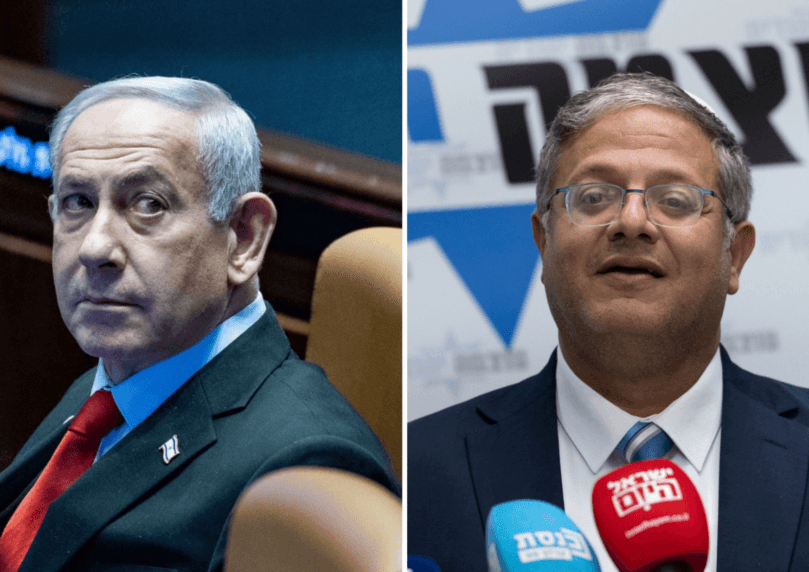

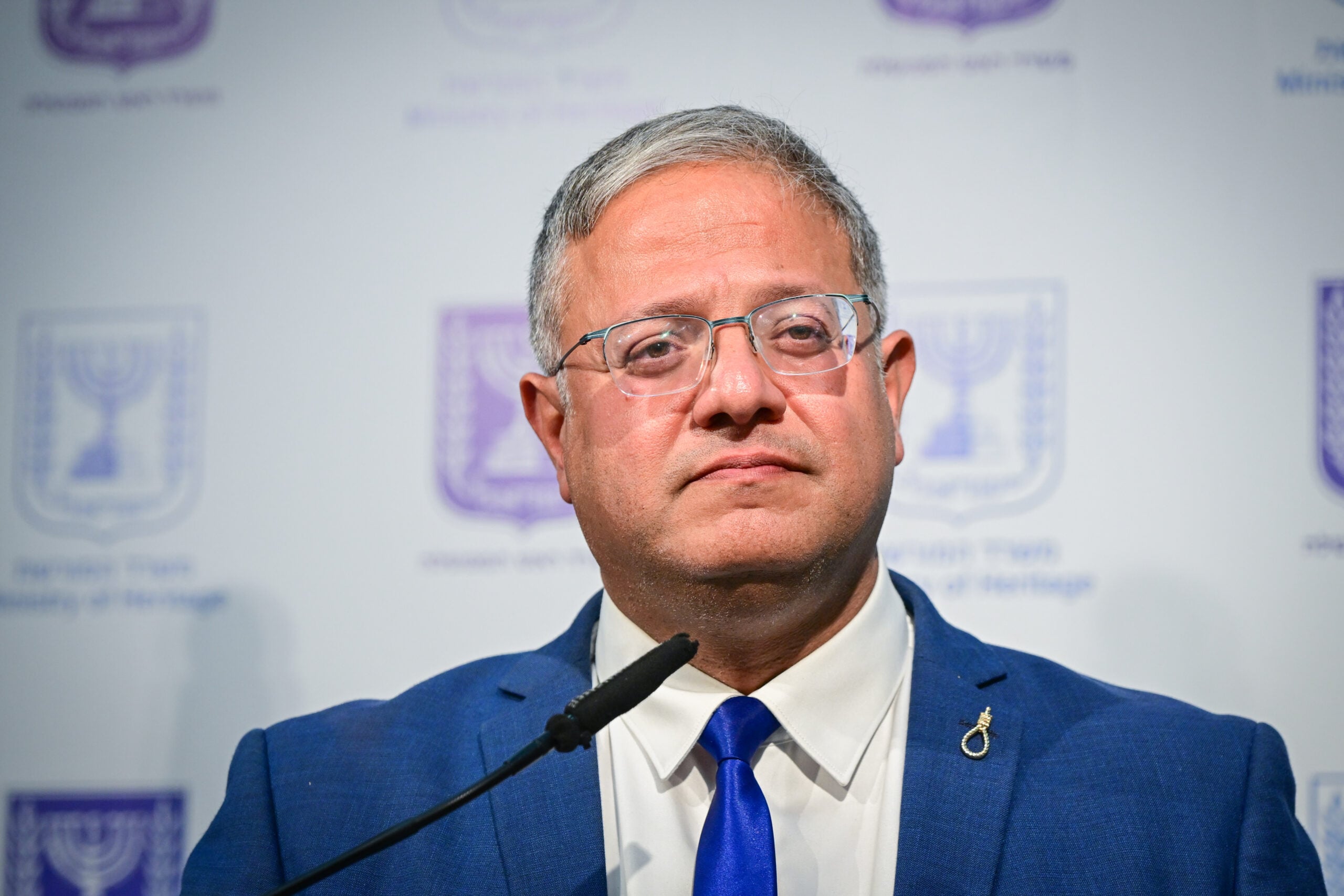
Allies of Itamar Ben-Gvir are increasingly convinced that Benjamin Netanyahu is no longer committed to a “full right-wing government”—and may be positioning himself to form a broader coalition after the election, even if that means leaving Otzma Yehudit out in the cold.
From Ben-Gvir’s perspective, the shift in language isn’t accidental. Instead of emphasizing a right-wing government, Netanyahu now talks about a “broad national government.” The National Security Minister’s circle sees this as a sign that Netanyahu wants room to maneuver after election day—and freedom to choose coalition partners more flexibly.

 3+
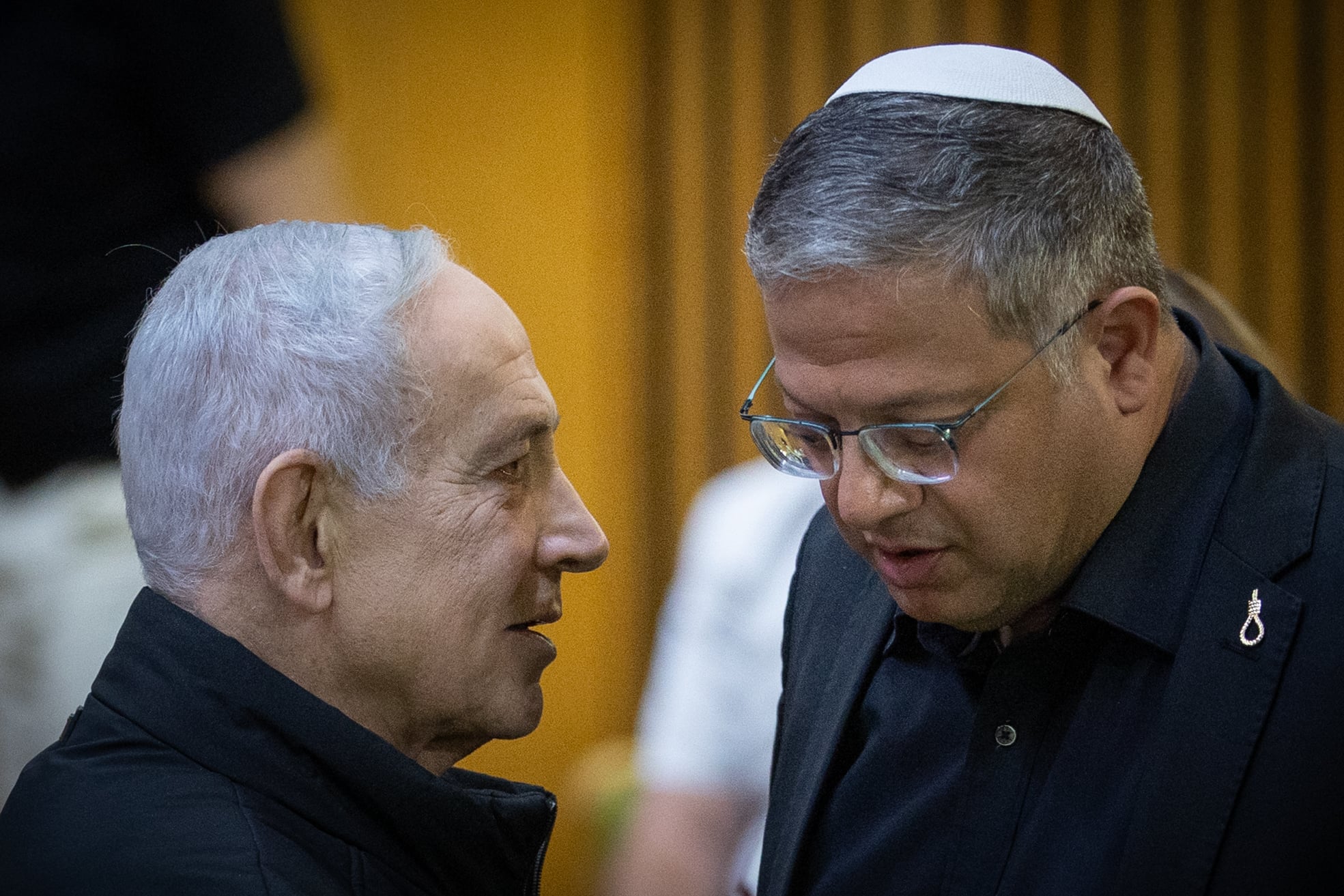
3+They’re not necessarily claiming Netanyahu has already decided to oust Ben-Gvir from the government. Rather, they’re pointing to a possibility that feels increasingly real: if election results allow Netanyahu to bring in a political player from the center or the opposing camp, he may prefer a government where Likud isn’t the most moderate party.
That’s also one of the conclusions they draw from the structure of the current government. Netanyahu sits in a coalition where his partners to the right are numerous and powerful, and Ben-Gvir’s circle believes this configuration isn’t necessarily the one the prime minister would have chosen if given a free hand.
 3+
3+In this context, they also recall 2009. After that election, Netanyahu chose to bring Ehud Barak and the Labor Party into his government, while right-wing parties like the National Union were left outside the coalition. For Ben-Gvir’s people, this historical example illustrates that Netanyahu may prefer—when political conditions allow—a broader partnership over exclusive reliance on right-wing parties.
 3+
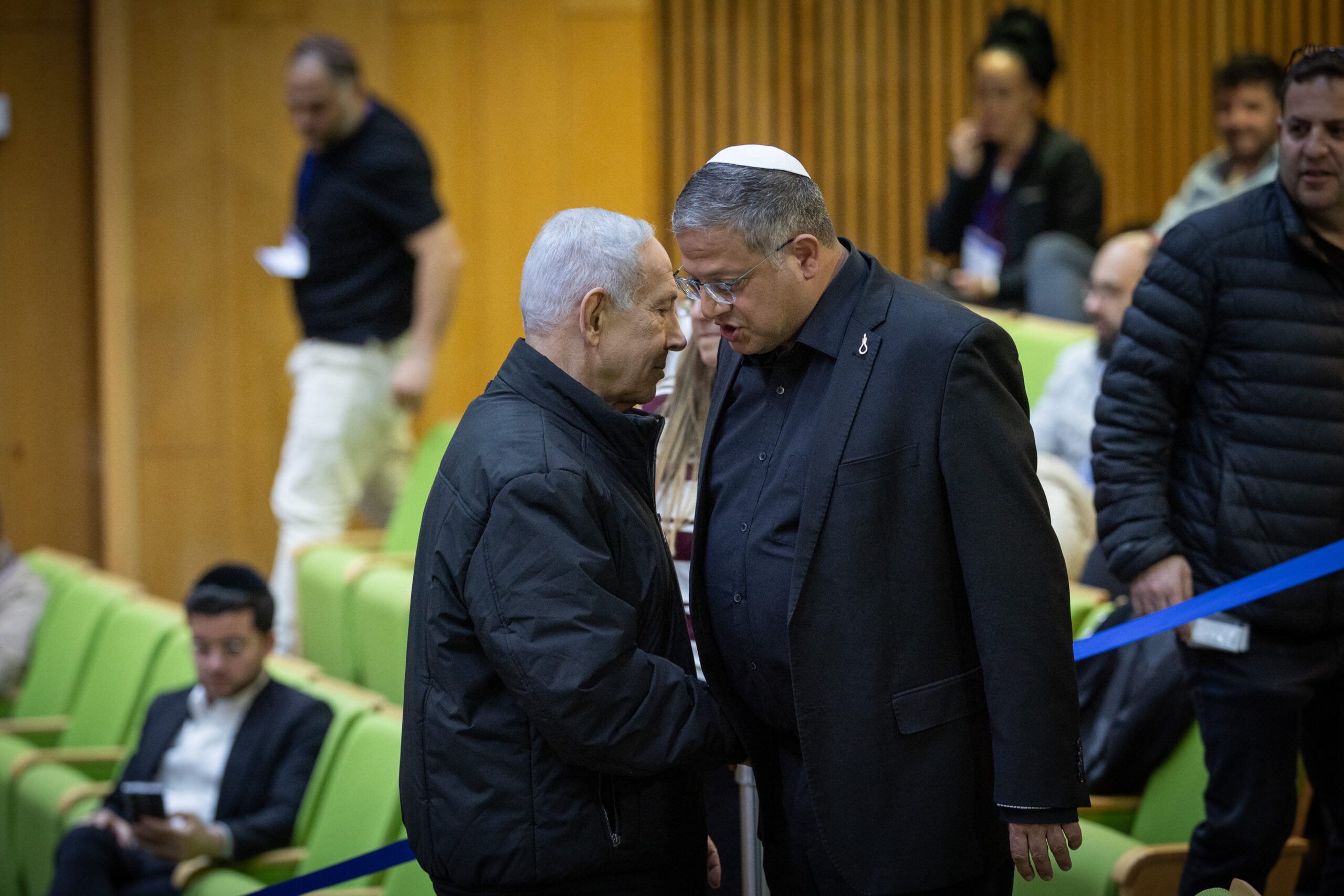
3+The relationship between Likud and Otzma Yehudit during the election campaign is also being examined through this lens by Ben-Gvir’s circle. They point, among other things, to the fact that Netanyahu didn’t photograph with Ben-Gvir at the Altalena event and to the maneuvering around surplus vote-sharing agreements between right-wing parties. For them, these are signs of Likud distancing itself from Otzma Yehudit and preparing the ground for the day after the election.
But alongside this interpretation, there’s another picture. Likud is currently sending a message that there’s no intention to give up Ben-Gvir as a coalition partner. The messages coming from the party don’t point to preparation for a government where Otzma Yehudit stays outside, but rather to a desire to maintain the alliance with right-wing parties and form a government that will include Ben-Gvir as well.
 3+
3+So while Ben-Gvir’s circle reads Netanyahu’s new language and political conduct as signs he wants to keep the option open for a different government, Likud is trying to signal that this option isn’t on the table—and that even after the election, if the right-wing bloc makes it possible, Ben-Gvir is expected to be part of the government.
Ben-Gvir looks at Netanyahu’s conduct and tries to understand where he’s headed; Likud, meanwhile, continues to signal that the direction is a right-wing government with Otzma Yehudit staying inside.