


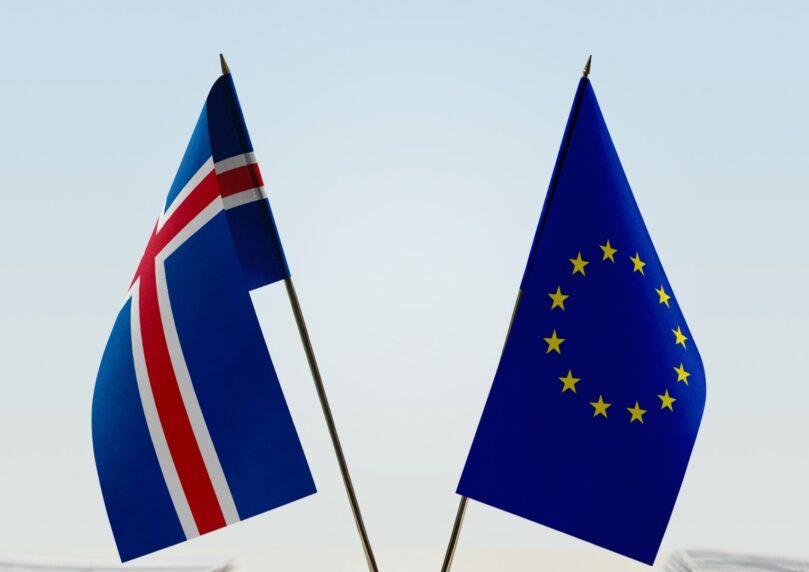
Icelanders rejected resuming European Union membership talks, deciding the country will remain outside the bloc for the foreseeable future. The “no” camp won the referendum after a heated campaign in which the opposition warned that joining would threaten Iceland’s sovereignty and control over its fishing waters.
According to RÚV, Iceland’s public broadcaster, the vote centered on whether to restart negotiations with the EU years after the previous process was frozen. About 272,000 citizens were eligible to participate in the referendum, considered one of the country’s most significant political issues in recent years.

The government promoted resuming talks as a “now or never moment.” Prime Minister Kristrún Frostadóttir said during the campaign that voting against restarting negotiations would effectively end discussion of Iceland joining the EU. After casting her ballot in the capital Reykjavik, she called it a “big day” and said the country had waited years for a public decision on the issue.
Supporters of joining argued that EU membership could help Iceland tackle high interest rates and strengthen its economic and political security during a period of global instability. They said the war in Ukraine, tensions in the Arctic region, and U.S. tariffs highlighted Iceland’s need to anchor itself within a broader European framework.
Opponents warned that joining the EU could damage Iceland’s independence and control over its natural resources, especially fishing waters—considered among the country’s most important strategic and economic assets. For many voters, the fishing question was a decisive factor in opposing renewed talks.
Iceland: national continuation of EU accession negotiation referendum
With “No” firmly in the lead, it appears the “Yes” margins in Reykjavík have been unable to keep pace with “No” in the rural regions.
Yes: 47.46% (-2.44%)
No: 52.52% (+2.44%)99% reporting
+/- vs. 80%… pic.twitter.com/73DxbOPPxu
— Europe Elects (@EuropeElects) August 30, 2026
The decision is expected to be received with disappointment in Brussels, where officials viewed Iceland as a relatively easy candidate for EU expansion. EU sources estimated that the country’s membership could have strengthened the bloc’s position in the Arctic region and reduced public skepticism toward EU enlargement.
Iceland first applied to join the EU in 2009 following the financial crisis that devastated its economy. But in 2013, a euroskeptic government halted negotiations, and the issue has returned to the agenda intermittently since then. Now, after the public’s decision, it appears the question of joining the EU will once again be taken off the table.