


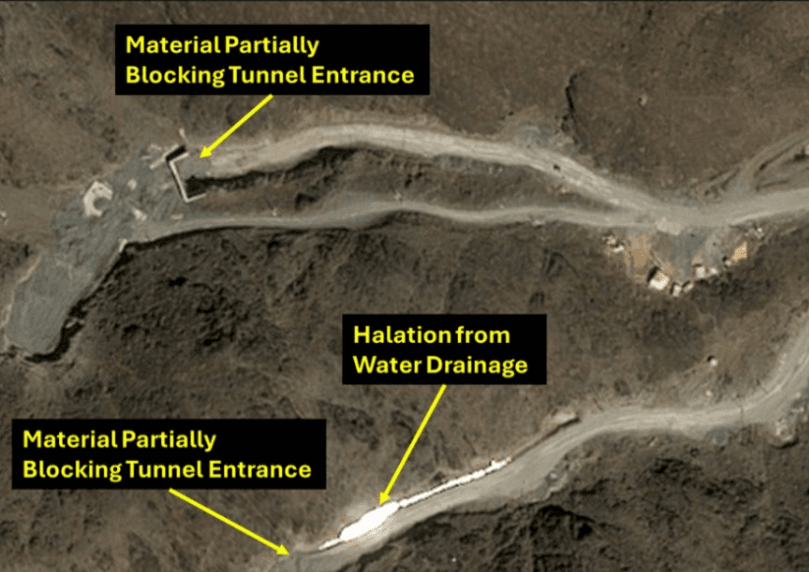

The nuclear facility at Pickaxe Mountain, a massive underground complex apparently designed to house centrifuges for uranium enrichment, is currently an empty cavern as the Iranians have yet to install the machinery. However, its very existence and the ongoing construction work there create a critical flashpoint in the strained relationship between Washington and Tehran.
Trump on Iran:
We are going to take out Pickaxe Mountain.
Let the Iranians know we are coming.
There is not a damn thing they can do about it! pic.twitter.com/cOLeqCve9A
— Clash Report (@clashreport) July 13, 2026
According to assessments, there’s currently no conventional military solution for this facility. The site is built at such an extraordinary depth that even conventional bunker-buster bombs—including those dropped on the Fordow facility—can’t penetrate it. What’s more, the option of using next-generation bunker-busters like the B61 is considered unlikely under current circumstances, given the heavy concern about breaking the taboo on tactical nuclear weapons use by Putin.
Given these constraints, very few operational options remain for striking the site. The main option left on the table is a complex ground operation against the facility. Another possibility is attacking the tunnel entrances and collapsing earth into them, but past experience shows the Iranians are capable of clearing debris and restoring the site to operation.
IRAN NUCLEAR UPDATE: Possible NEW Passive Defensive Measures Noted at Pickaxe Mountain
Based upon newly available satellite imagery of the Pickaxe Mountain underground complex, just south of the Natanz Nuclear Complex, it appears that as early as April 22nd, the two eastern… pic.twitter.com/KGAhBkLks8
— Inst for Science (@TheGoodISIS) May 6, 2026
Meanwhile, Iran is continuing construction work at the site—apparently violating the memorandum of understanding with the Americans, particularly Article 9 requiring maintenance of the status quo on the nuclear program.
The issue of dealing with the Pickaxe Mountain site has been at the center of Israel’s agenda and security discussions. Moreover, an Israeli delegation to Washington was expected to present to the American administration Israel’s red lines regarding Iran’s nuclear program, with dealing with the site being one of the central demands.
Mount Pickaxe is believed to be Iran’s newest and deepest suspected underground nuclear facility, with analysts suggesting it may have been declared to the IAEA before recent U.S. strikes. pic.twitter.com/t0MdRKLEk8
— Osint World (@OsiOsint1) July 13, 2026
It’s possible the delegation has already visited Washington, and that Israeli pressure conveyed to the American administration by security officials and experts influenced President Trump’s recent statements. The combination of Iranian progress on the ground—violating its international commitments—and intelligence and policy coordination with the United States positions the Pickaxe Mountain facility as a potential turning point in the effort to stop Iran’s nuclear program.
For now, Pickaxe Mountain remains unfinished—but so too does the race to determine whether it can ever be stopped from the air. If construction continues, the window for neutralizing the site without a far riskier military operation will continue to narrow.