


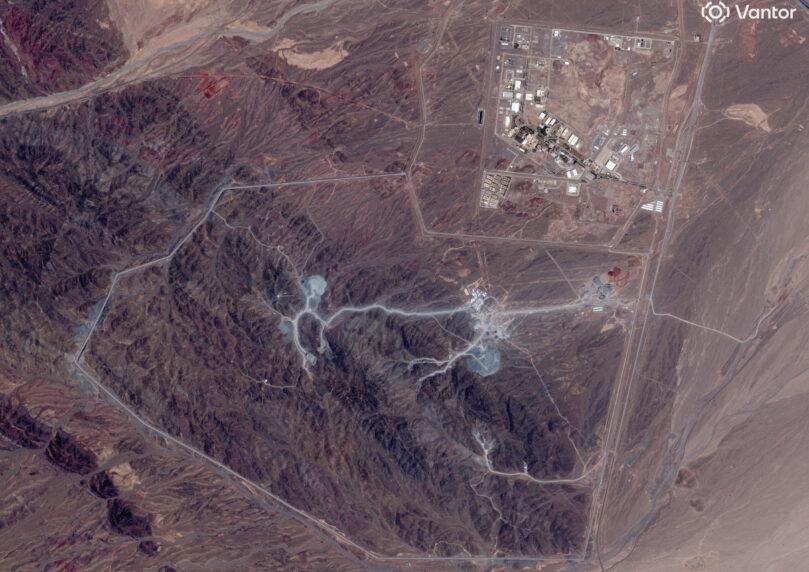

Deep beneath the surface, at a site almost never exposed to the world, Iran continues work at the Pickaxe Mountain facility near the Natanz nuclear complex. New satellite imagery from late June shows ongoing activity at the underground compound—raising questions about whether Tehran is honoring commitments made under its understanding with the United States.
Recent satellite imagery from late June 2026, of the Natanz Nuclear Complex and the nearby Pickaxe Mountain facility, Fordow, and Esfahan, were provided to the Institute by @vantortech.
At Natanz, little activity can be seen. The access points to the below ground enrichment… pic.twitter.com/on6isIGhNA
— Inst for Science (@TheGoodISIS) July 2, 2026
According to analysis by the Institute for Science and International Security (ISIS), the site shows vehicle movement on roads leading to the western tunnel entrances, along with continued work to reinforce the tunnel system’s access points. Researchers estimate that work inside the compound is still ongoing—even though under the Washington-Tehran understanding, Iran committed to maintaining the status quo on all nuclear-related activity.
If that interpretation of the understanding is correct, researchers say, construction work at the facility may violate Iran’s commitments. Meanwhile, the eastern tunnel entrances remain partially covered with dirt, as documented as early as May. The assessment is that this is a measure designed to make it harder for vehicles to quickly enter or exit the compound.
Documentation Released in May
IRAN NUCLEAR UPDATE: Possible NEW Passive Defensive Measures Noted at Pickaxe Mountain
Based upon newly available satellite imagery of the Pickaxe Mountain underground complex, just south of the Natanz Nuclear Complex, it appears that as early as April 22nd, the two eastern… pic.twitter.com/KGAhBkLks8
— Inst for Science (@TheGoodISIS) May 6, 2026
In contrast to the activity at Pickaxe Mountain, satellite images show no significant change at the main nuclear facilities that were hit in strikes. At Natanz, only minimal activity is visible—access points to the underground enrichment facilities remain destroyed, power and cooling systems have not been restored, and only one vehicle was spotted in the area.
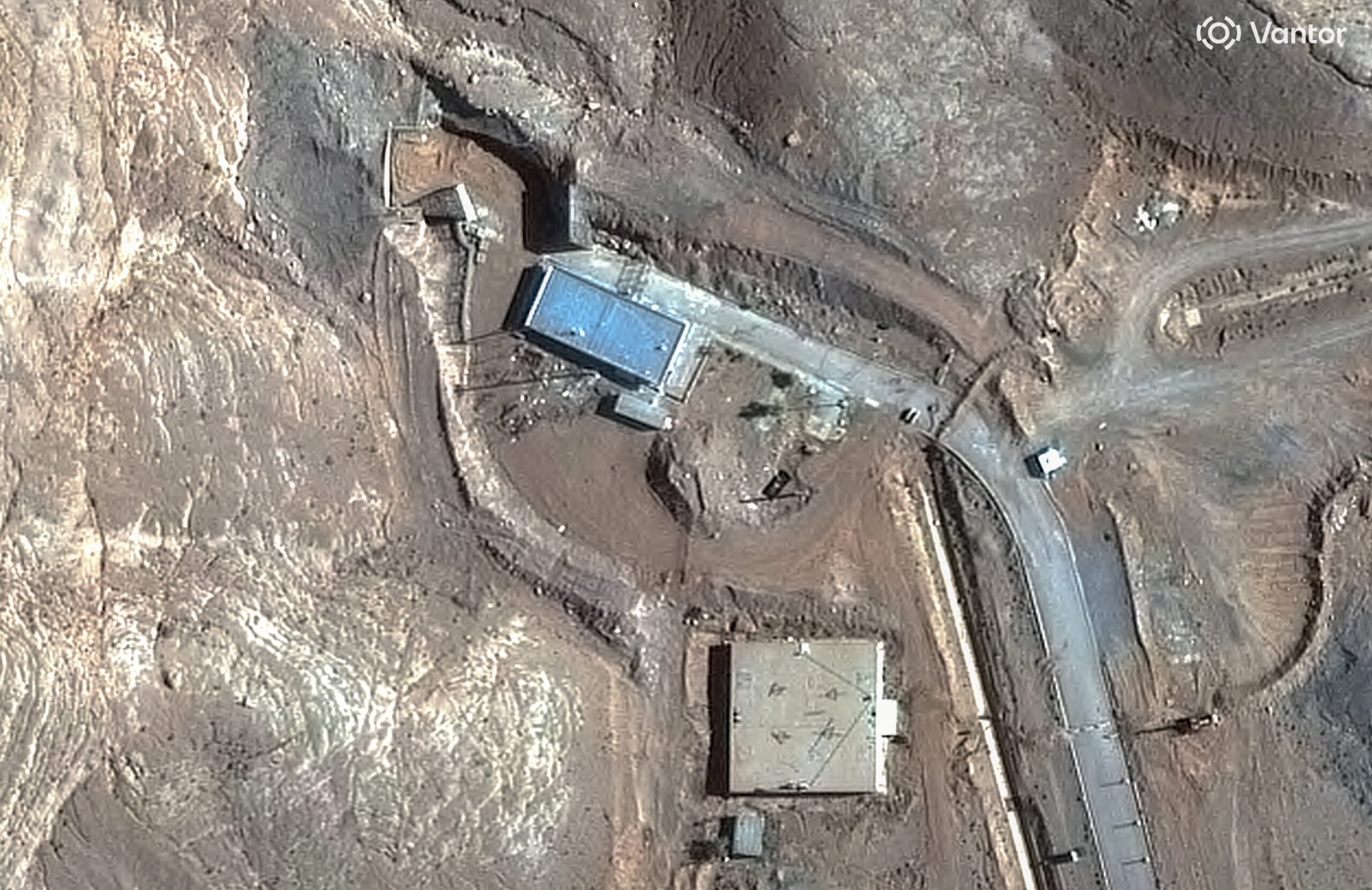

At the Fordow facility, no signs of tunnel reopening were detected either. Defensive measures Iran placed along access routes—including earth and rock berms creating a winding passage—remain in place. At Esfahan, as of late June, no new activity was detected and tunnel entrances there also remain covered with dirt.
Pickaxe Mountain is considered one of the most mysterious facilities in Iran’s nuclear program. Over the years Iran has released almost no information about the site, and inspectors from the International Atomic Energy Agency have never visited it. According to various assessments, it may be used to store sensitive equipment and materials, to transfer activity from more vulnerable facilities, or as an underground site that would continue operating even in the event of a strike.
The facility itself was not hit in strikes attributed to Israel and the United States against Iranian nuclear sites over the past year, unlike the enrichment sites at Fordow and Natanz and the facility at Esfahan. Because of this, any sign of activity there continues to draw interest from research and intelligence sources tracking Iran’s nuclear program.