


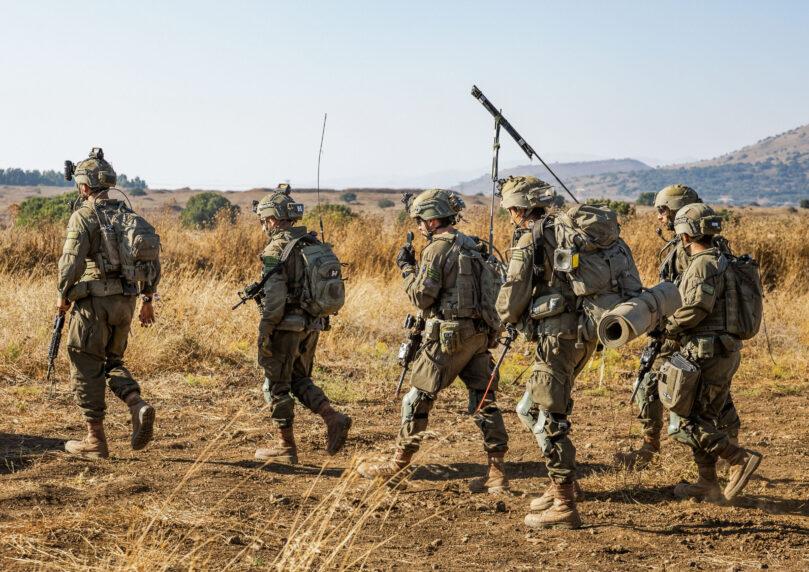

The Israel Defense Forces (IDF) released data Sunday on the number of wounded soldiers and the support and rehabilitation systems provided to them, ahead of the opening on Monday of the national week honoring Israel’s wounded and victims of hostile actions. According to the figures, roughly 70% of combat-wounded troops from the past three years have returned to service in the IDF, while the Defense Ministry’s rehabilitation division currently recognizes some 31,000 wounded. At the same time, the military reports thousands of requests for mental health support and an expansion of programs designed to support wounded soldiers and reservists even after their active service ends.

 3+
The week of recognition, opening on Monday, is led by the IDF’s Manpower Directorate in partnership with the Defense Ministry’s rehabilitation division and Disabled Veterans of Israel. Its purpose is to honor IDF wounded—both physical and psychological—to recognize their contribution to the nation’s security, and to make support and rehabilitation services more accessible to them. The standout figure the military released is the return-to-service rate among combat-wounded troops over the past three years, at roughly 70%. Alongside this, the Defense Ministry’s rehabilitation division currently recognizes about 31,000 wounded soldiers, who are entitled to a rehabilitation package based on their condition and eligibility.
As part of the week of recognition, a new initiative called “Embrace from Home” will launch for the first time, designed to strengthen the connection between wounded soldiers and the communities where they live. The initiative is led by the IDF Spokesperson’s Unit, the Wounded Soldiers Department and the Casualties Division, together with the IDF in the City administration in the Manpower Directorate, in partnership with ten selected local authorities across the country.
 3+
The activities will include gatherings with IDF commanders, local authority heads, and combat-wounded residents. The meetings will feature panels where wounded soldiers share their experiences, alongside presentations of the services and support available to them. The goal is to enable personal and community recognition while strengthening connections with the agencies supporting wounded soldiers through the rehabilitation process.
Alongside the return-to-service data, the IDF is also releasing figures on mental health activity. Since the start of the war, roughly 5,800 requests have been received by combat response units, which provide support to those dealing with psychological effects following combat incidents. In addition, more than 9,800 processing sessions for combat experiences and operational events have been held, led by commanders and accompanied by mental health officers. This activity is designed to help service members cope with their experiences and identify difficulties requiring additional professional support.
 3+
Parallel to medical and mental health support, the IDF is working to make wounded soldiers’ rights more accessible through government ministries and military agencies. Since the start of 2026, 12 “arrangement days” for wounded soldiers have been held across various local authorities, led by the IDF in the City administration’s Manpower Directorate. During these days, wounded soldiers received services and information on transportation, taxes, licenses, salaries, and additional benefits, alongside access to mental health support. The activity was conducted in partnership with government ministries and IDF agencies, aiming to consolidate various services in one place and make it easier for wounded soldiers to exercise their rights.
As part of expanding the support system, the Manpower Directorate developed the “Between Times” program, designed to continue supporting reservists even after active service ends. As part of the program, the Reservists’ House was established at Kfar Hamaccabiah, where recognition ceremonies, programs for processing service experiences, and additional activities will take place. The facility is designed to consolidate a range of services and support for reservists, recognizing that coping with the effects of service doesn’t necessarily end when the operational mission is complete. To advance the program, new positions have also been created, including service envelope and cohesion officers, who will help strengthen connections with service members and provide support for their needs.
 3+
The IDF emphasizes that the week of recognition isn’t limited to ceremonies and events, but represents part of the ongoing commitment to Israel’s wounded soldiers and their families. The military, in partnership with the Defense Ministry’s rehabilitation division and Disabled Veterans of Israel, says it will continue working for wounded soldiers and supporting them through rehabilitation. “At this time, and throughout the year, we have a duty to honor those who sacrificed themselves for the most important mission of all—defending the state,” the IDF said. The week of recognition will include meetings and activities designed to express appreciation for wounded soldiers, raise awareness of their struggles, and strengthen the physical and mental support they receive.