


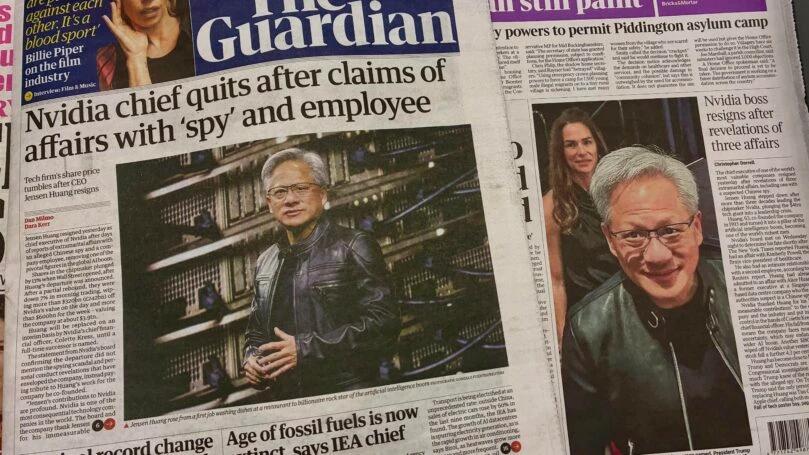

The world’s leading artificial intelligence companies—including OpenAI, Anthropic, and Nvidia—have begun actively recruiting former intelligence agency employees for internal counterintelligence roles, offering annual salaries up to $500,000, according to a report in the financial magazine Fortune. The hiring wave comes amid mounting fears of corporate and state-backed espionage, as the global race for technological superiority in artificial intelligence has increasingly become a frontline national security priority.

According to data compiled by workforce tracking firm Revelio Labs, recruitment for counterintelligence roles across the AI sector is steadily rising. Anthropic alone has hired 33 employees into such positions this year, up sharply from just 14 last year, while OpenAI has recorded a similarly substantial jump in specialized security hiring.
Beyond operational investigators and analysts, leading AI firms are also appointing former senior intelligence officials to top governance and advisory posts. Notable appointments include former National Security Agency (NSA) Director Paul Nakasone joining OpenAI’s board of directors, as well as a former deputy director of the Central Intelligence Agency (CIA) being named to Anthropic’s advisory council.

 1+
The surging demand for intelligence expertise is far from theoretical, driven instead by real-world espionage incidents that have rattled the technology sector. While security vulnerabilities surrounding Nvidia CEO Jensen Huang drew widespread attention and underscored the exposure of top industry executives, another alarming breach occurred just one month earlier, when an OpenAI engineer was arrested on suspicion of planting a covert listening device inside a company conference room and maintaining contact with parties in Saudi Arabia. Together, these episodes highlight the intense stakes surrounding competition at the frontier of AI development.
 1+
The resulting A.I.Iiring scramble has created a specialized labor market marked by rapidly escalating compensation. “AI companies have snapped up a lot of security talent,” said Christopher Falkenberg, a former agent with the U.S. Secret Service. “Demand exceeds the supply of people with relevant experience.”
Security experts explain that modern espionage operations targeting technology firms rely on sophisticated social engineering rather than blunt approaches. Instead of directly soliciting trade secrets, operatives often initiate contact through seemingly innocent encounters at industry conferences or via dating apps, making the threat landscape far more complex for Silicon Valley defenders to detect and neutralize.