




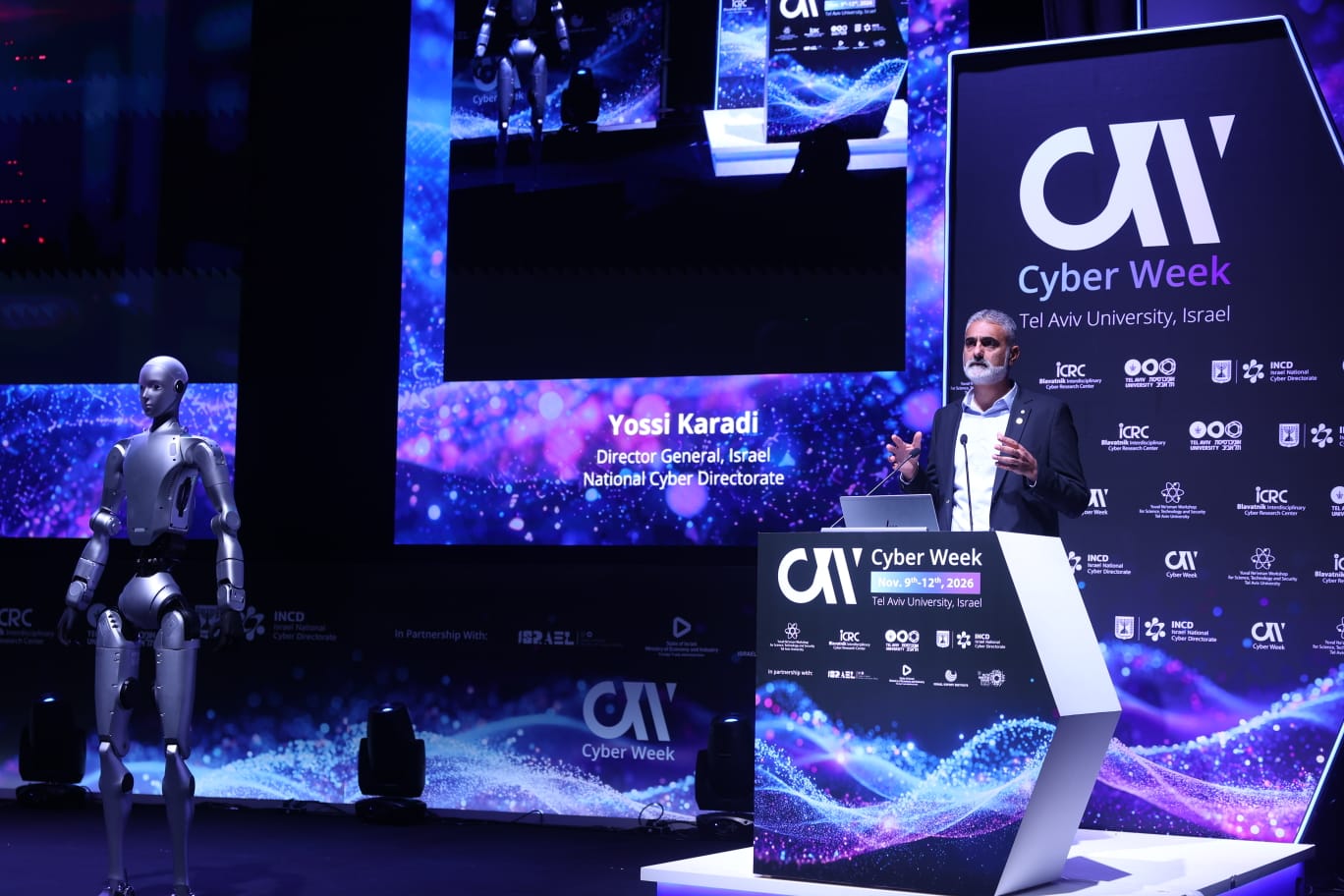
Yossi Karadi, head of Israel’s National Cyber Directorate, warned Monday at Cyber Week that Iran is developing AI-based cyber attack capabilities that could threaten the entire world. “While the world is working to prevent Iran from obtaining nuclear weapons, we know Iran is also working to develop another offensive capability in cyber using artificial intelligence,” Karadi said in his speech.

 2+
Karadi described the time gap in which attackers enjoy an advantage over defenders before AI capabilities are integrated into national defense. According to him, an attacker needs to use one model, attack one target, and choose when to act. At the same time, defenders must protect many organizations around the clock from attacks based on a wide range of models, all while meeting regulatory requirements.
“At the national level, the defenders’ mission is harder,” Karadi said. “We must successfully defend many organizations simultaneously, around the clock, against attacks enabled by a wide range of different models, all while meeting regulatory requirements,” he added.
 2+
Later in his speech, Karadi presented a new concept of cyber war of attrition, recently published in an American journal. According to the concept, the strategic threat lies not only in the power of a single attack, but in the accumulation of attacks over time. When the pace of attacks exceeds the pace of recovery, even isolated incidents can accumulate into broad systemic damage to a country.
 2+
“In the new cyber war of attrition, the enemy doesn’t have to win with one attack,” Karadi explained. “He can try to defeat it through sustained erosion. A country that can’t recover at the pace it’s being attacked could find itself gradually worn down, even without a single cyber attack that defeated it,” the cyber chief said.
At the end of his speech, Karadi brought on stage Roberta, a humanoid robot from Professor Yuval Elovici’s lab, and raised a question about human control over machines: “When a machine operates in the physical world, are we still in control?” According to him: “Imagine a million robots from the same manufacturer, operating in dozens of countries. And then, one day, an update or cyber attack causes all million robots to perform the same dangerous action at the same time. People could get hurt.”