




Israel’s 26th Knesset was sworn in Tuesday in a ceremonial session attended by President Isaac Herzog, where all 120 newly elected members took their oaths of office. The inauguration comes amid a frantic political race to form the next government, after the president on Sunday tasked Gadi Eisenkot, leader of the Yashar party—which won 21 seats in the election—with forming a coalition. Eisenkot secured recommendations from 67 lawmakers.
While Eisenkot has 28 days to assemble a coalition, the parliamentary arena is already roiling with initial moves by the ‘change bloc’ to fill key positions, establish a steering committee, and hold feverish talks with various factions in an attempt to avoid another election round.

 2+
The day’s events began with lawmakers’ arrival at the Knesset and a series of sharp political statements. Prime Minister Benjamin Netanyahu arrived with his wife Sara and marked a historic milestone, becoming the person who has served in the most Knessets in the state’s history—15 in total, surpassing the record of former President Shimon Peres.
 2+
Meanwhile, Yisrael Beiteinu chairman Avigdor Lieberman explained before the ceremony why campaign promises give way to political reality, claiming he saw how the ultra-Orthodox parties were behaving and identified “an opportune moment that must be seized.” At the same time, Knesset member Tally Gotliv sharply attacked the entry of 19 lawmakers from the Arab parties, made clear she doesn’t see the swearing-in day as a happy one given their presence, and called on the ultra-Orthodox factions not to cooperate with those who called them “parasites.”
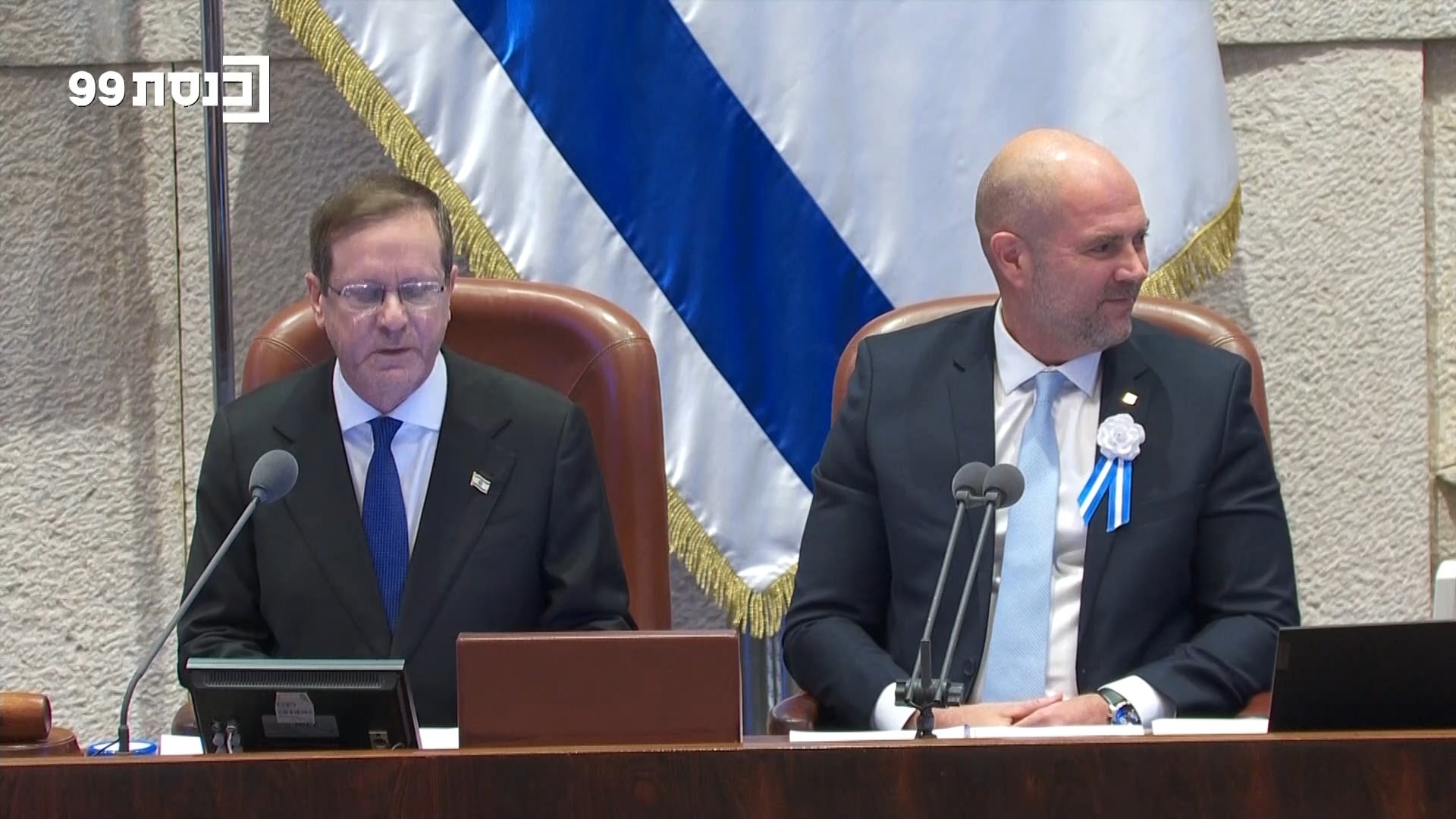
Inside the plenum, the ceremony produced stately, tense, and moving moments. President Herzog called on the new lawmakers in his speech “to make the most of its days,” while outgoing Knesset Speaker Amir Ohana declared in his address that “there can be no cooperation with those who call the Jewish people invaders in their own land.” A particularly moving moment came when Likud Knesset member Elisha Madan, who was critically wounded in combat in Gaza and lost both legs, insisted on standing on his prosthetic legs despite the pain while taking his oath to the 26th Knesset, earning loud applause and ovations. But the ceremony ended on jarring notes: just before the singing of the national anthem “Hatikvah,” Arab party lawmakers walked out of the plenum. The unusual incident sparked immediate uproar and harsh criticism, especially given the political cooperation being woven with them in recent days.
Alongside the ceremony, the parliamentary arena buzzed over dramatic legislative moves from both sides of the barricade. Deputy Knesset Speaker Limor Son Har-Melech of Otzma Yehudit, a center-right party, submitted a bill to dissolve the 26th Knesset and hold new elections even before the swearing-in was completed. Son Har-Melech justified her proposal with serious allegations of corruption, fraud, election bribery, foreign funding, and interference by enemy states in the election results, relying on warnings from the Shin Bet chief and published investigations on the matter.
 2+
On the other side, Democrats party chairman Yair Golan announced the launch of a “legislative blitz” including dozens of bills in the areas of law, security, economy, and religion and state—among them limiting the prime minister’s tenure, operating public transportation on Shabbat, and recognizing civil marriage. Golan added that the next government’s first decision will be establishing a state commission of inquiry, and called on left-bloc leaders to form a government quickly and not rule out including the Arab parties in the coalition, arguing that “whoever can treat our wounded sons and save their lives is entitled, permitted, and able to sit with us.”
The main political drama on the Knesset’s first day centered on the battle for control of the institution’s bodies and the identity of the speaker. Yashar party leader Gadi Eisenkot managed to push aside Avigdor Lieberman on three central issues and advanced a move to oust Knesset Speaker Amir Ohana and replace him with Knesset member Matan Kahana. Eisenkot secured more than 61 signatures for the move while relying on votes from the Arab factions—a maneuver that drew sharp public criticism, including from bereaved mother Esti Yaniv, who wrote painfully that Kahana “will get his plot on Mount Herzl with Arab votes.”
The most significant and far-reaching event summing up the swearing-in day is the dramatic shift in the political balance of power: with the establishment of the 26th Knesset, the right-wing bloc lost the majority it had in the parliament. While coalition talks with the ultra-Orthodox factions continue and contact is maintained with Ra’am and the Joint List, left-bloc figures are already establishing facts on the ground, advancing moves to change the face of the system, and preparing to take full control of the Knesset’s central committees.