


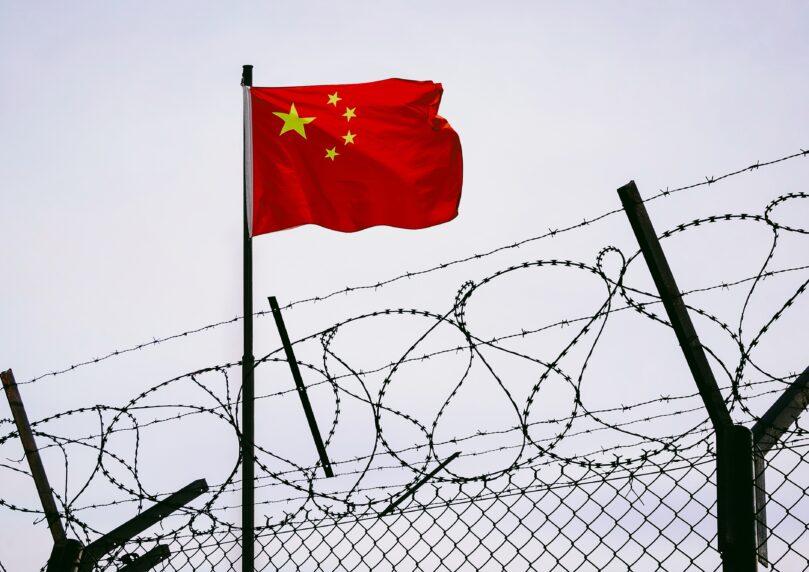

Two Muslim men from the Uyghur minority held in Thailand since 2014 are begging authorities not to deport them to China, fearing imprisonment and torture. The men, ages 26 and 35, made their appeal Wednesday following their release from prison in late October and the possibility they could be handed over to Beijing’s regime. Amid growing criticism, Thailand’s National Security Council clarified that any extradition would only occur following a formal request and court ruling, while human rights groups warn of a repeat of last year’s case when 40 Uyghurs were deported and disappeared.


 4+
Responding to public and international criticism, Thailand’s National Security Council announced it would not carry out direct administrative deportation, and that the fate of the two men would be decided through an open legal process—and only if China submits a formal, legally binding extradition request.
The two were arrested in 2014 near the Malaysian border, along with a group of more than three hundred Uyghurs who fled China following ethnic, cultural, and religious persecution in Xinjiang province. Since then, the Chinese government has consistently demanded the return of all refugees to its territory, labeling them as terrorist operatives.
 4+
In a letter delivered in English and published by Kanawee Suebsang, a former lawmaker and founder of the human rights organization Peace and Rights Foundation, one of the detainees described the ongoing terror: “Every time we are terrified that China will take us back. We are not terrorists.”
Sisinart Thamnithinan, a member of parliament from the opposition People’s Party, called on the government to respect local law and international law prohibiting the return of anyone to a place where their life is in danger: “Maintaining international relations is important, but it cannot override human rights and the rule of law. We must not send anyone into danger just because the government wants to get rid of a problem.”
 4+
In light of the public outcry, the head of Thailand’s National Security Council, Chaipruek Duangprapapat, clarified that unlike the deportation of forty Uyghur detainees last year, this time a full judicial process would be required: “If the court rules against them, they will be extradited according to the treaty. This is the judicial process.” Duangprapapat added that if the court rules in their favor, they would have the option to be resettled in a third country.
Meanwhile, Chinese Foreign Ministry spokesperson Mao Ning declined to answer directly whether a formal extradition request had been submitted, but emphasized: “Cooperation between China and Thailand in combating cross-border crime, including illegal immigration, is conducted in accordance with the laws of both countries, international law, and accepted practice.”
 4+
Fears for the two men’s lives are based on harsh past precedents. Of the more than three hundred Uyghurs who fled in the first wave, Thailand allowed most women and children to travel to Turkey, but in 2015 deported one hundred and nine men to China against their will—a move that sparked fierce international outrage and led to protesters storming Thailand’s embassy in Turkey.
In February 2025, the Bangkok government repeated the move and deported forty more men, despite the detainees’ pleas and sharp warnings from the UN and Thai lawmakers. Until the moment of deportation, the Thai government denied its intentions, and later claimed the detainees had signed documents in Chinese confirming their voluntary return.
 4+
But a report published by Thailand’s National Human Rights Commission found that authorities provided no evidence of the men’s free consent or guarantee of their safety. Since their deportation, the forty Uyghurs have vanished completely, and all attempts by human rights activists and officials at Thailand’s Foreign Ministry to determine their fate have gone unanswered by Beijing authorities.
The Uyghurs are a Muslim ethnic group speaking a Turkic language, with historical origins in Xinjiang province in northwestern China. In recent decades, the Beijing regime has waged an ongoing campaign against the Uyghur population under the guise of fighting terrorism and separatism—a campaign that has escalated in recent years to violent repression, mass detention in re-education camps, erasure of cultural identity, and forced labor—measures defined by several Western governments as genocide.
The flight of hundreds of refugees through Southeast Asia in 2014 turned Thailand into a diplomatic battleground: while international organizations demanded they be granted humanitarian asylum, China applied heavy economic and political pressure on Bangkok demanding their return to its territory.