


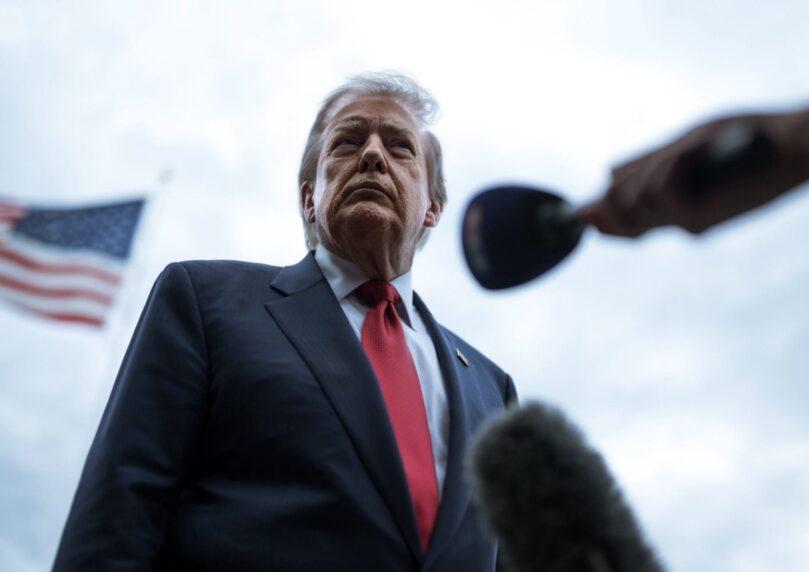

Israel has already ordered billions of dollars in U.S. military equipment, and even after the current aid agreement expires in 2028, roughly $10 billion in unpaid orders will remain—commitments that could complicate President Donald Trump’s stated intention to end military aid to Israel, the Wall Street Journal reported Wednesday.


 2+
According to a State Department document sent to Congress and obtained by the newspaper, the United States has already committed to transferring nearly $7 billion in military aid to Israel over the next two years, but that amount doesn’t cover the full value of orders Israel has placed.
The difficulty stems in part from the U.S. aid mechanism, which allows Israel to order military equipment against funds the United States has committed to transfer in the future—before the financing is actually received. This lets Israel purchase fighter jets, bombs, and other weapons in advance, but also accumulate financial commitments that extend beyond the current aid agreement period.
 2+
Democratic Congressman Joaquin Castro, who requested details from the State Department on the scope of commitments, addressed the newly revealed figures: “Even if the memorandum of understanding continues through its planned end in 2028, there will still be an additional $10 billion beyond that, and the question is who will pay that amount.” The response he received clarified that funding could come from U.S. aid funds, Israel’s budget, or a combination of both.
Meanwhile, U.S. lawmakers are advancing legislation designed to change the nature of security cooperation between the countries, shifting emphasis from direct financial aid to defense investments and joint production of military technologies. Supporters of the proposal seek to expand cooperation in a format similar to the Iron Dome system, whose production involves American companies as well, while opponents warn the move would actually make it harder for Congress to scale back security ties with Israel in the future.
 2+
Earlier this week, President Donald Trump announced his intention to end annual military aid to Israel—worth roughly $4 billion—after what he said were understandings reached on the matter with Prime Minister Benjamin Netanyahu, claiming Israel has become a successful country that no longer needs regular American aid.