


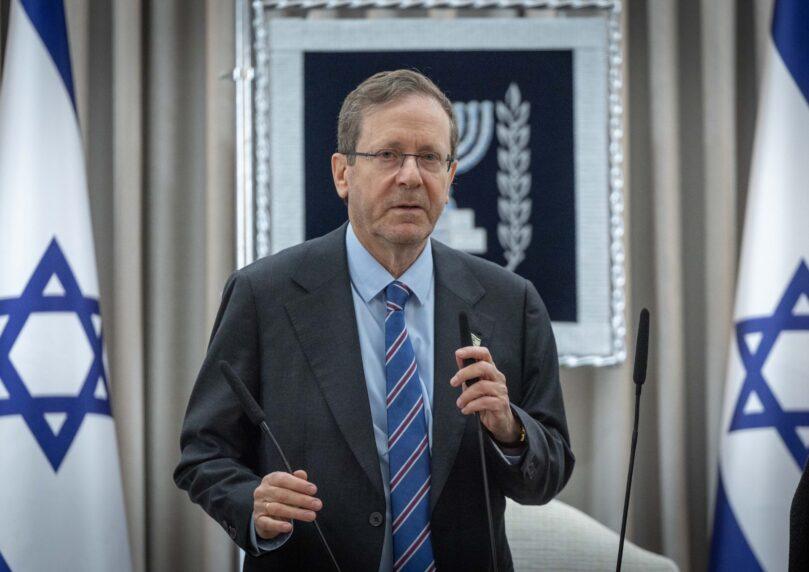

President Isaac Herzog began a round of consultations with Knesset factions today (Wednesday) ahead of tasking someone with the formation of the next government. The Shas and Religious Zionist factions recommended Likud Chairman Benjamin Netanyahu. During the meeting with Shas representatives, Herzog inquired about the status of Aryeh Deri—following reports of his potential resignation—and was told that the party chairman enjoys the absolute backing of the Council of Torah Sages.
Shas Recommends Netanyahu; Herzog Asks About Deri’s Status
The Shas faction arrived at the President’s Residence and recommended that Benjamin Netanyahu be tasked with forming the government. During the consultations, Herzog raised the issue of party chairman Aryeh Deri’s status, asking the faction’s representatives about his situation in light of recent reports.

In response, a Shas representative stated: “Rabbi Aryeh Deri has the absolute backing of the Council of Torah Sages; everyone views him as the man who will continue to lead the party for many years to come.” MK Michael Malkieli addressed the public discourse surrounding the Ultra-Orthodox (Haredi) community over the past four years, asserting that it was marked by incitement and harsh rhetoric directed at those who study Torah.
“We have just concluded a four-year term which, to my great regret, was accompanied by incitement and harsh statements against an entire community; there is no negative remark that hasn’t been leveled at the community of Torah scholars,” Malkieli stated.
According to him, a shift in the discourse regarding the Haredi community has occurred in recent days, with parties that previously voiced sharp criticism now calling for the reaching of understandings. Malkieli argued that this shift indicates that the earlier statements against the Haredi community were driven by political motives.
During the meeting, Malkieli highlighted the attitude of the late Rabbi Ovadia Yosef toward IDF soldiers, as well as the efforts made by the Shas party on behalf of those serving in the military. President Herzog responded by noting that he had known the late Rabbi Ovadia Yosef, and asked why, in recent years, the party has been perceived as having distanced itself from the realm of military service.

Malkieli replied that the support Shas received from soldiers—who cast their ballots via the “double-envelope” voting process—demonstrates the enduring connection between the party and those serving in the IDF. He added that while Shas was subjected to a period of targeted incitement, the party chose not to respond in the moment, out of a desire to de-escalate the hateful rhetoric. He further emphasized that the party has continued to work toward preserving Jewish identity and supporting vulnerable populations, including in the areas of welfare and healthcare.
Religious Zionism Recommends Netanyahu: Discussion Regarding Arab Parties
Earlier, a delegation from the Religious Zionism party—comprising Minister Orit Strock, Itamar Eitam, and Zvika Mor—arrived at the President’s Residence. The faction’s representatives recommended that the President task Likud Chairman Benjamin Netanyahu with forming a government.
During the meeting, a discussion arose regarding the possibility of cooperation with Arab parties. Strock made her opposition clear, stating: “We firmly believe that Arab parties are not legitimate partners for any coalition—neither from within nor from the outside.” She added that this opposition extends to any cooperation aimed at ousting the Speaker of the Knesset. Herzog asked Strock: “Why do you rule out Ra’am? Their number two was a senior police official.” He then added: “How do you distinguish between racism and what you are saying?” Strock replied: “I think reality has made that distinction.”

Later, Itamar Eitam called for the formation of a “broad national government, comprising all those who seek the good of the state.” Zvika Mor argued that there is a “takeover of the state by civil society organizations, under the guise of democracy.” Herzog took issue with this, stating: “That is a very dangerous remark. To claim that another side—regardless of who they are—is orchestrating a takeover from within is extremely dangerous.”
During the consultations with the Religious Zionism faction, Herzog also raised the issue of IDF enlistment, asking the representatives whether they had a new proposal to resolve the crisis. Itamar Eitam referred to the severe injury sustained by Minister Bezalel Smotrich’s son, emphasizing that a change in the distribution of the burden is necessary.
“The future will not look like the past—that is clear to us. We will need to reach an agreement,” Eitam said. He argued that the equation between those who serve and those who do not must be altered, through a discussion held within the democratic framework and without ruling out any options in advance. Minister Strock also addressed the issue, arguing that the political discourse surrounding military conscription has devolved into a campaign, rather than focusing on practical solutions. “I believe everything is solvable,” she stated.
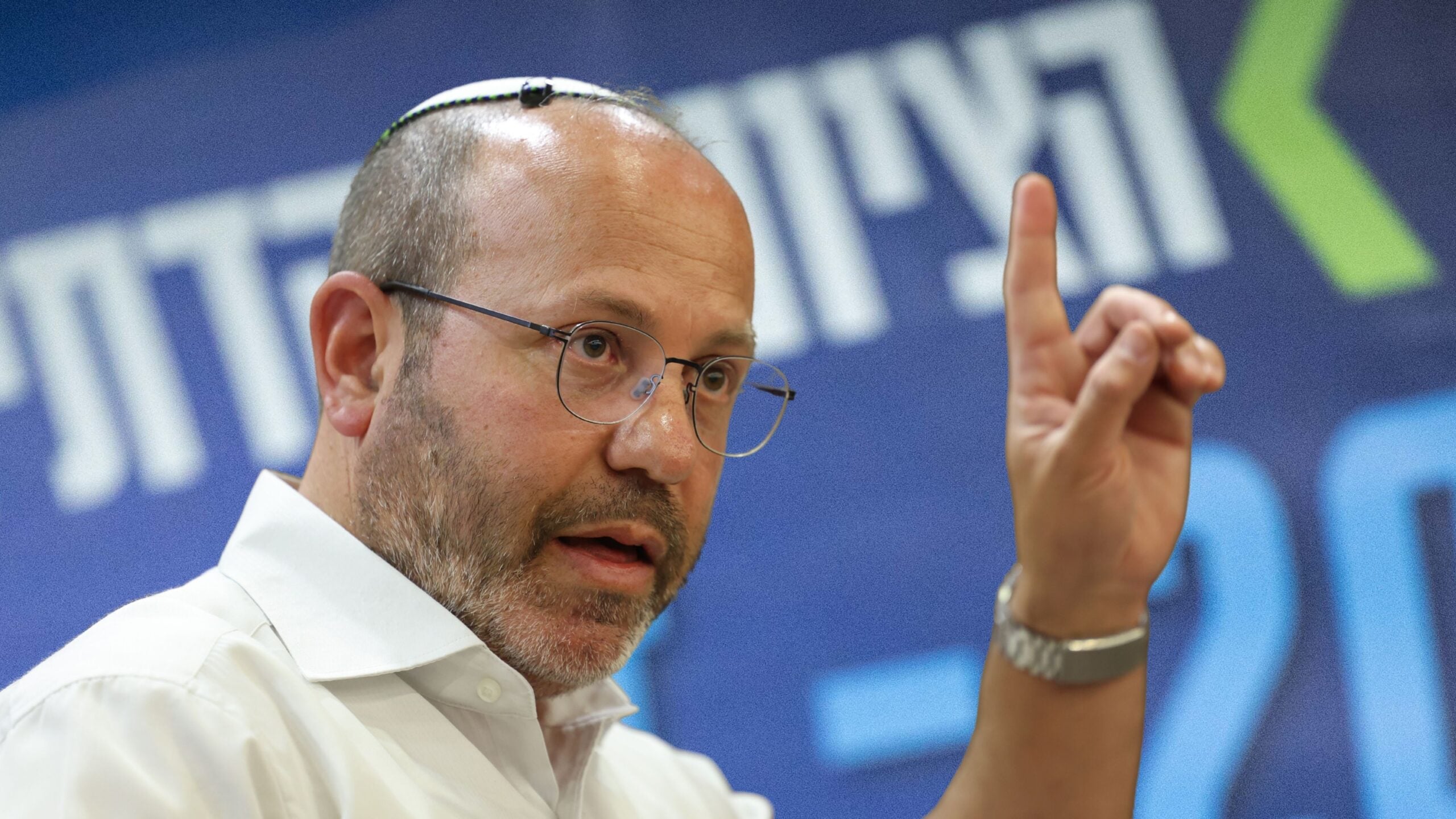
During the consultations, the President also touched upon the “ballot jihad” scandal, noting that he had held several discussions in recent hours with the head of the Shin Bet, the Police Commissioner, and the Attorney General. He stated that all relevant authorities are committed to conducting a thorough investigation and reaching definitive conclusions.
As the round of consultations began, an unusual security incident occurred at the President’s Residence: during a security screening of a foreign journalist, traces of a suspicious substance were detected on her person.
Following the incident, access to the residence was halted, and police bomb disposal experts were dispatched to the scene. Once the police investigation concluded, access to the President’s Residence was restored to normal.