




Israel may be preparing to deliver a covert, surprise blow against Iran’s security leadership in a format reminiscent of the pager and walkie-talkie explosions carried out against Hezbollah in September 2024. That’s what former senior Mossad official Oded Eilam revealed Saturday in an interview with the New York Post. According to him, four military commanders effectively run the country and could become the top target if fighting resumes. The disclosure comes as a third American aircraft carrier makes its way to the region, amid assessments that a broad strike against Tehran will launch immediately after the U.S. midterm elections.
According to the report, the nuclear-powered American aircraft carrier USS Theodore Roosevelt, a Nimitz-class carrier, is heading to the Middle East. Upon arrival, it’s expected to join two carrier strike groups already operating and sailing in the region: USS George Washington and USS George H.W. Bush. The massive concentration of naval and air power is taking place against the backdrop of intelligence and policy assessments that the military campaign against Tehran could resume with great intensity immediately after the U.S. midterm elections.

President Donald Trump said Friday in an interview with a local radio station in Kansas City that the war “is going to end soon,” but declined to elaborate on how he intends to bring it to a close. Republican Senator Roger Marshall of Kansas, who met recently with Trump, sharpened the timeline and estimated at a campaign event Thursday: “I’m guessing one to three days after this election, I wouldn’t want to be anywhere close to Iran.”
Meanwhile, Democratic Senator Chris Murphy, who sharply opposes military action, warned against the plans formulated in the administration after receiving a detailed security briefing. At an event held at the Middle East Institute in Washington on October 29, he said: “Their plan is insane. It will lead to devastating escalation and possible damage to our commitment to the rule of law. The plan they’ve developed will, in my view, lead to prolonging and escalating the war in a way that will be devastating to our security interests.” Murphy refrained from revealing classified details, but noted that the moves under consideration also include the possibility of striking Iranian civilian infrastructure.

At the heart of the report is the assessment that Israel won’t settle for regular air force fighter jet strikes, but will choose an unprecedented covert sabotage operation that will strike the regime’s leaders with complete surprise. Oded Eilam, who previously served as deputy head of the Mossad’s global operations division, told the New York Post that an operational plan in the format of the pager attack against the Islamic Republic’s leadership is on the table: “This is the bread and butter of Israeli strategy—surprising twists, unexpected moves. I’m absolutely certain that Israel has cards up its sleeve that will be used.”
Eilam recalled the successful operation Israel carried out on September 17 and 18, 2024, during which thousands of pagers and walkie-talkies used by Hezbollah operatives in Lebanon and Syria exploded simultaneously, an action that led to dozens killed, thousands wounded, and paralysis of the organization’s command.

According to him, Israel has been engaged for years in planning deception and surprise operations against targets in Iran, and therefore the preparations of authorities in Tehran don’t guarantee them protection: “Israel will use its imagination, its intelligence, and the ability of Israelis to surprise and turn the table upside down in ways that can’t be predicted in advance.”
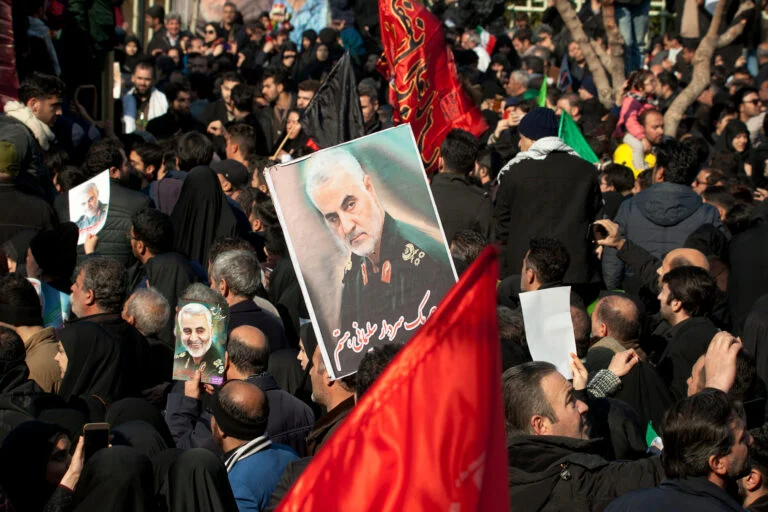
One of Eilam’s central assertions is that Iran’s civilian and political government institutions are stripped of all real power, and decisions are made by a small group of four senior military and intelligence officials. According to Eilam, President Masoud Pezeshkian, Foreign Minister Abbas Araghchi, and Parliament Speaker Mohammad Bagher Ghalibaf have no decision-making authority, and even the new Supreme Leader, Mojtaba Khamenei, essentially functions as a figurehead only: “The president and foreign minister can’t make decisions. The military junta hides behind Mojtaba, but he’s not the one running things. He’s an absolute puppet.”

 3+
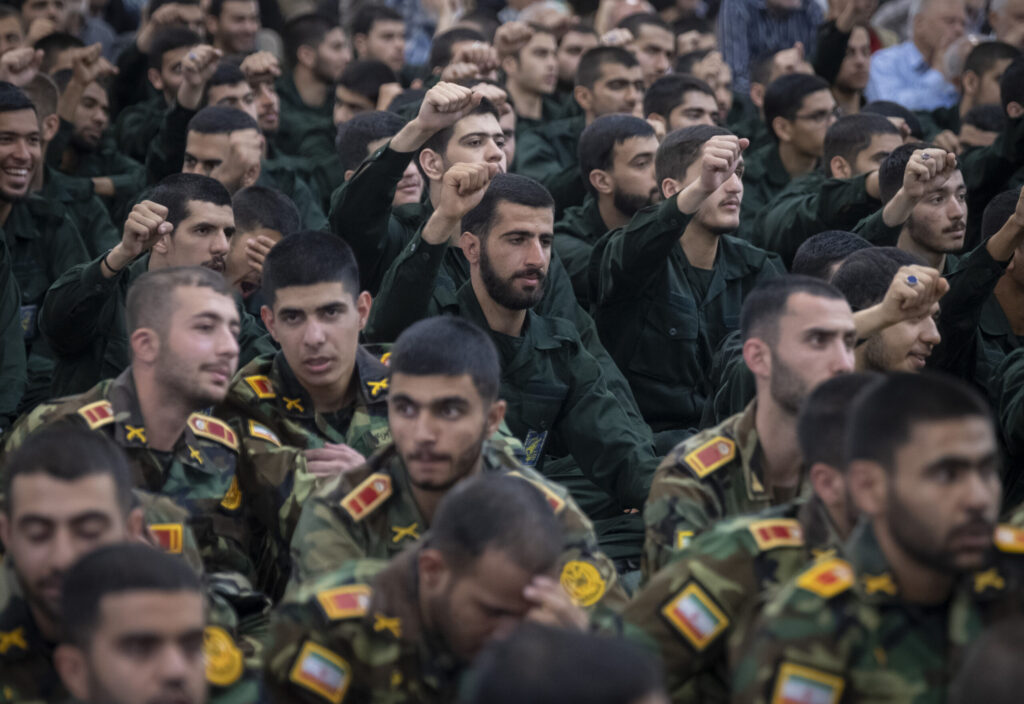
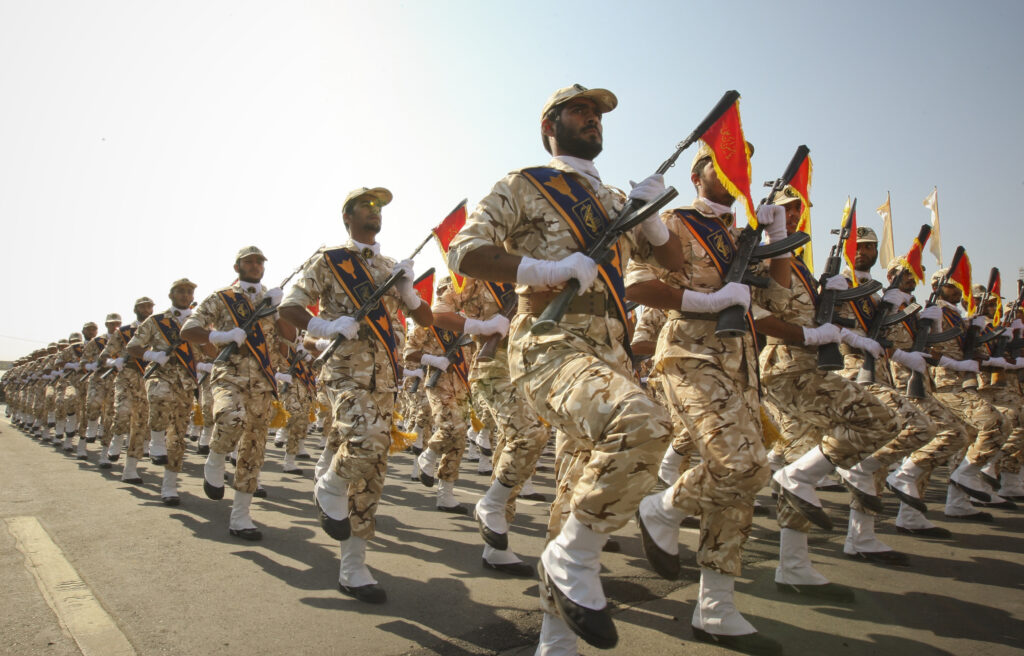
The four individuals comprising the military power center are: First is Ahmad Vahidi, commander of the Revolutionary Guards. Vahidi commands the central force responsible for violent suppression of protests and popular demonstrations inside Iran in January, and is under heavy economic sanctions from the United States and European countries for terrorist activity and advancing the nuclear program.
The second senior official is Hossein Taeb, commander of the Basij forces. Taeb leads the paramilitary volunteer organization that serves as a central arm for suppressing civilians, and was appointed to his position by Mojtaba Khamenei with the goal of deepening internal intelligence capabilities and increasing the number of fighters.
 3+
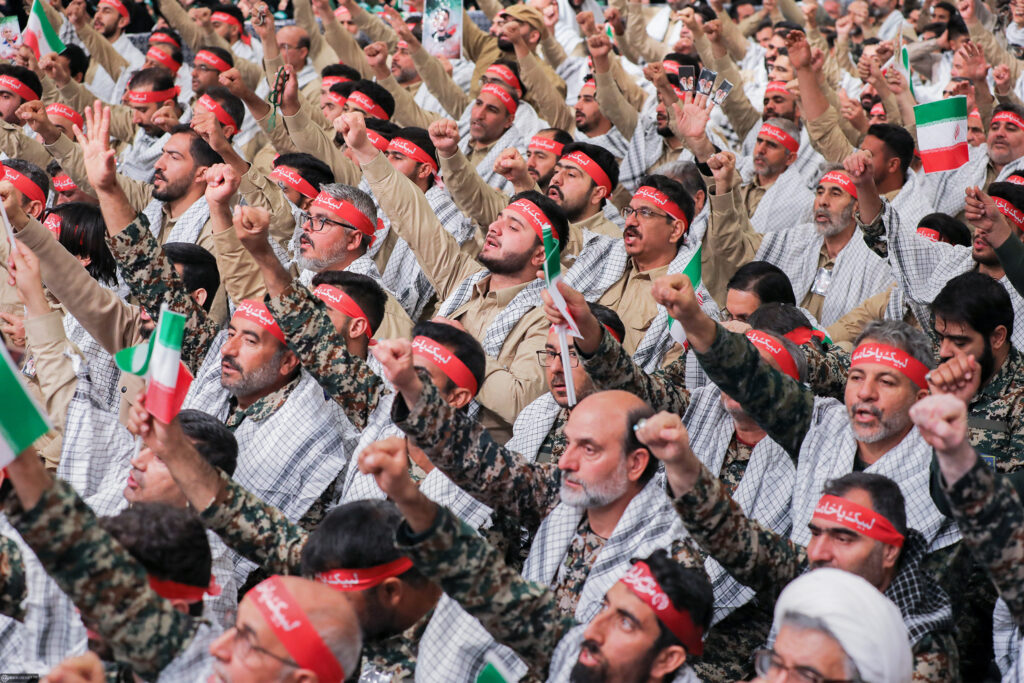
The third senior official is Ali Abdollahi, chief of the general staff of Iran’s armed forces. Abdollahi, who is under sanctions from the Treasury Department in Washington, leads a particularly aggressive line against the United States, called it “the Great Satan,” and directly threatened that Arab countries in the Gulf that cooperate with it will be hit in war.
The fourth senior official is Mohsen Rezaei, secretary of the Supreme National Security Council. Rezaei is among the founding generation of the military establishment in the Islamic Republic, and has an outstanding international arrest warrant from Interpol due to his involvement in planning the attack on the Jewish community building in Buenos Aires in 1994, in which eighty-five people were murdered.
 3+
According to the published information, Vahidi, Rezaei, and Taeb stood behind the violent and deadly suppression of protest demonstrations in Iran last January, which according to estimates claimed the lives of up to seventy-five thousand protesters, when Iran’s regular army refused to take part in harming civilians.
Eilam argues that the four commanders not only dictate military policy, but also consistently thwarted every attempt by the political echelon in Tehran to reach an arrangement with the United States. The conception that led the military junta is that control of the Strait of Hormuz and blocking oil routes give Iran decisive leverage, and that the American administration will ultimately retreat under the influence of fuel prices and economic shocks.
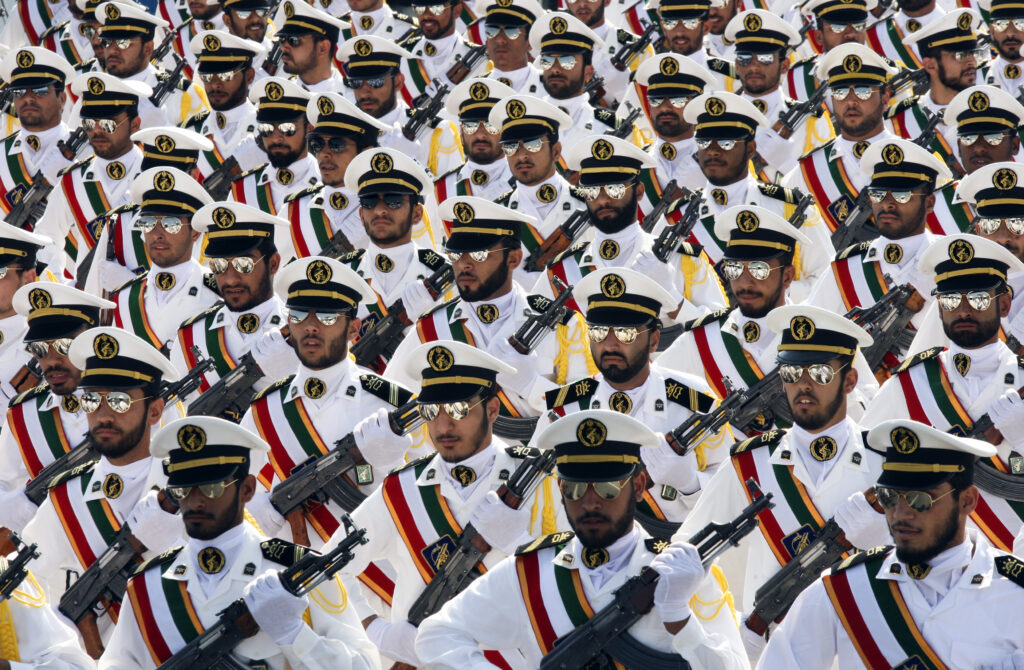
According to Eilam, this led to great internal embarrassment in Tehran in February, when the Revolutionary Guards ordered a renewed closure of the Strait of Hormuz shortly after Foreign Minister Araghchi announced its opening following understandings reached with the United States: “In February the Iranians violated their own agreement. Araghchi was completely surprised—he didn’t understand the logic of violating the agreement they had reached.”
At the same time, Eilam emphasized that among the four senior officials themselves there are deep disagreements, stemming from the intensification of sanctions and the naval blockade: “They’re not on the same page. We’re seeing a lot of friction within the regime, different approaches, agreements followed by immediate retreat.” In this context, it was reported that U.S. Vice President JD Vance recently conveyed a special letter to Rezaei with the aim of examining a resumption of contacts, but no official response has yet been delivered from Tehran.
The main advantage of a targeted sting operation against Iran’s security leadership lies in its paralyzing psychological impact on the rest of the government apparatus. Eilam estimated that such a shock could exceed in intensity a broad ground invasion: “The impact is enormous, especially on the enemy’s psychology. Imagine that after the attack there’s a conversation in some bunker, among Iran’s senior regime officials, and everyone is looking right and left and thinking that the person sitting next to them is a spy.”
Meanwhile, retired American General Jack Keane emphasized that one shouldn’t settle for personal harm to commanders, but rather should exploit the intelligence accumulated in the last six months to destroy Iran’s nuclear centers, energy facilities, and missile and drone factories.
 3+
In the intelligence community and research institutes in Washington, they warn that a resumption of fighting could drag an Iranian response that’s desperate and unrestrained. Behnam Ben Taleblu, senior Iran researcher at the Foundation for Defense of Democracies in Washington, emphasized: “The regime’s interest is survival. They’ll fight harder and try to cause heavy damage in a short time by attacking energy infrastructure and civilian facilities in Gulf countries, and perhaps also in Israel.”