




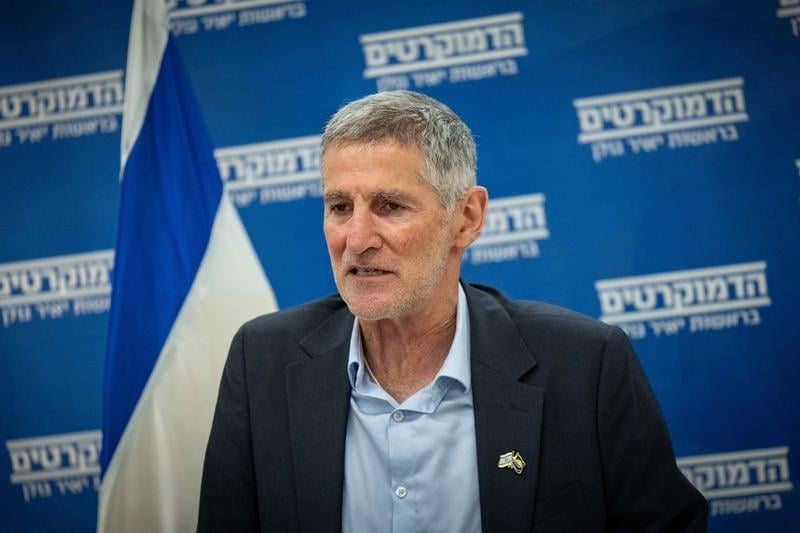
Democrats party leader Yair Golan laid out his post-election religion-state agenda in a meeting with party activists abroad, describing it in stark terms: “kicking religion from the public sector.” During the conversation, Golan detailed several steps he wants to advance, including civil marriage and public transportation on the Sabbath, which he presented as central planks of his religion-state policy.

 1+
1+The remarks add to Golan’s previous positions and statements on the issue. He has previously called for shutting down the Eli pre-military academy and advancing initiatives affecting religious Zionist education. We also previously reported that Golan expressed support for state-funded courses encouraging people to “leave the faith.”
“The Game Changer of the Election”
Another topic that came up in the conversation was the right-wing fringe parties, including those associated with Ofer Winter and Israel Zelekha. Golan addressed them and told activists: “This is the game changer of the election.”
 1+
1+The comments were made in the context of the election campaign and the significance these parties could have on the bloc map. Whether they cross the electoral threshold and what impact they’ll have on seat distribution is expected to be one of the factors determining the election outcome.
Knesset member Ahmad Tibi also recently addressed the right-wing fringe parties at a meeting held in Jaffa. The remarks raise the question of what influence these parties might have on the balance of power between the blocs.