


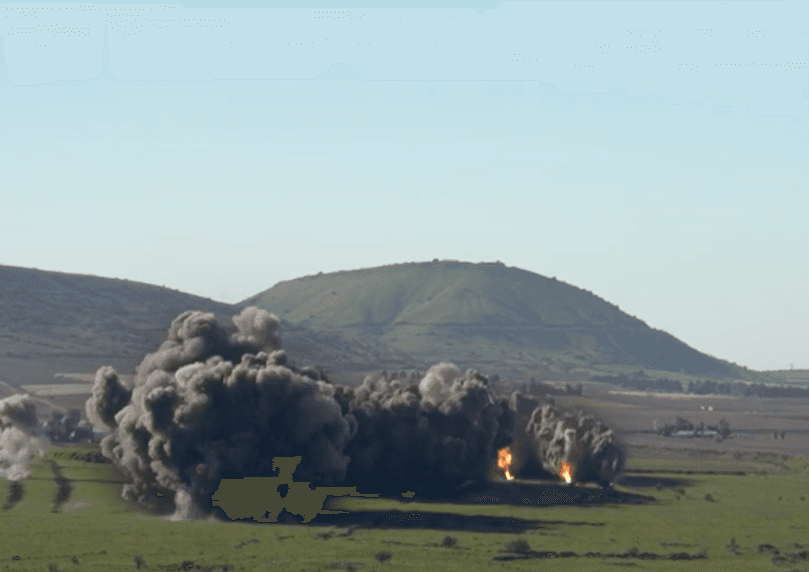

The explosion that occurred Monday at the Ramim Ridge area on the Israel-Lebanon border brings back into focus the danger posed by landmines and old unexploded ordnance left in the ground, sometimes for decades. While the circumstances of the current incident are still under investigation, over the years Israel has seen several serious incidents in which soldiers and civilians were killed and wounded.

 5+
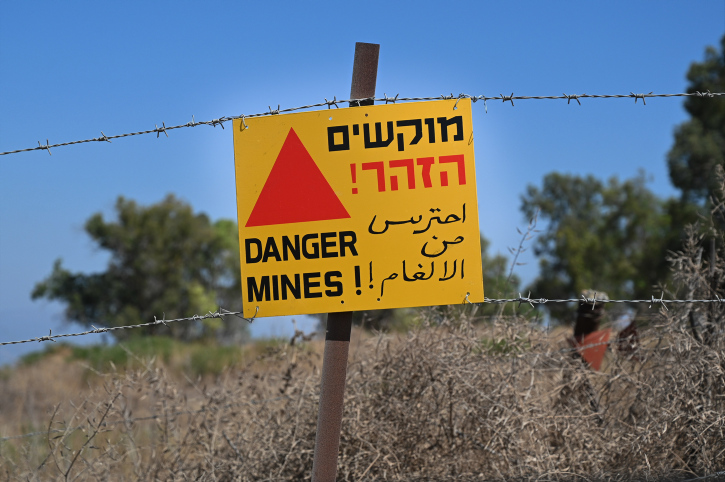
5+Landmines planted along the borders—some by Arab armies and some by the IDF—can shift position due to rain, erosion, and ground movement. Alongside the minefields, grenades, shells, and ammunition that failed to detonate during their original use remain in the field, still active and dangerous.
The Previous Explosion on the Lebanon Border
The incident most similar to the current one occurred on March 21, 2023. Two IDF soldiers were wounded then by a landmine explosion during routine engineering activity in an enclave on the Lebanon border—territory located beyond the security fence but within Israel’s sovereign territory.
 5+
5+One soldier was initially listed in serious condition and later upgraded to moderate, while his comrade was lightly wounded. The initial investigation found that the force stepped on an old Israeli mine that apparently drifted or moved from its position over the years. The IDF clarified it was not an enemy action.
In February 2018, seven soldiers were lightly wounded after a military vehicle they were traveling in hit a mine near Qasr al-Yahud in the Jordan Valley. An engineering force was repairing the fence surrounding a minefield, and during the activity the vehicle entered the mined area. Following the incident, a team was appointed to examine the circumstances.
 5+
5+Three years earlier, an IDF officer was wounded by a mine explosion in the Nahal Sa’ar area of the Golan Heights. The officer suffered serious shrapnel wounds to her lower limbs, was evacuated by helicopter to Rambam Medical Center, and underwent surgery. Reports from that time stated her leg was amputated.
The Soldier Killed During Mine Clearance
In May 2013, Corporal Roy Israel Alfi, 19, from Gan Yavne, was killed by an anti-tank mine explosion in the southern Golan Heights. Alfi, a soldier in Combat Engineering Corps training, was participating in mine detection and clearance operations near Moshav Yonatan.
 5+
5+The squad he was operating with detected the mine and marked it, but it exploded while Alfi was handling it. The IDF estimated the explosion may have been caused by a technical failure in the old mine. The military investigation found deficiencies in the commanders’ conduct, and the company commander was removed from his position.
In October of that year, a 37-year-old man was moderately wounded after stepping on an explosive device inside an abandoned building near Moshav Yardena in the Beit She’an Valley. Initially there was suspicion it was an old shoe mine, but investigators also examined the possibility that the device was hidden there by criminal elements.
One of the most remembered mine incidents occurred in February 2010. Five members of a family who went out to play in the snow in the northern Golan Heights were wounded by a mine explosion. Daniel Yuval, then 11, was seriously wounded and his leg was amputated below the knee. His 12-year-old sister was also wounded.
The family claimed they didn’t see a fence or clear signage warning of the minefield. The incident sparked widespread public debate about the danger posed by minefields no longer needed for security purposes, and led to advancing legislation to establish the National Mine Clearance Authority.
It’s not just mines that endanger those in the field. In April 2017, Omar and Muhammad Abu-Qweider, ages 6 and 10, were killed after playing with unexploded ordnance near a tent in the Segev Shalom area. Police bomb squad examination found that the ordnance exploded while the children were playing with it.
 5+
5+The Military Rabbi Who Lost Both Legs
In September 2025, Major (Res.) Rabbi Liraz Za’ira, a battalion rabbi and Chabad emissary to colleges in Jerusalem, was seriously wounded after stepping on a mine at an IDF outpost in southern Syria.
Rabbi Za’ira arrived at the outpost in the Khudna area to prepare for Sukkot and check the eruv. During the inspection, he apparently stepped on an old Syrian mine and was hit in both legs. He was evacuated by military vehicle and then by helicopter to Rambam Medical Center in Haifa, where doctors were forced to amputate both his legs.
Rabbi Za’ira has since undergone a lengthy rehabilitation process and began walking using prosthetic legs. This past May, he and his wife Anat welcomed their sixth son. In footage released, the rabbi is seen standing on his prosthetic legs and blessing with emotion “Hatov v’Hameitiv.”
Another case occurred in August 2025, when an old Syrian grenade exploded during IDF forces’ activity deep in the Syrian Hermon villages. Four soldiers were lightly wounded, evacuated to Ziv Medical Center, and released after examinations and observation.
 5+
5+Thousands of Minefields in the North
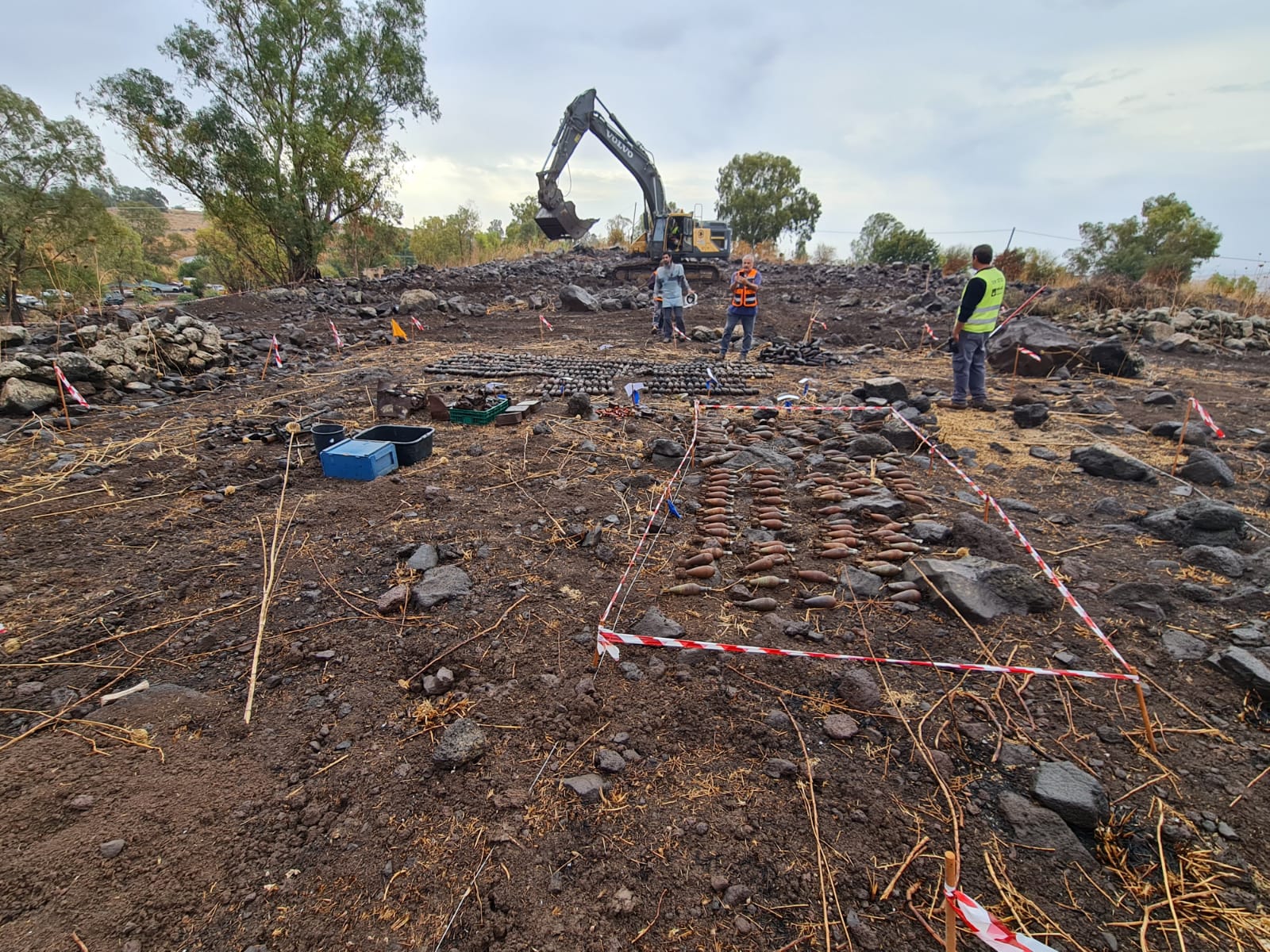
According to data published by the IDF in 2022, the Northern Command area had approximately 4,000 minefields spread over roughly 85,000 dunams. Each minefield has a record including its boundaries, the type of mines planted in it, and the entity that laid them.
The National Mine and Unexploded Ordnance Clearance Authority at the Defense Ministry reported that since its establishment, approximately 200,000 mines have been cleared from a total area of roughly 9,000 dunams. Despite clearance operations, many mined areas still exist along the country’s borders, mainly in the Golan Heights, Jordan Valley, and Arava.
Encountered Unexploded Ordnance? Don’t Approach
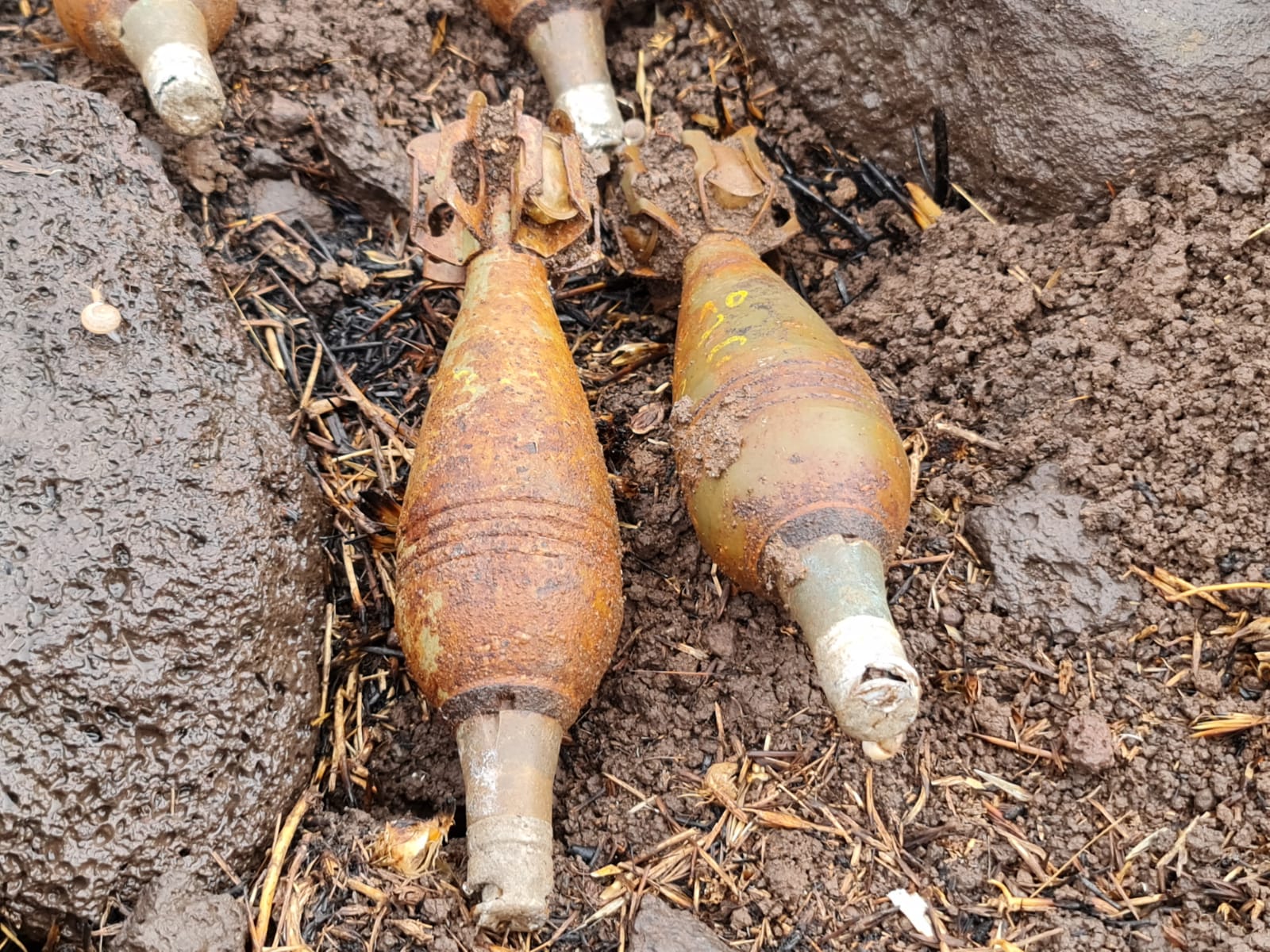
The Defense Ministry warns that unexploded ordnance can detonate from slight movement and even without any visible cause. In case of finding unexploded ordnance or an item that looks like a weapon, do not touch it, move it, pick it up, or try to clear it independently. Move away from the location, prevent others from approaching, and immediately report to Israel Police’s 100 hotline. Handling the item must be done only by bomb disposal experts or authorized clearance teams.