




Britain’s opposition Conservative Party made a dramatic announcement Monday: it plans to build a new air defense system against missiles and drones called “Britannia Shield,” with an investment of roughly £10 billion (~$12.5 billion) over a decade, the BBC reported.

 3+
3+According to the report, the initiative comes amid NATO warnings about repeated Russian drone incursions into European airspace and the increased use of missiles and drones in recent wars—including in Ukraine and the Middle East.
Party leader Kemi Badenoch said “there is a new type of warfare,” adding: “Warfare with drones—requires a different kind of missile defense.” She explained further: “There could be a situation, for example, where people could get very close to the English Channel and send drones and missiles toward our critical national infrastructure.”
 3+
3+In a speech at a conference in Birmingham, Shadow Defense Secretary James Cartlidge also addressed the move: “With a budget of £10 billion, this will be one of Britain’s most significant military programs since the Cold War. But one that is absolutely necessary because of the threats we face.”
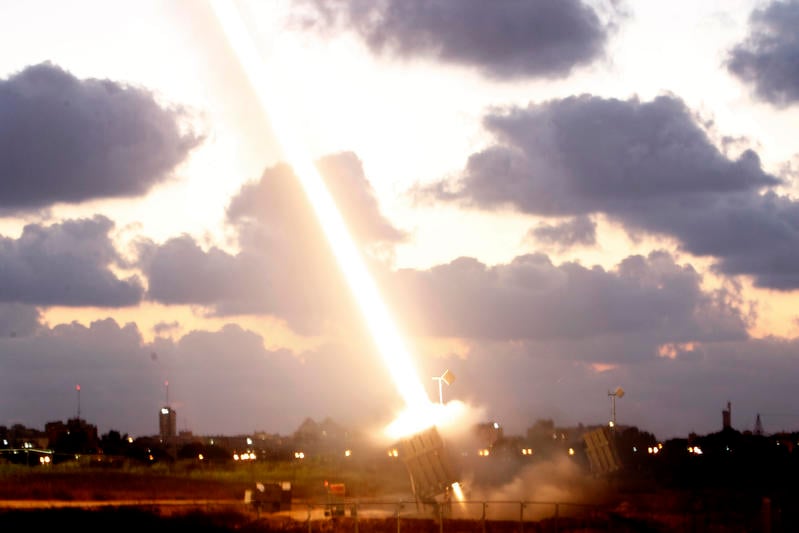
The Conservatives initially presented the plan as “a kind of British Iron Dome,” inspired by Israel’s air defense system. But party leader Kemi Badenoch later distanced herself from the comparison. She says Britain doesn’t face the level of daily threat that Israel faces, so there’s no need to build a system identical to Iron Dome—rather, a system specifically tailored to the threats Britain confronts.
 3+
3+The plan proposes a budget of £10 billion (~$13.2 billion), an amount some experts have questioned whether it would be sufficient for a multi-layered Israeli-style system, estimated at around £80 billion. But Badenoch insisted the budget would be enough for the country’s practical needs.
Addressing this, Professor Stephen Burt, CEO of Cambridge Aerospace, which develops interceptor missiles, told the BBC that £10 billion is indeed “a significant commitment,” but the exact cost would depend on the proposal’s details.
According to him, since it wouldn’t be practical for the system to protect “every square inch” of British territory, a more realistic arrangement would need to cover only “significant portions of the population in high-density central areas.” Burt added that the focus should be on protecting critical national infrastructure, warning that “enormous damage” could result if data centers serving transportation and health systems were attacked.
 3+
3+The Proposed System Will Be Based on Three Main Components
The system is supposed to include an integrated network of advanced radar systems, command and control systems for information integration and rapid decision-making, and interceptor missiles alongside anti-drone capabilities. The combination of capabilities is designed to protect vital national infrastructure, military bases, and British territory, in a structure reminiscent of the Sky Sabre system currently in the British military.
According to the Conservative Party, the plan will be included in its pledges ahead of the next general election, and funding for the project will come as part of its commitment to raise defense spending to 3% of GDP by 2030. The funding will be achieved through welfare budget reforms, reprioritization of government spending, reducing spending on research to cut greenhouse gas emissions to zero, reinstating the child benefit cap, and limiting housing benefits.