


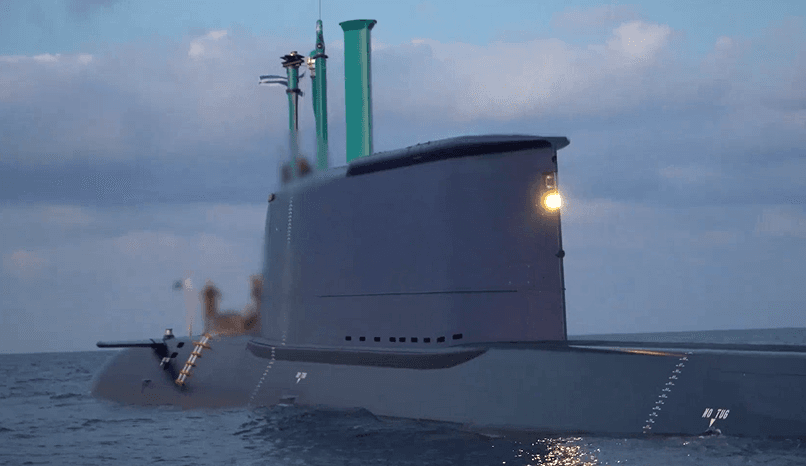

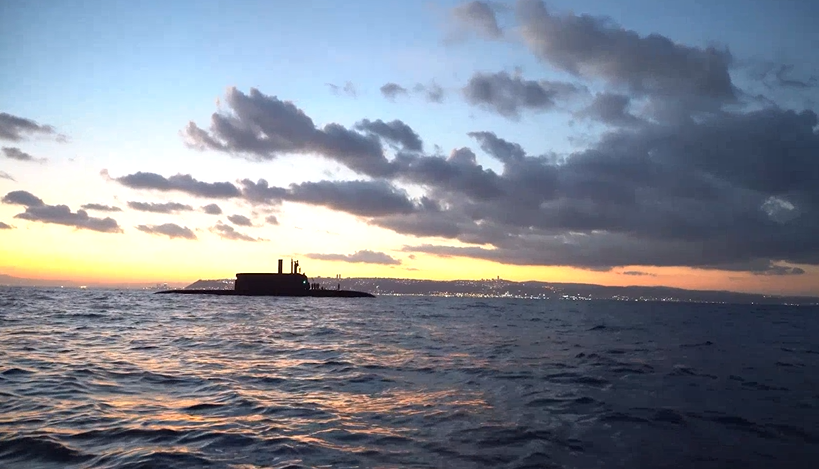
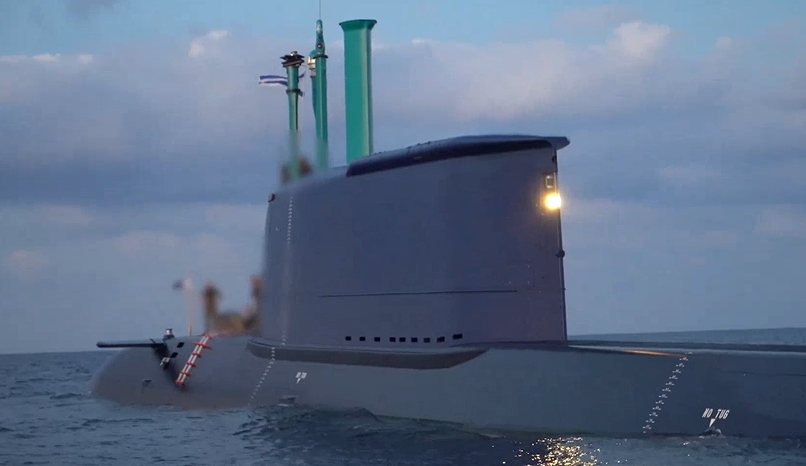
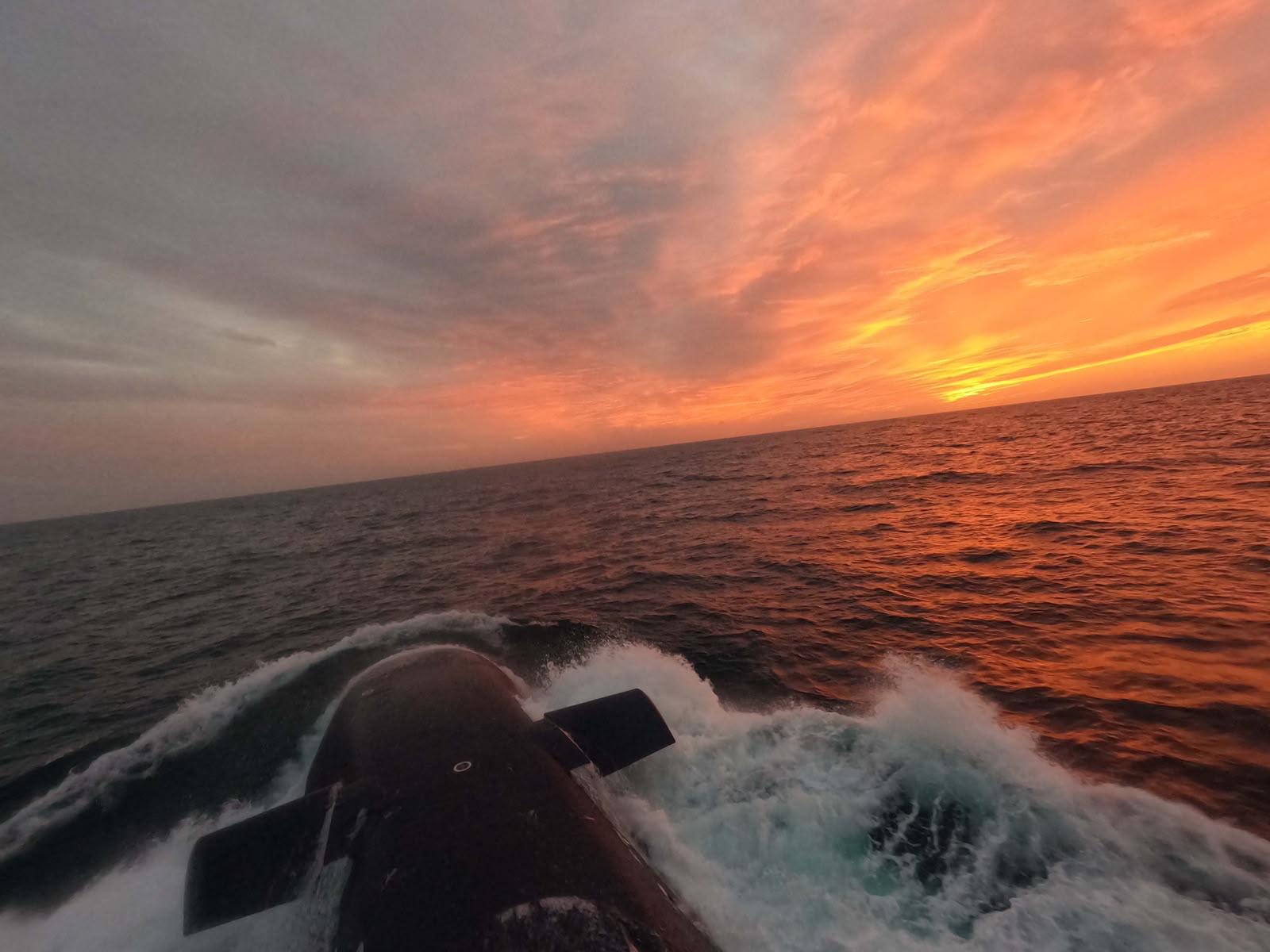
Israel’s INS Drakon submarine, which arrived in Israel late last week, is a major strategic asset of the Israeli Navy built at a shipyard in Kiel, Germany — but the story behind its arrival may be far more dramatic. Although the deal to purchase the submarine was signed with the German government some 14 years ago and was publicly known, questions are now emerging over who else may have been closely watching its construction.

 2+
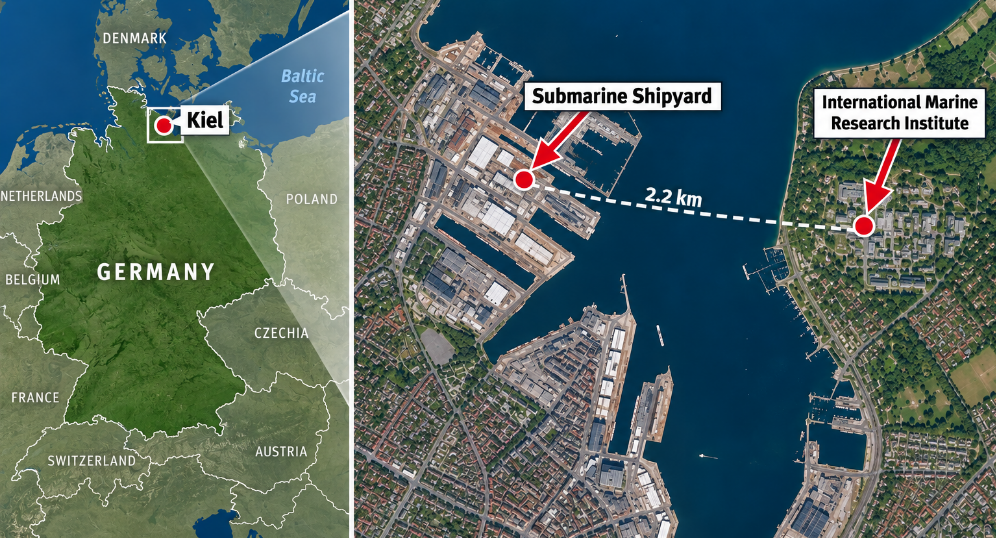
2+INS Drakon was built in Kiel, on Germany’s Baltic coast, an area filled with docks, shipyards and research laboratories. On one side are the submarine shipyards, including the facility where the Israeli vessel was constructed. Yet just 2.2 kilometers away as the crow flies sits GEOMAR, an international marine research institute. Although the institute conducts entirely civilian research focused on oceanography and mapping the seafloor, its proximity to a highly sensitive defense shipyard had reportedly been identified in advance in Israeli risk assessments.
The dangerous gap sharpens in light of findings that among the researchers working at GEOMAR were about ten Iranians who studied at universities in Iran. More troubling still: at least five of them came directly from Shahid Beheshti University and Amirkabir University—institutions whose names have been linked over the years to sensitive areas of Iran’s nuclear program, and which have been sanctioned by the United States, Britain, and the European Union for their involvement in developing small reactors, including in maritime contexts and the possibility of submarine propulsion.
 2+
2+In fact, this concern wasn’t unfounded: German intelligence itself has previously warned of the possibility that researchers and academics arriving from countries like Iran, China, and Russia operate with dual identities—on one hand as innocent researchers, on the other as spies gathering security intelligence. Following these warnings, the arrival of researchers was restricted, and special checks on the matter were conducted in Israel by the Defense Ministry and the Mossad, which designated GEOMAR as a sensitive and dangerous entity.
 2+
2+The central question that now remains open, beyond the submarine’s actual arrival in Israel, is whether Iran indeed tried to exploit this research presence in Kiel to monitor the construction of INS Drakon. As of now, there’s no definitive proof that a surveillance attempt was made or that classified information leaked from the shipyard, but the very presence of Iranian researchers within touching distance of Israel’s most sensitive strategic asset leaves the intelligence question threatening and unresolved.
The Defense Ministry said in response: “The claims about information leakage are not known to us and we have no indication of this. The Defense Ministry maintains close and ongoing cooperation with German security authorities, and as a rule, we do not detail the protective envelope and security systems implemented in the field.”