


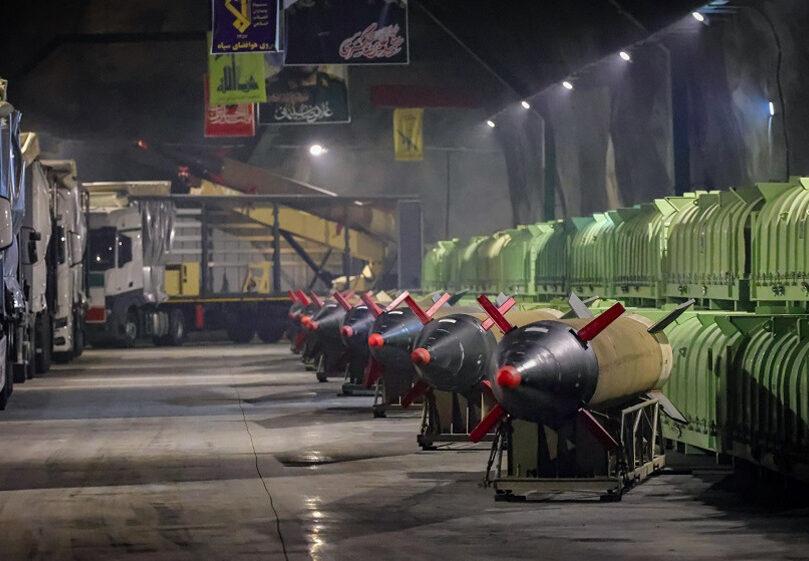

Iran is continuing intensive military preparations for the possibility of a renewed confrontation with Israel and the United States, unveiling a newly fortified subterranean complex on Tuesday that Tehran refers to as a “missile city,” packed with ballistic missiles, cruise missiles, and mobile launch systems. Yet behind the carefully choreographed footage released by the regime lies a decisive operational question for Israel’s defense establishment: whether these subterranean installations can actually shield Iran’s missile array from precision aerial strikes.
🚨🇮🇷 Iran’s IRGC has released new footage unveiling a massive underground terror city. https://t.co/PUrJ4od8IC
— C14 News | EN (@c14english) November 11, 2026
Video distributed by Iran’s semi-official Tasnim news agency shows senior Iranian military figures—including Ali Abdollahi and Islamic Revolutionary Guard Corps (IRGC) Aerospace Force Commander Majid Mousavi—touring an expansive underground tunnel network lined with missiles, transporter-erector-launchers, and military vehicles. Tehran did not disclose the facility’s precise geographic coordinates or the total volume of munitions stored inside.
For years, Iran has invested heavily in constructing hardened subterranean tunnels designed to conceal missile reserves and protect them from pre-emptive airstrikes. Now, according to statements from IRGC officials, Tehran is seeking to expand that network by moving parts of its missile and unmanned aerial vehicle (UAV) production lines underground. IRGC spokesman Hossein Mohebbi claimed that Iran has already begun transferring manufacturing infrastructure beneath the surface in an effort to ensure that military production can continue uninterrupted even under prolonged aerial bombardment.
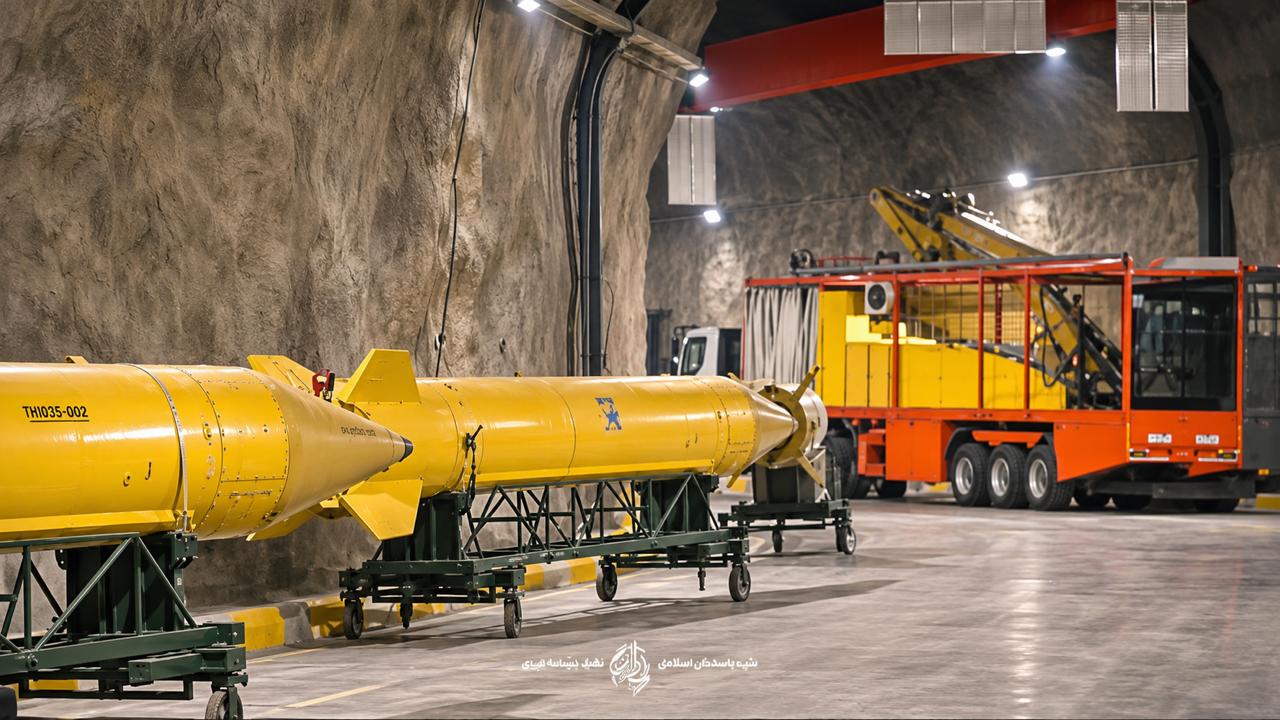
The move reflects an attempted shift in Iranian military doctrine: rather than merely safeguarding pre-existing stockpiles, Tehran aims to preserve its industrial capacity to manufacture fresh munitions during an active war. However, the footage released on Tuesday offers no independent proof that active assembly lines are operating inside the unveiled complex, nor that they could function amid sustained attacks. Subterranean military complexes pose inherent operational challenges for air forces by complicating target detection, hindering battle damage assessments, and shielding critical hardware beneath layers of rock and reinforced concrete. Nevertheless, defense analysts emphasize that depth alone is not the sole determinant of a bunker’s survivability.
A facility’s actual resilience depends heavily on local geological formations, the thickness of protective overhead layers, structural engineering, and vulnerable external support infrastructure such as ventilation shafts and access portals. Even deeply buried installations remain vulnerable when targeted with actionable intelligence, specialized bunker-busting munitions, and tailored strike profiles. Israel has previously struck infrastructure tied to Iran’s ballistic missile array, including launchers, storage depots, and military bases.

Satellite imagery analyzed following prior clashes—including strikes carried out during Operation “Lion’s Roar”—indicated concerted Iranian efforts to repair damaged missile bases and reinforce sensitive facilities.
Even so, insufficient public intelligence exists to determine with certainty whether the newly unveiled “missile city” could withstand a coordinated Israeli or American strike, or what its true level of fortification entails. Alongside the propaganda release, Western intelligence assessments published by Bloomberg indicate that Tehran continues to reconstitute its missile capabilities.

According to those estimates, Iran is currently capable of producing roughly 50 ballistic missiles per month—approximately half of its pre-war manufacturing rate—and still retains an arsenal of at least 1,700 ballistic missiles.
While these figures represent intelligence estimates rather than independently verified totals, they underscore that despite substantial degradation to its military infrastructure, Iran still commands a formidable long-range strike capability. During the unveiling of the complex, Abdollahi warned that in the event of another attack, Iran’s retaliation could expand beyond the borders of the Middle East.
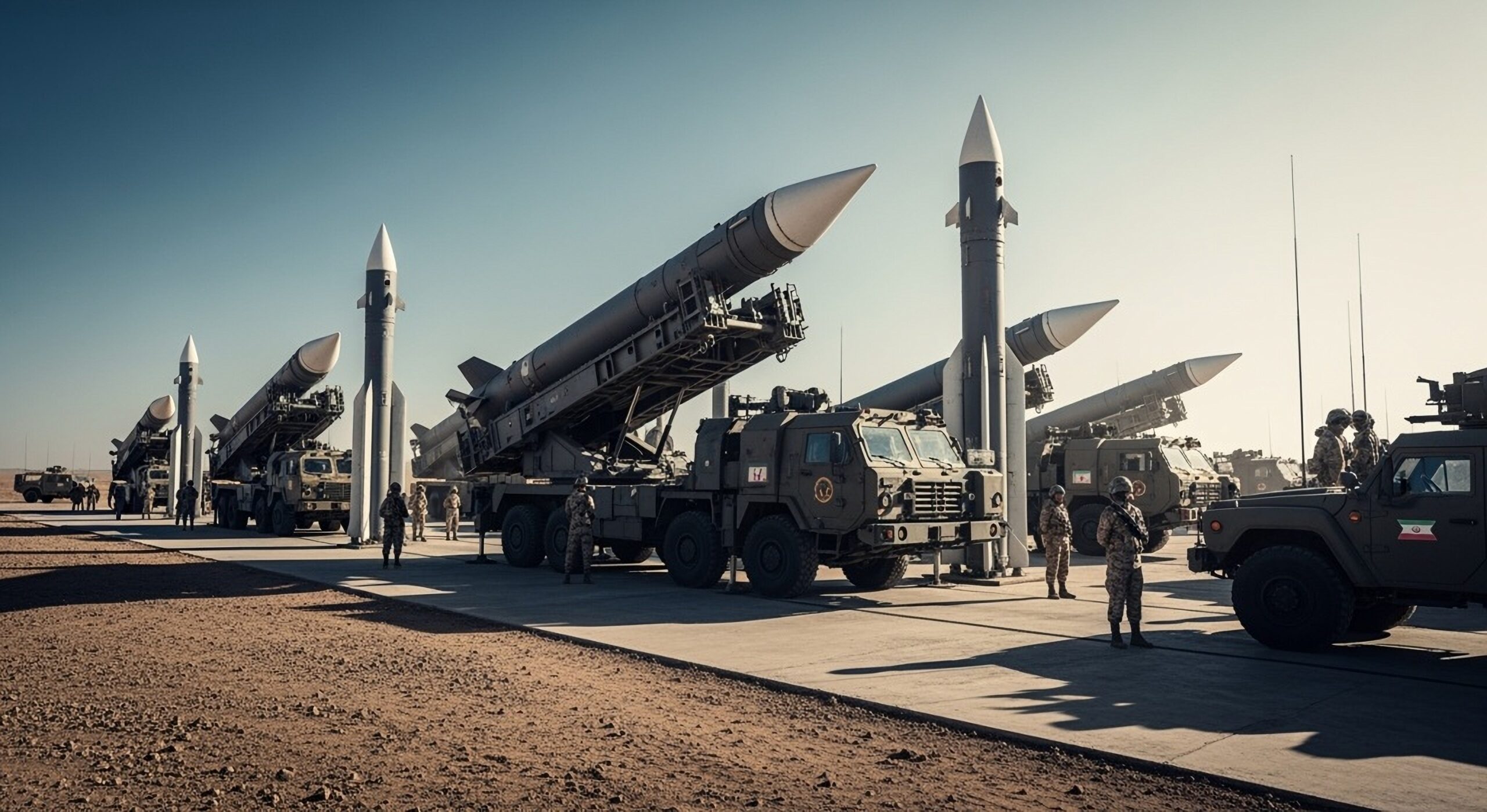
His remarks echo a broader messaging campaign by senior officials in Tehran to project enduring military resilience despite the heavy blows the country has absorbed. The timing carries clear diplomatic and strategic intent, arriving amid ongoing friction with Washington and Jerusalem alongside tentative efforts to revive negotiations between the U.S. and Iran. For Tehran, showcasing subterranean facilities broadcasts military survivability and signals that its missile force remains intact.
For Israel, the strategic challenge extends beyond counting how many missiles Iran holds—requiring the operational capability to neutralize the hidden infrastructure enabling Tehran to store, manufacture, and launch them during a prolonged conflict.