


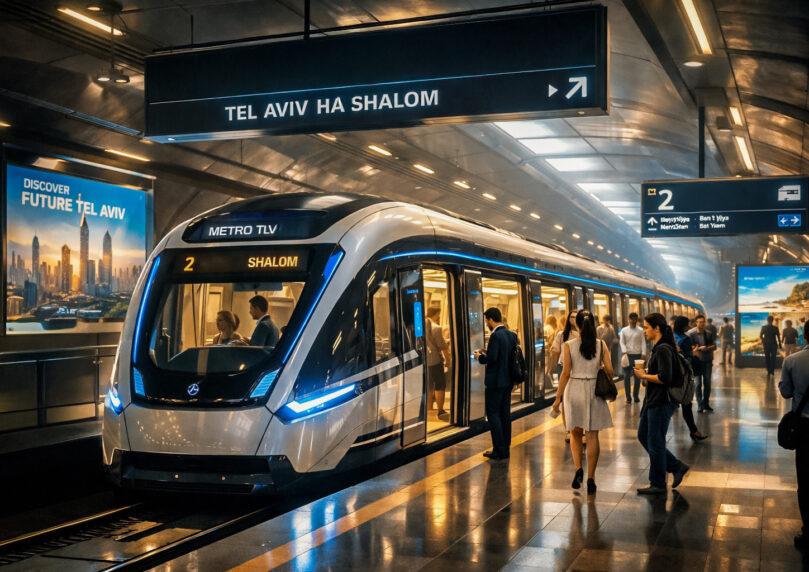

The Tel Aviv metro project is moving to its next phase, and this time it’s about the trains themselves. The National Transport Infrastructure Company (NTA) is publishing tenders worth around 30 billion shekels (~$8.3 billion) to select the companies that will handle the trains, control and signaling systems, electricity, communications, stations, and operations for the future network. One of the project’s main innovations: the trains are designed to be fully autonomous and operate without drivers. They’re expected to run on the GOA4 standard—the highest level of train automation—where trains can travel, stop, and manage various situations automatically, with no driver in the car.

 1+
1+The planned metro network in the Tel Aviv metropolitan area will include three lines spanning roughly 150 kilometers, 109 stations, and connections between 24 municipalities. It’s one of the largest and most expensive infrastructure projects ever built in Israel, and it’s supposed to fundamentally change public transportation in the center of the country. The new tenders are part of what’s called “Infra 2″—the phase of the project dealing with equipment and metro operations. It will select the companies that supply the train fleet and build the systems that allow them to operate and communicate with stations and control centers.
This includes signaling and control systems, electrical and power systems, communications, and equipment and systems to be installed in the underground stations. The selected companies are also expected to be involved in operating and maintaining the metro for years to come. The new phase joins the “Infra 1” tender, which deals with the physical side of the project—digging the tunnels and building the infrastructure for the stations. That tender is estimated at around 65 billion shekels (~$18 billion) and is in the screening stages with 20 international and Israeli groups.
NTA is advancing both processes in parallel, aiming not to wait for infrastructure work to finish before starting system installation. The idea is to integrate the systems, electricity, signaling, and trains into the infrastructure already during construction.
 1+
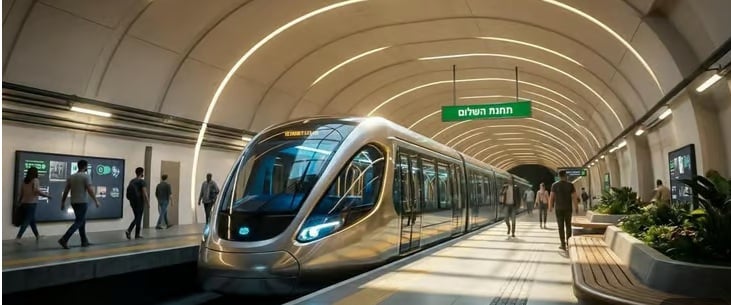
1+For passengers, the new tender means the planned Tel Aviv metro won’t just be a subway. It’s an automated system where trains are supposed to operate without drivers, with train movement controlled through control and communication systems and command centers. If the project’s timelines hold, it represents a significant shift in how public transportation will look in central Israel—from a network of hundreds of kilometers of tracks and congested roads to an automated metro system running beneath Tel Aviv metro cities and connecting dozens of municipalities.