


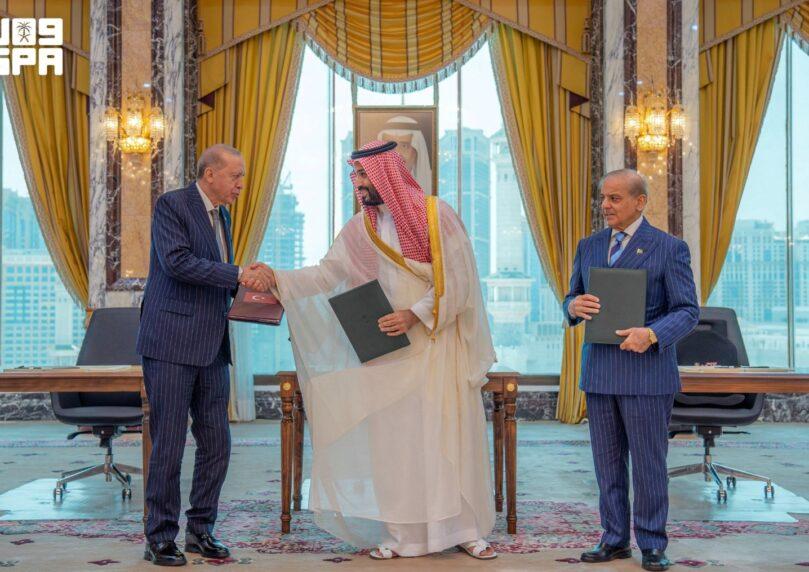

The defense agreement signed last week by Turkey, Saudi Arabia and Pakistan is moving from declarations to implementation on the ground: Turkey’s Defense Ministry announced Thursday that the three countries will establish permanent political and military coordination mechanisms designed to transform the alliance into a coordinated operational force.
In practice, the move brings the countries closer to establishing a form of “joint headquarters” linking their defense ministers, foreign ministers and military chiefs—a step raising questions about the creation of a new regional axis and the potential for heightened tensions with Iran.


 1+
1+The three countries signed the Mecca Joint Defense Pact on August 7, bringing together three Sunni U.S. allies against the backdrop of escalating regional tensions, including Iranian missile fire targeting Gulf oil-exporting states. The agreement contains a significant collective-defense provision stipulating that an attack against one member will be considered an attack against all three—a model resembling NATO’s collective-defense principle.
At a weekly briefing in Ankara, officials said the new mechanisms will include regular meetings and ongoing coordination between the three countries’ defense ministers, foreign ministers and military chiefs. The agreement also calls for joint military exercises and broader cooperation encompassing the joint production of weapons systems and the sharing of advanced defense-industry technologies. Together, the measures are creating a significant Sunni power axis in the region in response to the growing Iranian threat.
 1+
1+Beyond the military dimension, the establishment of an independent coordination mechanism suggests that the three countries, despite being U.S. allies, no longer intend to rely exclusively on the American security umbrella in confronting the growing Iranian threat.
Instead, they are signaling an intention to take greater responsibility for their own security and construct a powerful, independent Sunni axis capable of counterbalancing Tehran’s efforts to expand its power across the Middle East.