


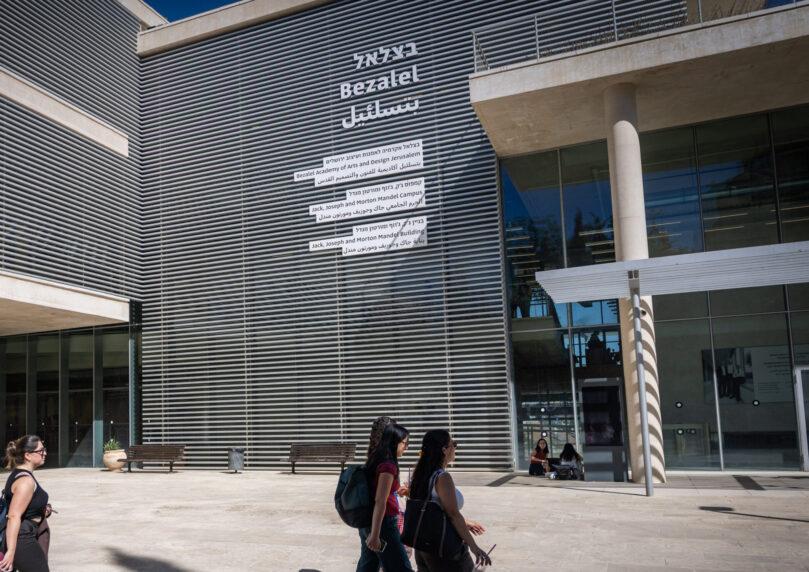

Following a Channel 14 investigation, authorities opened a probe Thursday into Issa Grayeb, a lecturer at Jerusalem’s Bezalel Academy of Arts and Design, who made harsh statements against the State of Israel and IDF forces. Grayeb, an Israeli citizen born in Nazareth who studied at the Jerusalem institution and later joined its faculty, is at the center of serious allegations that emerged from documentation published in Germany. According to the findings, Grayeb routinely tags sovereign Israeli cities—including Nazareth, Haifa, and Jerusalem—as ‘Palestine’ while calling IDF soldiers “Israeli occupation forces.”


 1+
1+The revelations raised serious questions about the responsibility of a publicly funded Israeli academic institution toward the public and its students. Beyond his social media statements, Grayeb recently received a prestigious artist grant from Germany’s DAAD organization, where he was presented as someone from the “‘Palestinian’ territories.”
In a clarification conducted with the German organization, it emerged that in his self-declaration, Grayeb listed himself as a resident of “East Jerusalem and Ramallah”—despite being an Israeli citizen born and raised in Nazareth. The German article also revealed that on October 17, 2023—just ten days after the October 7 massacre and before the ground operation began—Grayeb published a call to stop what he termed the “genocide” Israel was committing against ‘Palestinians’, without mentioning a word about the atrocities committed by Hamas.
 1+
1+The opening of the investigation comes after serious concerns arose that his actions—which include denying the state’s existence and defaming the state’s military while serving as a faculty member at an academic institution—cross every legitimate boundary. Authorities are now examining whether Bezalel’s administration was aware of the full scope of Grayeb’s publications and statements over the years, and how the institution allows a full-time lecturer to present Israeli cities as ‘Palestine’. The case tests the institution’s commitment to setting clear boundaries for such conduct, especially when it’s presented to the world as fact under academic auspices.