




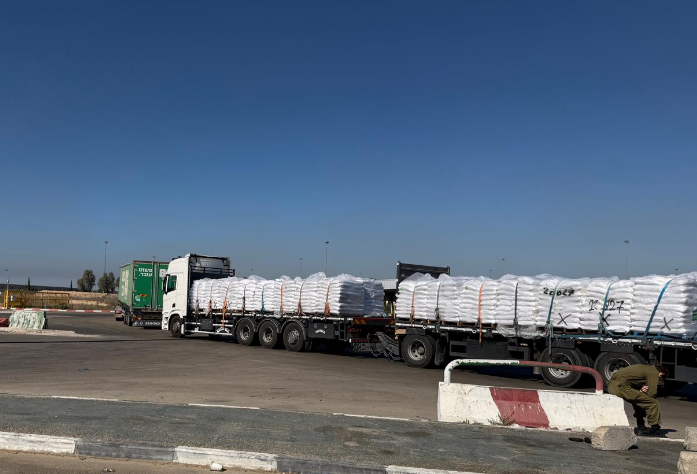
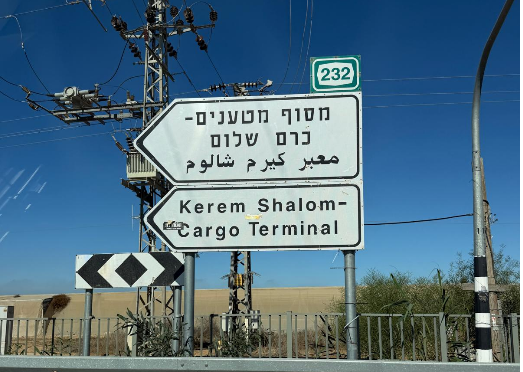
Truckloads of Twix, Snickers and Bounty bars sit stacked at the Kerem Shalom crossing, waiting for Gazan workers to haul them into the Strip. C14 English went to Israel’s main humanitarian aid crossing, on the southern border beside Rafah, to see firsthand what is going into Gaza.
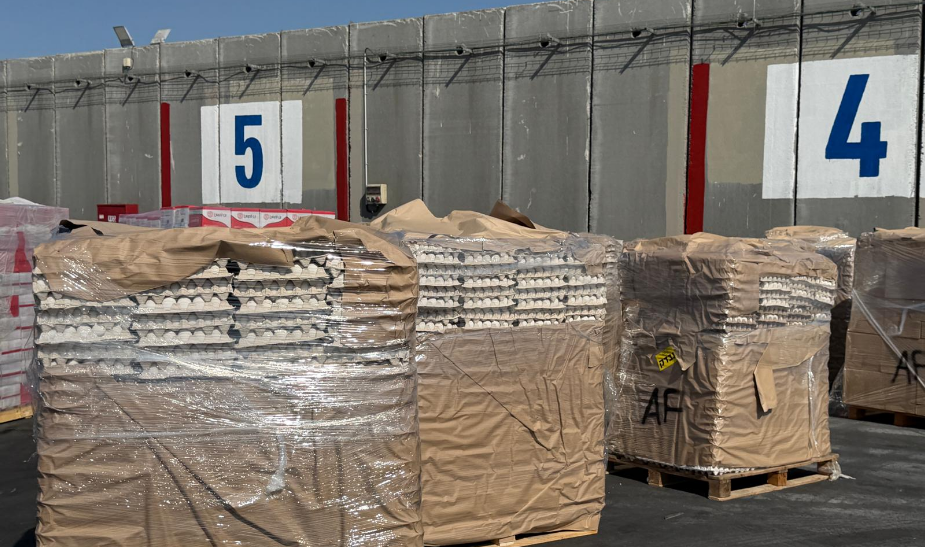
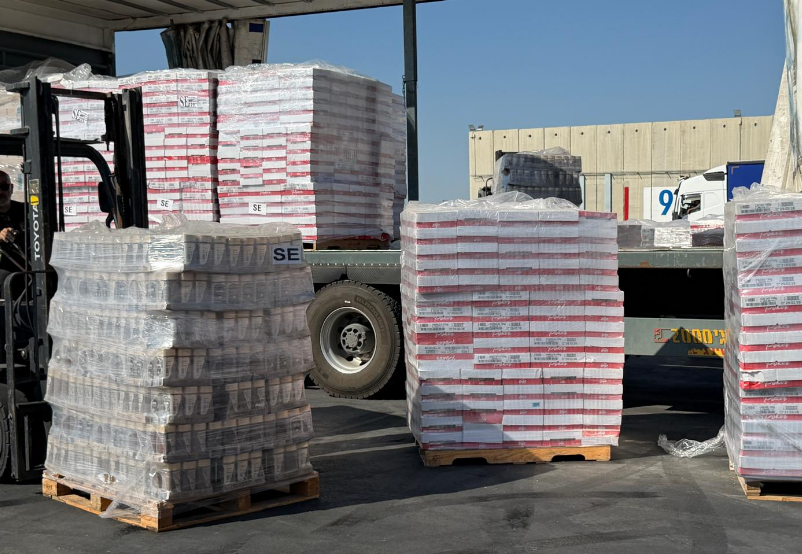
The pallets told their own story. Cartons of eggs, sacks of flour and boxed food were stacked next to Arabic sweets. Further along, crates of premium cooked baby shrimp and frozen calamari tentacles stood ready for collection, the kind of products you’d expect in a high-end supermarket freezer.
The assortment illustrates the range of products arriving at the crossing, from basic food staples to goods more commonly associated with commercial retail. Whether the chocolate and seafood shipments were commercial imports, humanitarian donations or another category of goods was not established during the visit. Their presence nevertheless offers a firsthand look at a side of the crossing rarely captured in the broader debate over Gaza’s humanitarian situation.

 3+
How the crossing works
Aid is unloaded into a closed area at the crossing. Once everything is in place, Israel seals off its side. Workers from Gaza then come in through a separate gate, load the goods and take them into the Strip. From that point on, Israel has no control over where the aid goes or who ends up with it.
The distinction between goods entering Gaza and goods ultimately reaching civilians is central to understanding the humanitarian situation. The presence of supplies at the crossing establishes that those products have been delivered by Israel for collection, but does not by itself establish how they are distributed, whether they reach their intended recipients or at what price they may eventually be sold.
 3+
The winter aid numbers
COGAT, the Israeli defense body that coordinates aid into Gaza, recently published figures on its winterization plan. Since the plan began, more than 93,000 tents have entered Gaza, along with over 8,200 trucks carrying tarpaulins, blankets, winter clothing and other supplies. COGAT says it is also advancing water and sanitation infrastructure projects across the Strip.
 3+
A familiar cycle
The figures come as winter rains return to Gaza. With them comes a wave of headlines describing flooded tent camps and accusing Israel of blocking aid. Gaza’s economy depended on humanitarian aid well before October 7. Hamas’s war against Israel deepened that dependence, and the question that matters most now begins on the far side of the gate, once the trucks leave Israeli hands.
 3+
The question is not simply how much aid crosses the border, but what happens afterward: who collects it, how it is distributed and whether the civilians who need it most ultimately receive it.