


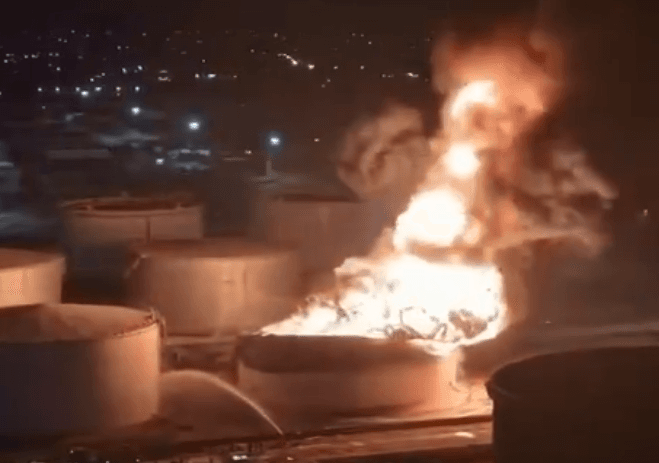

Libyan emergency crews are battling a massive fire that erupted Monday night at a major oil facility after it was struck by unidentified attackers. The Zawiya refinery, located west of the capital Tripoli, was hit in a drone attack—the third such incident in just two days. The escalating violence comes amid continued instability across the country.
Libya’s National Oil Corporation says a drone attacked the Zawiya oil blending plant.
It follows several drone strikes around the Zawiya oil complex since Aug 8.
No group has claimed responsibility.pic.twitter.com/rsic6V6D70
— Clash Report (@clashreport) August 10, 2026
The Zawiya refinery is Libya’s largest, with a production capacity of 120,000 barrels of oil per day. Libya’s National Oil Corporation (NOC) said a tank containing approximately 4.5 million liters of fuel was directly hit, collapsing ans triggering an enormous blaze. Libya’s ambulance and emergency services said there were no “serious injuries” resulting from the fire, with most of those treated suffering only from smoke inhalation.
The NOC condemned similar attacks in Zawiya in recent days, including two drone strikes targeting an oil depot and a water desalination facility. The NOC called on authorities to investigate who is behind the attacks, warning it may suspend operations if the attacks continue.
🛢️ 🇱🇾 Libya Declares Maximum Emergency After Third Drone Strike Hits Largest Functioning Refinery
🔸Libya’s National Oil Corporation declared a “maximum state of emergency” around the Zawiya refinery west of Tripoli after three drone attacks in roughly 48 hours, Anadolu… pic.twitter.com/0ihJH6eAKe
— Drop Site (@DropSiteNews) August 11, 2026
Libya has remained deeply divided since the outbreak of civil war following the overthrow and killing of former leader Muammar Gaddafi in 2011. Since his fall, rival centers of power—one in the east backed by military commander Khalifa Haftar and another in the west based in Tripoli under Prime Minister Abdulhamid Dbeibah—have competed for political and military control.
With three attacks in two days and no culprit publicly identified, the strikes are now threatening more than individual facilities: continued attacks could disrupt operations at one of Libya’s most important oil installations and inject another layer of uncertainty into an already fractured country.