


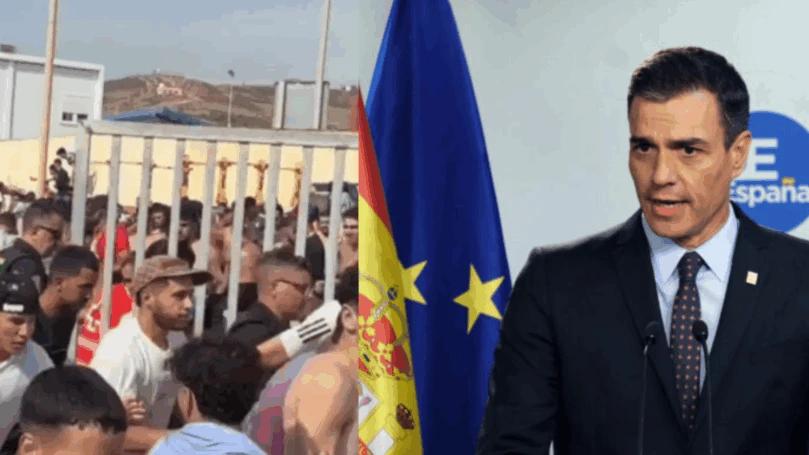

European Commission President Ursula von der Leyen sent a letter Monday to Spanish Prime Minister Pedro Sánchez, praising Spain and Morocco for managing the migrant crisis in the Spanish enclave of Ceuta “efficiently and effectively.”
Despite commending the response, von der Leyen also called for an emergency meeting of European Union interior ministers to “draw lessons” from the crisis. She said the meeting would also focus on developing a coordinated European response to the challenges posed by illegal migration.
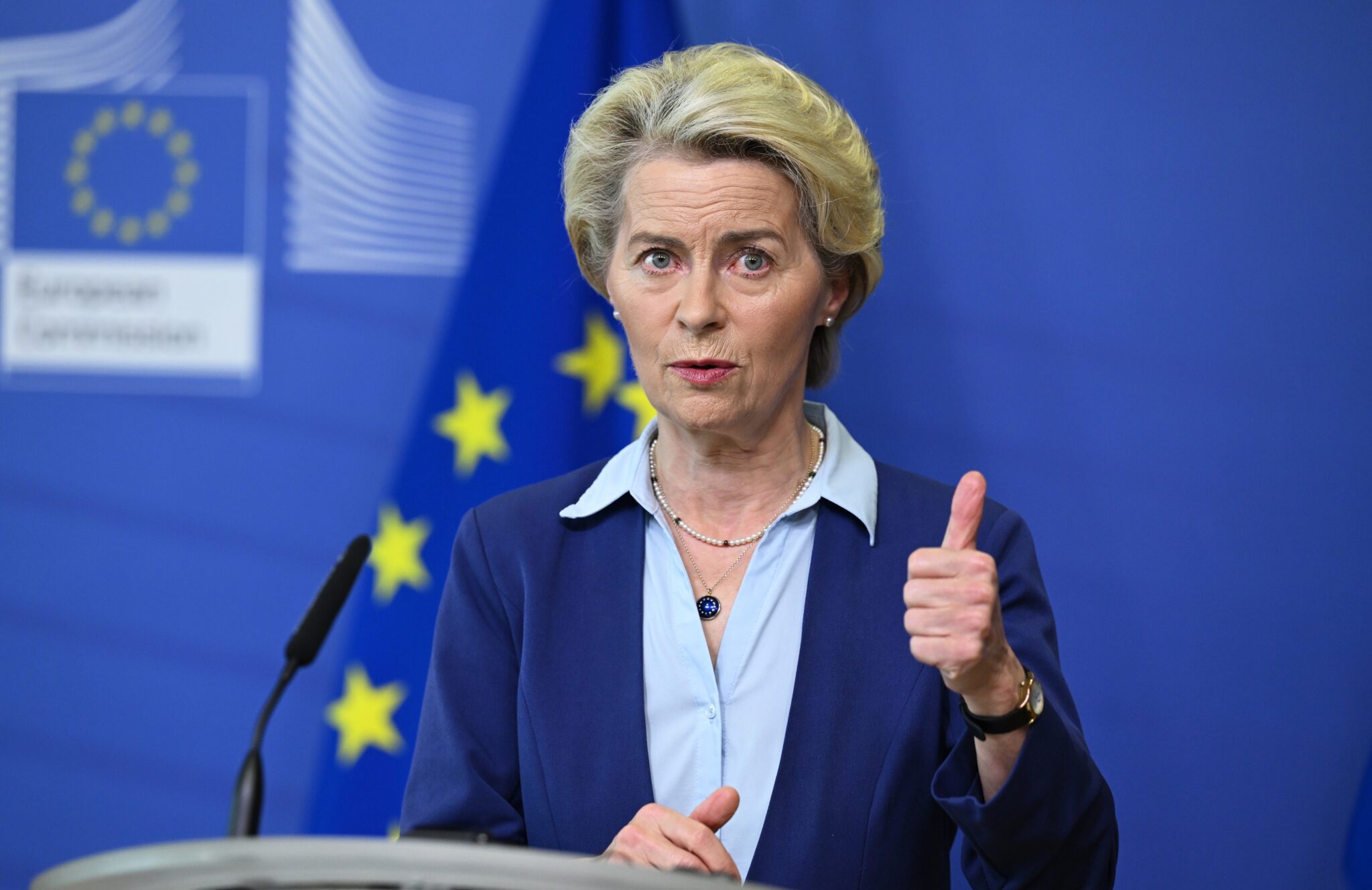
The tone of von der Leyen’s letter shifted as she went on to argue that the crisis demonstrated the urgent need to strengthen the bloc’s external borders.
“This incident clearly illustrates the need to go further in reinforcing our borders at our most sensitive crossing points,” she wrote, suggesting measures including enhanced surveillance and, where necessary, the use of physical barriers.
Von der Leyen also stressed that the European Union “will not accept illegal entry” or “any attempt to use illegal migration as a means of exerting pressure on any member state.” She reiterated that protecting the EU’s external borders is “a shared European responsibility.”

Ceuta, the Spanish territory in North Africa, is one of the European Union’s only two land borders with Africa. Over the weekend, it experienced an unprecedented migrant surge, with Spanish authorities estimating that between 50,000 and 60,000 people crossed into the enclave. Dozens reportedly died during the journey.
The sheer scale of the influx overwhelmed Spain’s land border while thousands of migrants also entered by sea. Prime Minister Sánchez deployed the military in an effort to contain the crisis and, after nearly 72 hours, announced that most of the migrants had been returned to Morocco.
The crisis became so severe that several EU member states, led by Italy, reportedly called for Spain to be suspended from the Schengen Agreement, which allows passport-free travel across much of Europe.

In recent months, the European Union has significantly tightened its migration policies. Among the measures adopted is a framework allowing member states to transfer illegal migrants to processing facilities outside EU territory, known as “return hubs.”
As part of that effort, a Taliban delegation traveled to Brussels for talks with EU officials regarding the return of illegal Afghan migrants to Afghanistan.
The highly unusual meeting marked one of several policy shifts that would have been considered unthinkable only a few years ago. The European Union has also reached similar migration agreements with Egypt and Tunisia. Unlike those governments, however, the Taliban regime is not formally recognized by the European Union.
The Ceuta crisis has intensified the debate over Europe’s immigration policies, underscoring the growing pressure on EU leaders to reconcile humanitarian concerns with increasingly urgent demands for stronger border security.