


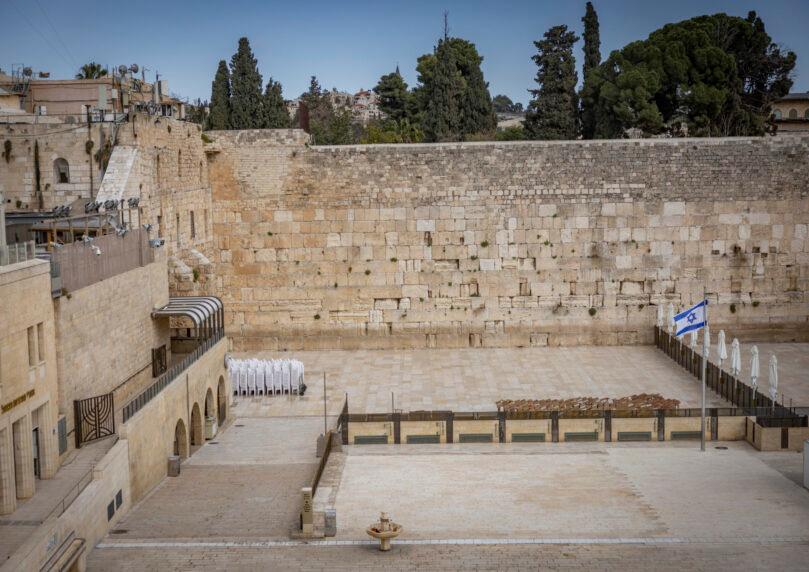

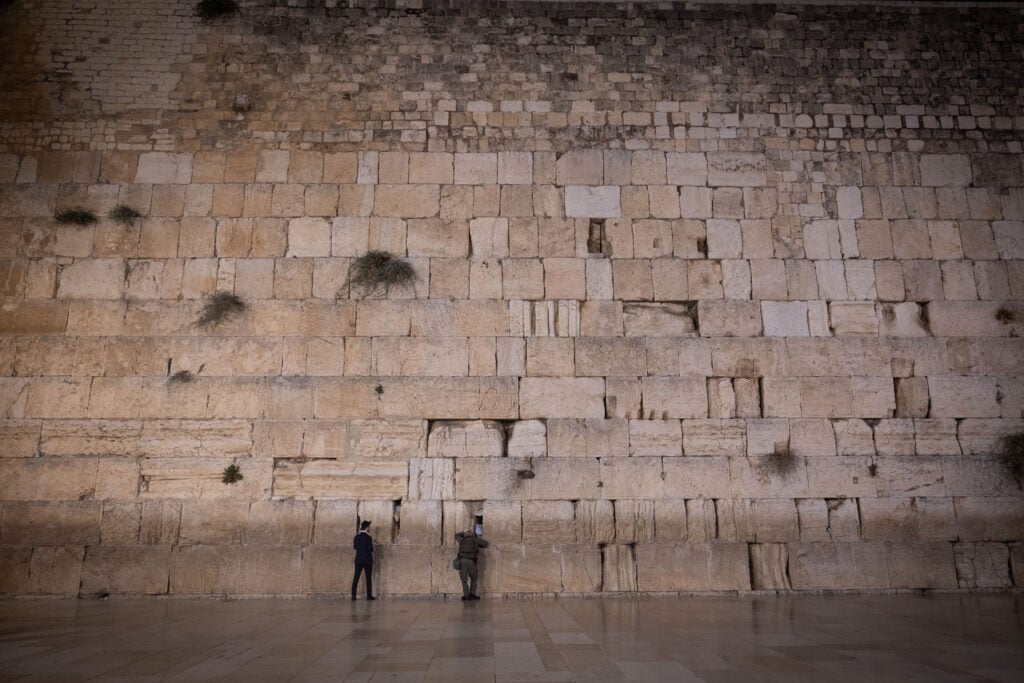
The rabbi of the Western Wall and Holy Sites is demanding the Israel Museum transfer an ancient stone on display to the Western Wall Heritage Foundation. The stone is one of four ancient stones that definitively belong to the Wall, which were scattered as exhibits across various institutions in Jerusalem including the Knesset and the President’s Residence. On the eve of the Tisha B’Av fast, the president approved transferring the stone from the President’s Residence, returning the third of the four stones to the Wall.

 3+
3+The stone displayed at the museum is particularly special because it bears the inscription “To the Trumpeting Place,” marking the spot during the Second Temple period where trumpets were sounded to announce the arrival of the Sabbath and festivals, as described in the writings of Josephus.
While the stones displayed for decades at the Knesset and President’s Residence have already been returned to their place, this one remains at the museum—despite official requests, demands, and decisive halakhic rulings by Israel’s Chief Rabbis and the Western Wall rabbi calling for its immediate return.
 3+
3+In recent years, historic decisions were made to return Western Wall stones held outside its walls to their natural environment, including the Wall stone displayed at the President’s Residence, which was recently returned to its place in the garden adjacent to the Western Wall in a moving ceremony on the eve of Tisha B’Av.
The Israel Museum displays one of the fallen Wall stones discovered at the southwestern foot of the Temple Mount—a stone that stood at the southern corner of the Western Wall. It has an internal niche and an ancient Hebrew inscription from the Herodian period: “To the Trumpeting Place to…”
 3+
3+The halakhic position and Chief Rabbinate: For decades, Israel’s Chief Rabbis and the Western Wall rabbi, Rabbi Shmuel Rabinowitz, have demanded the stones be returned to their place. In an official letter sent to the museum’s management, it was noted that the Wall stones originate from the “site of the Temple,” and that 55 years ago the leading rabbis of the generation and Sephardic Chief Rabbi Yitzhak Nissim ruled that it is improper to display holy stones outside their original location, quoting from the Book of Lamentations: “How is the gold become dim! How is the most fine gold changed! The stones of the sanctuary are poured out at the head of every street.”
 3+
3+The Israel Antiquities Authority clarified that the legality of the stone’s transfer to the museum in the past is entirely unclear, and that the director of the Jerusalem district at the Authority submitted an unequivocal request to return the stone to its place alongside the Wall stones.
Those involved in the matter emphasize that returning the stone bearing the historic inscription is not just a technical matter, but a profound symbol of connection, preservation of the site’s sanctity, and historic correction in accordance with halakhic requirements and Israel’s heritage. To date, despite repeated requests from the Western Wall rabbi and the Antiquities Authority, the Israel Museum has chosen to continue holding this stone of supreme importance, contrary to the shared position of religious and archaeological authorities in Israel.