


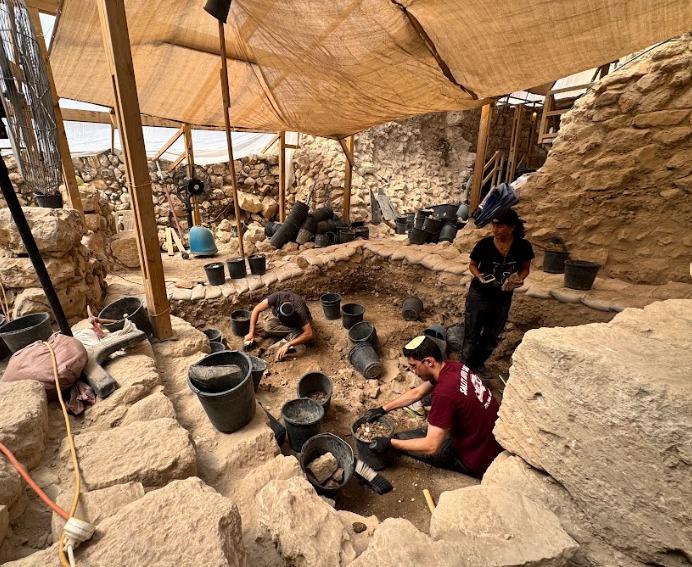

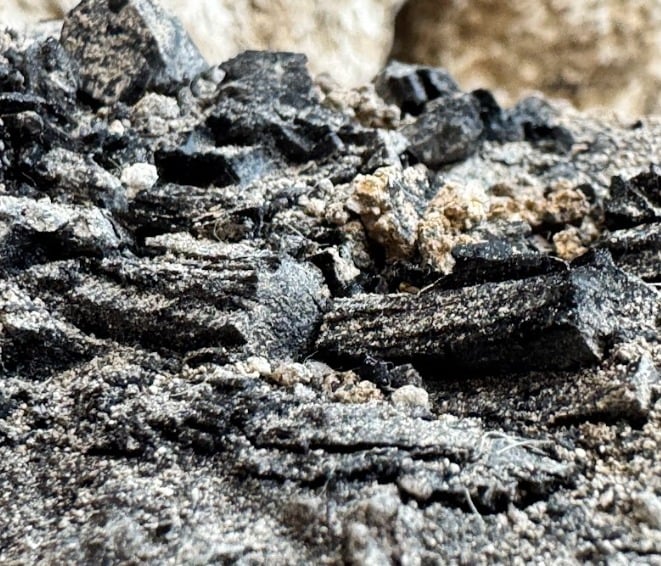
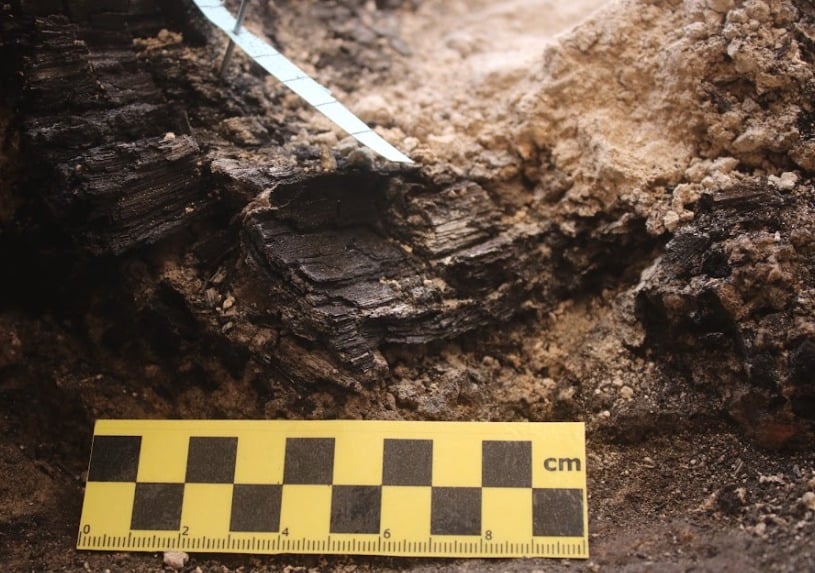
Days before Tisha B’Av, the Israel Antiquities Authority and Tel Aviv University announced Monday the discovery of a rare archaeological find in excavations at the City of David National Park surrounding the walls of Jerusalem—thick, charred wooden beams that burned during the destruction of the First Temple in 586 BCE have been preserved for roughly 2,600 years and were uncovered inside a building that collapsed in the intense fire that struck the city.

 1+
1+According to excavation director Efrat Botzer, “It appears that these beams, which likely served as roofing for an interior courtyard of a First Temple period building, collapsed during the destruction onto the building’s floor. We believe that the plaster, which covered the building’s walls and melted during the fire, also covered the charred wooden beams, and that’s what helped their exceptional preservation.”
“It’s very rare to find wood in Israel with a nice quantity of rings, and here, in the City of David, we found thick beams that have many rings, and this represents research potential,” adds Dr. Yohanna Regev from the Israel Antiquities Authority, who is studying the find. “The more rings a tree has, the more it helps us achieve higher resolution dating,” she explains. “If until now we could date a find within a range of hundreds of years, now we’re reaching more precise dating, within a range of only 10 years.”
 1+
1+Excavation directors Dr. Yiftah Shalev from the Israel Antiquities Authority and Prof. Yuval Gadot from Tel Aviv University explain that the find testifies to the intensity of the destruction in Jerusalem: “It’s clear to us that this large building was deliberately burned and collapsed all at once. It’s interesting to see that in the Persian period, after the destruction, residents blocked the entrance to this area but continued living in other parts of the building.” According to them, the decision to settle alongside and within the ruins shows a strong desire to preserve the memory. “Creating a memory space is a basic human need, especially after a traumatic event. The residents consciously chose to leave the destruction as testimony to the devastation, and rebuilt next to it instead of clearing it away.”