


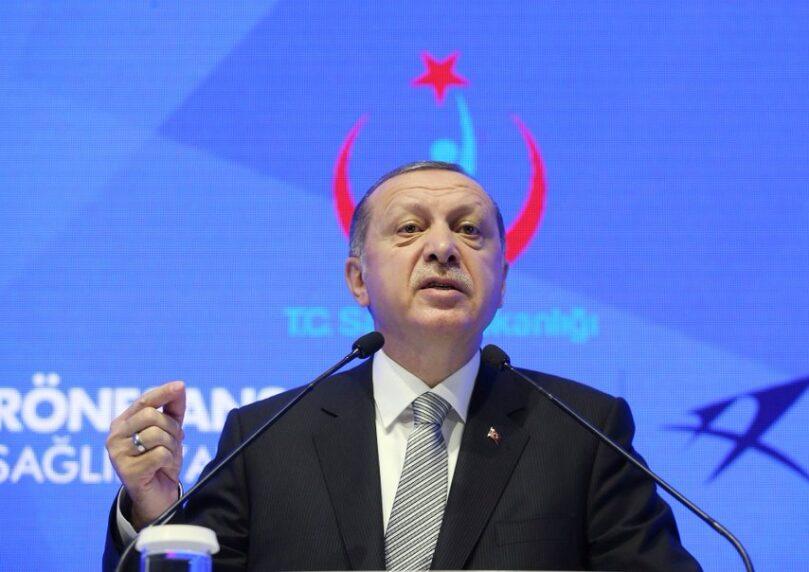

Turkey, it must be said with honesty and clarity, is an emerging strategic threat facing the State of Israel in particular, as well as several of its traditional rivals in the Eastern Mediterranean, foremost among them Greece. Israel requires a sober and realistic strategic vision, one that is based on the understanding that it must prepare itself not only through diplomatic means, but also for the possibility of a future military confrontation with Turkey.
A historic transformation took place in the life of modern, post-Ottoman Turkey with the rise to power of the Justice and Development Party (AKP), a political movement that emerged from the ideological world of the Muslim Brotherhood.
The secular and democratic character of Turkey — established after the First World War by Mustafa Kemal Atatürk, the founder of the Turkish Republic — has undergone a profound process of regression. The republic that was built upon the principles of secular nationalism has gradually moved away from its original identity.
Through a calculated political process led by President Recep Tayyip Erdoğan, Turkey has been transformed into an Islamic autocracy with increasingly authoritarian characteristics.
Under Erdoğan’s rule, the secular opposition has been systematically weakened, critical media outlets that challenged the Muslim Brotherhood-inspired government in Ankara have suffered severe pressure, and the long-standing suppression of the Kurdish people — an Iranian ethnic group with national aspirations for political independence — has continued.
However, this does not necessarily mean that Erdoğan’s Turkey has become an Islamic theocracy similar to neighboring Iran.
Fundamental differences exist between Sunni Islamism, rooted in the ideological tradition of the Muslim Brotherhood, and Shiite Islamism developed from the teachings of Imam Ruhollah Khomeini, whose doctrine of Velayat-e Faqih — the rule of the Islamic jurist — stands at the heart of the Iranian Islamic Revolution. Nevertheless, the influence of Turkey’s Islamic religious establishment today is far greater than it was in the past, when the country was defined by an uncompromising secular identity inherited from the legacy of Atatürk.
Neo-Ottomanism and the “Blue Homeland” Doctrine
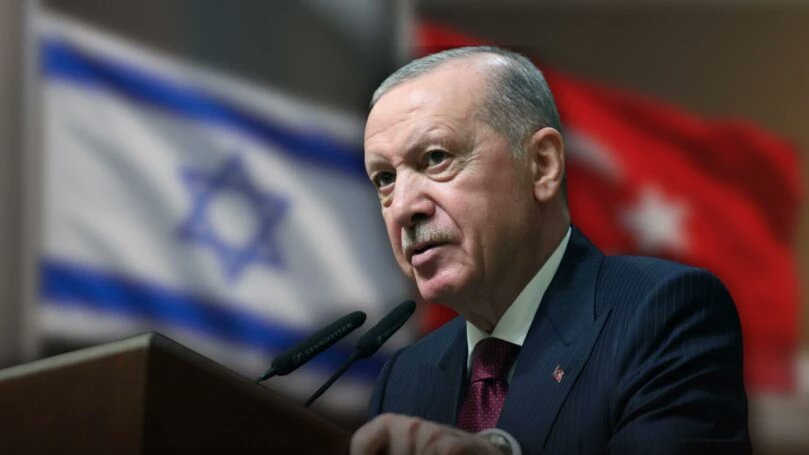

The transformation of Turkey under Erdoğan cannot be understood solely through the lens of domestic politics. At its core lies a broader ideological and geopolitical vision that combines historical nostalgia, religious identity, and aspirations for regional influence.
Erdoğan’s Turkey is, to a considerable extent, a synthesis between Neo-Ottomanism and the foundational ideas of political Islam associated with the Muslim Brotherhood. This combination raises a fundamental question: what does this vision mean in practical terms, and how does it shape Turkey’s regional strategy?
At the heart of Neo-Ottomanism lies a historical, political, and territorial vision — the aspiration to return to the perceived glory days of the Ottoman sultans and restore Turkey’s status as a dominant regional power.
Supporters of this worldview emphasize the Ottoman legacy and portray the empire as a historical model that maintained a degree of religious tolerance toward minority communities living throughout its vast territories. However, the contemporary ideological framework promoted by Erdoğan’s Turkey is not based solely on Ottoman nostalgia. It is also deeply connected to the political Islam of the Muslim Brotherhood, founded by the Egyptian Sheikh Hassan al-Banna.
This ideological fusion has created a new strategic narrative in which Turkey seeks to redefine its place in the Middle East. Unlike the secular nationalism that shaped the early Turkish Republic, the current vision places greater emphasis on religion, historical memory, and Turkey’s role as a leading power within the Muslim world.
It is important, however, to distinguish between the Ottoman historical experience and modern political Islam. While the Ottoman Empire operated through a complex imperial system that included various forms of coexistence among religious communities, the ideology of political Islam associated with the Muslim Brotherhood represents a different framework — one in which religious identity plays a central role in shaping political and international relations.
This broader ideological vision also has a distinct geopolitical expression in Turkish strategic thinking: Mavi Vatan — the Blue Homeland. The Blue Homeland doctrine encapsulates Turkey’s historical and territorial aspirations. It represents a strategic concept focused on establishing a broad sphere of influence across the Mediterranean Sea, the Aegean Sea, and the Black Sea.
The doctrine is not merely about maritime borders or access to natural resources. It reflects a much wider perception of Turkey’s regional role and its desire to secure strategic depth beyond its immediate borders.
This is precisely why the Blue Homeland doctrine has generated deep concerns among Greece and Cyprus, which view Ankara’s maritime ambitions as a direct challenge to their sovereignty and national interests in the Eastern Mediterranean.
Moreover, the concept of the Blue Homeland is part of a broader strategic vision through which Turkey seeks an expanding political, military, and cultural presence in Arab and Muslim regions that, according to this worldview, are historically connected to the Ottoman sphere.
Therefore, Mavi Vatan should not be understood merely as a naval doctrine. It represents a central component of Erdoğan’s broader vision of Turkey as a renewed regional power with influence extending far beyond its current borders.
Syria, Jerusalem and Turkey’s Regional Ambitions
The strategic vision of Erdoğan’s Turkey extends far beyond maritime ambitions. At the center of Ankara’s regional objectives lies the Syrian arena — a country that holds enormous geopolitical importance and may serve as a strategic corridor toward the Land of Israel.
From Turkey’s perspective, the road to Jerusalem and the aspiration to influence the future of the Al-Aqsa Mosque — one of the holiest sites in Islam, located in the eastern part of the city — passes through Damascus and through the wider Muslim world. Within this vision, radical Islamist forces committed to concepts of jihad may become instruments of political and military influence.
To understand Turkey’s role in Syria, one must recognize that Ankara has long viewed the Syrian arena as a critical component of its regional strategy. Syria is not merely a neighboring state for Turkey; it represents a central arena in the struggle over influence, security, and the future balance of power in the Middle East.
The new Syria under President Ahmed al-Sharaa has, in practice, developed under significant Turkish political influence since the historic revolution of the winter of 2024, which removed the secular-Alawite authoritarian rule of the Assad family after 54 years.
Erdoğan’s Turkey has played a significant role in the Islamist transformation of Syria and in the rise of Hay’at Tahrir al-Sham (HTS). Through its deep involvement in northern Syria, particularly in the Idlib region, Ankara established substantial influence over the forces that shaped the military campaign that ultimately led to the fall of the Assad regime in Damascus.
Turkey’s involvement in Syria reflects a broader strategic pattern: the pursuit of influence in territories that Ankara considers essential to its historical, security, and ideological interests.
Against this background, one must examine Jerusalem’s place within Turkey’s regional vision. The city is not only a religious symbol for the Muslim world; it also carries profound historical and political significance within the broader ideological framework promoted by Erdoğan’s Turkey.
For many years, Turkey has conducted extensive political and civilian activity in the Old City of Jerusalem, particularly in Arab Muslim neighborhoods surrounding the Holy Basin. Through a carefully developed network of Islamic charitable organizations and cultural initiatives, Ankara has sought to strengthen the historical connection between Jerusalem and the Ottoman legacy.
Senior figures within Turkey’s political establishment have repeatedly emphasized the importance of Jerusalem within the Turkish and Muslim worldview. Hakan Fidan, Turkey’s Foreign Minister and former head of the National Intelligence Organization (MIT) between 2010 and 2023, has frequently addressed the symbolic and strategic importance of the city. This context also provides a framework for understanding his recent statement in an interview with CNN Türk, in which he claimed that Israel had “become a burden on all of humanity.”
Turkish FM @HakanFidan’s sickening words are textbook incitement to genocide.
Dehumanizing the Jewish people as an “unbearable burden” is the classic, horrific language of history’s worst eliminationist regimes.
The civilized world and Turkey’s NATO allies must unequivocally…
— Gideon Sa’ar | גדעון סער (@gidonsaar) July 2, 2026
Such statements cannot be ignored. Political rhetoric of this nature, when combined with ideological narratives and historical ambitions, can contribute to the legitimization of extreme positions and deepen regional confrontation.
At the same time, this rhetoric reflects Turkey’s own strategic concerns regarding Israel — particularly its military capabilities, which have been demonstrated in recent years through Israel’s rapid military operations in Lebanon, Syria, and against its regional rival Iran.
Another important dimension in the relationship between Ankara and Jerusalem is historical memory. After years of political hesitation, Israel recognized the Armenian Genocide committed by the Ottoman Empire during its final years against the Armenian people living under Ottoman rule.
According to historical estimates, between one million and one and a half million Armenians were systematically killed by the Ottoman authorities, both in the context of Armenian national aspirations and due to their Christian identity.
Israel’s recognition of the Armenian Genocide represents a moral and historical position, but it also carries diplomatic significance in light of the political campaign waged by Erdoğan’s Turkey and Foreign Minister Hakan Fidan against Israel since the outbreak of the Gaza war in October 2023.
At the heart of this campaign lies, from Israel’s perspective, a process of political dehumanization aimed at portraying the Jewish state as illegitimate and comparable to the darkest examples of twentieth-century authoritarianism.
Ultimately, the confrontation between Israel and Erdoğan’s Turkey is not merely a dispute over current foreign policy disagreements. It represents a deeper struggle over the future character of the Middle East — a struggle over history, identity, religion, sovereignty, and regional power.
The Blue Homeland is therefore far more than a maritime doctrine. It is the expression of a broader geopolitical vision through which Erdoğan’s Turkey seeks to redefine its role in the twenty-first-century Middle East.
Elad Ben Ahdut Cohen is a Commentator and Lecturer on Arab Affairs