


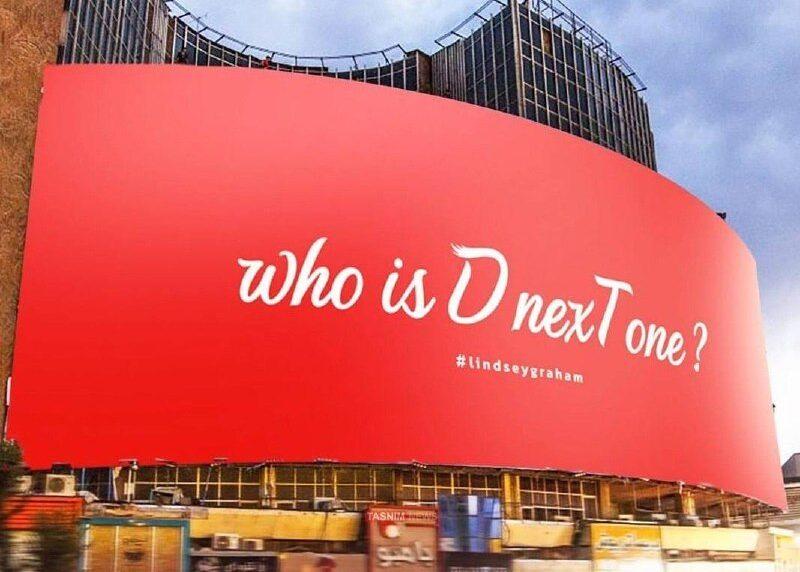
In a defiant move raising tensions between Tehran and Washington, a new, provocative billboard went up Thursday morning in Tehran’s central Valiasr Square, featuring a hashtag of the late American Senator Lindsey Graham alongside the caption “Who’s next?”

 2+
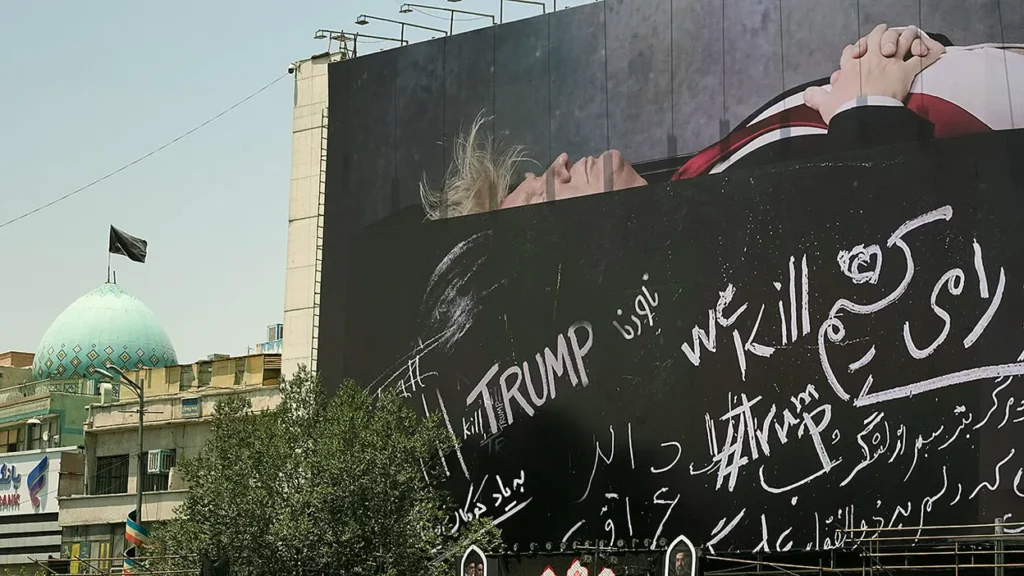
2+The Valiasr Square billboard isn’t an isolated incident, but part of a well-orchestrated incitement campaign exploiting Graham’s death. Graham was one of the most hawkish and consistent voices against Iran. The regime also erected a shocking billboard showing Donald Trump inside a coffin.
Displaying Graham—a friend of the president—alongside the billboard of Trump in a coffin signals Iran’s clear intentions: The regime is marking American officials, living and dead alike, as targets for psychological warfare, sending a message of fearlessness toward the West and continued commitment to a vengeful line against those who acted against it.
 2+
2+Despite official findings and medical reports in the United States unequivocally determining that Senator Lindsey Graham died of natural causes, the Tehran regime chose to adopt an opposite and chilling narrative. In the billboards and official propaganda messages, the senator’s death is presented as an “achievement” of what the Iranians call “righteous revenge.”
In a move designed to project power and confidence both domestically and abroad, Iranian rhetoric presents his passing as divine punishment or a direct result of his hostility toward the Islamic Republic, while they claim vague “responsibility” for his death to intimidate their adversaries and send a message that no figure involved in policy against Iran is immune from their reach—even though reality on the ground indicates the complete opposite.
 2+
2+Using Valiasr Square as a bulletin board for hostile messages has become the Iranian regime’s trademark. Over the years, signs have been hung there glorifying the assassination of General Qasem Soleimani, calls for Israel’s destruction, and explicit threats against key Western figures. The new billboard’s significance is that the Tehran regime has no intention of changing its stripes, even after changes of government or political events in the U.S.
For the Iranian public, these billboards are meant to demonstrate the leadership’s strength and confidence, but on the international level, this is targeted incitement. The attempt to link a senator’s death with threats on the life of a former president or other political figures shows that Iranian strategy is based on inflaming tensions and maintaining the threat as a diplomatic and security tool in the struggle against the “Great Satan.”