



Why did the Iranian regime officially declare me an “enemy”? The answer is simple and infuriating: they know exactly how dangerous I am to them and their proxies in Arab countries. While we occasionally hear about young Israelis caught cooperating with Iranian intelligence for money, I’m on the other side of the equation. I’m the man the regime in Tehran hates, the man they officially define as hostile.

 3+
3+Several days ago, Iranian intelligence published an unprecedented official document, submitted to their state prosecutor and published in the official newspaper. The document defines no fewer than 415 entities as hostile—networks, virtual pages, and media figures. I appear there, under the category of “hostile media figures,” alongside entities like Channel 14.
The obvious question is—why me specifically? After all, I’m not a statesman, not a politician, and not a military man. I’m just a commentator on Arab affairs. But in Arabic, the language I write and speak in, I have more than a million followers in the Arab world. What causes such an enormous number of people to follow an Israeli, a Zionist, and a right-winger? The answer is one: the truth.
 3+
3+The regimes in the region understood this long ago. Not just the Iranians, but the Egyptians too. Several weeks ago they approached Elon Musk and X with a request to block my accounts inside Egypt, claiming I harm “national security.” The real reason? I expose Egypt’s collapsing economy, the external debt that crossed the $160 billion threshold, and the fact that the Egyptian military prefers to purchase weapons instead of helping the people. The Egyptian people’s response was overwhelming: tens of thousands joined my followers, thirsty for truth they won’t get from their conscripted media.
As a Jew born in Lebanon, I know this reality up close. I saw how Hezbollah destroyed the “Switzerland of the Middle East” with their own hands, under Iranian direction and financing. When I expose Hezbollah’s Unit 900, the missile arsenal hidden beneath civilian homes, and the transformation of southern Lebanon into an Iranian province—these aren’t theories. This is information that reaches directly to the Lebanese person who sees his country collapsing. When I expose in Iraq how the pro-Iranian militias steal the people’s oil and water, it raises questions these regimes don’t know how to deal with.
 3+
3+The Saudi newspaper “Arab News” defined me as one of the influential commentators in the Middle East for 2021. They knew then, and they know today: an Israeli voice speaking Arabic, dismantling their narratives and reaching directly to the Arab street, isn’t just “propaganda.” It’s a strategic threat.
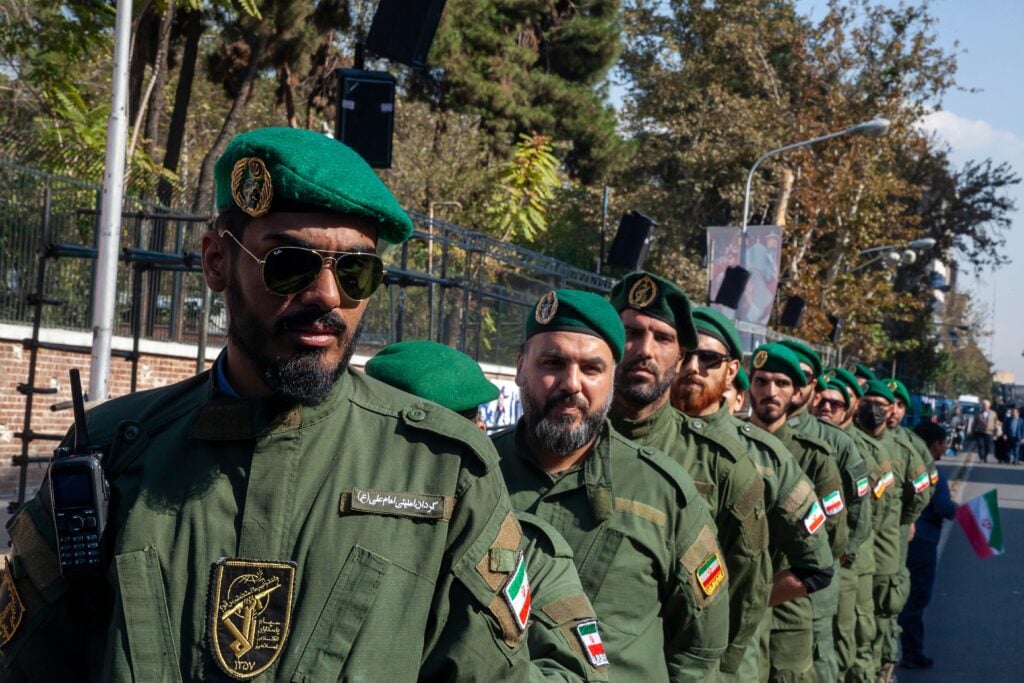
The list published in Tehran isn’t just a document. It’s an official admission of fear. They understand that information penetrates the walls. So instead of dealing with the claims, they’ve made listening to me a “crime.” In Algeria, Lebanon, and other countries, people have been imprisoned just for liking or sharing a tweet of mine. The Iranian regime compares us, the journalists and commentators, to terror organizations, just to justify the persecution of us.
 3+
3+They hate me not because I’m a “Zionist,” but because I prove to them that their control is crumbling. They’ve already declared my death several times in the past—it’s their heart’s desire. Today I can’t visit Lebanon, Egypt, or Iran, and as far as they’re concerned they can continue issuing orders and putting me on blacklists. But what has already penetrated the consciousness of the Lebanese in Beirut, the Iraqi in Baghdad, and the Egyptian in Cairo—they won’t be able to stop. That’s their real fear, and that’s the exact reason I’ll continue on my path.