




Women living on Jewish ranches in Judea and Samaria have begun training to defend themselves and their children with their own licensed firearms. More than 170 Jewish ranches sit on isolated hilltops in Israeli controlled area’s of Israel’s heartland region, often far from help. The ranches are located in an area internationally agreed to be under Israel’s control, referred to as ‘Area C’ in the Oslo Accords. According to the Yesha Council, the program is meant to address that distance from larger communities, and the likelihood that no security forces will be present in the first moments of an attack on women and children in their homes.
The Judea and Samaria Situation Room (JSR), which monitors security incidents across the region, recorded 634 terror attacks by Arabs over the past two months (October and November of 2026). Ninety of them targeted Jewish shepherds.
Oren Seliger of the JSR said the ranches are hit daily. “Farms and ranches are attacked every single day,” he said. “We see that in the data that we’re seeing at the JSR.”
He called the incidents nationalistic attacks, adding that theft is sometimes part of them. “They come and steal sheep, but often when they come and steal the sheep, they first attack the rancher with an axe or with a knife,” Seliger said. “It’s a deadly attack.”

 3+
For long stretches, the women on these ranches face that threat by themselves. “They are completely on their own, they’re isolated, and they could be attacked at any moment,” he said.
Officials in Judea and Samaria credit the ranches with a security role well beyond their own fences, according to reporter Eliya Aviv. Along Allon Road in Binyamin, once described as the most dangerous highway in Israel, terror incidents fell from 459 in 2022 to 52 between January and early November 2026, according to Binyamin Regional Council data reported by C14 earlier this month. Over the same years, the number of ranches along the corridor rose from three to 13. The council and the Ranches Association attribute the drop to shepherds whose daily grazing keeps an Israeli presence on the open ground between terror hubs and the road.
 3+
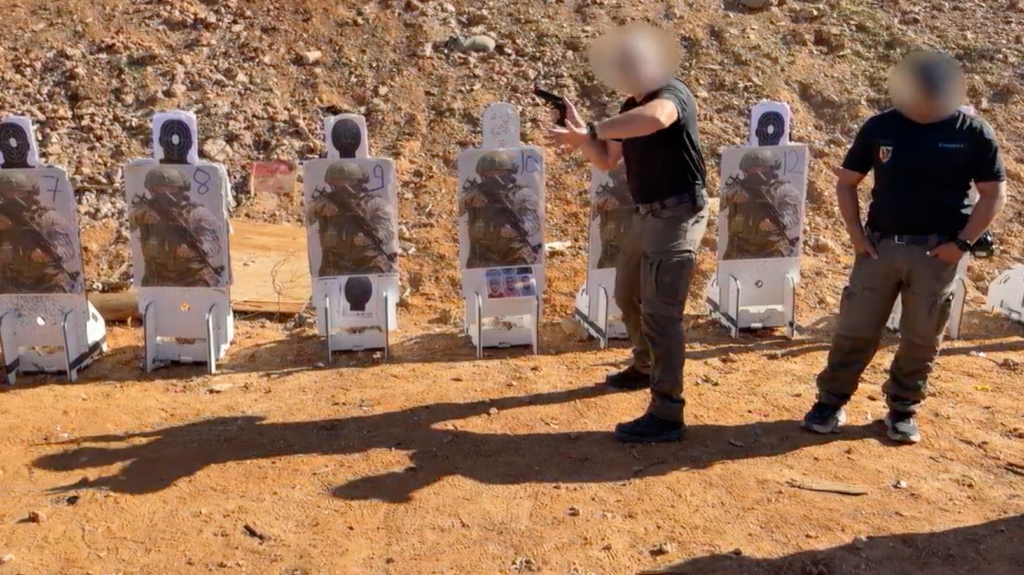
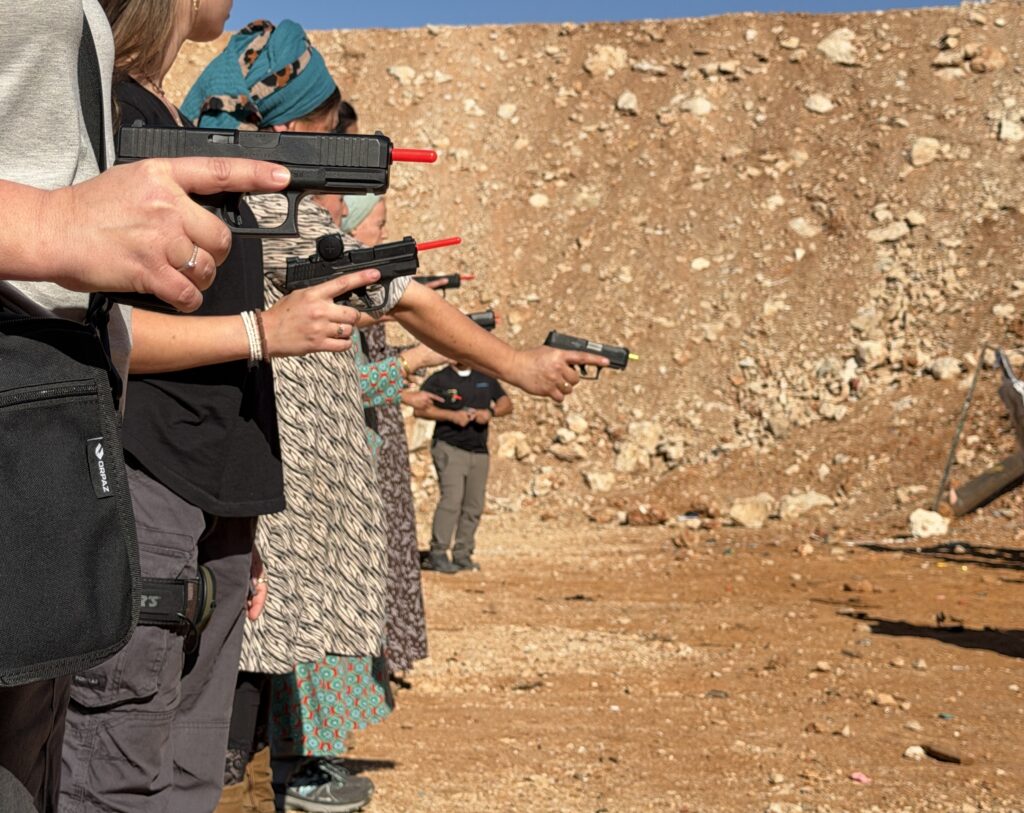
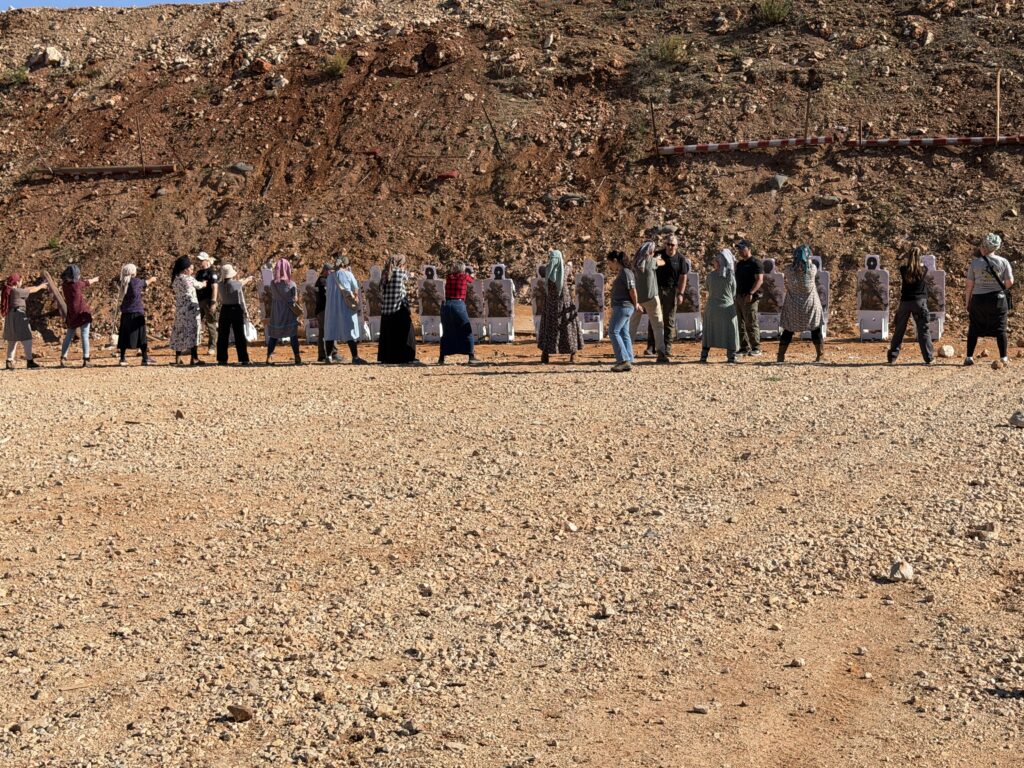
The program, called Eshet Chayil, Hebrew for “woman of valor,” was launched by the Yesha Council and the Ranches Association, which describe it as the first of its kind. Training days are being held across Judea and Samaria for ranch women who already carry a licensed weapon.
Each session runs about five hours and centers on handgun skills for self-defense. The drills are built around situations particular to ranch life, among them a terrorist entering a home and opening fire at point-blank range, and using a weapon with children close by.
Hagai Tam, acting director-general of the Yesha Council, said the project grew out of a real need raised by the women themselves. “Carrying a licensed weapon is important, but it is no less important to know how to use it skillfully and responsibly when needed,” he said. Ranch women are often the first to confront a security incident, he added.
 3+
Avishag, who owns a ranch in western Binyamin, said a terrorist tried to get into her ranch on a Shabbat morning a few weeks ago. Someone on the ranch stopped him.
“It could have ended differently. He could have gotten close to me and my children, because we’re on the front line,” she said. “That’s when I understood that I have to know how to handle a pistol, so that if, God forbid, I’m the one standing in front of the terrorist, I’ll be able to operate the weapon and protect my children.”
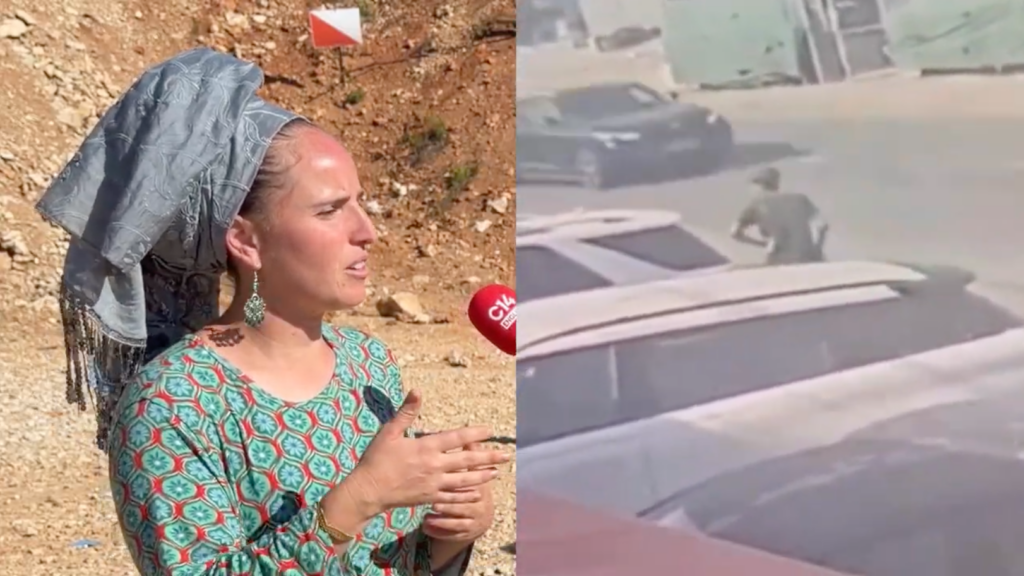
Carrying a pistol with a license is not enough, Avishag said. She called the training day lifesaving. Elisheva, a mother who lives on another ranch, told C14 she fears an attack inside her own walls. “I’m afraid of someone coming and trying to attack me or my kids in our house, in our home,” she said. She and other women like her have already been targeted, she said. Once, while she was walking around the ranch with her children, a boy threw rocks at them.
The region’s roads carry their own risk. Elisheva described her fear of a driver forcing her car to stop and the occupants getting out to attack her.
 3+
Elisheva grew up in Sderot, the city on the Gaza border that lived under rocket fire for years. She has no intention of hiding again. “I want to be active,” she said. “I want to be able to protect myself, really, and not just hide.”
The women taking part tell C14 they hope they never have to draw their weapons on the ranches they call home, but learning how to use their firearms responsibly is key to being able to defend themselves and their families against daily infiltration attempts by Arab invaders.